英语
英语 俄语
俄语 西班牙语
西班牙语 德语
德语
Home / Author / Linnea Qiao — International Sales Manager / 100kg Single Tumble Dryer: High-Capacity, Intelligent, and Energy-Efficient Drying for Professional Laundry Operations

Kingstar is your trusted partner for industrial and commercial laundry equipment. We specialized in the R&D and manufacturing of high-end industrial washers, commercial washers and dryers. Meanwhile, we provide global clients with comprehensive planning, layout workflow design, and software-hardware integration services for smart laundry plants.
Linnea Qiao — International Sales Manager
Oct 12,2026
100kg Single Tumble Dryer: High-Capacity, Intelligent, and Energy-Efficient Drying for Professional Laundry Operations
Introduction to High-Capacity Industrial Drying
Professional laundry facilities need drying equipment that can process large volumes of textiles quickly, consistently, and safely. Hotels, hospitals, commercial laundries, dry cleaners, self-service laundries, and institutional laundry departments all face the same operational challenge: wet linen must be dried thoroughly without damaging fibers, wasting energy, or creating unnecessary delays.
The 100kg Single Tumble Dryer is designed to meet these requirements with a high-capacity drum, intelligent moisture management, programmable drying control, and a construction suitable for demanding commercial use. With a rated capacity of 100 kilograms, the machine enables operators to complete larger batches in fewer cycles, improving workflow efficiency and supporting reliable turnaround times.
Manufactured by Jiangsu Chuandao Intelligent Equipment Co., Ltd., the dryer combines practical mechanical design with computerized operating functions. Its configuration includes a 2,000-liter drum, a 1,460-millimeter drum diameter, steam heating, automatic drying time control, and humidity verification technology. These features allow the machine to deliver controlled drying performance for towels, bed linen, uniforms, healthcare textiles, tablecloths, and other commercial laundry items.
Unlike basic dryers that depend only on fixed timer settings, this machine is designed to monitor and regulate the drying process more intelligently. By helping operators avoid excessive drying, it can reduce fabric stress and unnecessary energy consumption while maintaining a dependable level of dryness.
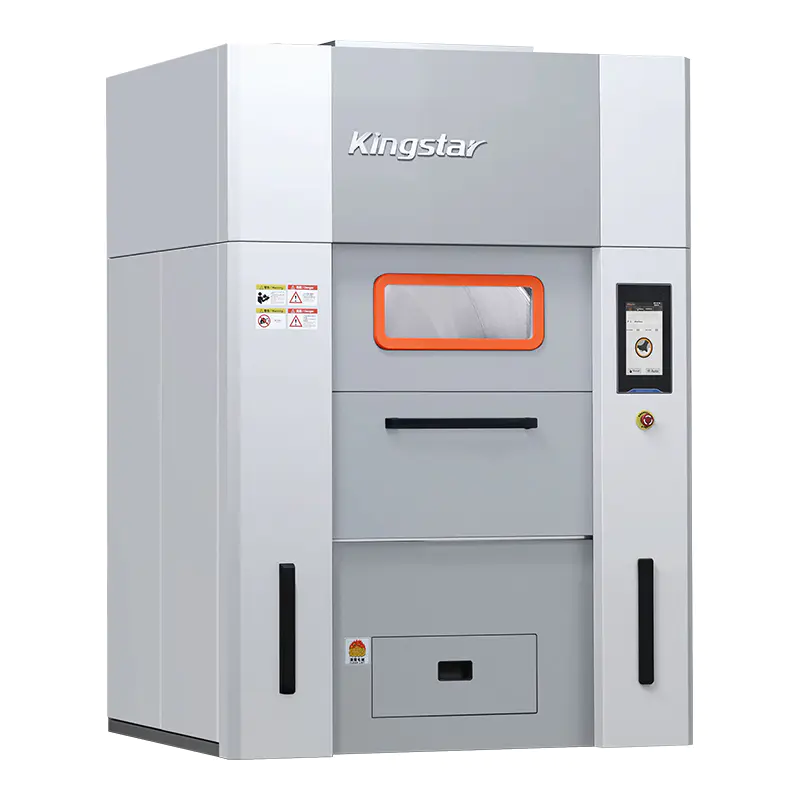
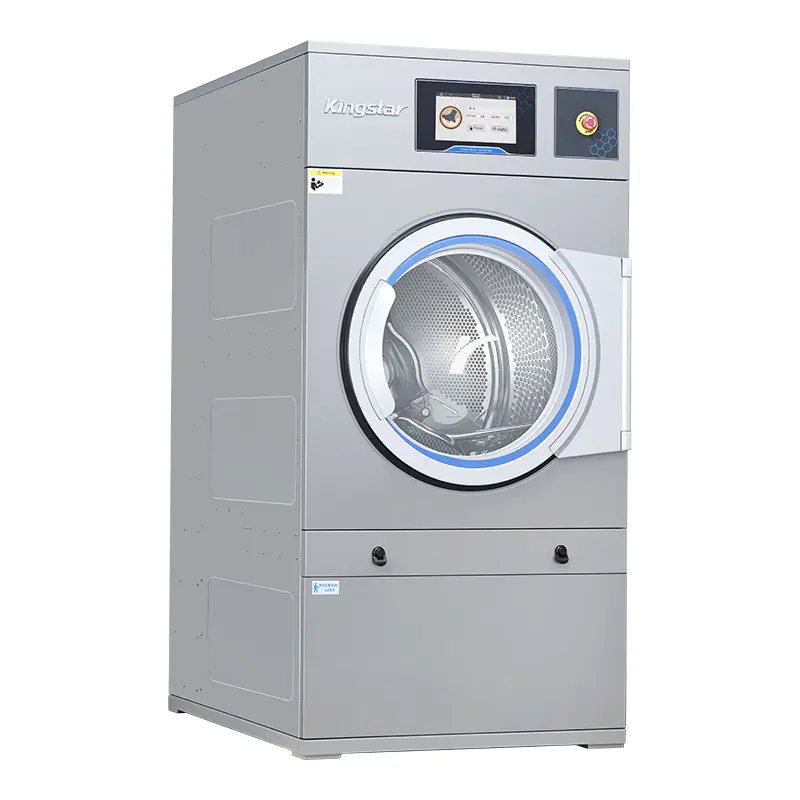
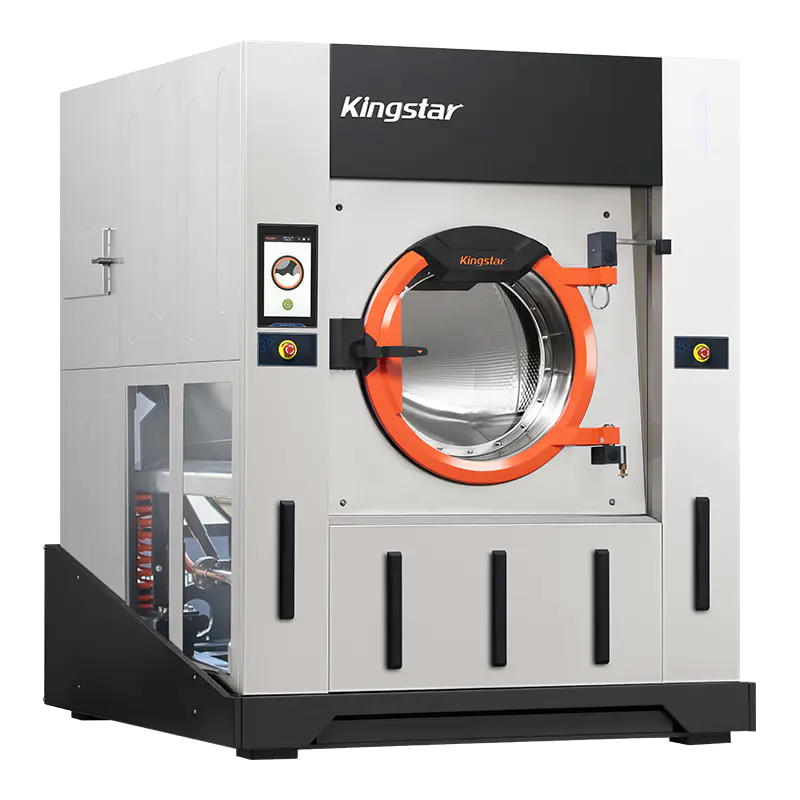
100kg Single Tumble Dryer
Product Overview
The 100kg Single Tumble Dryer is a large industrial dryer developed for facilities that need continuous and efficient textile processing. Its single-drum structure offers a straightforward loading, drying, and unloading process, while its computerized control system makes it easier to manage operating parameters according to the fabric type and production schedule.
The drum is engineered for a 100kg load and has a rated capacity of approximately 2,000 liters. The drum diameter is 1,460 millimeters, and the drum depth is 1,200 millimeters. This spacious internal configuration provides enough room for laundry to move through the drum during operation instead of remaining compressed in one position.
Proper textile movement is essential for effective drying. When laundry is lifted and released repeatedly as the drum rotates, heated air can contact a greater surface area of the load. This supports more uniform moisture removal and reduces the likelihood of damp areas remaining inside heavy or bulky loads.
The dryer uses steam heating with a listed steam pressure of 0.6 MPa. Steam heating is widely used in industrial laundry environments because it can provide stable and controllable heat when a facility has access to a suitable steam system. It is particularly practical for hotels, hospitals, textile service centers, and commercial laundries that already operate boilers or centralized heating equipment.
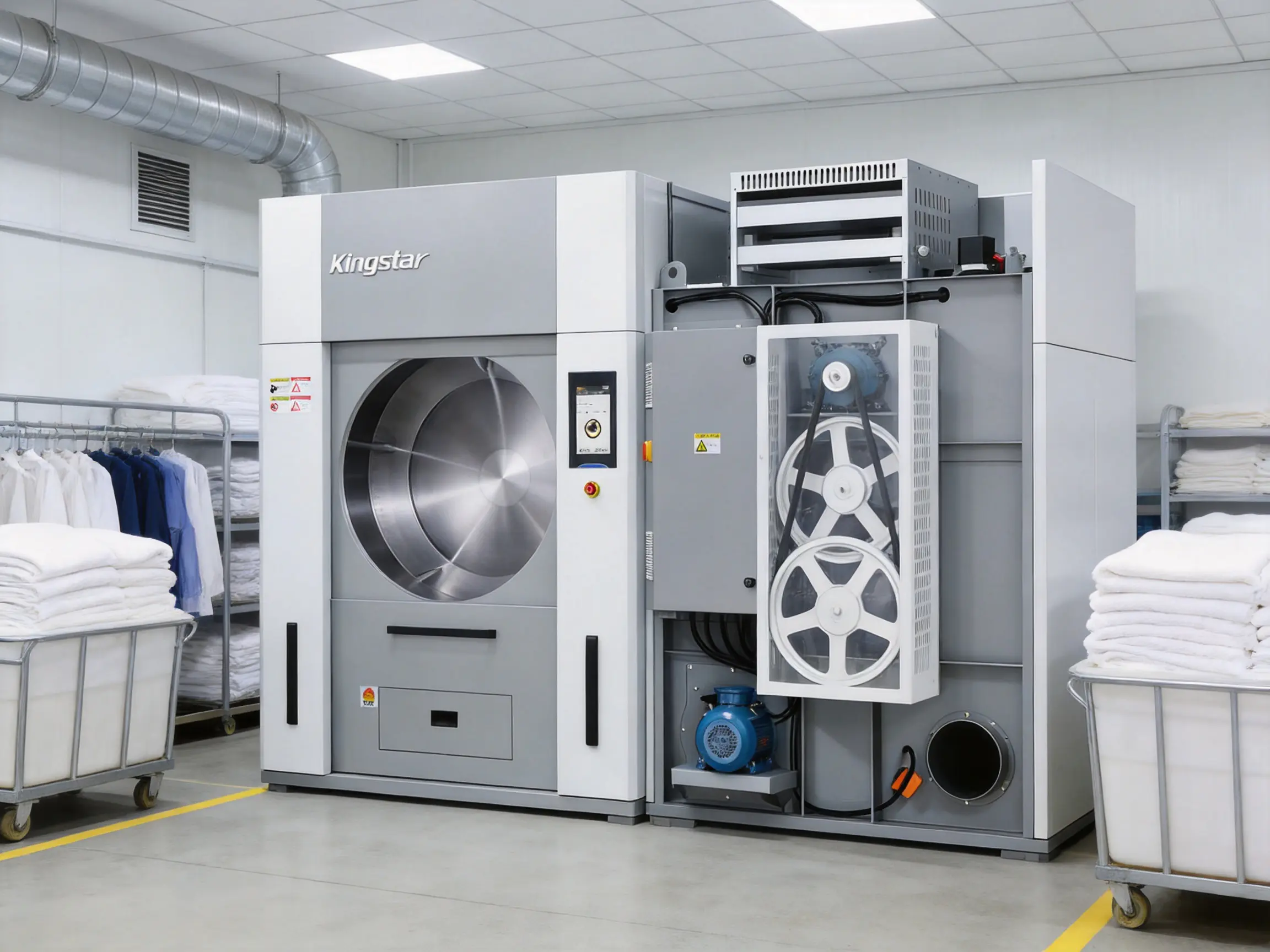
The main drum motor is rated at 2.2 kW, while the air motor power is listed as 5.5 kW. The machine operates at a listed voltage of 380 volts, subject to the electrical configuration confirmed before installation. Its overall dimensions are approximately 1,638 millimeters in width, 2,100 millimeters in depth, and 2,630 millimeters in height, with a listed machine weight of approximately 2,300 kilograms.
Main Technical Specifications
| Specification | Details |
|---|---|
| Product type | Industrial single tumble dryer |
| Model | SDR-2100 |
| Rated capacity | 100 kg |
| Drum diameter | 1,460 mm |
| Drum depth | 1,200 mm |
| Drum capacity | Approximately 2,000 liters |
| Main motor power | 2.2 kW |
| Air motor power | 5.5 kW |
| Heating method | Steam heating |
| Listed voltage | 380 V |
| Steam pressure | 0.6 MPa |
| Overall width | 1,638 mm |
| Overall depth | 2,100 mm |
| Overall height | 2,630 mm |
| Machine weight | Approximately 2,300 kg |
High-Capacity Processing for Commercial Laundry
One of the most important advantages of a 100kg dryer is its ability to process large batches. Smaller dryers may require several separate cycles to complete the same workload, increasing labor requirements and extending the time between washing and delivery. A 100kg machine can consolidate more laundry into each cycle, helping reduce handling and improve production planning.
For a hotel laundry, this capacity is useful when processing bed sheets, pillowcases, bath towels, hand towels, bath mats, robes, and staff uniforms. For a hospital, the dryer can support the processing of healthcare garments, patient clothing, sheets, blankets, and other washable textiles. Commercial linen services can use the machine to handle customer orders in a more organized sequence, especially during periods of high demand.
High capacity does not simply mean placing more textiles into the drum. Correct loading is still essential. Operators should follow the recommended load ratio, consider the type and weight of the textiles, and avoid overloading the drum. Adequate space must remain available for the laundry to tumble freely and for heated air to circulate through the load.
When used correctly, the large drum allows an efficient balance between production volume and drying quality. The result can be fewer cycles per shift, reduced transfer time between machines, and a more predictable workflow from washing to folding or finishing.
Designed for a Shorter Drying Workflow
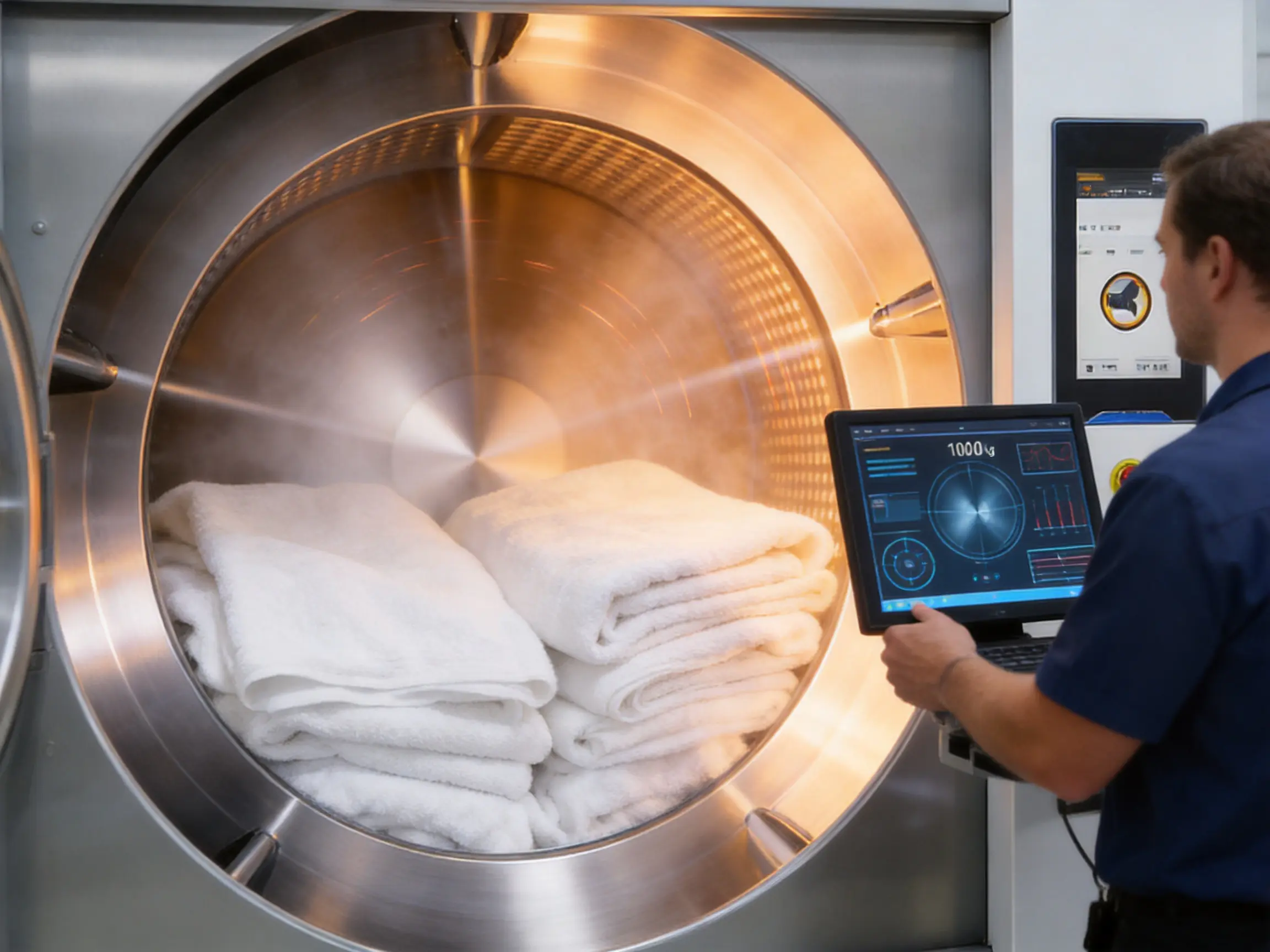
The product information indicates that the dryer is designed to dry large loads of linen and related textiles within approximately 40 minutes, depending on fabric type, residual moisture, load size, heating conditions, and operating settings. Actual drying time should be determined through commissioning and testing because heavy towels, lightweight sheets, uniforms, and blankets do not dry at the same rate.
A shorter drying cycle can have a significant effect on commercial laundry productivity. When drying becomes a bottleneck, washing machines may remain idle, clean laundry can accumulate in holding areas, and delivery schedules may be affected. A high-capacity tumble dryer helps create a smoother transition between washing, drying, ironing, folding, and packaging.
The intelligent drying functions also support cycle optimization. Instead of relying entirely on a fixed time selected by the operator, the control system can help manage the drying period according to moisture conditions. This reduces the risk of ending a cycle too early while also helping prevent the load from remaining in heated air longer than necessary.
Intelligent Humidity Verification Technology
Humidity management is a central feature of the 100kg Single Tumble Dryer. During a drying cycle, the moisture level of the load changes continuously. At the beginning, the textiles contain a relatively high amount of water. As the cycle progresses, the moisture level falls, and the risk of over-drying becomes greater.
A fixed-time drying process cannot always respond to these changes. The same timer setting may be suitable for one load but excessive for another. Factors such as extraction performance, textile composition, load weight, room temperature, steam pressure, and fabric thickness can all influence the final drying time.
The dryer’s humidity verification technology is designed to provide more accurate control of this process. By helping identify the moisture condition of the load, the system supports more appropriate drying decisions. The purpose is to achieve a thoroughly dried result while reducing unnecessary exposure to heat.
This function is particularly valuable for mixed commercial workloads. Towels may require a different drying approach from sheets, and healthcare garments may have different requirements from heavy blankets. Operators can use programmable settings together with humidity monitoring to establish repeatable procedures for different textile categories.
More accurate moisture control may provide several practical benefits:
First, it helps reduce over-drying. Excessive heat and extended tumbling can place unnecessary stress on fibers, elastic components, coatings, and surface finishes. Avoiding this condition can help preserve the usable life of frequently washed textiles.
Second, it can support energy conservation. Energy is still consumed when a load is already sufficiently dry but continues to run. A control system that helps reduce unnecessary drying time can improve the energy efficiency of each cycle.
Third, it can improve consistency. Laundry staff may use different judgments when deciding whether a load is dry enough. A more systematic control approach supports more uniform results across shifts and operators.
Finally, it can help reduce reprocessing. If laundry is removed too early, damp sections may require another cycle or additional manual handling. Better control helps minimize the possibility of incomplete drying.
Intelligent Drying Time Control
The dryer is also equipped with intelligent drying time control. This feature complements humidity verification by allowing the drying program to be managed more precisely. The objective is not simply to operate the machine for the longest possible period, but to use an appropriate cycle duration for the actual load.
Programmable time control is useful in facilities with multiple textile categories. An operator may establish different operating procedures for terry towels, flatwork, workwear, medical textiles, uniforms, or other common loads. Once the procedures have been tested and confirmed, staff can follow a repeatable process that reduces guesswork.
Intelligent time control also helps support production planning. A laundry manager can estimate how many loads can be completed during a shift and coordinate the operation of washers, extractors, dryers, folders, and finishing equipment. This is especially important in facilities that work under strict delivery windows.
The best results are achieved when time control and humidity control are used together. Time settings provide a basic operating framework, while moisture verification helps prevent the cycle from continuing unnecessarily or ending before the load has reached the required condition.
Steam Heating for Stable Industrial Performance
The 100kg Single Tumble Dryer uses steam heating. Steam systems are common in industrial laundry operations because they can provide consistent heat across large machines and multiple production stages. A properly designed steam supply can support steady drying performance while allowing the facility to centralize its heating infrastructure.
Steam heating is especially suitable for large-capacity dryers because the machine requires substantial thermal energy to remove moisture from a heavy load. The listed steam pressure of 0.6 MPa provides a reference for system planning, but the final installation must be coordinated with the facility’s boiler, piping, valves, condensate return, ventilation, and safety requirements.
Using steam can also offer operational flexibility. Facilities may already have steam available for washers, pressing equipment, finishing machines, or other processes. Connecting the dryer to an existing system can help standardize maintenance and reduce the need to manage several unrelated heating technologies.
Stable heating contributes to predictable drying quality. If the available heat fluctuates significantly, cycle times may vary and operators may compensate by increasing drying time. A suitable steam system, correctly installed and maintained, helps the dryer operate closer to its intended performance.
Installation Considerations
Before installation, the buyer should confirm the required steam pressure, steam consumption, condensate handling, electrical supply, exhaust ducting, fresh-air requirements, floor strength, access routes, and service clearance. Because the machine weighs approximately 2,300 kilograms and stands approximately 2,630 millimeters high, the building and installation area must be evaluated carefully.
The installation location should provide sufficient room for loading and unloading as well as access to inspection points and service components. The route from the receiving area to the laundry room should also be checked for door dimensions, ceiling height, turning space, ramps, and lifting equipment.
A professional installation helps protect the machine, improve operator safety, and reduce future maintenance difficulties. It also allows the customer to verify that ventilation and exhaust arrangements are appropriate for the building and the textile volume being processed.
Durable Construction for Demanding Laundry Environments
Industrial laundry equipment operates under conditions that are more demanding than ordinary household use. Machines may run for many hours per day, process heavy loads, and work in environments with heat, humidity, lint, detergent residue, and frequent loading and unloading.
The 100kg Single Tumble Dryer is built around a heavy-duty industrial configuration intended for this type of operation. Its large drum and approximately 2,300-kilogram machine weight provide a stable foundation for high-capacity drying. A stable structure is important because the drum must rotate smoothly while handling substantial textile loads.
Durability also depends on the design of the drive system, drum supports, air circulation components, heating system, control cabinet, door assembly, and access panels. These components must work together under repeated operating cycles. Routine inspections and preventive maintenance remain necessary, but a robust initial design can reduce the risk of interruptions and help maintain performance over time.
Commercial customers often compare equipment based not only on purchase price but also on total operating cost. A dryer that handles more laundry per cycle, reduces unnecessary drying time, and minimizes unplanned downtime may provide greater long-term value than a lower-capacity machine with a lower initial price.
Operational Reliability
Reliability is particularly important for hotels and hospitals because laundry demand does not always follow a predictable schedule. Occupancy changes, emergency admissions, seasonal events, and unexpected increases in linen use can create sudden peaks in workload.
A high-capacity dryer gives laundry managers additional production capacity during these periods. It can help facilities respond to larger volumes without immediately adding several smaller machines or increasing manual labor. The machine is also appropriate for commercial laundry providers that need to process multiple customer orders with consistent quality.
Reliable performance depends on correct operation. Loads should be sorted appropriately, washing and extraction should be optimized before drying, and the drum should not be overloaded. Lint filters, air passages, steam components, and safety devices should be inspected according to a planned maintenance schedule.
Advantages Compared with Conventional Dryers
The 100kg Single Tumble Dryer offers several advantages over conventional low-capacity or timer-only dryers.
Higher Productivity
A 100kg load capacity allows the machine to handle more laundry in each cycle. This can reduce the number of cycles required during a shift and help increase the amount of finished linen available for delivery or use.
More Controlled Drying
Humidity verification and intelligent time control provide more sophisticated drying management than a basic fixed-time system. Operators can work toward a consistent final moisture condition instead of depending only on experience or visual inspection.
Reduced Risk of Over-Drying
Over-drying may cause unnecessary fiber stress, shrinkage, fading, or deterioration of sensitive materials. Moisture-focused control helps reduce the possibility of continuing a heated cycle after the load has already reached the desired condition.
Energy-Conscious Operation
Reducing unneeded drying time can lower energy consumption per load. The actual savings depend on load composition, steam efficiency, operating settings, and local energy costs, but intelligent control provides a practical foundation for more efficient use of heat.
Greater Process Flexibility
Programmable settings allow operators to adjust procedures for different fabrics and load categories. This is more flexible than using one universal drying program for every item processed by the facility.
Suitable for Industrial Workloads
The machine is designed for laundry, dry-cleaning, and self-service laundry applications. Its large dimensions, heavy structure, and steam heating arrangement make it more appropriate for professional facilities than for residential settings.
Applications in Different Industries
Hotels and Resorts
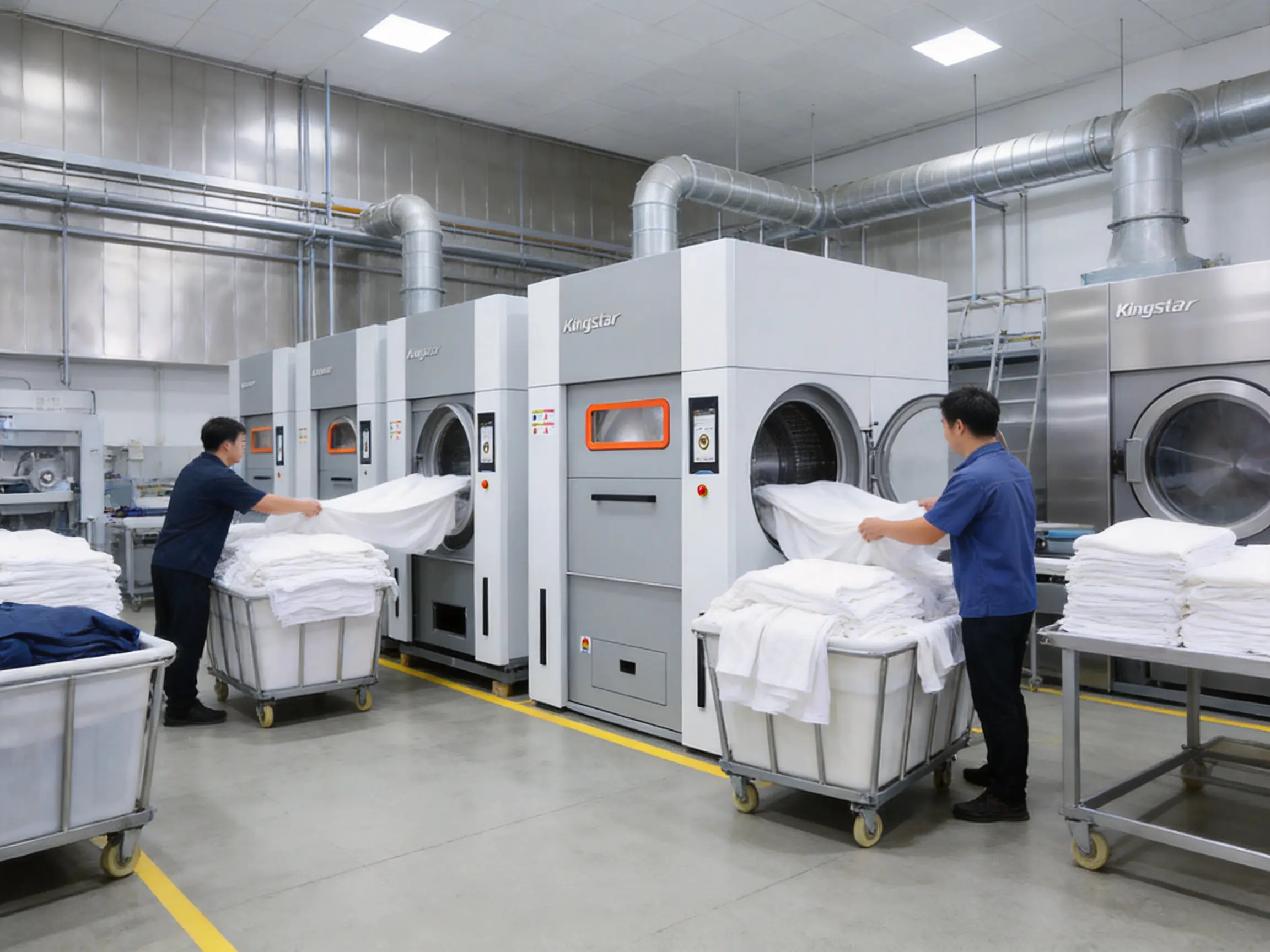
Hotels require a constant supply of clean and dry linen. Guest rooms, restaurants, spas, kitchens, and housekeeping departments all generate textile demand. A high-capacity dryer can process towels, sheets, duvet covers, pillowcases, tablecloths, napkins, uniforms, and robes in organized batches.
During busy periods, rapid drying is essential because clean laundry must return to service quickly. The 100kg capacity helps reduce pressure on the laundry room and supports more efficient coordination between washing, drying, ironing, folding, and storage.
Hospitals and Healthcare Facilities
Hospitals and healthcare facilities process sheets, gowns, scrubs, patient garments, blankets, towels, and other textiles. These loads may be heavy, frequent, and subject to strict hygiene procedures.
The dryer can support healthcare laundry workflows by providing dependable drying for large quantities. Operators should follow the facility’s approved textile handling procedures, including sorting, washing, disinfection, drying temperature selection, and quality inspection.
Commercial Laundry Services
Commercial laundry companies serve hotels, restaurants, hospitals, factories, schools, and other organizations. Their success depends on processing large amounts of laundry within agreed delivery times.
A high-capacity dryer can help commercial operators organize production according to customer orders. The machine’s programmable functions support different drying procedures, while its large drum allows the company to process more material without excessive machine transfers.
Dry Cleaners and Textile Care Centers
Dry cleaners and textile care centers may process workwear, uniforms, washable garments, household textiles, and specialty items. Not every textile requires the same drying condition, so adjustable control is important.
Operators can establish suitable programs based on fabric weight, moisture level, and care instructions. Items that require gentler handling should be processed according to their material requirements rather than using the maximum capacity or highest heat for every load.
Self-Service and Institutional Laundries
Self-service laundries and institutional laundry rooms benefit from equipment that is straightforward to operate and capable of handling frequent cycles. Clear operating procedures and programmable controls can help reduce training requirements and support consistent use by different operators.
Manufacturing Strengths and Engineering Capability
Jiangsu Chuandao Intelligent Equipment Co., Ltd. specializes in washing machinery and laundry equipment for professional applications. Its product range includes industrial washing machines, hospital washing machines, industrial dryers, commercial washer-extractors, stacked washer and dryer systems, stack dryers, and commercial dryers.
The company’s experience across multiple categories of laundry machinery provides an important engineering advantage. A laundry system is rarely composed of one machine alone. Washers, extractors, dryers, finishing machines, steam systems, conveyors, and folding equipment must work together as part of a complete process.
By developing equipment for both washing and drying applications, the company can better understand the relationship between extraction performance, residual moisture, heating requirements, drying time, and textile handling. This broader perspective supports more practical product design.
Integrated Product Development
Advanced laundry machinery requires coordination between mechanical engineering, electrical control, heating technology, air movement, structural design, and user interface development. The 100kg Single Tumble Dryer reflects this integrated approach through the combination of a large drum, steam heating, computerized operation, air motor power, humidity verification, and drying time control.
Each of these systems influences the others. Drum movement affects textile exposure. Air circulation affects moisture removal. Heating affects evaporation. Control logic affects cycle duration. The final drying result depends on the combined performance of all systems rather than on any single component.
A manufacturer with experience in industrial laundry machinery is able to evaluate these relationships during product development and production. This can help create equipment that is not only powerful, but also practical for daily operation and maintenance.
Manufacturing Quality and Process Control
Industrial equipment quality begins with material selection and continues through fabrication, assembly, wiring, testing, and final inspection. Large machines require accurate dimensions, stable structural alignment, reliable rotating components, and carefully organized control systems.
Manufacturing process control is especially important for a dryer because drum balance, airflow, heating, and door sealing all affect performance. A well-controlled production process helps ensure that machines are assembled consistently and that key components meet the intended design requirements.
Factory testing should include inspection of drum rotation, control functions, heating response, airflow, safety devices, access doors, and abnormal operating conditions. Testing before shipment can help identify issues at an earlier stage and improve the installation experience for the customer.
OEM and ODM Support
The company provides customized manufacturing support for professional laundry equipment. OEM and ODM cooperation may be suitable for distributors, laundry project contractors, hospitality groups, healthcare organizations, and equipment integrators with specific market requirements.
Customization may involve electrical standards, control language, steam system configuration, machine appearance, branding, loading arrangements, or project-specific integration. The exact scope depends on technical feasibility, order quantity, local regulations, and the project’s operating conditions.
Energy Efficiency and Total Cost of Ownership
Energy consumption is a major consideration in industrial drying. Dryers use substantial heat to evaporate water from textiles, so operating efficiency can directly influence the cost per kilogram of processed laundry.
The 100kg Single Tumble Dryer addresses energy management through humidity verification and intelligent drying time control. These functions are designed to reduce unnecessary drying after the load has reached the required condition. The result is a more measured use of steam and operating time.
Energy efficiency also depends on the washing and extraction stages. Laundry that enters the dryer with lower residual moisture requires less energy to dry. For this reason, the dryer should be evaluated as part of the complete laundry system. Efficient washer-extractors, suitable extraction speeds, correct load sizes, clean air passages, and properly maintained steam equipment all contribute to overall performance.
Total cost of ownership includes more than energy. It also includes labor, maintenance, downtime, textile replacement, floor space, installation, and production capacity. A high-capacity dryer may reduce labor associated with multiple small batches and may help prevent production delays caused by insufficient drying capacity.
Preventive maintenance is another important part of ownership cost. Regular cleaning and inspection can help maintain airflow, protect heating performance, and reduce the risk of unexpected stoppages. The recommended maintenance schedule should be established during commissioning and adapted to the facility’s operating intensity.
Simple Operation and Humanized Design
Industrial equipment should be powerful without being unnecessarily difficult to operate. The dryer is designed around computerized control and programmable operation, allowing operators to manage key drying procedures through a structured control interface.
Simple operation can reduce the time required for staff training and help minimize operating errors. When the controls are organized clearly, employees can select the appropriate program, confirm the load, start the cycle, and monitor progress more confidently.
Humanized design also includes practical access to the drum, loading area, inspection points, and maintenance components. In a busy laundry facility, operators may repeat these actions hundreds of times during a working week. Ergonomic access and clear procedures can improve productivity and reduce unnecessary physical effort.
Safety should remain a priority during operation. Staff should receive training on loading limits, hot surfaces, steam systems, lint management, emergency stop procedures, and maintenance isolation. The machine should be used only according to the operating instructions and the safety requirements of the installation site.
Recommended Operating Workflow
Step One: Sort and Inspect the Laundry
Separate textiles according to material, color, weight, care requirements, and intended drying conditions. Remove foreign objects and inspect items for damage before loading.
Step Two: Confirm Washing and Extraction Results
Efficient drying begins with proper washing and water extraction. The load should be sufficiently extracted before entering the dryer. Excessive residual water increases drying time and energy use.
Step Three: Load Correctly
Load the dryer according to the recommended capacity and textile type. Avoid overloading because compressed laundry may restrict air circulation and produce uneven drying. Underloading should also be considered because it may reduce tumbling efficiency.
Step Four: Select the Appropriate Program
Choose a drying program based on the fabric category, load weight, residual moisture, and required final condition. Adjust the drying time and other available settings as necessary.
Step Five: Monitor the Cycle
Observe the machine for abnormal vibration, noise, temperature behavior, or airflow conditions. The humidity verification and intelligent time control functions should be used as part of the normal process rather than ignored.
Step Six: Confirm Final Dryness
When the cycle is complete, inspect representative items from different parts of the load. The laundry should be sufficiently dry for the next process without being exposed to unnecessary additional heat.
Step Seven: Clean and Record
Clean lint collection areas and complete routine checks according to the maintenance schedule. Recording cycle information, faults, and unusual conditions can help the laundry manager identify trends before they become major problems.
Why Choose This Dryer for a Professional Laundry Project?
The decision to purchase industrial laundry machinery should be based on the complete operational requirement. Capacity, heating method, control functions, installation conditions, service support, and long-term productivity all need to be considered together.
The 100kg Single Tumble Dryer provides a strong combination of high capacity and intelligent control. Its 2,000-liter drum supports large loads, while humidity verification helps manage the drying process more accurately. Steam heating provides a suitable solution for facilities with centralized steam infrastructure, and programmable controls allow the dryer to serve different textile categories.
The machine is also supported by the broader capabilities of Jiangsu Chuandao Intelligent Equipment Co., Ltd. The company’s product portfolio covers multiple types of commercial and industrial laundry machinery, enabling it to support customers that require more than one piece of equipment.
For distributors and project contractors, this product range can simplify equipment sourcing. For end users, it can support the development of a coordinated laundry system in which washing, extraction, drying, and finishing stages are planned together.
Q&A
What is the capacity of the dryer?
The rated capacity is 100 kilograms. The actual usable load depends on the type of textile, moisture content, loading method, and the operating requirements of the facility.
What is the model number?
The listed model number is SDR-2100.
What heating method does the dryer use?
The dryer uses steam heating. The listed steam pressure is 0.6 MPa. Buyers should confirm the final steam requirements with the manufacturer and installation contractor before commissioning.
How quickly can it dry a load?
The product information indicates that large linen loads can be dried within approximately 40 minutes. Actual results vary according to fabric type, load size, residual moisture, steam conditions, selected program, and environmental conditions.
How does humidity verification help?
Humidity verification helps monitor the moisture condition of the load during drying. It supports more accurate cycle management, reduces the risk of over-drying, and may help conserve energy by limiting unnecessary drying time.
Can the dryer process different types of textiles?
Yes. It can be used for towels, sheets, uniforms, healthcare textiles, table linen, blankets, and other washable materials, provided that the selected program and drying conditions are suitable for the specific fabric.
Is the dryer suitable for hospitals?
Yes. The machine is suitable for hospital laundry applications involving sheets, gowns, scrubs, patient garments, towels, and related textiles. The healthcare facility must establish its own approved washing, disinfection, drying, and quality-control procedures.
Can the machine be used in a commercial laundry?
Yes. Its 100kg capacity and programmable drying functions make it suitable for commercial laundry services, hotel laundries, institutional facilities, dry cleaners, and self-service laundry projects with appropriate industrial infrastructure.
What electrical supply is listed?
The listed voltage is 380 volts. The final electrical specification should be confirmed according to the customer’s country, power system, control configuration, and installation requirements.
What are the machine dimensions?
The listed dimensions are approximately 1,638 millimeters wide, 2,100 millimeters deep, and 2,630 millimeters high. Installation access and service clearance should be checked before delivery.
What maintenance does the dryer require?
Maintenance generally includes lint removal, inspection of air passages, checking the drum and drive system, inspecting steam components, cleaning relevant areas, verifying safety devices, and reviewing electrical and control-system operation. The final schedule should follow the manufacturer’s instructions and the intensity of use.
Can customized configurations be discussed?
Customization may be available through OEM or ODM cooperation. Customers should provide information about local electrical standards, steam conditions, textile types, control language, installation space, and project requirements so the appropriate configuration can be evaluated.
Conclusion
The 100kg Single Tumble Dryer is a high-capacity industrial drying solution for facilities that require productivity, consistency, and controlled operation. Its large drum supports substantial laundry loads, while steam heating provides a practical source of thermal energy for professional laundry environments.
The dryer’s key competitive advantages include humidity verification technology, intelligent drying time control, programmable operation, a 2,000-liter drum, and a construction intended for demanding commercial use. These features help operators process more laundry in fewer cycles while reducing the risk of over-drying and unnecessary energy consumption.
Its applications extend across hotels, hospitals, commercial laundries, dry cleaners, self-service laundries, and institutional textile operations. When correctly installed, loaded, operated, and maintained, the machine can contribute to a smoother workflow from washing to drying and finishing.
Jiangsu Chuandao Intelligent Equipment Co., Ltd. strengthens the product offering through its experience in industrial washing machinery, commercial dryers, washer-extractors, stacked laundry systems, and related equipment. Its manufacturing and engineering capabilities support customers looking for reliable individual machines as well as integrated laundry solutions.
For laundry operators seeking to increase production capacity while improving drying control, the 100kg Single Tumble Dryer provides a practical combination of scale, intelligent operation, steam heating, and industrial durability.
References
1. Industrial Laundry Equipment Operating and Maintenance Principles.
2. Commercial Textile Drying and Moisture Management Guidelines.
3. Steam Heating Systems for Professional Laundry Facilities.
4. Textile Care, Fabric Protection, and Controlled Drying Practices.
5. Preventive Maintenance Recommendations for Industrial Drying Machinery.
6. Commercial Laundry Workflow and Energy Management Practices.
Product: 100kg Single Tumble Dryer

ADD:No.388 Xinggang Road, Chongchuan District, Nantong City, 226000, Jiangsu Province, China.
-
Phone: +86-13917089379
-
Tel:+86-13917089379
-
Fax:+86-0513-85663366
-
E-mail:louislu@kingstarlaundry.com
products