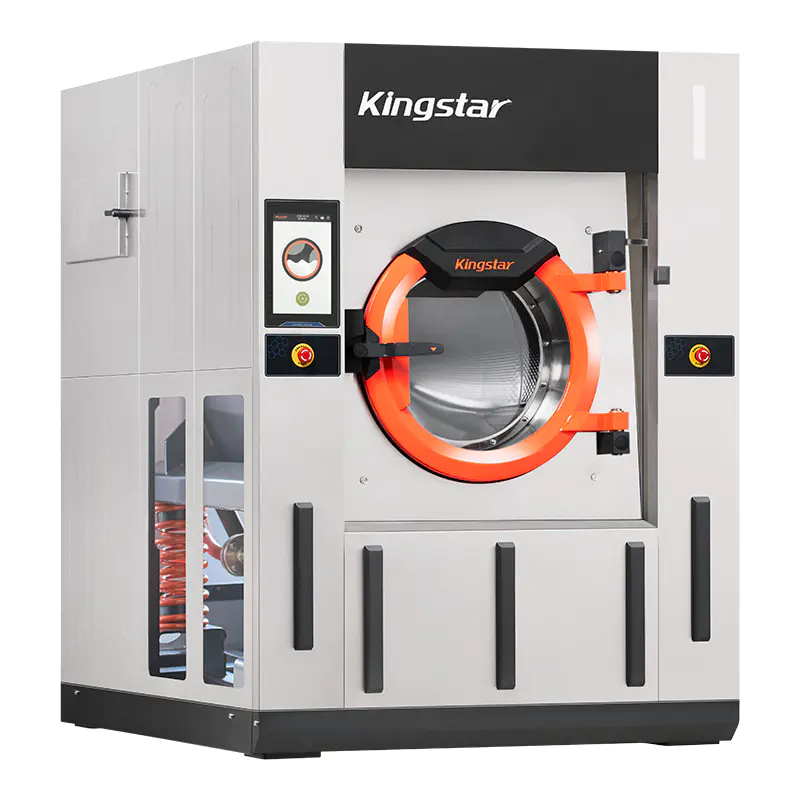
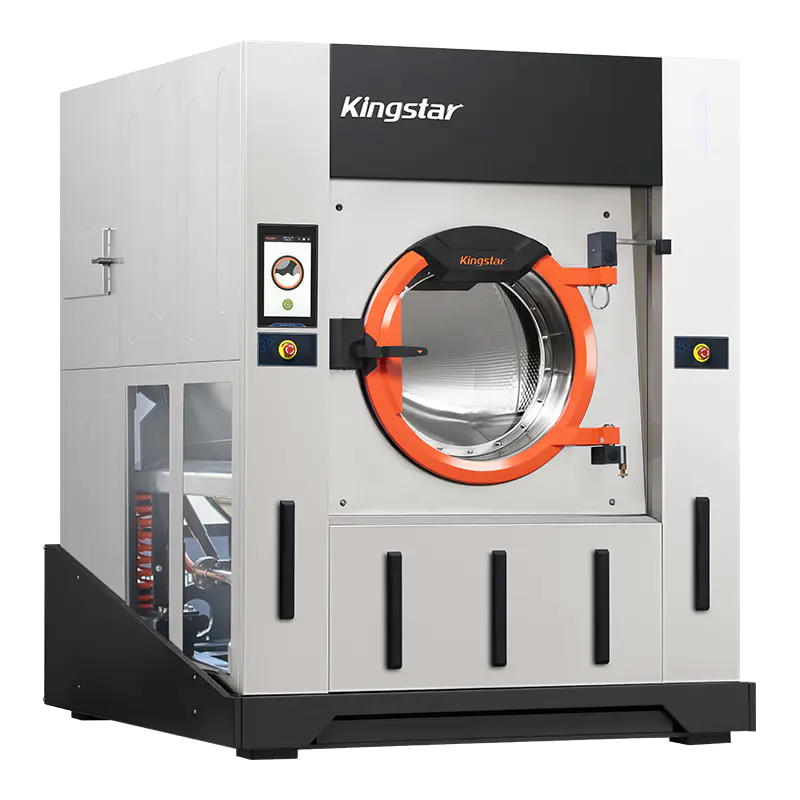
Laundry is one of the last household chores to undergo a serious technological overhaul — but that's changing fast. The next generation of laundry technology is converging around four forces: connectivity, water efficiency, on-site convenience, and smarter machines built specifically for shared environments like apartments and laundromats. Whether you manage a multifamily property, operate a coin laundry business, or are simply planning a building's laundry room, understanding what's coming — and what's already here — is increasingly a financial decision, not just a preference.
On-site laundry refers to washers and dryers located within a residential building, workplace, hotel, or institution — rather than in a separate commercial laundromat. It sounds straightforward, but the distinction carries significant implications for equipment selection, amenity value, and operational complexity.
For multifamily housing, on-site laundry has shifted from a basic amenity to a competitive differentiator. A 2023 National Apartment Association survey found that in-building laundry ranked among the top five amenities renters consider when choosing where to live, outranking features like gym access and rooftop terraces in many mid-market segments. In-unit washers and dryers ranked even higher — but they require individual plumbing hookups that older buildings often can't accommodate without expensive retrofits.
This gap between what renters want and what buildings can realistically offer is precisely where on-site shared laundry rooms — equipped with modern, connected machines — fill a critical role. The "on-site" model also applies to hotels, hospitals, universities, and corporate campuses, each of which has distinct usage patterns and equipment needs.
| Factor | On-Site Shared Laundry | In-Unit Washer/Dryer |
|---|---|---|
| Upfront cost for building | Lower (shared infrastructure) | Higher (per-unit plumbing) |
| Renter preference | Moderate | Strong |
| Machine capacity | High (commercial-grade) | Limited (residential) |
| Revenue potential for owner | Yes (pay-per-use) | No (included in rent) |
| Maintenance responsibility | Centralized (building) | Often tenant or landlord dispute |
| Feasibility in older buildings | High | Often low |
Laundry machines marketed for apartment use span a wide spectrum — from true commercial-grade units designed for shared laundry rooms to compact ventless machines built for individual units. The terminology overlaps enough to create real confusion when buying, so it's worth being precise.
These are true commercial-grade or light-commercial machines designed to handle heavy, continuous use by multiple households. Brands like Speed Queen, Maytag Commercial, Electrolux Professional, and Huebsch dominate this segment. Key specifications that matter in this context include:
For apartments without dedicated washer/dryer hookups, the emerging category is ventless heat pump dryers and combination washer-dryer units. These machines don't require external venting — a major barrier in older apartment buildings — and can run on standard 120V or 240V outlets.
LG's WashTower, the GE Profile UltraFast with OdorBlock, and Bosch's 500 Series compact combo are three examples that have gained traction in apartment markets. The GE Profile's flagship model, for instance, can wash and dry a load in under 2 hours without any external venting — a genuine breakthrough for pre-war urban apartment buildings where vent installation would otherwise require exterior wall penetrations.
The laundromat equipment market has undergone a quiet but significant evolution over the past decade. What used to be a relatively simple hardware purchase — buy machines, install, collect coins — now involves network connectivity, software platforms, efficiency certifications, and integration with payment ecosystems.
The best commercial washers for laundromats in 2024 are not just machines — they're data-generating assets that feed usage metrics, maintenance alerts, and revenue reports directly to an operator's phone or dashboard.
| Brand | Known For | Connectivity Platform | Typical Price Range (per unit) |
|---|---|---|---|
| Speed Queen | Durability, parts network | COMMAND platform | $1,800–$5,500 |
| Electrolux Professional | Energy efficiency, European tech | myPROFESSIONAL Connect | $2,500–$7,000 |
| Continental Girbau | High-capacity, OPL strength | e-Link | $3,000–$9,000 |
| Maytag Commercial | Brand recognition, reliability | Whirlpool Commercial Connect | $1,500–$4,500 |
The laundry industry is not typically associated with rapid innovation — but the pace of change over the next five to ten years is expected to be substantial. Several technologies that have been in development or limited deployment are now crossing into mainstream adoption.
Heat pump dryers recirculate hot air rather than exhausting it, using dramatically less energy than traditional vented dryers. While heat pump technology has been common in European residential appliances for years, it's now entering the commercial segment in the U.S. Heat pump commercial dryers use 40–50% less energy than conventional electric resistance dryers — a meaningful operating cost reduction for any high-volume laundry operation.
The tradeoff has historically been longer cycle times. But newer commercial heat pump dryers from Miele Professional and Electrolux are narrowing that gap, reaching cycle times within 10–15 minutes of conventional dryers while maintaining the efficiency advantage. Expect this technology to become standard in both apartment laundry rooms and laundromats within the next five years as energy costs continue rising.
Several manufacturers are developing or have already deployed washers with sensors that detect load weight, fabric type, and soil level — then automatically adjust water volume, temperature, and cycle length. Samsung's AI Wash feature and LG's AI DD (Direct Drive) technology are early residential implementations of this concept.
In the commercial context, this matters because overloading and incorrect cycle selection are among the leading causes of accelerated machine wear and poor wash results in shared laundry environments. A machine that automatically compensates for user behavior — rather than depending on it — should last longer and deliver more consistent results.
Auto-dosing systems — where detergent is dispensed automatically in calibrated amounts — are already available on commercial machines from Electrolux and Kannegiesser. These systems reduce chemical waste by 20–30% and eliminate the damage caused by detergent overdose, which is a chronic problem in coin laundries where customers often use far more soap than necessary.
Ozone laundry systems inject ozone (O₃) into the wash water, which acts as a powerful oxidizer capable of sanitizing fabrics at cold water temperatures. The implications are significant:
Ozone systems are currently most common in institutional laundry (hospitals, large hotels) but are beginning to appear in premium laundromat builds as a differentiator. Properties using ozone washing report energy savings of 30–40% per cycle and extended linen lifespans of 20–25%.
Water recycling systems — which filter and reuse rinse water for subsequent wash cycles — are also gaining traction in high-volume commercial settings. Systems from manufacturers like Poseidon and Sea-Tec can recover up to 50% of the water used in a laundry cycle, a compelling proposition in water-scarce regions or facilities facing rising water rates.
Unplanned machine downtime is one of the most costly problems in commercial laundry operations. A broken washer during peak hours means lost revenue and frustrated customers. Predictive maintenance — using sensor data and machine learning to anticipate mechanical failures before they occur — is emerging as a practical solution.
Speed Queen's COMMAND platform, for example, tracks vibration patterns, cycle completion rates, error codes, and usage data across connected machines. Anomalies that precede common failures — worn bearings, failing door seals, pump degradation — can be flagged weeks before a breakdown occurs. Early adopters of predictive maintenance programs report 25–40% reductions in unplanned downtime, with commensurate improvements in machine lifespan.
One of the more significant structural shifts in the laundry industry is the rise of the managed laundry room model for apartment buildings. Rather than a property owner purchasing machines outright and managing them independently, a laundry service company installs and maintains the equipment in exchange for a revenue share.
Companies like WASH, CSC ServiceWorks, and Hercules operate on exactly this model, and they've invested heavily in connected infrastructure to manage their distributed machine fleets. For apartment building owners, this arrangement eliminates capital expenditure and maintenance responsibility. For the service provider, connectivity is essential — remote monitoring of hundreds or thousands of machines across dozens of properties would be operationally impossible without real-time data.
The connected laundry room also enables features that were previously unavailable in shared environments:
Commercial laundry operations consume significant resources. A mid-size laundromat with 30 machines running 8 hours daily can use over 3,000 gallons of water and 400+ kWh of electricity per day. At that scale, efficiency improvements translate directly into meaningful cost savings and environmental impact.
Regulatory pressure is adding to market-driven sustainability demands. Several U.S. states — including California, Colorado, and New York — have tightened energy and water efficiency standards for commercial appliances, effectively mandating newer machine technologies for replacement purchases. California's Title 20 efficiency standards, for instance, have already removed the least-efficient commercial washers from the state's legal market.
For laundromat operators and apartment building managers, this means that equipment replacement cycles are increasingly driven by regulation and utility economics — not just machine age. Investing in Energy Star-certified, network-connected commercial washers now is both a compliance hedge and an operating cost strategy.
Beyond machines themselves, the design of laundry spaces is also evolving. Solar-assisted water heating, gray water recycling loops, and LED-optimized laundry rooms designed to reduce HVAC load are all being incorporated into new laundromat builds and major apartment renovations — particularly in markets where utility costs are highest.
Given the pace of change, making equipment decisions that lock you into outdated infrastructure is a costly mistake. Here are the practical priorities that apply whether you're equipping a laundromat or an apartment laundry room:
ADD:No.388 Xinggang Road, Chongchuan District, Nantong City, 226000, Jiangsu Province, China.
Phone: +86-13917089379
Tel:+86-13917089379
Fax:+86-0513-85663366
E-mail:[email protected]
Cookies give you a personalized experience,Сookie files help us to enhance your experience using our website, simplify navigation, keep our website safe and assist in our marketing efforts. By clicking "Accept", you agree to the storing of cookies on your device for these purposes. Click "Adjust" to adjust your cookie preferences.For more information, review our Cookies Policy.