英语
英语 俄语
俄语 西班牙语
西班牙语 德语
德语
Home / News / Industry News / Practical Guide for Laundry Shops: Step-by-Step Treatment and Efficiency Solutions for Water-Soluble and Lipophilic Pigment Stains

Kingstar is your trusted partner for industrial and commercial laundry equipment. We specialized in the R&D and manufacturing of high-end industrial washers, commercial washers and dryers. Meanwhile, we provide global clients with comprehensive planning, layout workflow design, and software-hardware integration services for smart laundry plants.
Industry News
Apr 27,2026
Practical Guide for Laundry Shops: Step-by-Step Treatment and Efficiency Solutions for Water-Soluble and Lipophilic Pigment Stains
When facing the clothes sent by customers with ink or cosmetics, how to effectively treat fabrics without damage is the key to measuring the professionalism of a laundry shop. The following is a standardized treatment process and efficiency improvement ideas for water-based pigment stains (various inks) and lipophilic pigment stains (ballpoint pen ink, lipstick...). The aim is to improve the one-time cleaning rate and control the cost of rewash.
Core Treatment Principle
The first step is always identifying the stain types by gently dabbing the edge of the stain with a white cotton cloth:
- If primarily water-soluble spreading occurs, it is most likely a water-soluble pigment stain.
- If oily dissolved marks appear on the cloth, it is generally a lipophilic pigment stain.
Standard Process for Water-Soluble Pigment Stains
The golden rule is first, absorbing to prevent spreading, and then treating different colors with targeted methods.
● The universal pre-treatment is the absorption method:
- place a clean towel or absorbent pad under the stain
- use another slightly damp white cloth to gently blot from the outer edge toward the center to absorb loose color
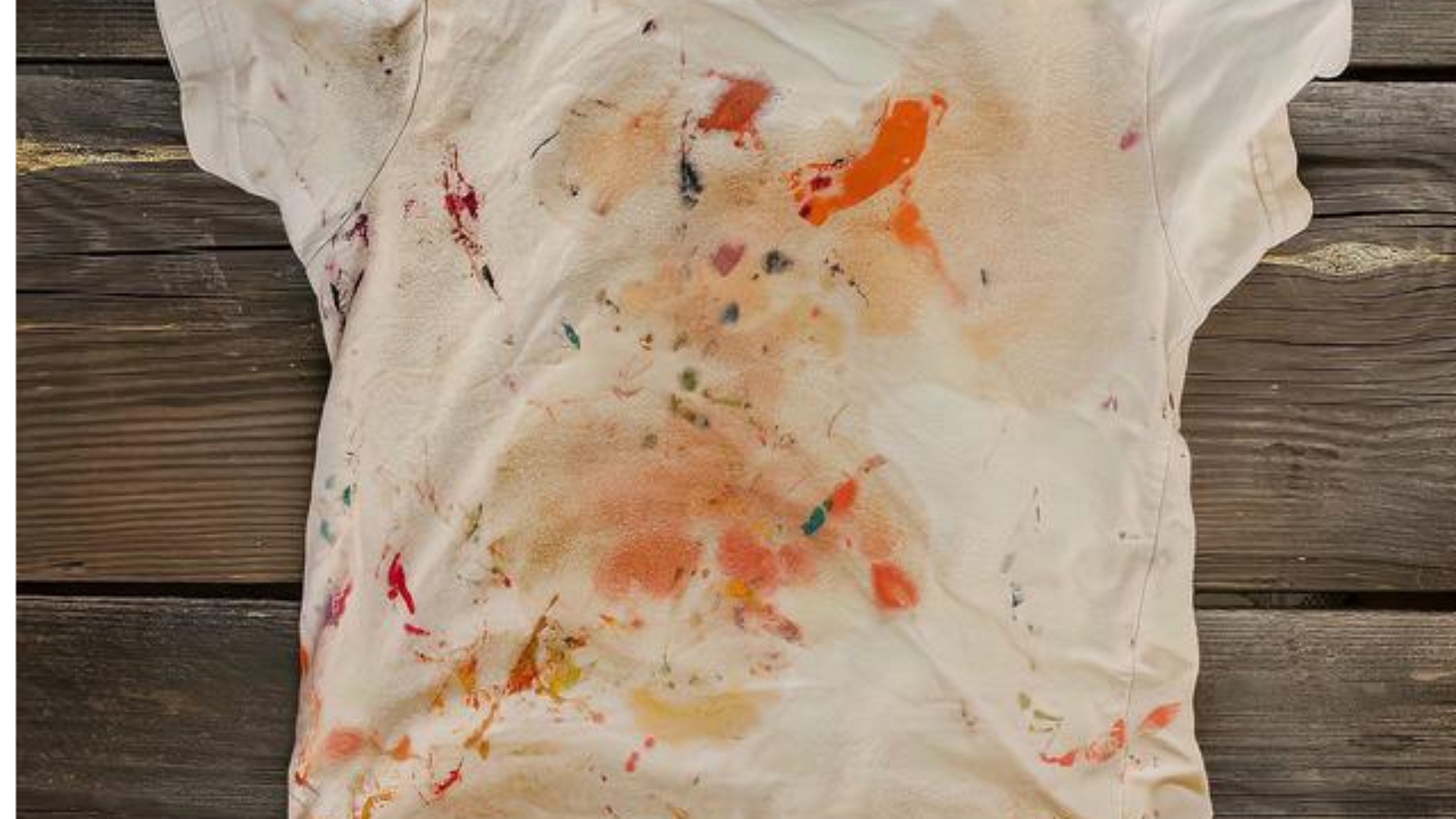
- avoid rinsing with water or rub from enlarging the stained area
| Stain Type | Key Treatment Agents | Core Steps & Notes |
| Non-Red Ink (Blue-Black, Carbon) | Glycerin, Acetic Acid, Neutral Detergent, Oxalic Acid | Non-red ink (blue-black, carbon) 1.After adsorbing loose color, apply a mixture of glycerin + neutral detergent and gently brush. 2.If color remains after rinsing, dab with a low-concentration oxalic acid solution. 3. For stubborn carbon ink, try dissolving the resin components with butyl acetate first, then use cold cooked starch paste to adhere and lift the carbon black particles. |
| Red Ink | Soap Solution, Ammonia, Glycerin, Sodium Hydrosulfite (2% Solution) | 1.After adsorbing loose color, treat with soap solution + glycerin + ammonia. 2. For residual red stains, use a 2% sodium hydrosulfite (hydrosulfite of soda) solution for reduction removal; the effect is significant. |
| Chinese Ink (Sumi Ink) | Butyl Acetate, Cooked Starch Paste, Cooked Rice Paste | 1.Do NOT rinse with water! Thoroughly adsorb excess ink. 2.Use butyl acetate to dissolve the resin components. 3. Gently rub with cooled cooked starch paste or cooked rice to lift carbon black from deep within the fibers. 4. Finish with a thorough wash. |
Standard Process for Lipophilic Pigment Stains
Core logic is removing oil first and then lifting color.
● Two-step treatment
- Dissolve the oil carrier
Select a solvent according to the table below and gently wipe from outside in with a cotton swab.
- Remove residual color
After oil removal, treat the remaining pigment with the water-soluble stain method.
| Stain Type | Recommended Solvents (in order of priority) | Special Remarks |
| Ballpoint Pen Ink, Stamp Ink | Alcohol → 120# Solvent Gasoline | Alcohol is effective for most ballpoint pen inks and offers a lower cost. |
| Lipstick, Rouge | Alcohol + Mixed Solution with a Little Xylene | Perform a fabric color fastness test before use. |
| Paint (Fresh) | Lacquer Thinner (Xylol), Special Thinner | Treat immediately and absorb the stain quickly. |
| Paint (Old/Set) | Glycerin/Peanut Oil (Soak to Soften First) → Thinner | Softening is crucial; otherwise, the stain will penetrate deeper into the fibers. |
| Nail Polish | Special Nail Polish Remover (Acetone) | Absolutely forbidden for acetate fabric (e.g., certain linings) as acetone will dissolve the fabric. |
● Important safety operating rules
- Ventilation should be good during treatment. Operators must wear gloves.
- All solvents must first be tested on an inconspicuous area of clothes.
- All other steps should be after the solvent fully dissolves the stain and is absorbed by the underlying towel (until the towel no longer picks up color).
Professional Laundry Equipment
Careful pre-treatment is only half the success. The stability and gentleness of the main wash directly determine whether stain removal results are fully preserved, and affect the long-term service life of linens and clothes.
● Controlled variables for consistent results
After pre-treatment, fibers in the stained area become sensitive. Excessive fluctuations in temperature or mechanical force during the main wash may cause residual pigment to re-fix or damage fibers.
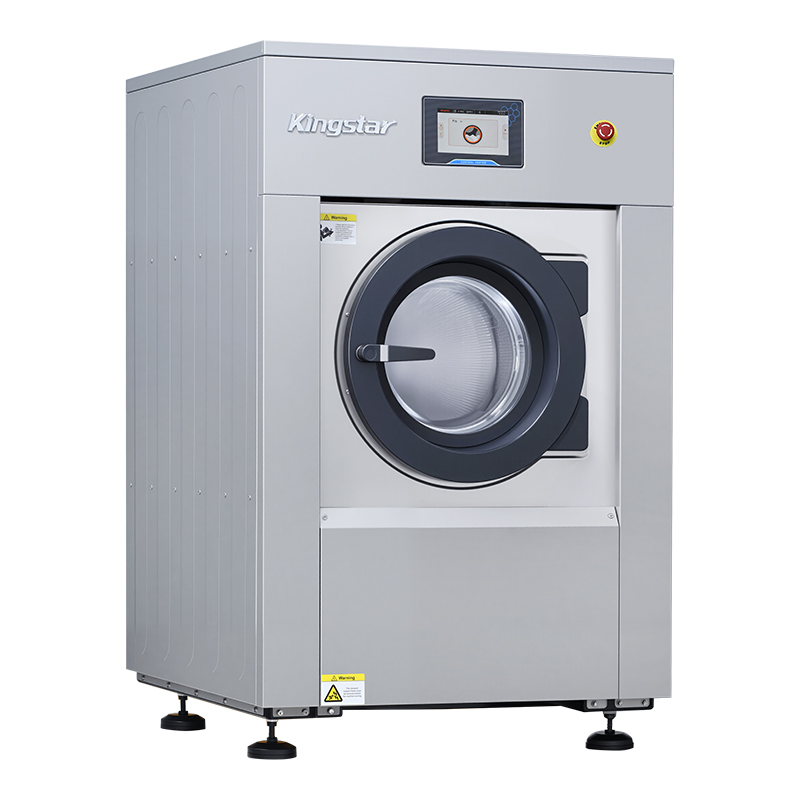
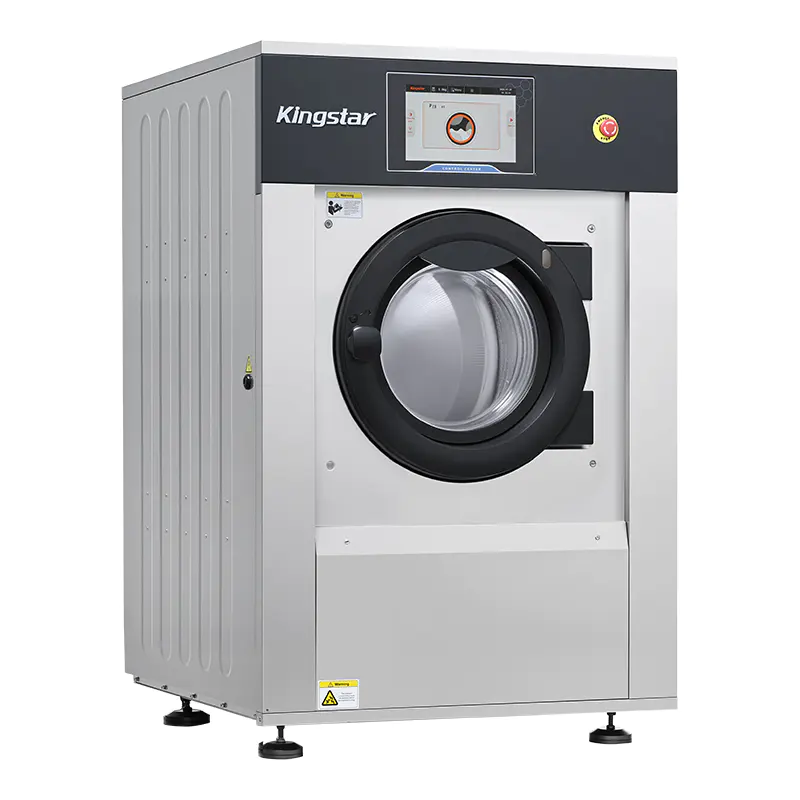
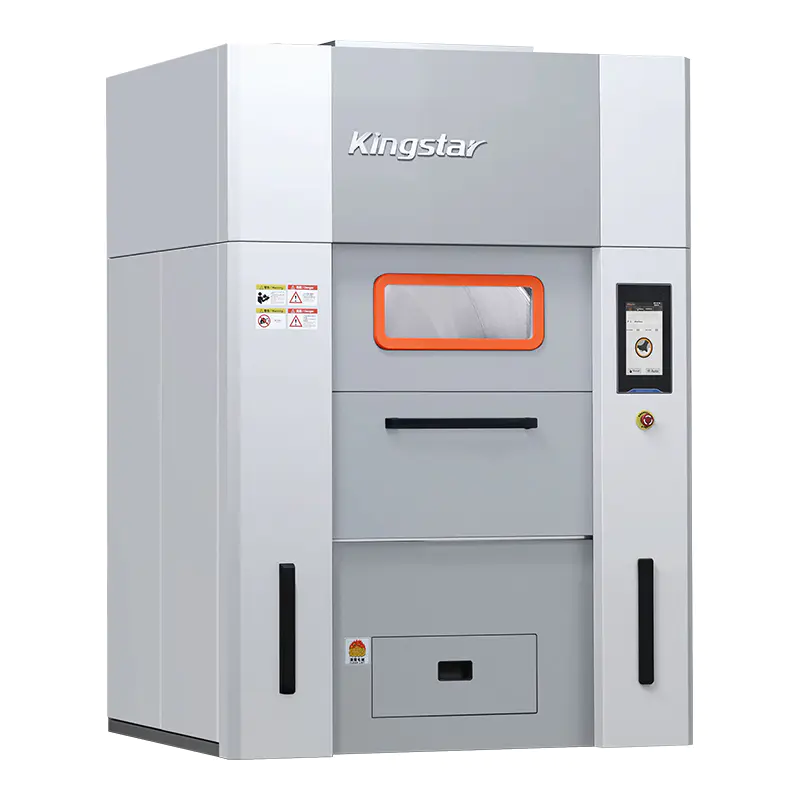
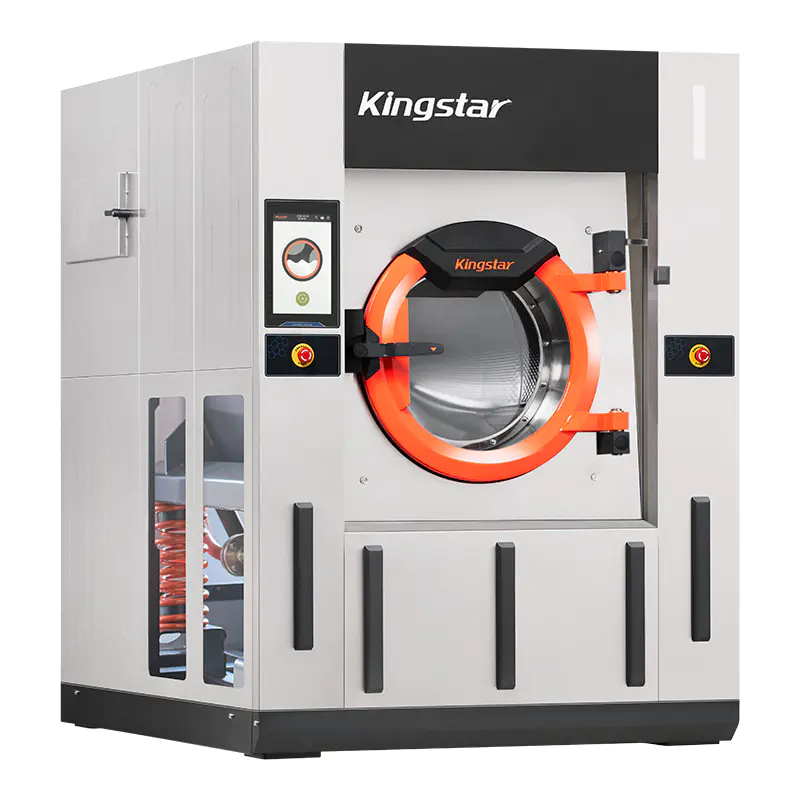
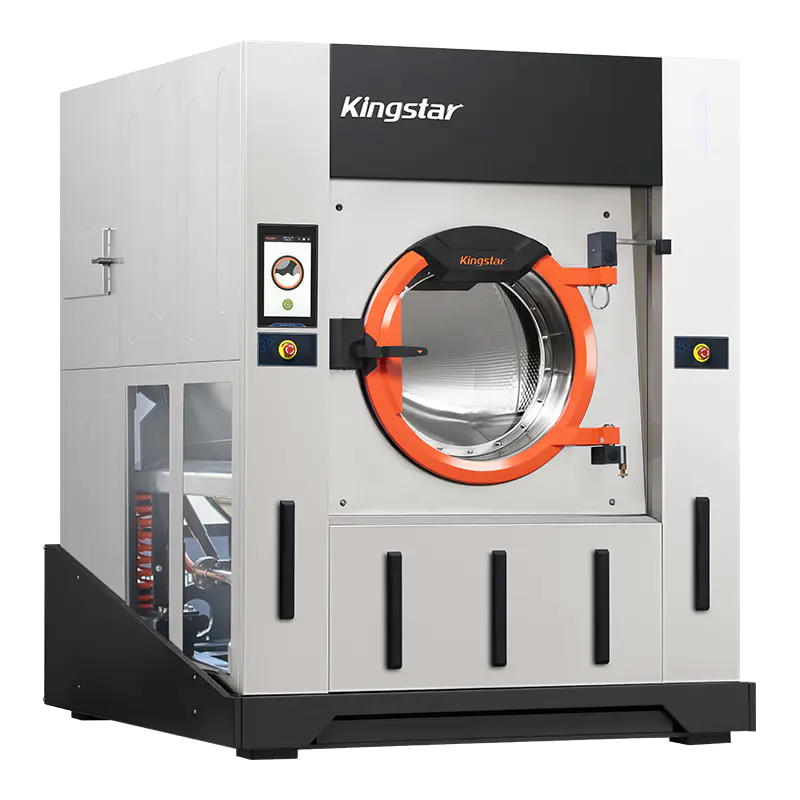
Equipment such as Kingstar washing machines, with precise temperature control and programmable washing cycles, provides a stable environment for stain removal agents. This consolidates pre-treatment effects under controlled conditions and avoids rework.
● Gentle washing for fabric protection
Intensive stain removal may temporarily weaken fibers. Strong mechanical pulling or excessive heat during subsequent spin and drying cycles can further stress fabrics.
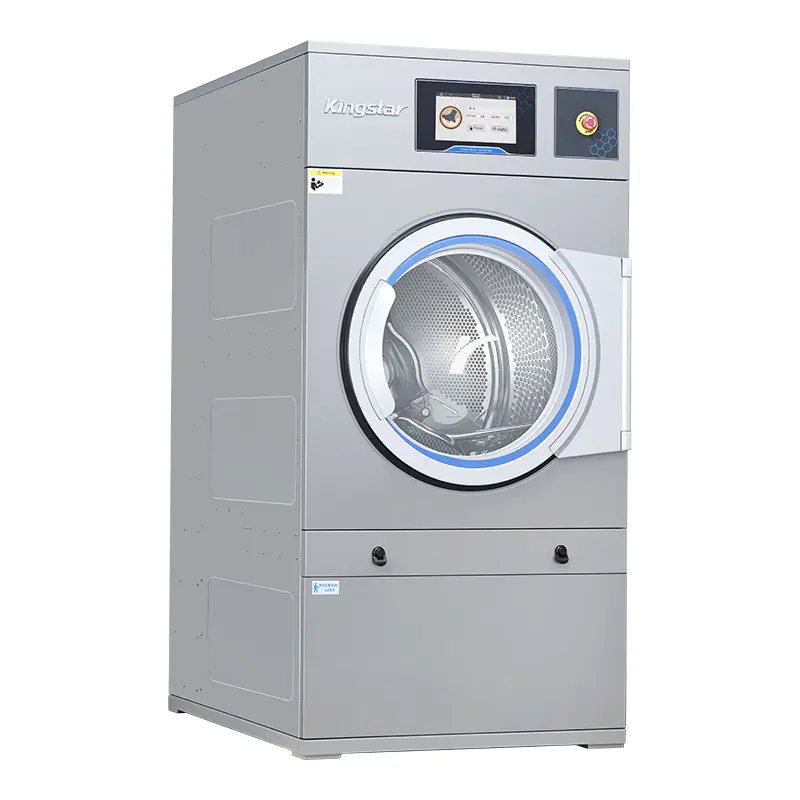
Equipment with high-level load balancing, low-temperature drying, and humidity monitoring reduces physical damage, preserves fabric hand feel and strength as much as possible. It is important for high-end hotel linens and customer clothes.
● Operational recommendation
Combining professional stain removal procedures with reliable laundry equipment to build a standardized system of detailed pre-treatment + stable main wash is key for laundries to increase customer trust, establish technical advantages, and achieve cost reduction and efficiency improvement.
Q&A
Q1: What is the fastest and safest way to treat ballpoint pen and lipstick stains from customers?
A1: These are lipophilic pigment stains, so the key is to dissolve oil first.
Use alcohol for ballpoint ink, and apply dish soap concentrate or a special degreaser directly to lipstick stains, with an absorbent pad behind the fabric.
Important: Do not let customers or front desk staff rub the stains themselves. All treatment must be done in the pre-treatment area to avoid spreading and setting, which increases difficulty.
Q2: Regular washing fails on Chinese ink or carbon ink stains. What is the key to professional treatment?
A2: The key is decomposition and absorption. Regular washing cannot remove carbon black and resin.
The standard process is:
- Dissolve the color-fixing resin with butyl acetate;
- Use cooled cooked starch paste or cooked rice to lift carbon black particles deep within fibers.
This requires careful pre-operation, followed by a gentle and stable main wash to lock in results and prevent residue.
Q3: For red ink stains, should I use bleach or sodium hydrosulfite?
A3: Never use strong oxidizers such as chlorine bleach directly because they can easily damage fabrics.
The standard method is to apply a 2% sodium hydrosulfite solution for reduction treatment after pre-treatment.
It selectively breaks down red dye, causes minimal fabric damage, and delivers thorough, safe results. It is the standard choice for professional laundries.
ADD:No.388 Xinggang Road, Chongchuan District, Nantong City, 226000, Jiangsu Province, China.
-
Phone: +86-13917089379
-
Tel:+86-13917089379
-
Fax:+86-0513-85663366
-
E-mail:louislu@kingstarlaundry.com
products