英语
英语 俄语
俄语 西班牙语
西班牙语 德语
德语
Home / Author / Suyin Huo — Regional Sales Executive / 100 kg Forward-Tilting Washer Extractor with Forward and Reverse Functions

Kingstar is your trusted partner for industrial and commercial laundry equipment. We specialized in the R&D and manufacturing of high-end industrial washers, commercial washers and dryers. Meanwhile, we provide global clients with comprehensive planning, layout workflow design, and software-hardware integration services for smart laundry plants.
Suyin Huo — Regional Sales Executive
Oct 06,2026
100 kg Forward-Tilting Washer Extractor with Forward and Reverse Functions
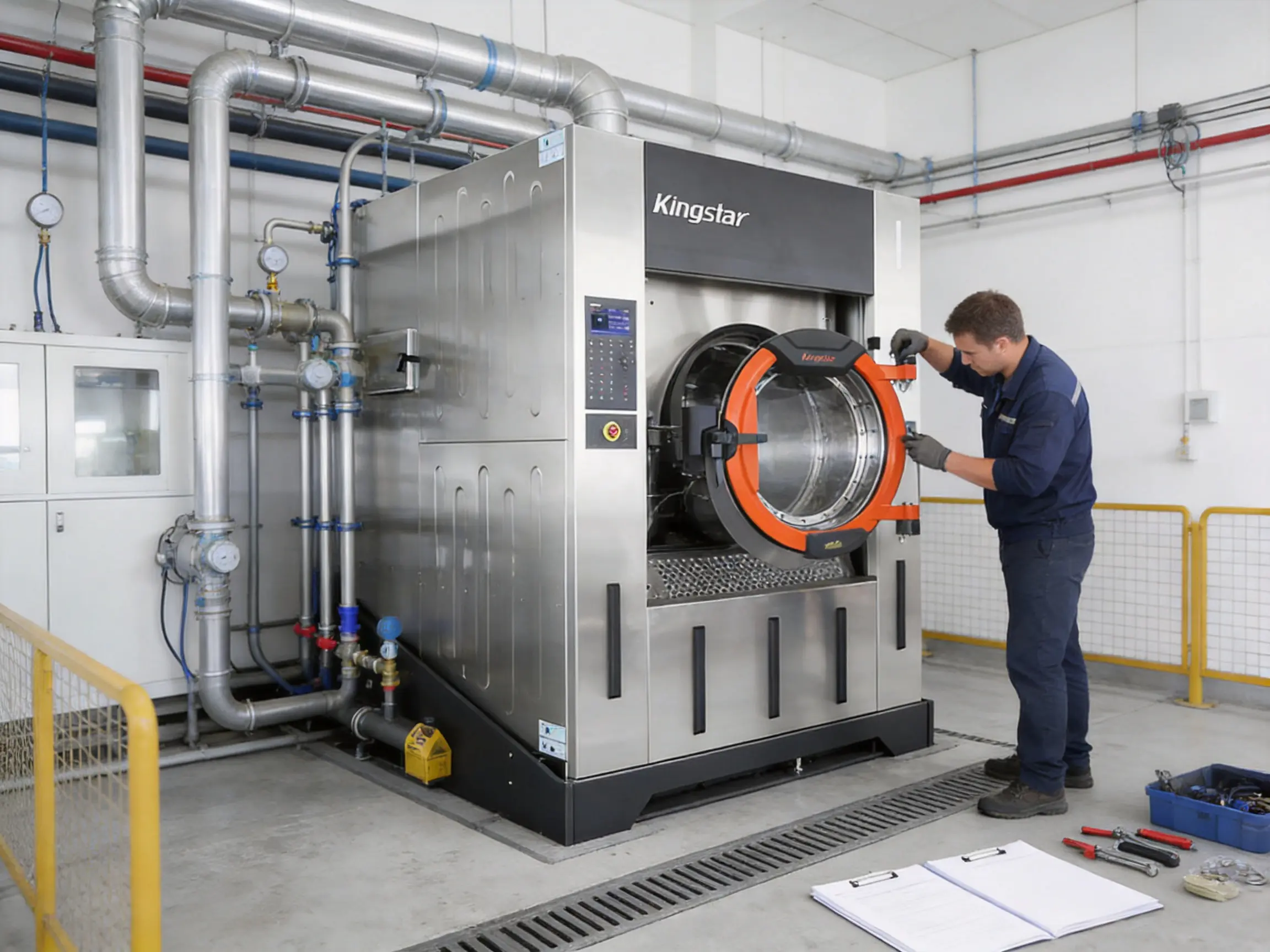
Large-scale laundry operations require more than a machine with a large drum. They need dependable washing performance, efficient extraction, safe handling, repeatable programs, and a practical method for unloading heavy wet linen. The 100 kg forward-tilting washer extractor is designed to address these requirements in one integrated industrial laundry solution. With a rated capacity of 100 kg, a 1,000-liter drum volume, a maximum speed of 745 revolutions per minute, and a tilting angle of 15 degrees, this machine is built for demanding commercial and industrial applications.
Its most distinctive feature is the combination of forward tilting and forward-and-reverse drum rotation. After a washing and extraction cycle, linen can become compacted, heavy, and entangled. Removing it manually by pulling can increase labor requirements and may place unnecessary stress on the fabric. The forward-and-reverse function helps loosen and move the load, while the forward-tilting structure assists the operator during discharge. Together, these features create a cleaner, more controlled, and more thorough unloading process.
This article examines the machine’s operating principle, technical specifications, productivity benefits, laundry applications, safety considerations, maintenance requirements, and competitive advantages. It also explains how Jiangsu Chuandao Intelligent Equipment Co., Ltd. supports industrial laundry equipment production through specialized engineering, equipment integration, and manufacturing experience in washing machines, washer extractors, and related laundry machinery.
Why Large-Capacity Laundry Operations Need More Than Washing Power
Hotels, hospitals, nursing facilities, textile rental companies, uniform suppliers, industrial laundries, and institutional laundry rooms process large quantities of linen every day. Their equipment must handle towels, sheets, uniforms, workwear, bedding, table linen, healthcare textiles, and other materials with different weights, moisture levels, and soil conditions.
In these environments, the washing stage is only one part of the workflow. The machine must also support loading, chemical distribution, water management, extraction, unloading, and transfer to dryers or finishing equipment. A machine that washes effectively but is difficult to unload can still create a bottleneck. Similarly, a machine with a high nominal capacity but poor extraction performance may increase dryer time and utility costs.
The 100 kg forward-tilting washer extractor is designed around the complete workflow. Its large drum accommodates substantial loads, while its extraction capability reduces the amount of residual moisture retained by the linen. The forward-and-reverse drum action is especially valuable at the end of the cycle because it helps separate and discharge textiles instead of leaving them compressed inside the drum.
For high-volume operators, these features can contribute to improved labor utilization. Operators spend less time reaching into the drum, pulling out compacted linen, or repeatedly adjusting the load by hand. The machine can also help establish a more consistent transfer process between washing, extraction, drying, and finishing departments.
Core Product Design
100 kg Rated Capacity
The machine has a rated capacity of 100 kg, making it suitable for industrial laundry facilities that need to process large batches. A large capacity allows operators to combine more compatible items in a single cycle, which can reduce the number of cycles required during a shift. This is particularly useful where large volumes of hotel sheets, hospital bedding, towels, workwear, or rental textiles must be processed continuously.
Capacity must always be matched to the type and condition of the textile. Dense materials, heavily soiled items, and textiles that require more mechanical space may need a lower working load than lightweight linen. Correct loading is important for washing action, chemical distribution, rinsing, extraction balance, and equipment longevity.
When operated within the recommended load range, a 100 kg machine provides a practical balance between batch size and process control. It is large enough for industrial throughput while remaining suitable for facilities that need flexible handling of different linen categories.
1,000-Liter Drum Volume
The stated drum volume is 1,000 liters. Drum volume influences how textiles move through the wash liquor and how much space is available for mechanical action. A suitable volume-to-capacity ratio helps prevent excessive compression of linen during washing and extraction.
Appropriate drum space is important for bulky items such as blankets, duvet covers, mattress pads, and thick towels. If a load is too tightly packed, water and chemicals may not circulate evenly, and the textiles may not receive consistent mechanical action. The large drum volume of this washer extractor supports the processing of substantial loads while allowing the textiles to move within the drum.
High-Speed Extraction
The maximum speed is specified as 745 rpm, with a G factor of 400. The G factor expresses the relative centrifugal force applied during extraction. A higher extraction force generally removes more water from the textile, subject to fabric type, load balance, and program settings.
Effective extraction has a direct effect on downstream drying. Linen that leaves the washer with less residual moisture typically requires less time and energy in the dryer. It may also reduce thermal exposure, which can be beneficial for fabrics that are sensitive to prolonged drying temperatures.
Extraction performance must be controlled carefully. Different textiles have different tolerances for centrifugal force. Heavy or delicate items may require an appropriate program rather than simply operating at the maximum speed. The combination of programmable operating practices and a high extraction capability gives industrial laundries greater flexibility across different textile categories.
Forward Tilting for Unloading
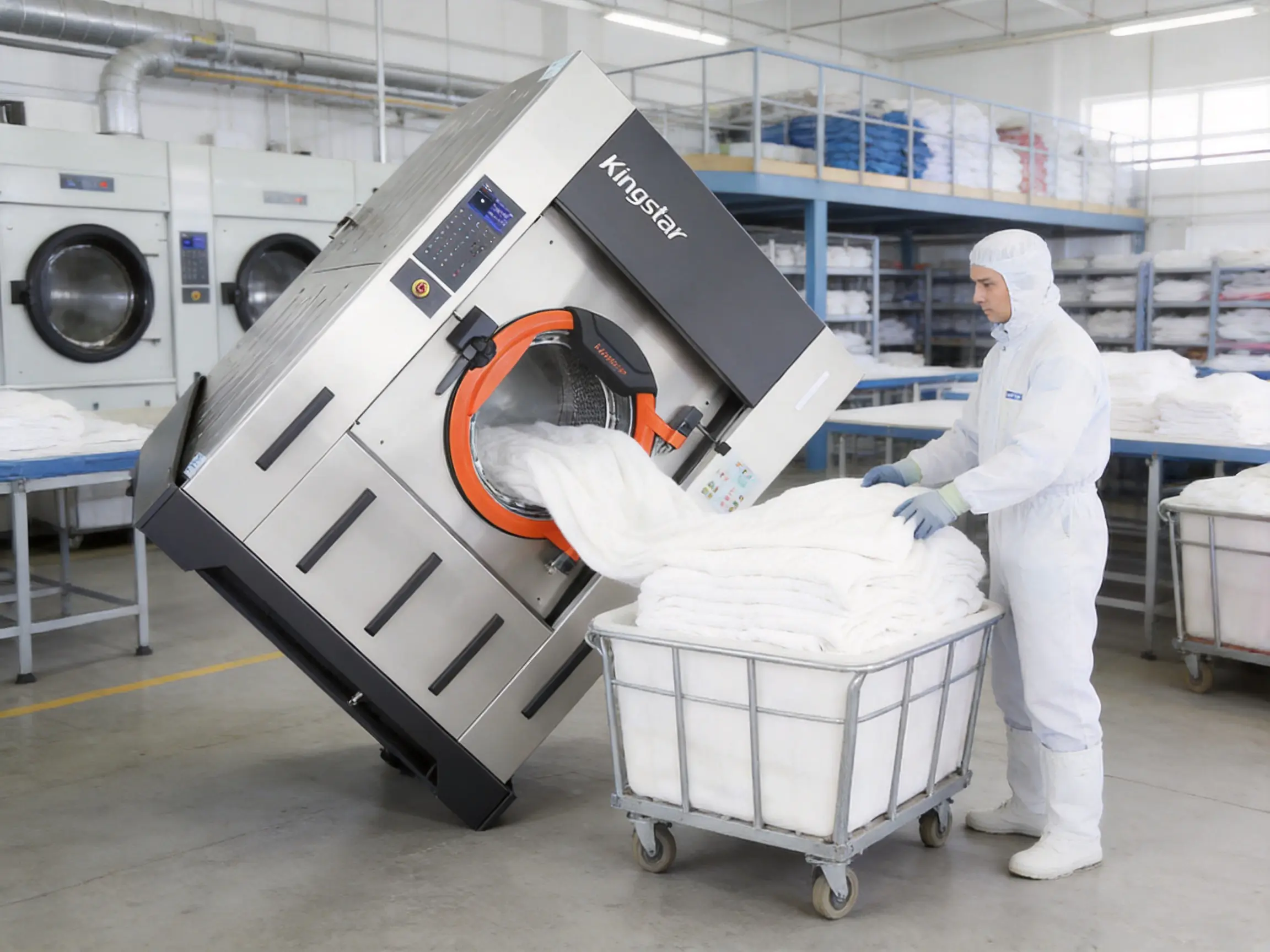
The machine has a 15-degree tilting angle. Forward tilting changes the position of the drum opening relative to the unloading area, helping the operator guide the linen outward. This is particularly valuable when the load remains heavy after extraction.
Wet textiles can be difficult to remove because they compact against the drum surface and may form a dense mass. A forward-tilting mechanism reduces the need for deep manual reaching and helps bring the load toward the discharge side. The operator can then transfer the linen more efficiently to a trolley, conveyor, dryer, or other handling system.
Tilting also supports better workplace organization. When the machine is positioned correctly in relation to the receiving equipment, the unloading path can be made shorter and more predictable. This can help reduce unnecessary carrying, improve floor efficiency, and support a more orderly laundry workflow.
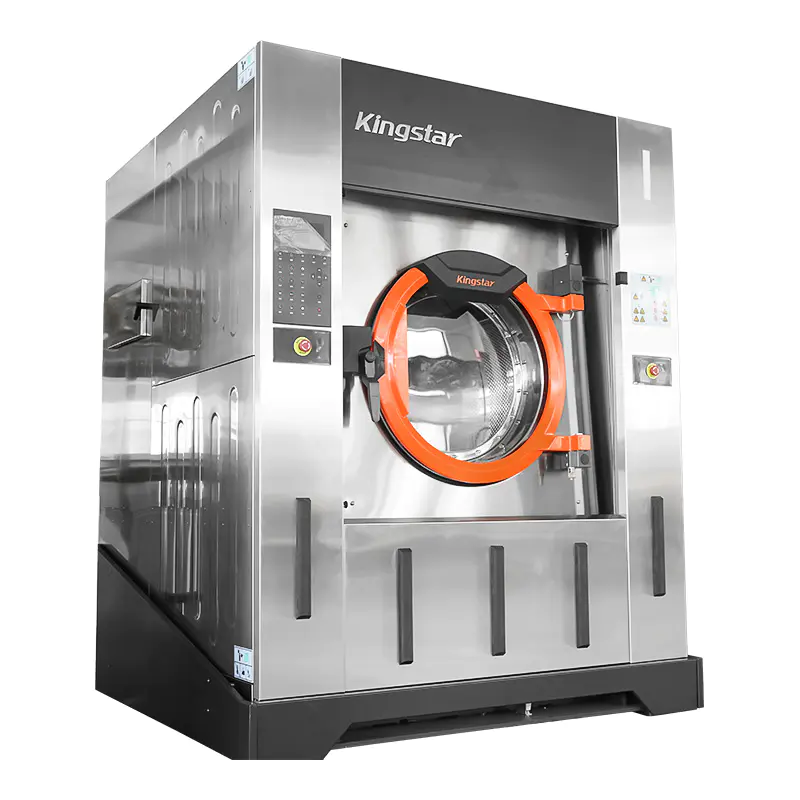
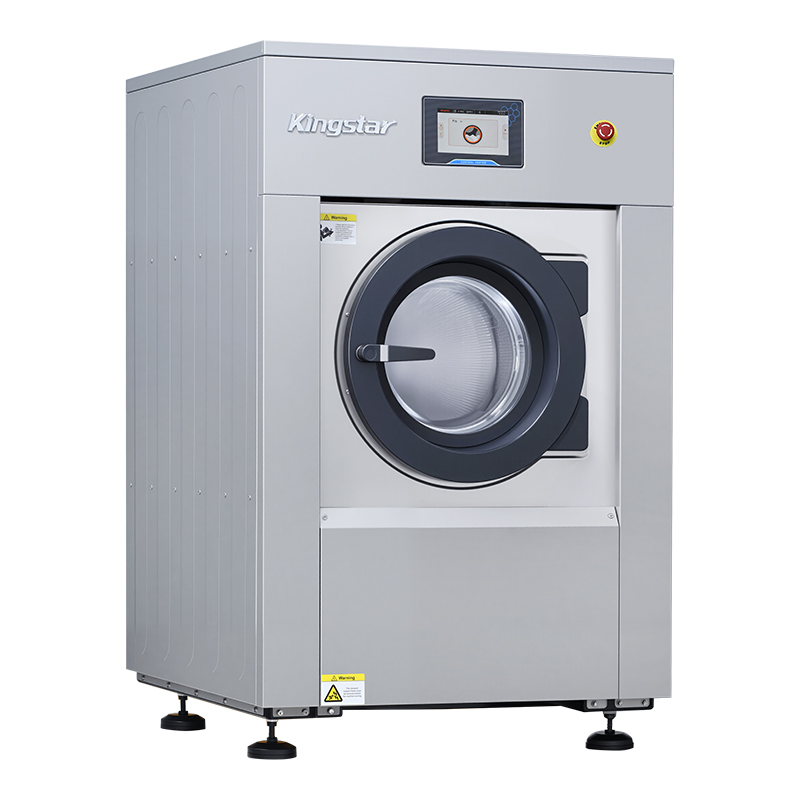
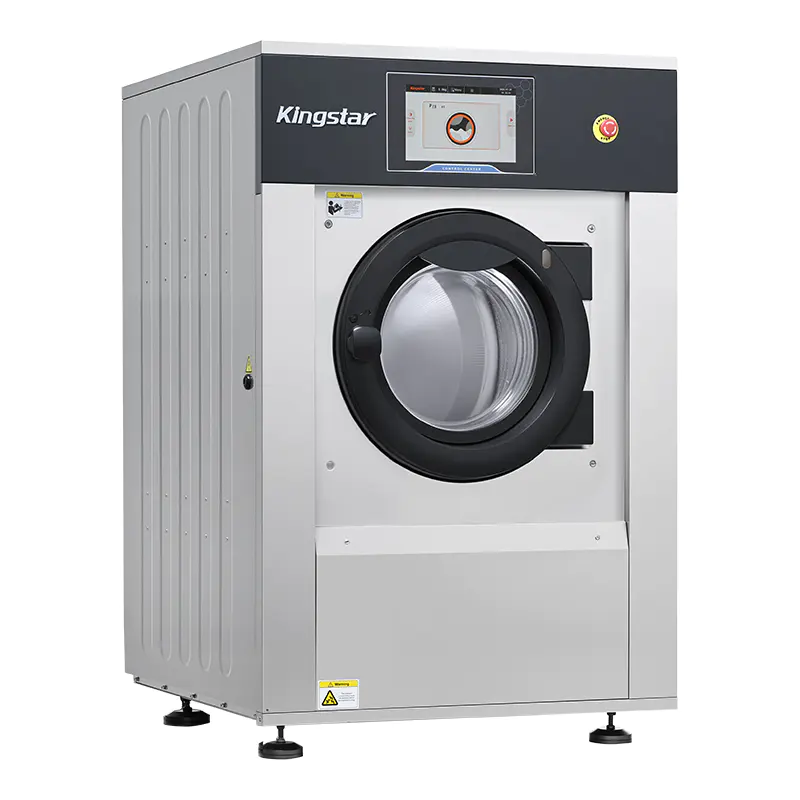
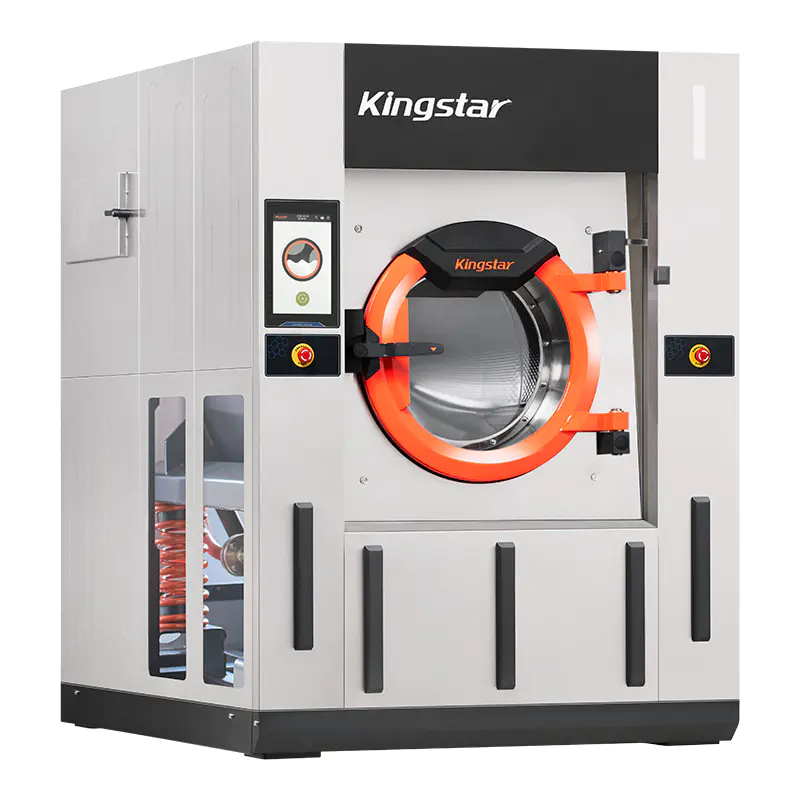
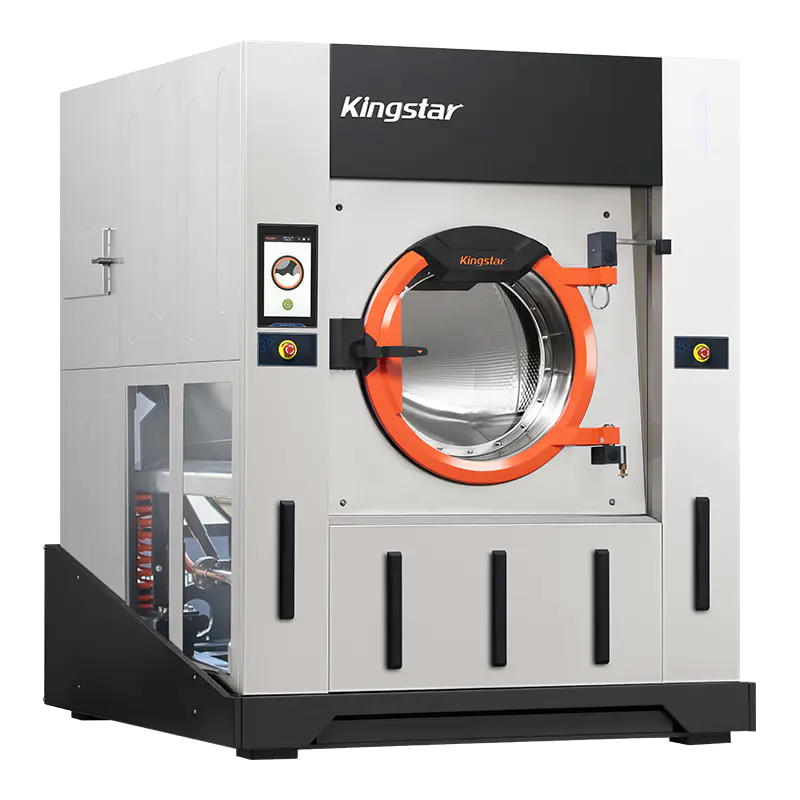
100kg Forward Tilting Washer Extractor With Forward and Reverse Functions
The Advantage of Forward-and-Reverse Drum Rotation
The forward-and-reverse function is one of the most important features of this washer extractor. The drum can rotate in both directions to assist with textile movement during unloading. This is especially useful after dehydration, when linen is heavier, more compact, and more likely to become entangled.
Reducing Manual Pulling
Without a drum rotation function during discharge, operators may need to pull the linen out by hand. A tightly packed load can require considerable force, especially when it contains towels, bedding, or other heavy materials. Excessive pulling may stretch seams, distort fabric, or damage delicate components such as closures and fasteners.
Forward-and-reverse rotation helps break up the compacted load. By changing the direction of movement, the drum can loosen areas where the linen has become wrapped or compressed. The operator can use the rotation to bring sections of the load toward the opening instead of relying only on manual force.
Cleaner and More Thorough Discharge
Complete unloading is essential in commercial laundry operations. If linen remains inside the drum, it may be mixed with the next load, remain damp, or require additional inspection. A discharge process that supports full removal improves load accountability and reduces the risk of cross-contamination between textile categories.
The forward-and-reverse action helps make the discharge cleaner and more thorough. It allows the operator to rotate the drum in a controlled way, changing the position of the textile mass and helping release material that may remain at the rear of the drum.
Improved Protection for Linen
Textile care is a major operating cost in hotels, hospitals, rental laundries, and uniform services. Damage can result in replacement expenses, customer complaints, shortened textile life, and reduced productivity. A discharge method that reduces aggressive pulling can help protect linen during one of the most physically demanding stages of the laundry cycle.
The forward-and-reverse function does not replace correct loading, suitable program selection, or proper chemical control. Instead, it adds a mechanical aid that supports gentler handling when the load is ready to leave the machine.
Technical Specifications
The following table summarizes the principal technical data supplied for the 100 kg forward-tilting washer extractor.
| Specification | Value |
|---|---|
| Model | SHS-2100T |
| Rated capacity | 100 kg |
| Drum volume | 1,000 L |
| Voltage | 380 V |
| Maximum speed | 745 rpm |
| Power | 15 kW |
| G factor | 400 G |
| Steam pressure | 0.4–0.6 MPa |
| Water inlet pressure | 0.2–0.4 MPa |
| Noise level | ≤70 dB |
| Steam pipe | DN25 |
| Water inlet pipe | DN50 |
| Hot water pipe | DN50 |
| Drain pipe | DN110 |
| Drum diameter | 1,310 mm |
| Drum depth | 750 mm |
| Tilting angle | 15 degrees |
| Approximate machine weight | 3,690 kg |
| Overall dimensions | 1,900 × 1,850 × 2,350 mm |
Installation conditions should be verified before ordering or commissioning. The listed voltage, pressure ranges, pipe sizes, dimensions, and machine weight affect building preparation, utility connections, floor loading, drainage design, ventilation, access routes, and service clearance. Local electrical and safety requirements should also be reviewed by qualified personnel.
Water, Steam, and Drainage Requirements
Water Supply
The listed water inlet pressure range is 0.2–0.4 MPa, with a DN50 water inlet connection. Adequate water pressure helps support filling, rinsing, and chemical distribution. An unstable or undersized water supply may extend cycle times or affect process consistency.
Facilities should evaluate the available water flow, temperature, filtration, and hardness. Water quality influences detergent performance, scale formation, textile appearance, and maintenance requirements. Where local water conditions are challenging, pretreatment or water-conditioning equipment may be considered.
Hot Water Integration
The washer extractor includes a DN50 hot water pipe specification. Hot water integration can support faster heating and may reduce the demand placed on on-board or external heating systems, depending on the laundry’s configuration.
A properly designed hot water system can improve process efficiency, especially when multiple machines operate simultaneously. However, the hot water source must provide stable temperature and sufficient flow for the intended production schedule. Plumbing design should include suitable shutoff valves, filters, insulation where appropriate, and access for maintenance.
Steam Connection
The specified steam pressure is 0.4–0.6 MPa, with a DN25 steam pipe. Steam heating is widely used in industrial laundries because it can provide rapid and controllable heat transfer. It is suitable for facilities that already operate a central boiler or steam distribution system.
Steam installations must include the appropriate controls and protective devices required by local regulations and the facility’s engineering standards. Condensate management, pipe support, insulation, pressure regulation, and maintenance access are important considerations.
Drainage
The listed drain pipe size is DN110. Large-capacity washing machines release substantial volumes of water, often with lint, detergent residue, and suspended soil. The drainage system must be designed to accept the discharge volume without backflow, pooling, or excessive delay.
A suitable drain layout helps maintain reliable cycle times and reduces the risk of water remaining in the machine after discharge. Drainage channels and floor surfaces should also be designed for easy cleaning, because industrial laundry areas require regular removal of lint, moisture, and chemical residue.
Operational Benefits for Industrial Laundries
Higher Throughput Potential
A 100 kg batch capacity can help industrial laundries process more linen per cycle than smaller commercial machines. This may reduce the number of loading and unloading events required during a shift. The actual throughput will depend on program length, fabric type, soil level, water temperature, extraction requirements, and the availability of dryers and finishing equipment.
Capacity alone does not determine productivity. The forward-tilting discharge system is equally important because unloading time can become a hidden constraint. Faster and more controlled unloading helps the next batch begin sooner and supports a smoother production rhythm.
Lower Downstream Drying Demand
The maximum extraction speed and 400 G factor are designed to remove a substantial amount of water before the linen enters the dryer. Reduced residual moisture can shorten drying cycles and help improve dryer utilization.
Lower drying demand may also support energy management. A dryer that receives better-extracted linen can spend less time evaporating water, although the actual savings depend on fabric composition, ambient conditions, dryer type, load size, and operating temperatures.
More Efficient Labor Use
Large industrial washers require coordinated labor for loading and unloading. Forward tilting and bidirectional rotation can reduce the physical effort needed to remove the load. Operators can spend less time manually reaching into the drum or pulling heavily compressed linen.
Reducing strenuous handling may support better ergonomic practices. It can also make the machine easier to operate consistently across different shifts and employee experience levels. Training remains essential, but the machine’s mechanical functions provide practical assistance during discharge.
Better Load Separation
Industrial laundries often process different categories of linen in sequence. Thorough unloading helps prevent residual items from remaining in the drum and becoming mixed with another category. This is particularly relevant when facilities process healthcare textiles, food-service linen, uniforms, and general hotel laundry.
Operators should still inspect the drum after every load and follow the facility’s procedures for textile segregation. The forward-and-reverse feature supports the process, but good housekeeping and operating discipline remain necessary.
Applications Across Multiple Industries
Hotels and Resorts
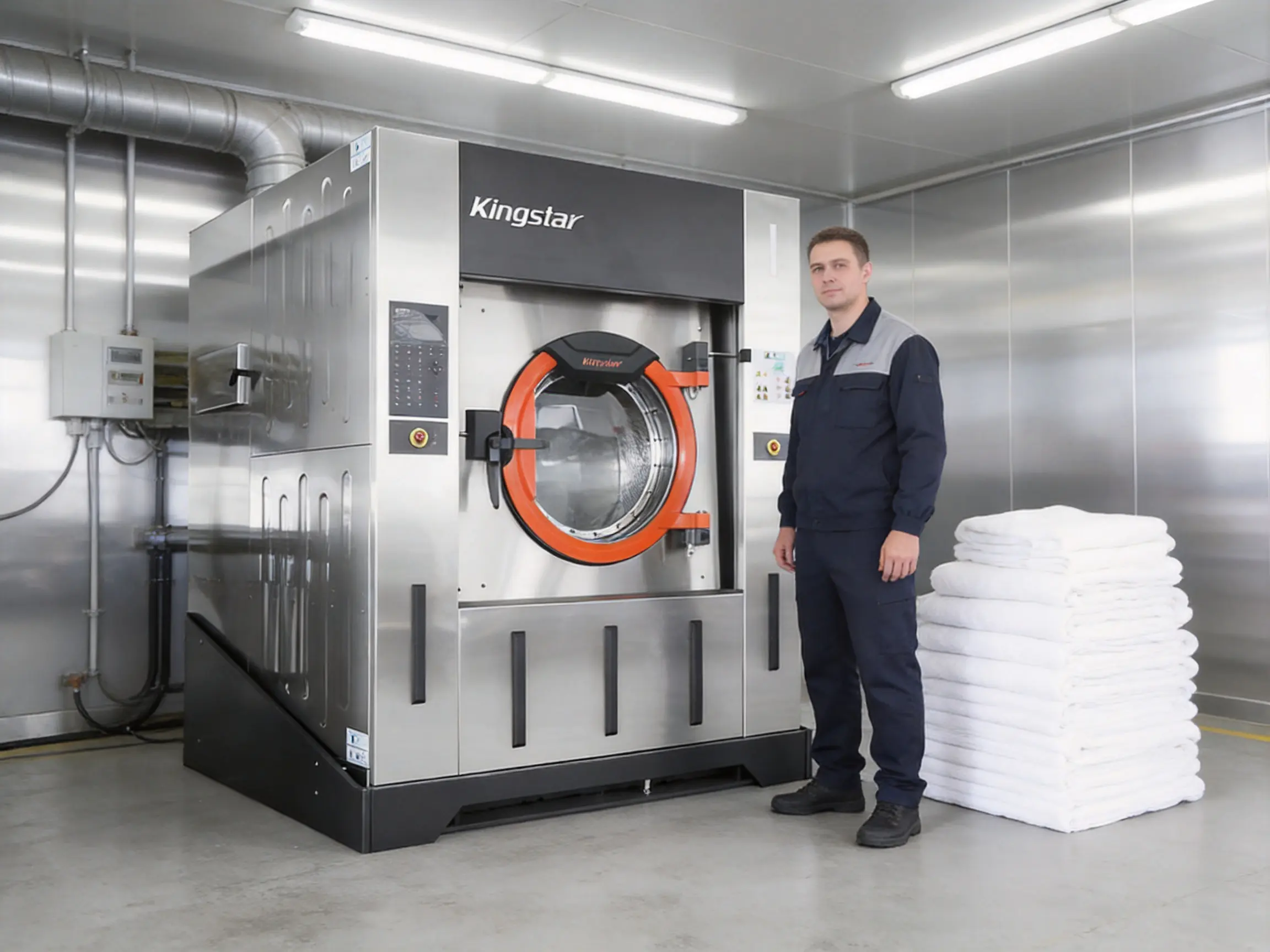
Hotels and resorts process large quantities of sheets, pillowcases, towels, bath mats, tablecloths, and staff uniforms. These items often arrive in large batches and must be returned to service quickly. The 100 kg capacity is appropriate for centralized laundry rooms and hospitality laundries that require high daily production.
The extraction capability can help prepare towels and bedding for efficient drying, while the tilting discharge system can simplify the transfer of heavy linen to carts or dryers. Forward-and-reverse rotation is useful when towels and sheets become wrapped together during extraction.
Hospitals and Healthcare Facilities
Healthcare laundries handle bedding, patient garments, gowns, uniforms, towels, and other textiles. Their procedures typically require strict separation, accurate processing, and careful handling. A complete unloading process helps operators verify that the drum is empty before processing the next textile category.
Facilities must operate the machine according to their infection-control procedures, approved wash formulas, chemical supplier guidance, and applicable regulations. The equipment can support a structured workflow, but sanitation results depend on the complete process, including temperature, chemistry, time, mechanical action, rinsing, and textile handling.
Industrial Workwear Laundries
Factories, construction companies, workshops, and service organizations may send heavily soiled workwear to an industrial laundry. Such loads can be dense and difficult to discharge after extraction. The forward-and-reverse function can assist with loosening garments and reducing the need for forceful manual pulling.
Workwear programs should be selected according to soil type, fabric construction, protective finishes, and any requirements related to flame resistance, high visibility, chemical exposure, or oil contamination. The machine provides the capacity and mechanical action for industrial work, while the wash formula must be tailored to the textile.
Textile Rental Companies
Rental laundries must process customer-owned or leased textiles consistently. They often handle hotel linen, restaurant textiles, healthcare garments, industrial uniforms, and specialty products. High productivity and dependable unloading are important because large volumes move through the facility every day.
A washer extractor with a large drum and controlled discharge can fit into a production line that includes sorting, washing, extraction, drying, finishing, folding, inspection, and dispatch. The machine’s dimensions and utilities should be coordinated with the overall plant layout.
Institutional and Government Laundries
Schools, correctional facilities, military organizations, dormitories, and other institutions may operate centralized laundry departments. These facilities often require equipment that can process large loads while maintaining predictable operation and straightforward handling.
The forward-tilting design can be advantageous where staff need to transfer linen quickly without installing a complex automated unloading system. It provides mechanical assistance while allowing the operator to remain involved in load inspection and separation.
Manufacturing and Engineering Strengths
Jiangsu Chuandao Intelligent Equipment Co., Ltd. specializes in industrial laundry machinery, including washing machines and commercial washer extractors. The company’s product range and supplied technical information indicate a focus on equipment designed for professional laundry environments rather than household use.
Product-Focused Engineering
Industrial laundry equipment must be engineered as a system. The drum, drive arrangement, extraction performance, heating connections, water supply, drainage, tilting mechanism, and operator access all influence the final result. A machine cannot be evaluated only by capacity or motor power.
The supplied design combines a large drum, high-speed extraction, forward tilting, and bidirectional rotation. This combination shows attention to the complete material-flow process. Washing and extraction are integrated with the practical requirements of discharge, which is a key distinction between a basic large-capacity washer and a purpose-designed industrial washer extractor.
Manufacturing Process Considerations
Advanced manufacturing of industrial laundry equipment typically begins with engineering review and component planning. At this stage, the manufacturer must consider drum geometry, structural load, drive requirements, access panels, pipe connections, tilting movement, balance, and serviceability.
Material preparation and fabrication are then carried out according to the machine design. Structural components must be accurately formed and aligned so that the finished equipment can withstand repeated loading, vibration, water exposure, and thermal variation. Drum and frame alignment is especially important for smooth operation and reliable extraction.
Welding and assembly quality are also central to industrial equipment performance. Joints exposed to water, detergent, steam, and repeated mechanical movement require appropriate fabrication practices. Smooth internal surfaces are important because rough areas can retain soil or catch textile fibers.
Surface treatment and finishing contribute to corrosion resistance, hygiene, appearance, and cleanability. Industrial laundry machines operate in humid environments and may be exposed to chemicals. Appropriate surface preparation and protective finishing can help preserve the equipment over time.
Mechanical and electrical assembly must be coordinated carefully. The drive system, rotation controls, heating connections, water valves, drain arrangement, tilting mechanism, and operator controls must work together. A structured assembly process helps reduce installation errors and supports easier commissioning.
Testing and Quality Control
Industrial equipment should be inspected throughout production rather than only at the end. Dimensional checks, connection inspections, electrical verification, movement tests, and operational checks help identify problems before shipment.
For a forward-tilting washer extractor, testing should pay particular attention to drum rotation, forward and reverse movement, tilting travel, discharge position, extraction operation, drainage, and utility connections. Noise and vibration should also be observed because abnormal operation may indicate alignment or balance issues.
The listed noise level of no more than 70 dB provides a reference point for operating conditions. Actual noise can vary according to installation, floor construction, load balance, surrounding equipment, and building acoustics. Correct installation and regular maintenance remain important for preserving stable performance.
Flexible OEM and ODM Support
The company identifies itself as a supplier of commercial washer extractors and laundry machinery and offers OEM and ODM services. This can be valuable for distributors, project contractors, hotel groups, healthcare suppliers, and industrial laundry operators that require specific branding, documentation, configuration, or market adaptations.
OEM and ODM cooperation should be based on clear technical communication. Buyers should confirm voltage, frequency, heating method, utility connections, control requirements, installation standards, language options, packaging, spare parts, and service expectations before production.
Competitive Advantages Compared with Conventional Washer Extractors
Integrated Discharge Assistance
Many washer extractors focus primarily on washing and spinning. The forward-tilting design adds a practical advantage at the end of the cycle. It helps position the load for removal, which can improve the productivity of the complete laundry process rather than only the wash stage.
Bidirectional Rotation
The forward-and-reverse function gives operators greater control over compacted loads. Compared with a machine that only rotates in one direction, this design can help loosen entangled linen and reduce forceful manual extraction. The benefit is especially relevant for heavy towels, bedding, and dense workwear.
Large Capacity with Industrial Extraction
The combination of 100 kg capacity, 1,000-liter drum volume, 745 rpm maximum speed, and 400 G extraction force creates a strong profile for high-volume laundry work. Some machines may offer large capacity without comparable extraction capability, while others may provide extraction but lack a tilting discharge system. Integrating both functions improves workflow flexibility.
Utility Compatibility
The machine is specified for steam, hot water, cold water, and large-capacity drainage connections. This allows it to be integrated into different industrial laundry utility systems, subject to site verification. Facilities can coordinate the machine with existing boilers, hot water systems, water treatment, drainage, and laundry ventilation.
Operational Noise Reference
A listed noise level of no more than 70 dB provides an important planning reference for industrial laundry environments. Noise control supports operator comfort and may help facilities manage sound levels where several machines operate simultaneously.
Installation Planning
The approximate dimensions are 1,900 mm in length, 1,850 mm in width, and 2,350 mm in height. The machine weighs approximately 3,690 kg. These figures make site planning essential.
The access route should be checked before delivery. Doorways, corridors, loading bays, elevators, ramps, and turning areas must accommodate the machine and the equipment used to move it. The receiving area should also provide enough space for positioning, utility connections, maintenance access, and safe operator movement.
Floor loading must be reviewed by a qualified building or structural professional. The machine’s weight, operating movement, water load, and extraction forces all influence the foundation and support requirements. A level, stable installation surface is important for reliable tilting, rotation, drainage, and vibration control.
The machine should be positioned so that the forward-tilting discharge path is clear. Carts, conveyors, dryers, walls, pipes, and other machines must not obstruct the tilting movement or create a hazard for operators. The receiving equipment should be located at a practical height and distance.
Utility lines should be clearly identified and installed with suitable isolation points. Steam, hot water, cold water, drainage, and electrical connections should be accessible for inspection and maintenance. The final installation must follow the manufacturer’s technical documentation and local regulations.
Maintenance Recommendations
Preventive maintenance helps preserve washing quality, extraction performance, safety, and equipment life. Operators should inspect the drum after each load and remove foreign objects such as coins, metal pieces, fasteners, or other items that may damage the drum or drain system.
Door seals, gaskets, filters, valves, pipe connections, and drainage areas should be checked regularly. Detergent residue, lint, and soil can accumulate in areas that remain damp. Routine cleaning supports hygiene and helps prevent odors or restricted water flow.
The forward-tilting mechanism requires particular attention. Operators and maintenance personnel should check for unusual movement, leakage, abnormal noise, incomplete travel, or obstruction. The area around the machine must remain free of objects that could interfere with tilting.
Drive components and rotating assemblies should be inspected according to the manufacturer’s recommended schedule. Any unusual vibration, imbalance, scraping sound, or repeated cycle interruption should be investigated promptly. Continued operation under abnormal conditions can increase repair requirements.
Steam and water connections should be checked for leakage, pressure irregularities, and signs of corrosion. Drainage should be kept clear so that discharged water does not back up into the machine or laundry area. Electrical inspections should be completed only by qualified personnel.
Maintenance records should include inspection dates, observed issues, parts replaced, adjustments made, and the identity of the technician. A documented maintenance program helps identify recurring problems and supports better planning for spare parts and service interruptions.
Safe Operating Practices
Only trained operators should use the machine. Personnel should understand loading limits, textile classification, wash formulas, emergency procedures, tilting operation, drum rotation controls, and the hazards associated with steam, hot water, electrical power, and moving machinery.
Loads should be distributed evenly and should not exceed the appropriate capacity for the textile type. Overloading can restrict mechanical action, reduce washing quality, cause imbalance, and increase stress on the machine. Underloading may also create balance problems during extraction, depending on the load composition.
The door should be closed and secured before operation. Operators should never reach into the drum while it is rotating or attempt to remove linen before the machine has completed the required stop sequence. The tilting area should be treated as a moving zone and kept clear during operation.
Before unloading, the operator should confirm that the drum is stationary and that the machine is in the correct discharge mode. Forward-and-reverse rotation should be used according to the operating instructions. Manual assistance should be limited to safe, controlled handling rather than forceful pulling.
Personal protective equipment should be selected according to the working environment. Gloves, protective footwear, eye protection, hearing protection, and chemical-resistant equipment may be appropriate depending on the laundry’s procedures and chemical products.
Choosing the Machine for a Laundry Project
Buyers should begin with a production analysis. Important questions include the daily linen volume, peak shift requirements, textile categories, average batch weight, wash formulas, available floor area, steam or electric heating preference, water pressure, drainage capacity, and downstream dryer capacity.
The machine should be evaluated as part of the entire laundry line. If the washer extractor can process 100 kg per cycle but the dryer, finishing equipment, or folding department cannot handle the same output, the washer may not become the true production bottleneck. Balanced equipment planning produces better results than selecting one machine based only on its nominal capacity.
Buyers should also consider service access, spare parts, operator training, documentation, commissioning, and warranty support. Industrial machinery is a long-term investment, so technical communication before purchase is essential.
Jiangsu Chuandao Intelligent Equipment Co., Ltd. can support project discussions involving industrial washing machines, washer extractors, dryers, and related laundry machinery. Technical requirements should be submitted in detail so that the proposed configuration can be reviewed against the facility’s utilities and production goals.
Q&A
What is the rated capacity of this washer extractor?
The rated capacity is 100 kg. The correct working load should be adjusted according to textile type, density, moisture retention, and the requirements of the selected wash program.
What is the main purpose of the forward-tilting function?
The forward-tilting function helps move the drum and load toward the discharge side. It assists operators when removing heavy, wet, or compacted linen after washing and extraction.
Why is forward-and-reverse rotation important?
After extraction, linen can become heavy and entangled. Bidirectional rotation helps loosen the load and bring textile items toward the opening, reducing the need for forceful manual pulling and supporting more complete discharge.
What is the maximum drum speed?
The maximum listed speed is 745 rpm. The applicable operating speed should depend on the textile type, load balance, and selected program rather than always using the maximum value.
What does a 400 G factor indicate?
A 400 G factor indicates the centrifugal force available during extraction. Higher extraction force can remove more water from suitable textiles and may reduce subsequent drying time.
What steam pressure does the machine require?
The specified steam pressure range is 0.4–0.6 MPa, with a DN25 steam pipe connection. The site steam system should be checked by qualified personnel before installation.
What are the water connection requirements?
The listed water inlet pressure is 0.2–0.4 MPa, with a DN50 water inlet pipe. The machine also has a DN50 hot water pipe connection.
Is the machine suitable for hospitals?
Its large capacity and controlled unloading functions can be useful in hospital laundry operations. However, healthcare facilities must operate it according to their infection-control procedures, approved wash formulas, chemical requirements, textile segregation rules, and applicable regulations.
How much space is needed for installation?
The listed overall dimensions are 1,900 × 1,850 × 2,350 mm. Additional space is required for access, service, utility connections, operator movement, and the forward-tilting discharge path.
How heavy is the machine?
The approximate weight is 3,690 kg. Floor loading, transportation, lifting, and installation must be reviewed by qualified professionals.
Can the manufacturer provide OEM or ODM support?
The company identifies itself as an OEM and ODM supplier of commercial washer extractors and laundry machinery. Specific customization requirements should be confirmed during the technical and commercial quotation process.
What should be checked before ordering?
Buyers should confirm voltage, frequency, heating method, water pressure, steam availability, drain size, floor capacity, machine dimensions, access routes, discharge layout, control requirements, spare parts, installation support, and after-sales service arrangements.
Conclusion
The 100 kg forward-tilting washer extractor is designed for industrial laundry operations that need high capacity, effective extraction, and improved unloading control. Its 1,000-liter drum, 745 rpm maximum speed, 400 G extraction factor, 15-degree forward tilt, and forward-and-reverse drum rotation address both the washing process and the practical challenges of handling heavy wet linen.
Its strongest competitive advantage is the integration of bidirectional drum movement with a forward-tilting discharge system. This combination can reduce manual pulling, support more complete unloading, protect textiles from unnecessary handling stress, and improve the flow of materials to dryers and finishing equipment.
With its focus on industrial washing machines, washer extractors, dryers, and laundry machinery, Jiangsu Chuandao Intelligent Equipment Co., Ltd. provides equipment for commercial and industrial laundry projects. The company’s manufacturing approach centers on product engineering, structural fabrication, mechanical and electrical integration, utility compatibility, testing, and OEM or ODM cooperation.
For a successful installation, the machine should be selected as part of a complete laundry system. Proper site preparation, loading practices, operator training, preventive maintenance, and textile-specific programming are necessary to obtain reliable long-term performance.
References
1. Product technical information for the SHS-2100T 100 kg forward-tilting washer extractor, supplied in the product documentation.
2. Industrial laundry equipment planning principles, including capacity analysis, utility coordination, workflow design, and preventive maintenance practices.
3. Commercial textile care practices for washing, extraction, drying, handling, and textile segregation.
4. General engineering guidance for industrial machinery installation, floor loading, drainage, steam systems, electrical connections, and operator safety.
5. Professional laundry management principles concerning production balancing, energy use, equipment maintenance, and ergonomic material handling.
Product: 100kg Forward Tilting Washer Extractor With Forward and Reverse Functions

ADD:No.388 Xinggang Road, Chongchuan District, Nantong City, 226000, Jiangsu Province, China.
-
Phone: +86-13917089379
-
Tel:+86-13917089379
-
Fax:+86-0513-85663366
-
E-mail:louislu@kingstarlaundry.com
products