英语
英语 俄语
俄语 西班牙语
西班牙语 德语
德语
Home / Author / Suyin Huo — Regional Sales Executive / High-Speed Industrial Washer Extractor: Engineering, Performance, and Total Laundry Efficiency

Kingstar is your trusted partner for industrial and commercial laundry equipment. We specialized in the R&D and manufacturing of high-end industrial washers, commercial washers and dryers. Meanwhile, we provide global clients with comprehensive planning, layout workflow design, and software-hardware integration services for smart laundry plants.
Suyin Huo — Regional Sales Executive
Sep 08,2026
High-Speed Industrial Washer Extractor: Engineering, Performance, and Total Laundry Efficiency
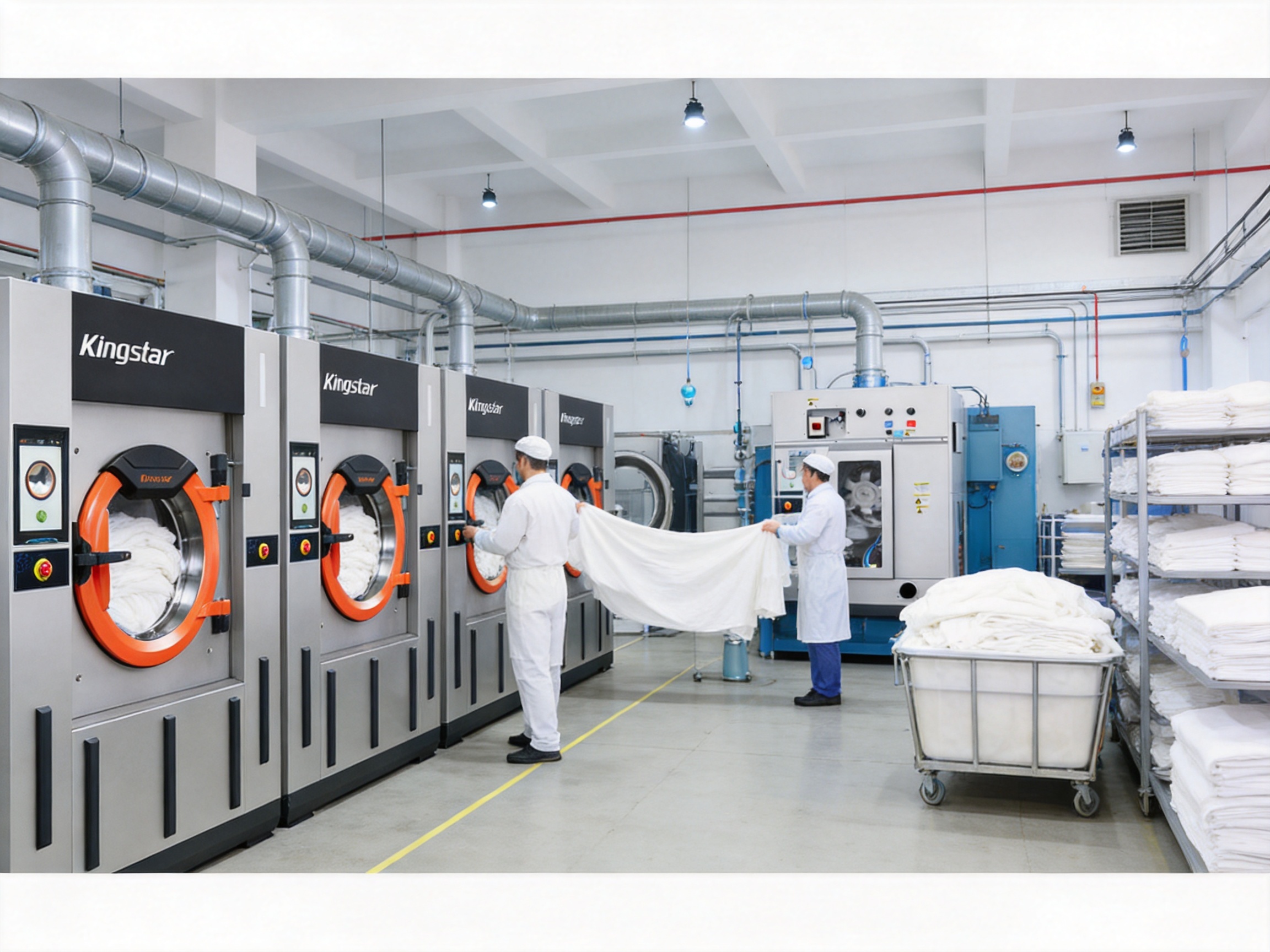
High-Speed Industrial Washer Extractor: Engineering, Performance, and Total Laundry Efficiency
1. Introduction
Industrial laundry operations require equipment that can clean large quantities of linen consistently, safely, and economically. Hotels, hospitals, laundromats, dry-cleaning facilities, textile-service companies, and institutional laundries all face the same fundamental challenge: processing more laundry in less time while maintaining high standards of hygiene and fabric care. A commercial washer that is suitable for a small business may not provide the capacity, durability, extraction performance, or automation required for demanding industrial applications.
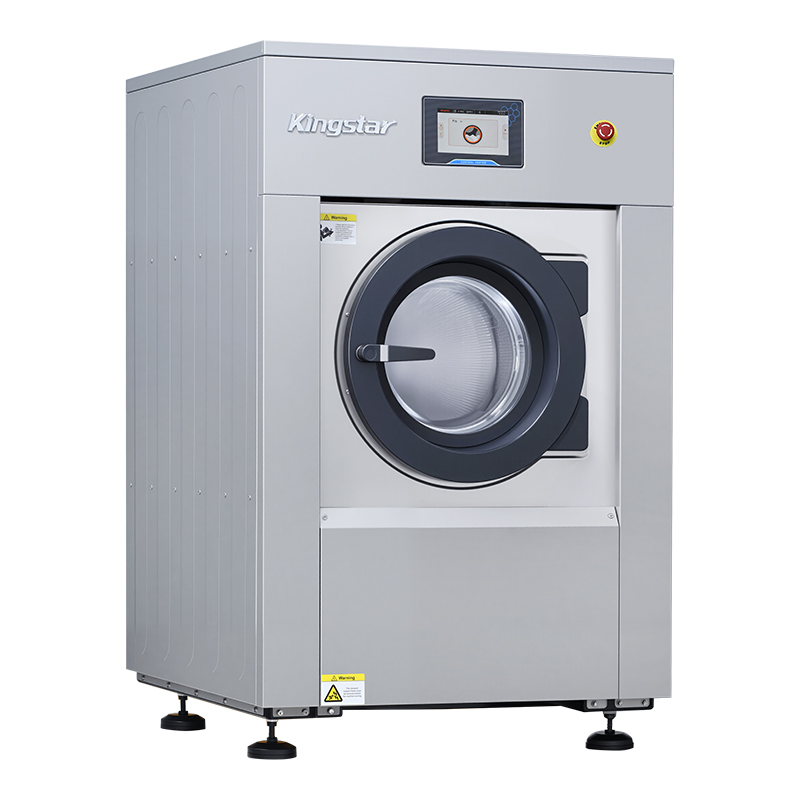
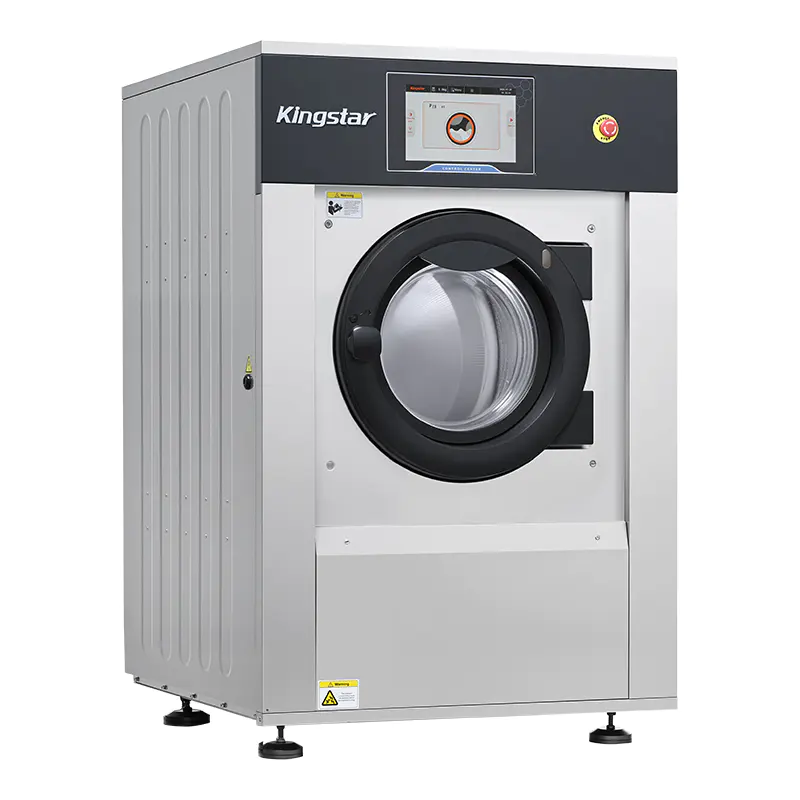
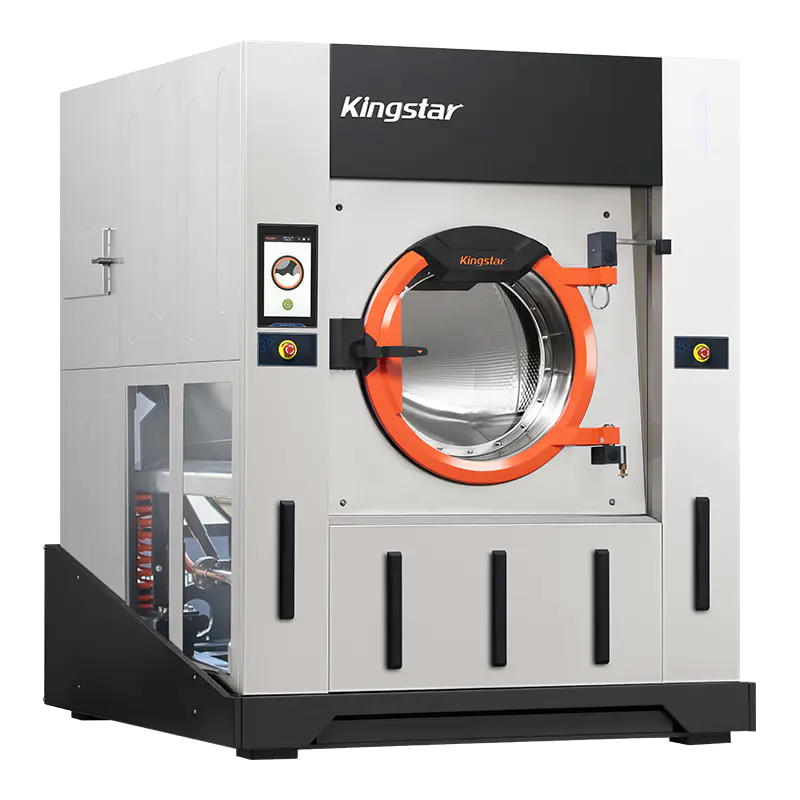
The Smart High-Speed Washer is an industrial washer extractor developed for these high-volume environments. Available in 30 kg, 40 kg, 60 kg, and 100 kg capacities, the range combines high-speed dehydration, intelligent washing control, stainless steel construction, automatic chemical dosing, advanced vibration absorption, and multiple heating options. The equipment is designed to reduce moisture before drying, shorten turnaround times, improve washing consistency, and lower the total cost of laundry processing.
Manufactured by Jiangsu Chuandao Intelligent Equipment Co., Ltd. under the Kingstar product line, the washer extractor is intended for professional users that cannot afford frequent interruptions or inconsistent results. Its design reflects practical experience in industrial laundry machinery, including attention to drum construction, transmission durability, water-contact materials, operator safety, and installation flexibility.
Compared with conventional low-speed commercial washers, the machine provides a higher dehydration factor and more efficient post-wash processing. Compared with basic industrial models, it offers a more complete control system, intelligent load management, a large touchscreen interface, low-vibration suspension, and a broad range of programmable cycles. These features make it suitable for facilities seeking reliable production capacity rather than simply a larger household-style washing machine.
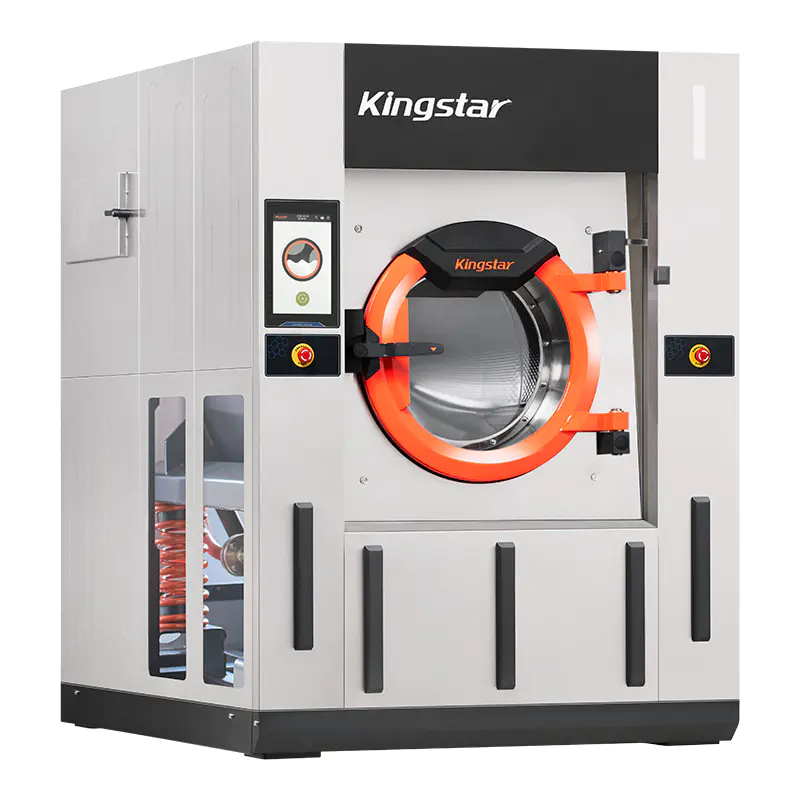
Smart High-Speed Washer
2. Product Positioning and Main Applications
An industrial washer extractor performs two main operations in one machine: washing and high-speed moisture extraction. During the wash phase, the drum uses programmed movement, water, detergent, temperature, and time to remove soil. During extraction, the drum rotates at high speed to force water from the textile load. The result is cleaner linen with a lower residual moisture level before it enters a dryer, finishing machine, or ironing line.
The Smart High-Speed Washer is designed for industrial and commercial laundry environments where large quantities of linen must be processed every day. Typical applications include hotel laundry plants, hospital laundry departments, self-service laundromats, dry cleaners, textile rental services, restaurants, factories, universities, nursing homes, and other institutional facilities.
Hotel and Hospitality Laundry
Hotels process sheets, pillowcases, towels, bathrobes, table linen, staff uniforms, and other textiles on a continuous basis. Laundry delays can affect room availability, housekeeping schedules, banquet operations, and guest satisfaction. A high-capacity washer extractor allows the laundry department to process more linen per cycle while maintaining repeatable washing results.
The available 60 kg and 100 kg models are particularly suitable for medium and large hotels. Their high extraction performance helps reduce the time and energy needed in the drying stage. This is important because drying often consumes more energy than washing. Removing more water mechanically, rather than thermally, can improve the efficiency of the entire laundry process.
Hospital and Healthcare Laundry
Healthcare facilities require strict process control. Bed sheets, patient gowns, operating textiles, towels, and staff garments must be washed using suitable programs and carefully controlled chemical and temperature settings. The machine provides 30 programmed wash cycles and five frequently used automatic cycles, allowing operators to establish separate procedures for ordinary linen, heavily soiled articles, delicate materials, and hygiene-sensitive loads.
The use of SUS304 stainless steel for the inner drum, outer cylinder, and water-contacting components also supports hygienic operation. Stainless steel resists rust and corrosion, helping prevent contamination or washing-quality problems caused by deteriorating metal surfaces. The smooth rolled edge around the drum opening further reduces the possibility of fabric damage during loading and unloading.
Laundromats and Self-Service Laundry
Commercial laundromats require simple operation, dependable cycle control, and equipment that can tolerate repeated use. The touchscreen control system provides a clear interface for selecting programs and monitoring machine status. The three-color indicator allows staff and customers to see whether the machine is operating, has completed its cycle, or requires attention because of a fault.
Depending on the business model, smaller 30 kg and 40 kg machines can support regular self-service loads, while larger models can serve commercial linen accounts or centralized laundry operations. The broad voltage options also make the equipment adaptable to different electrical infrastructures.
Industrial and Institutional Laundry
Factories, food-processing facilities, dormitories, nursing homes, and cleaning contractors often need to wash uniforms, protective garments, workwear, towels, and reusable cleaning textiles. These loads may contain oil, dust, food residue, body fluids, or other difficult soils. A programmable industrial washer extractor enables operators to adjust the process according to the textile and contamination level.
For these applications, durability is as important as capacity. The machine uses a reinforced transmission system, imported electrical components, a strong stainless steel drum assembly, and a low-vibration suspension structure intended for frequent operation over an extended service life.
3. Capacity Range and Technical Configuration
The product family includes four primary models: SHS-2030, SHS-2040, SHS-2060, and SHS-2100. Their maximum washing capacities are 30 kg, 40 kg, 60 kg, and 100 kg respectively. This range enables buyers to select equipment according to daily linen volume, available floor space, utility capacity, and future production requirements.
| Specification | SHS-2030 | SHS-2040 | SHS-2060 | SHS-2100 |
|---|---|---|---|---|
| Maximum washing capacity | 30 kg | 40 kg | 60 kg | 100 kg |
| Drum volume | 300 L | 400 L | 600 L | 1,000 L |
| Maximum spinning speed | 870 rpm | 833 rpm | 760 rpm | 745 rpm |
| Dehydration factor | 350 G | 350 G | 350 G | 400 G |
| Transmission power | 4 kW | 5.5 kW | 7.5 kW | 11 kW |
| Water consumption | 600 kg | 800 kg | 1,200 kg | 2,000 kg |
| Noise level | Not more than 70 dB | Not more than 70 dB | Not more than 70 dB | Not more than 70 dB |
| Total weight | 1,350 kg | 2,200 kg | 2,600 kg | 3,260 kg |
The 30 kg and 40 kg models are suitable for smaller hotels, healthcare facilities, laundromats, and commercial laundry rooms. The 60 kg model provides a balance between production volume and installation requirements. The 100 kg model is designed for high-throughput laundry plants that need to process substantial quantities of linen with fewer cycles.
All models use a standard operating voltage of 380 V, three-phase, 50 Hz, while alternative voltage configurations are available. These include three-phase 200 to 240 V, three-phase and neutral 200 to 240 V, three-phase and neutral 380 to 415 V, three-phase 380 to 415 V, and three-phase 440 to 480 V. Electrical configuration should be confirmed before ordering so that the machine can be correctly matched to local power conditions.
Heating and Utility Options
The washer extractor can be configured for steam heating or electric heating. Steam pressure is specified at 0.4 to 0.6 MPa, with steam consumption ranging from 19 kg for the 30 kg model to 65 kg for the 100 kg model. Electric heating power ranges from 24 kW to 72 kW depending on model capacity.
Steam heating can be advantageous for facilities with an existing central boiler system. Electric heating may be more convenient for sites without steam infrastructure. Offering both options allows the buyer to select a configuration based on local energy prices, building services, installation conditions, and overall plant design.
4. Intelligent Control and Automated Washing
The control system is one of the most important differences between a basic washer and a modern industrial washer extractor. Manual adjustment of water, temperature, detergent, and cycle time can result in inconsistent quality and unnecessary resource consumption. The Smart High-Speed Washer uses an intelligent control platform to make routine operation more repeatable and easier to manage.
12.1-Inch High-Definition Touchscreen
A 12.1-inch high-definition touchscreen provides a clear operating interface. Operators can select programs, review cycle stages, and manage washing parameters from a central display. The interface is designed to support automatic water addition, prewashing, main washing, rinsing, and neutralizing processes.
A large display is particularly useful in industrial environments where operators may be wearing gloves or working under demanding conditions. It also reduces the risk of selecting the wrong cycle or overlooking a machine warning. By consolidating operating information in one location, the touchscreen supports faster training for new staff and more consistent procedures across shifts.
Thirty Preset Programs and Five Automatic Cycles
The machine includes 30 preset washing programs and five commonly used one-touch automatic cycles. A commercial laundry can use these programs for different types of linen, soil levels, textile weights, and finishing requirements. Programs may be assigned to towels, sheets, uniforms, healthcare linen, heavily soiled workwear, or other categories according to the facility’s standard operating procedures.
Preset programs also help reduce operator dependence. Instead of manually entering every parameter for every load, staff can select a validated cycle. This can improve consistency and reduce the possibility of errors caused by incorrect temperature, insufficient rinsing, excess water, or an unsuitable extraction speed.
Intelligent Weighing and Resource Adjustment
The intelligent weighing system detects the approximate weight of each load and adjusts water, steam, and detergent requirements. This function is important because a partially filled drum should not necessarily use the same resources as a full load. Automatic adjustment can help avoid excessive water and chemical use while maintaining the required washing action.
Resource control also contributes to more predictable operating costs. In a large laundry plant, small reductions in water, energy, detergent, and wastewater treatment requirements can generate meaningful savings over thousands of cycles. The system can therefore support both environmental objectives and commercial efficiency.
Automatic Chemical Dosing
Each model is equipped with eight automatic dosing ports. These ports can be connected to a chemical dispensing system for detergents, alkalis, bleaches, softeners, neutralizers, and other process chemicals. Automatic dosing improves repeatability by delivering chemicals at the programmed stage and in a controlled quantity.
Accurate chemical dosing is also beneficial for fabric protection. Excessive detergent or chemical concentration may shorten textile life, while insufficient dosing can lead to poor cleaning results. Integrating dosing with the programmed cycle helps operators achieve a more stable balance between cleaning performance, hygiene, cost, and fabric care.
5. High-Speed Extraction and Energy Efficiency
The main performance advantage of this product family is its high dehydration factor. The 30 kg, 40 kg, and 60 kg models provide a 350 G extraction factor, while the 100 kg model reaches 400 G. A higher G factor means that more water is removed mechanically from the load during extraction.
Mechanical water removal is generally more energy-efficient than removing the same moisture through heat in a tumble dryer. When the washer extractor leaves less residual water in towels, sheets, and garments, the dryer can complete its work more quickly. This reduces drying time, increases daily throughput, and can lower steam or electricity consumption during finishing.
The advantage becomes particularly important in facilities that operate multiple dryers. A washer extractor with strong extraction performance can reduce the demand placed on the drying section and help prevent a production bottleneck. The result is a more balanced laundry line in which washing, extraction, drying, and finishing stages operate at compatible capacities.
Reinforced Transmission System
High-speed extraction creates significant mechanical forces. The machine therefore uses a reinforced transmission structure designed to maintain stable rotation under demanding loads. The main shaft has a maximum diameter of up to 160 mm, and the transmission assembly uses imported roller bearings and oil seals.
The transmission design is intended to support long-term operation with reduced maintenance requirements. The supplied product information indicates that the imported bearings and oil seals are designed not to require replacement for five years under appropriate operating conditions. Actual service intervals depend on load balance, operating frequency, installation quality, maintenance practices, and the working environment.
One-Piece Die-Cast Belt Pulley
The belt pulley is produced from high-grade aluminum alloy using an integral die-casting process. A one-piece structure can improve assembly accuracy and reduce the number of joints or weak points in the pulley. Aluminum alloy also provides corrosion resistance and contributes to vibration absorption while keeping the component relatively lightweight.
Accurate alignment between the pulley and main shaft is essential for stable transmission. Poor alignment can increase belt wear, bearing stress, noise, and vibration. The precision-processed transmission system is therefore an important element of the machine’s reliability and extraction performance.
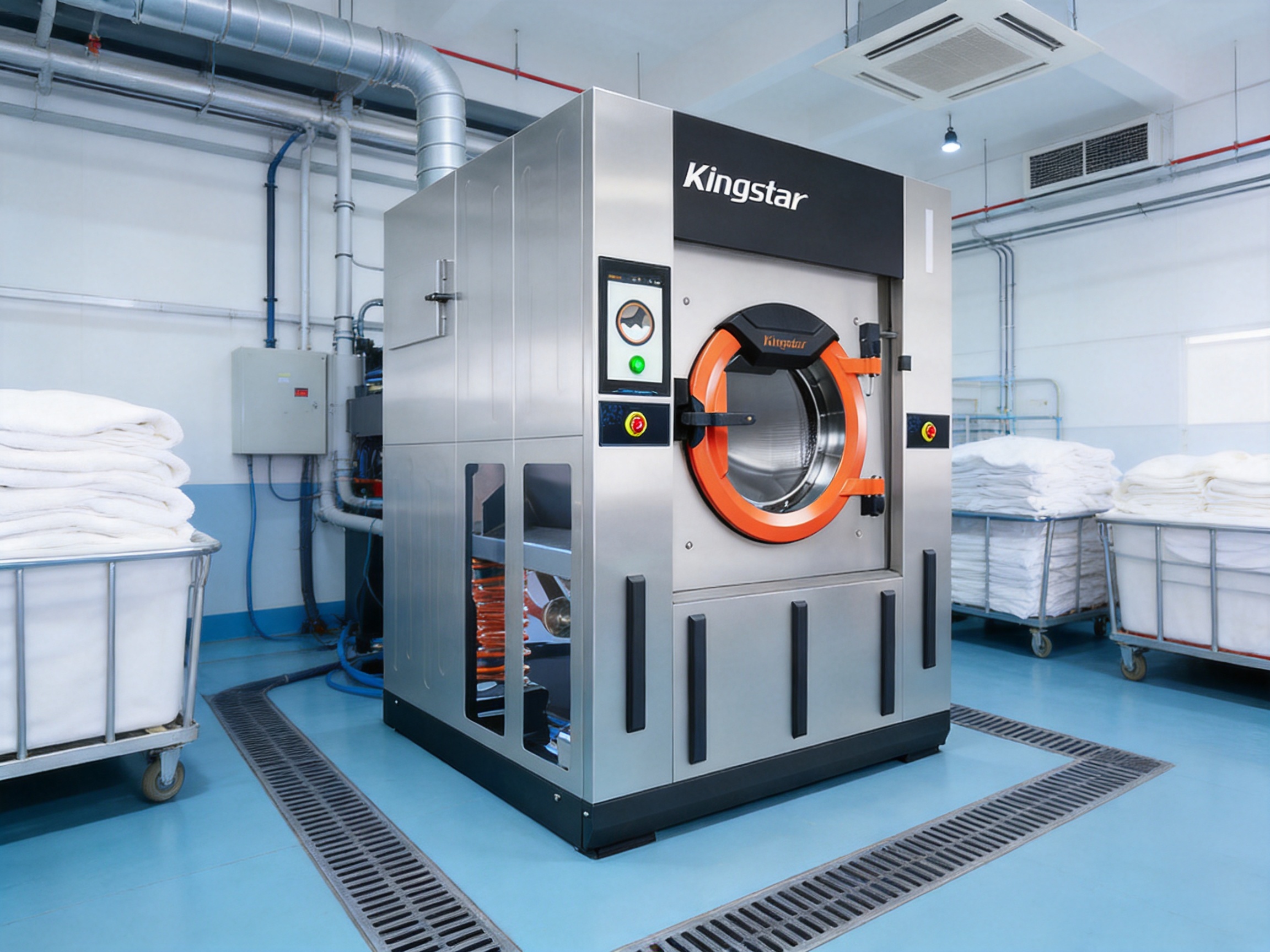
6. Low-Vibration Construction and Installation Flexibility
Industrial washer extractors generate considerable force during high-speed spinning. Traditional machines may require a specially constructed foundation to absorb these forces. The Smart High-Speed Washer uses a lower suspension shock absorption system intended to reduce vibration without requiring a fixed ground base in normal installation conditions.
The suspension structure combines inner and outer double-layer seat springs, rubber shock-absorbing springs, rubber machine feet, and four dampers. According to the supplied technical description, the system can achieve a shock absorption rate of up to 98 percent. The design allows the machine to be installed on different types of floors, subject to proper structural assessment and the manufacturer’s installation requirements.
Lower vibration offers several practical benefits. It can reduce noise in the laundry room, protect surrounding structures, improve operator comfort, and limit mechanical stress on the machine. It also provides more flexibility when a facility is being converted from another use and cannot easily install a deep concrete foundation.
The specified noise level is not more than 70 dB for the listed models. Actual perceived noise will depend on room acoustics, floor construction, loading conditions, machine balance, and maintenance. Correct leveling and proper load distribution remain essential even when an advanced suspension system is used.
7. Drum Engineering and Fabric Protection
SUS304 Stainless Steel Water-Contact Components
The inner drum, outer cylinder, and other components that contact water are manufactured from SUS304 stainless steel. This material is widely used in professional laundry equipment because it offers strong corrosion resistance and good durability in environments exposed to water, detergents, heat, and chemical agents.
Stainless steel construction supports long-term hygiene and helps prevent rust-related washing problems. If unprotected steel surfaces deteriorate, rust particles may stain textiles, affect water-contact areas, and create maintenance problems. SUS304 components help maintain a clean washing environment and preserve consistent washing quality over the equipment’s working life.
270-Degree Rolled Drum Opening
The junction between the inner and outer drum uses a 270-degree rolled edge. This special edge is processed to create a smooth, strong interface with a small gap. The purpose is to reduce the risk of linen being caught, snagged, or torn during loading and unloading.
This detail may appear simple, but it is important in high-volume operations. Hotel sheets, towels, uniforms, and healthcare textiles are repeatedly moved through the drum opening. Any sharp edge, irregular surface, or excessive gap can damage fabric over time. A smooth rolled opening helps protect both the laundry and the operator’s hands.
3.5-Degree Tilted Drum
The drum is tilted backward by approximately 3.5 degrees. This angled design encourages multidirectional movement of the load and supports more effective circulation during washing. It can also help reduce fabric damage around the door area and make loading and unloading more convenient.
Improved textile movement can contribute to more even contact between linen, water, detergent, and mechanical action. The result is a more uniform wash, especially when the load is correctly selected and the appropriate program is used.
Extra-Large Stainless Steel Door
The large front-loading door supports faster loading and unloading. This is especially valuable when operators handle heavy wet textiles or process multiple loads during a shift. A stainless steel door provides a durable surface that can withstand frequent use and exposure to moisture.
The electronic door lock is controlled by the automation system and remains locked during unsafe operating conditions. It is designed to open only after the spin cycle has ended and the drum has reached a safe state. This helps protect operators from accidental contact with a moving drum.
8. Manufacturing Processes and Quality Strengths
The performance of an industrial washer extractor depends not only on its specification sheet but also on how the machine is manufactured and assembled. Jiangsu Chuandao Intelligent Equipment Co., Ltd. combines structural fabrication, precision machining, electrical integration, stainless steel processing, assembly, and testing to produce equipment for demanding laundry applications.
Structural Fabrication
The machine frame and major supporting structures must withstand the combined weight of the machine, water, linen, and dynamic forces generated during extraction. Heavy-duty structural design helps maintain alignment between the drum, shaft, bearings, motor, and suspension system.
For the 100 kg model, the total equipment weight is approximately 3,260 kg. This substantial mass provides a stable foundation for a machine designed to process up to 100 kg of linen per cycle. Structural components are selected and assembled to support repeated operation rather than occasional use.
Precision Machining
Components such as the main shaft, belt pulley, bearing seats, drum supports, and door assemblies require accurate processing. Precision machining contributes to alignment, smooth rotation, low vibration, and longer component life. The use of a one-piece die-cast pulley and a main shaft with a large diameter reflects a focus on transmission reliability.
Accurate machining is particularly important for high-speed extraction. Small alignment errors can become more significant when rotational speed increases. By controlling the dimensional accuracy of key components, the manufacturer can improve the stability of the entire drive system.
Stainless Steel Processing
Stainless steel parts must be cut, formed, welded, polished, and assembled carefully. The inner drum surface should remain smooth so that it does not damage textiles or retain excessive soil. Water-contact welds and joints must also be finished properly to support hygiene and corrosion resistance.
The use of SUS304 stainless steel for the drum and water-contact areas demonstrates that the design prioritizes long-term durability in a wet and chemically active environment. This is especially important for hospitals, food-related facilities, and laundries that use hot water, steam, disinfectants, and alkaline detergents.
Electrical Integration
The machine uses imported electrical components, including Mitsubishi inverters from Japan and Schneider contactors from France, together with branded wires, plugs, and bearings. The inverter supports controlled motor operation and helps manage speed during washing and extraction. Reliable contactors, wiring, and protective devices are essential for safe operation under repeated industrial use.
Using recognized electrical components can simplify maintenance and replacement in international markets. It may also improve the availability of technical support and spare parts, although local availability should be confirmed by the purchaser and distributor.
Assembly and Functional Testing
Final assembly requires careful coordination of the drum, shaft, pulley, bearings, suspension, motor, control system, water inlets, steam connections, drains, and safety devices. Testing should verify rotation, door locking, drainage, heating, dosing signals, control functions, vibration behavior, and electrical performance before shipment.
A professional manufacturer must also ensure that the machine is configured for the customer’s selected voltage, heating type, drain arrangement, and utility connections. This reduces commissioning risk and helps the laundry facility begin operation more quickly after installation.
9. Advantages Over Conventional and Competing Equipment
Industrial laundry buyers often compare machines according to purchase price alone. However, the total value of a washer extractor depends on capacity, throughput, utility consumption, maintenance, textile protection, downtime, and ease of operation. The Smart High-Speed Washer offers several advantages when compared with conventional low-speed washers or less automated industrial alternatives.
Higher Throughput Through Stronger Extraction
Many conventional washers remove only a moderate amount of water during the spin cycle. This leaves the dryer with more work and can create a bottleneck in high-volume facilities. With extraction factors up to 400 G, the Smart High-Speed Washer is designed to transfer less residual moisture to the dryer.
This can increase the number of loads completed per day and reduce energy use per kilogram of finished linen. It may also allow a facility to purchase fewer dryers or operate existing dryers more efficiently, depending on the complete laundry layout.
More Consistent Results Through Intelligent Automation
Basic equipment may depend heavily on operator judgment. Differences in water level, detergent quantity, temperature, and cycle timing can lead to inconsistent washing quality. The intelligent weighing system, programmable cycles, and automatic dosing ports help standardize the process.
Standardization is valuable for hotel groups, healthcare providers, and laundry contractors that need the same result across multiple shifts or locations. It also makes it easier to document and reproduce washing procedures.
Reduced Foundation Requirements
Some high-speed industrial washers require extensive foundation work. The triple-layer shock absorption structure used in this product range is designed to provide stable operation without a fixed foundation in suitable installations. This can reduce building modification costs and shorten preparation time.
However, installation must still be evaluated by qualified personnel. The supporting floor must be capable of carrying the machine’s static and dynamic loads, and the equipment must be correctly leveled and connected.
Longer Component Life and Lower Maintenance Risk
The reinforced main shaft, imported bearings, oil seals, die-cast belt pulley, and branded electrical components are selected to improve reliability. The design target is a service life of up to 20 years when the machine is operated and maintained according to the manufacturer’s requirements.
Long service life does not mean that maintenance can be ignored. Regular inspection of belts, seals, bearings, suspension components, door gaskets, drains, valves, and electrical connections remains necessary. Nevertheless, robust components can reduce the frequency of major repairs and help protect production continuity.
Better Protection for Linen
The smooth 270-degree rolled drum opening, tilted drum, stainless steel surfaces, and controlled movement help reduce the possibility of textile damage. Protecting linen is important because hotels, hospitals, and textile rental companies incur replacement costs when sheets, towels, uniforms, or garments wear out prematurely.
A machine that cleans effectively while extending textile life can provide greater value than one that achieves strong cleaning performance through excessively aggressive mechanical action.
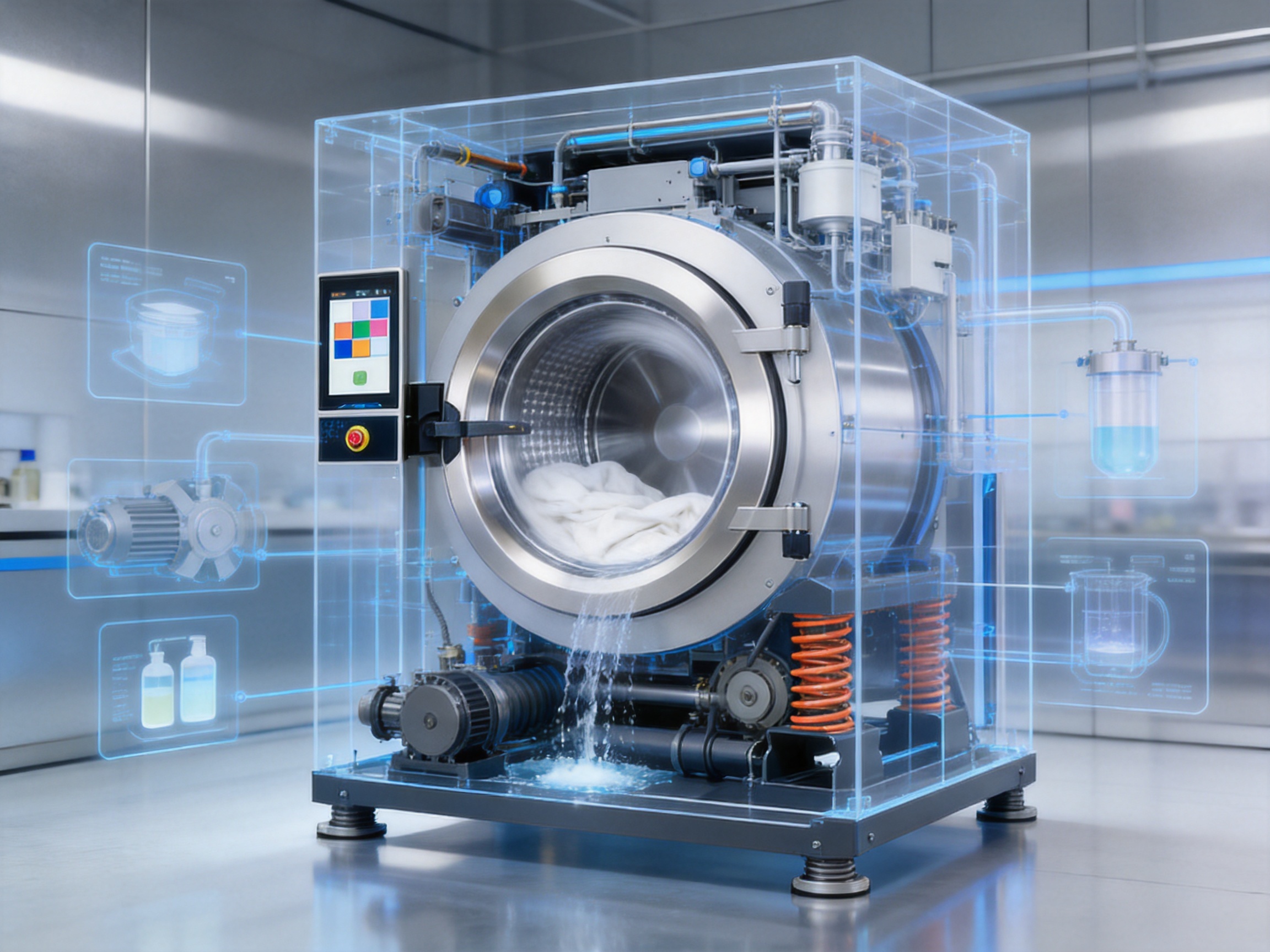
10. Operating Efficiency and Environmental Considerations
Industrial laundries consume water, electricity, steam, detergent, and labor. Improving one stage of the process can benefit the complete operation. The Smart High-Speed Washer addresses efficiency through load-based resource adjustment, programmable washing, high-speed extraction, and alternative heating configurations.
The intelligent washing system is designed to control time, water temperature, water volume, and mechanical action. When properly programmed, this can reduce unnecessary resource consumption without compromising cleaning performance. Automatic dosing also helps prevent chemical waste and reduces the risk of overdosing.
High-speed extraction supports lower dryer energy consumption by removing more water before drying. Since drying is often one of the most energy-intensive stages in a laundry plant, the extraction factor has a direct influence on operating cost. Facilities should evaluate the result using actual moisture retention, dryer cycle time, energy use, and kilograms processed per hour.
Water consumption varies according to model, program, textile type, soil level, and the number of rinses. The listed nominal water consumption ranges from 600 kg for the 30 kg model to 2,000 kg for the 100 kg model. Operators should select the correct program rather than using maximum water levels for every load.
Environmental performance also depends on wastewater management. Efficient dosing, appropriate temperature selection, and optimized rinsing can reduce the chemical and thermal load discharged from the laundry. In combination with water recycling, heat recovery, and energy-efficient dryers, the washer extractor can form part of a broader sustainable laundry strategy.
11. Installation and Maintenance Guidance
Correct installation is essential for safety, performance, and warranty protection. Before delivery, the buyer should confirm floor load capacity, access routes, door dimensions, ceiling height, drainage, water pressure, steam availability, electrical supply, ventilation, and space for maintenance.
The listed water inlet pressure is 0.2 to 0.4 MPa. The washer includes separate water and hot water inlet connections, with inlet sizes ranging from DN40 on smaller models to DN50 on the 100 kg model. Steam inlet connections are DN25 across the listed range. Drain connections are DN65 on the 30 kg model and DN100 on the larger models.
The overall dimensions also increase with capacity. The 30 kg model measures approximately 1,245 by 1,480 by 1,770 millimeters, while the 100 kg model measures approximately 1,815 by 2,090 by 2,390 millimeters. These dimensions should be considered together with the space required to open the door, load textiles, access the control panel, and perform service work.
Daily maintenance should include checking the door seal, removing foreign objects, cleaning chemical residue, inspecting the drain path, and confirming that the machine is level. Operators should avoid overloading the drum, mixing unsuitable textile types, or running unbalanced loads.
Scheduled maintenance should include inspection of belts, bearings, oil seals, dampers, springs, rubber feet, valves, wiring, dosing lines, and safety interlocks. The machine room should be kept clean and dry, and the area around the electrical cabinet should be free of excessive moisture and chemical vapor.
12. Selecting the Correct Model
The appropriate model depends on more than the maximum load printed on the specification sheet. Buyers should estimate the daily linen volume, peak-hour demand, number of operating shifts, average load weight, available utilities, and expected business growth.
| Facility profile | Suggested capacity consideration | Primary selection factors |
|---|---|---|
| Small hotel or laundromat | 30 kg | Available floor space, moderate daily volume, simple operation |
| Medium hotel or healthcare facility | 40 kg | Program variety, hygiene control, utility availability |
| Large hotel, institution, or laundry contractor | 60 kg | Throughput, extraction performance, dryer coordination |
| Central industrial laundry plant | 100 kg | High production volume, heavy-duty infrastructure, logistics |
A machine should not be selected solely because it has the largest possible capacity. Consistently operating a machine far below its intended load may reduce efficiency, while regularly overloading a smaller machine can increase wear and reduce cleaning quality. The best choice is normally the model that matches the facility’s regular operating load while providing reasonable reserve capacity for peak periods.
Buyers should also compare steam and electric heating based on the site’s existing infrastructure. A facility with a reliable boiler may prefer steam heating, while a smaller laundry without steam services may find electric heating easier to install. The available electrical supply must be checked carefully because electric heating can require significant power.
13. Company Manufacturing Strength and Service Commitment
Jiangsu Chuandao Intelligent Equipment Co., Ltd. is based in Nantong, Jiangsu Province, China, and specializes in washing machinery and laundry equipment. Its product range includes industrial washing machines, washer extractors, industrial dryers, commercial dryers, stacked washer and dryer systems, and related laundry machinery.
The company’s manufacturing strength is reflected in its focus on complete equipment integration rather than a single isolated component. A washer extractor must combine mechanical engineering, stainless steel fabrication, electrical control, software programming, water and steam management, safety systems, and final testing. Experience across these areas allows the manufacturer to provide equipment that is better coordinated from design through installation.
The company offers OEM and ODM cooperation for commercial washer extractors and laundry machinery. This can benefit distributors, laundry solution providers, hotel groups, and industrial users that require specific voltage configurations, branding, control settings, heating systems, or capacity combinations.
The stated design target is a service life of up to 20 years, supported by a three-year warranty under applicable terms. A long-life design can help customers plan capital expenditure over a longer period and reduce the risk of frequent equipment replacement. Buyers should confirm warranty coverage, spare parts availability, commissioning support, and maintenance responsibilities before purchase.
Product support is particularly important for industrial laundry equipment because downtime can affect room turnover, hospital operations, garment availability, and customer contracts. A strong supplier should be able to provide installation guidance, operating instructions, troubleshooting assistance, replacement components, and technical documentation.
14. Practical Return on Investment
The financial value of an industrial washer extractor should be assessed through total cost of ownership. The purchase price is only one part of the investment. Other factors include water consumption, heating energy, detergent use, labor, dryer capacity, textile replacement, maintenance, downtime, and expected service life.
High-speed extraction can contribute to return on investment by reducing dryer time. Intelligent dosing and load-based resource management can reduce operating waste. A durable stainless steel drum and reinforced transmission system can lower the frequency of major repairs. Low vibration can reduce installation costs where a heavy fixed foundation would otherwise be necessary.
Productivity should be measured in kilograms of clean, dry, finished linen per operating hour rather than simply kilograms per wash cycle. A machine with a large capacity but slow extraction or long drying requirements may deliver less actual output than a well-balanced system with strong extraction and efficient downstream equipment.
For a proper evaluation, the buyer should record current water use, drying time, energy consumption, labor hours, textile replacement rate, and annual maintenance costs. These figures can then be compared with the expected performance of the new washer extractor. The result will provide a more realistic payback calculation than comparing equipment prices alone.
15. Frequently Asked Questions
Q1: What is the main function of a washer extractor?
A washer extractor combines industrial washing and high-speed moisture extraction in one machine. It cleans the textile load and then spins it at high speed to remove water before drying or finishing.
Q2: What capacities are available?
The Smart High-Speed Washer is available in 30 kg, 40 kg, 60 kg, and 100 kg maximum washing capacities. The corresponding models are SHS-2030, SHS-2040, SHS-2060, and SHS-2100.
Q3: What is the highest extraction factor?
The 100 kg SHS-2100 model provides a dehydration factor of up to 400 G. The 30 kg, 40 kg, and 60 kg models provide a dehydration factor of 350 G.
Q4: How does high-speed extraction reduce operating costs?
High-speed extraction removes more water mechanically before the load enters the dryer. This can shorten drying cycles, reduce dryer energy consumption, increase throughput, and lower the workload on downstream equipment.
Q5: Is the machine suitable for hospitals?
Yes. The programmable wash cycles, automatic dosing, SUS304 stainless steel water-contact components, controlled rinsing, and high-capacity design make the machine suitable for hospital and healthcare laundry applications. Each facility should establish its own validated hygiene procedures and chemical protocols.
Q6: Does the machine require a concrete foundation?
The lower suspension and triple-layer shock absorption system are designed to allow installation without a fixed foundation in suitable conditions. The floor must still be capable of supporting the machine and its dynamic loads, and installation should follow the manufacturer’s technical instructions.
Q7: What heating methods are available?
The machine can be configured for steam heating or electric heating. Steam pressure is specified at 0.4 to 0.6 MPa, while electric heating power varies by model.
Q8: How many washing programs are included?
The control system includes 30 preset washing programs and five frequently used one-touch automatic cycles. These can be used for different textiles, soil levels, and process requirements.
Q9: How many automatic chemical dosing connections are provided?
Each listed model includes eight automatic dosing ports. These can be connected to a professional chemical dispensing system.
Q10: What materials are used for the drum?
The inner drum, outer cylinder, and other parts that contact water are made from SUS304 stainless steel. This helps resist rust and corrosion and supports consistent washing quality.
Q11: What electrical configurations are available?
The standard operating specification is 380 V, three-phase, 50 Hz. Alternative configurations include three-phase 200 to 240 V, three-phase and neutral 200 to 240 V, three-phase and neutral 380 to 415 V, three-phase 380 to 415 V, and three-phase 440 to 480 V, subject to confirmation.
Q12: What should buyers check before ordering?
Buyers should confirm capacity, daily laundry volume, floor load, machine dimensions, door access, electrical supply, steam or electric heating, water pressure, drainage, chemical dosing, ventilation, maintenance access, warranty terms, and local service support.
16. Conclusion
The Smart High-Speed Washer is designed as a complete industrial laundry solution rather than a basic high-capacity washing machine. Its combination of 30 kg to 100 kg capacities, 350 G to 400 G extraction performance, intelligent weighing, automatic chemical dosing, 30 preset programs, touchscreen control, stainless steel water-contact components, low-vibration suspension, and reinforced transmission gives commercial laundry operators a strong platform for reliable production.
Its main advantage over conventional equipment is the way these features work together. High-speed extraction supports shorter drying times. Intelligent controls promote consistent washing. Stainless steel construction improves hygiene and durability. The suspension system reduces vibration and installation limitations. Precision transmission components support long-term operation. Together, these characteristics can improve throughput, reduce operating waste, protect textiles, and support a lower total cost of ownership.
Manufactured by Jiangsu Chuandao Intelligent Equipment Co., Ltd., the equipment reflects a focus on industrial laundry engineering, integrated production, branded electrical components, precision processing, and professional applications. For hotels, hospitals, laundromats, institutions, and centralized laundry plants, the product range provides multiple capacity and heating options that can be matched to specific operational requirements.
The best results will be achieved when the machine is correctly sized, professionally installed, properly programmed, and maintained according to the manufacturer’s recommendations. When integrated into a balanced laundry system, the high-speed washer extractor can become a central production asset that supports cleanliness, efficiency, safety, and long-term business performance.
References
1. Jiangsu Chuandao Intelligent Equipment Co., Ltd. Product specification materials for the Smart High-Speed Washer series.
2. Kingstar Laundry. Technical descriptions of industrial washer extractors, control systems, suspension structures, and stainless steel drum construction.
3. Commercial laundry equipment engineering principles covering washer extraction, residual moisture reduction, textile handling, and industrial laundry workflow.
4. General industrial laundry maintenance practices for washer extractors, including inspection of bearings, seals, belts, dampers, dosing systems, drains, and safety interlocks.
5. Professional laundry planning guidelines concerning capacity selection, utility requirements, energy efficiency, process standardization, and total cost of ownership.
Product: Smart High-Speed Washer

ADD:No.388 Xinggang Road, Chongchuan District, Nantong City, 226000, Jiangsu Province, China.
-
Phone: +86-13917089379
-
Tel:+86-13917089379
-
Fax:+86-0513-85663366
-
E-mail:louislu@kingstarlaundry.com
products