英语
英语 俄语
俄语 西班牙语
西班牙语 德语
德语
Home / Author / Suyin Huo — Regional Sales Executive / Industrial Wet Cleaning Washer: High-Efficiency 20/25 kg Professional Laundry Solution

Kingstar is your trusted partner for industrial and commercial laundry equipment. We specialized in the R&D and manufacturing of high-end industrial washers, commercial washers and dryers. Meanwhile, we provide global clients with comprehensive planning, layout workflow design, and software-hardware integration services for smart laundry plants.
Suyin Huo — Regional Sales Executive
Sep 14,2026
Industrial Wet Cleaning Washer: High-Efficiency 20/25 kg Professional Laundry Solution
Introduction
Professional laundry operations require equipment that can deliver consistent cleaning performance, dependable extraction, low operating costs, and safe fabric handling. The 20/25 kg professional wet cleaning washer is designed for laundries that process substantial quantities of textiles while still needing precise control over washing conditions. It combines intelligent automation, flexible programming, high-speed extraction, automatic chemical dosing, advanced drum engineering, and a durable stainless-steel construction in one commercial laundry system.
Unlike basic washing machines intended for household or light commercial use, this washer-extractor is developed for demanding professional environments. It is suitable for commercial laundries, hotels, hospitals, care facilities, uniform service providers, textile processors, dry-cleaning businesses, and other operations that need reliable daily production. The SHS-2020P model handles loads from 8 to 20 kg, while the SHS-2025P model supports loads from 8 to 25 kg.
The equipment is particularly suitable for wet cleaning applications, where accurate control of mechanical action, water temperature, detergent concentration, rinsing, and extraction is essential. Its intelligent washing system allows operators to adapt programs to different fabrics, from robust workwear and hotel linen to delicate silk, wool, cashmere, and other high-value garments.
With a maximum extraction speed of 980 revolutions per minute and an extraction factor of 400 G, the washer removes a significant amount of moisture before the drying stage. This helps reduce drying time, improve workflow efficiency, and lower energy consumption. At the same time, a minimum drum speed of approximately 10 to 15 revolutions per minute supports gentle treatment for sensitive fabrics.
This article examines the main features, engineering advantages, manufacturing strengths, operating benefits, applications, maintenance considerations, and selection criteria of the professional 20/25 kg wet cleaning washer.
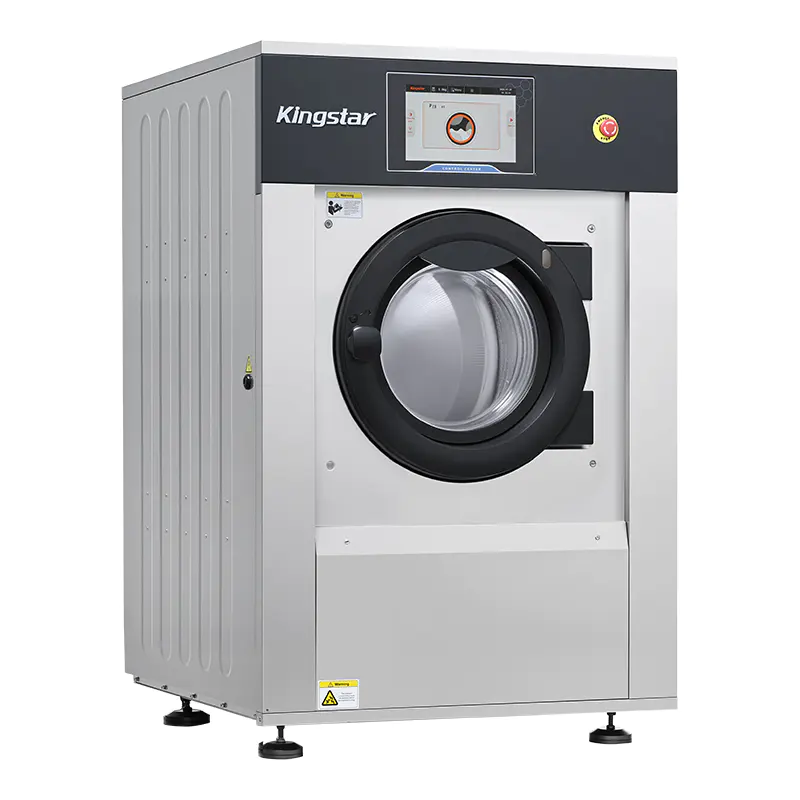
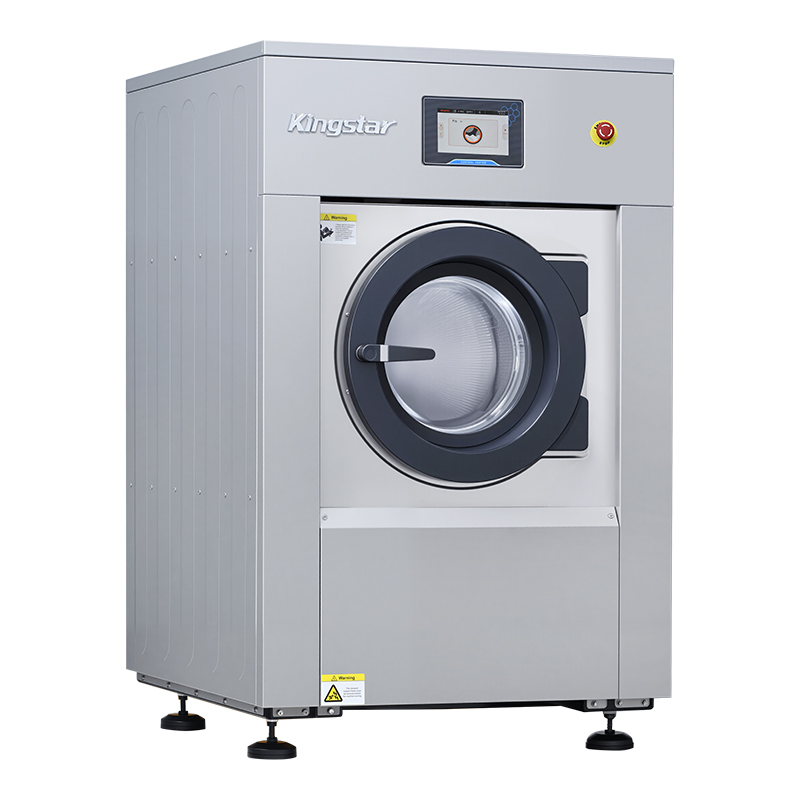
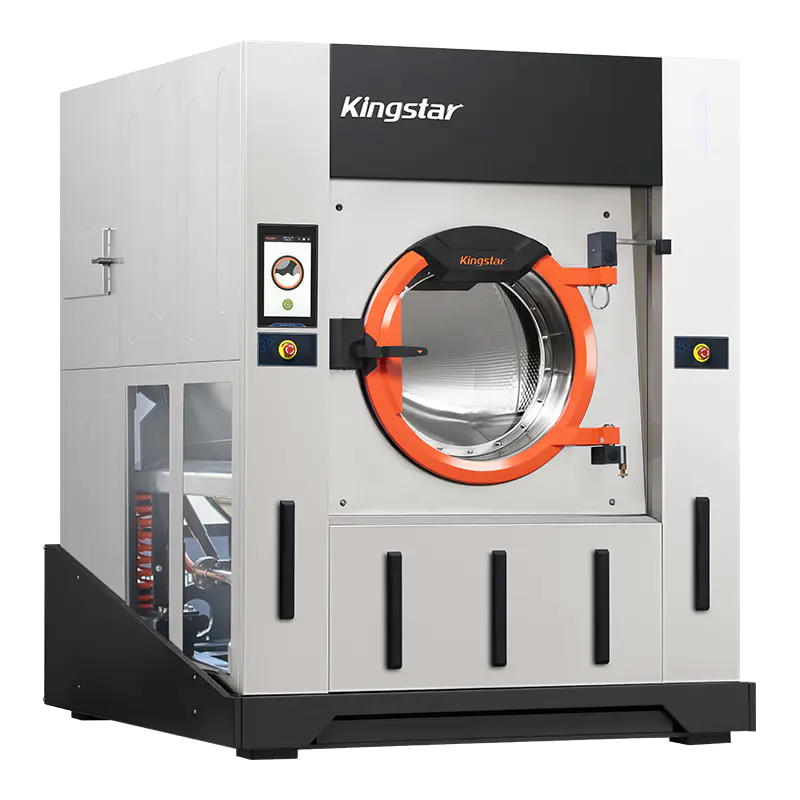
Professional Washer( Wet Cleaning Washer )20/25kg
1. Designed for Professional Laundry Production
Industrial and commercial laundry operations cannot rely on the same design principles as domestic washing. Professional users need equipment that can operate repeatedly, process different textile categories, maintain stable quality, and support efficient labor management. The 20/25 kg washer is built around these requirements.
Its construction, control system, drum capacity, extraction performance, and dosing capability are intended for continuous commercial service. The machine can accommodate smaller loads as well as full-capacity loads, with a recommended operating range of 8 to 20 kg for the SHS-2020P and 8 to 25 kg for the SHS-2025P. This operating flexibility helps laundries avoid unnecessary water and chemical consumption when processing partial loads.
The washer is also designed to support more personalized customer requirements. Professional laundries often handle mixed textile categories and specialized orders. A hotel may require separate programs for towels, sheets, uniforms, and delicate guest garments. A healthcare facility may need carefully controlled washing and rinsing cycles. A textile service provider may require specific extraction settings for different finishing processes. Programmable operation allows these requirements to be organized into repeatable washing procedures.
Compared with conventional commercial washers that provide only a limited number of fixed programs, this system offers more than 70 customizable wash programs. Operators can set washing speed, extraction speed, wash time, temperature, rinsing procedures, and other parameters according to fabric characteristics and production needs.
Program settings can also be transferred between devices, helping organizations standardize washing quality across several machines or multiple laundry locations. This is valuable for companies that operate centralized laundry facilities, hotel groups, healthcare networks, or regional textile service centers.
Suitable Load Range
The two available models provide a practical choice for different production scales. The 20 kg model is suitable for medium-sized laundry rooms and operations that need a compact professional washer. The 25 kg model provides additional capacity for facilities with higher daily linen volumes or more frequent batch processing.
| Model | Rated Washing Capacity | Drum Volume | Maximum Extraction Speed |
| SHS-2020P | 8–20 kg | 200 L | 980 rpm |
| SHS-2025P | 8–25 kg | 200 L | 980 rpm |
The flexible load range allows operators to match the washing process to actual textile volume. This is more efficient than using a large machine for every load, particularly when a facility processes garments or linens with different levels of soil and different hygiene requirements.
2. Intelligent Washing and Fabric Protection
One of the most important advantages of a professional wet cleaning washer is the ability to balance cleaning intensity with fabric protection. Excessive mechanical action, unsuitable drum speed, high temperature, or uncontrolled extraction can damage textiles. Insufficient mechanical action or poor rinsing can leave behind soil and chemical residue. The intelligent washing system is designed to provide more precise control over these variables.
The control software was developed using the experience of laundry specialists and software engineers. It manages drum rotation, pause ratios, washing speed, extraction speed, temperature, and cycle duration. These settings can be adjusted according to the structure and sensitivity of the fabric.
For delicate materials such as silk, wool, and cashmere, the drum can operate at a low speed. Gentle rotation reduces unnecessary friction and limits the risk of stretching, surface wear, or deformation. For heavier fabrics such as workwear, towels, and industrial uniforms, the operator can select more intensive mechanical action and appropriate extraction parameters.
More than 70 programmable washing procedures provide a level of flexibility that is not normally available in simple commercial washing equipment. Each program can be configured for a particular textile category, soil level, temperature requirement, washing duration, rinse sequence, and extraction speed.
Touchscreen Control
The machine uses a 12.1-inch full-color LCD touchscreen. The large interface allows operators to review program settings, select cycles, monitor operation, and adjust parameters through an intuitive control structure. A clear interface can reduce training time and help prevent errors caused by complicated manual controls.
One-touch operation supports complete cycle execution after the appropriate program has been selected. This reduces the need for constant operator intervention and allows staff to focus on loading, unloading, sorting, quality inspection, and other important laundry tasks.
The touchscreen also supports the management of customized programs. A facility can create standard operating procedures for different textiles and assign them to specific programs. This improves consistency between shifts and reduces dependence on individual operator experience.
Reduced Risk of Fabric Snagging
The interface between the inner drum and outer cylinder is designed with rolled edges and a narrow clearance of approximately 4 to 6 mm. This helps reduce the possibility of fabric becoming caught between moving components. The narrower opening is intended to provide a safer transition between the drum and cylinder than the wider gaps often found in less refined designs.
The door also uses a convex glass structure. This design helps keep garments away from the loading opening during rotation and reduces the chance that zippers, buttons, hooks, or other clothing components will snag against the door area.
These details are especially important when processing delicate garments, uniforms, high-end clothing, and textiles with attached hardware. Fabric protection is not limited to detergent selection; it also depends on the geometry and finishing of every surface that comes into contact with the load.
Stainless-Steel Water Contact Surfaces
The inner drum, outer cylinder, and water-contact components are made from 304 stainless steel. This material offers strong corrosion resistance and is appropriate for repeated exposure to water, detergent, chemical additives, and elevated temperatures.
A stainless-steel construction helps maintain a clean washing environment and supports long-term structural durability. It also simplifies inspection and routine cleaning because the surfaces are resistant to corrosion and do not easily absorb contaminants.
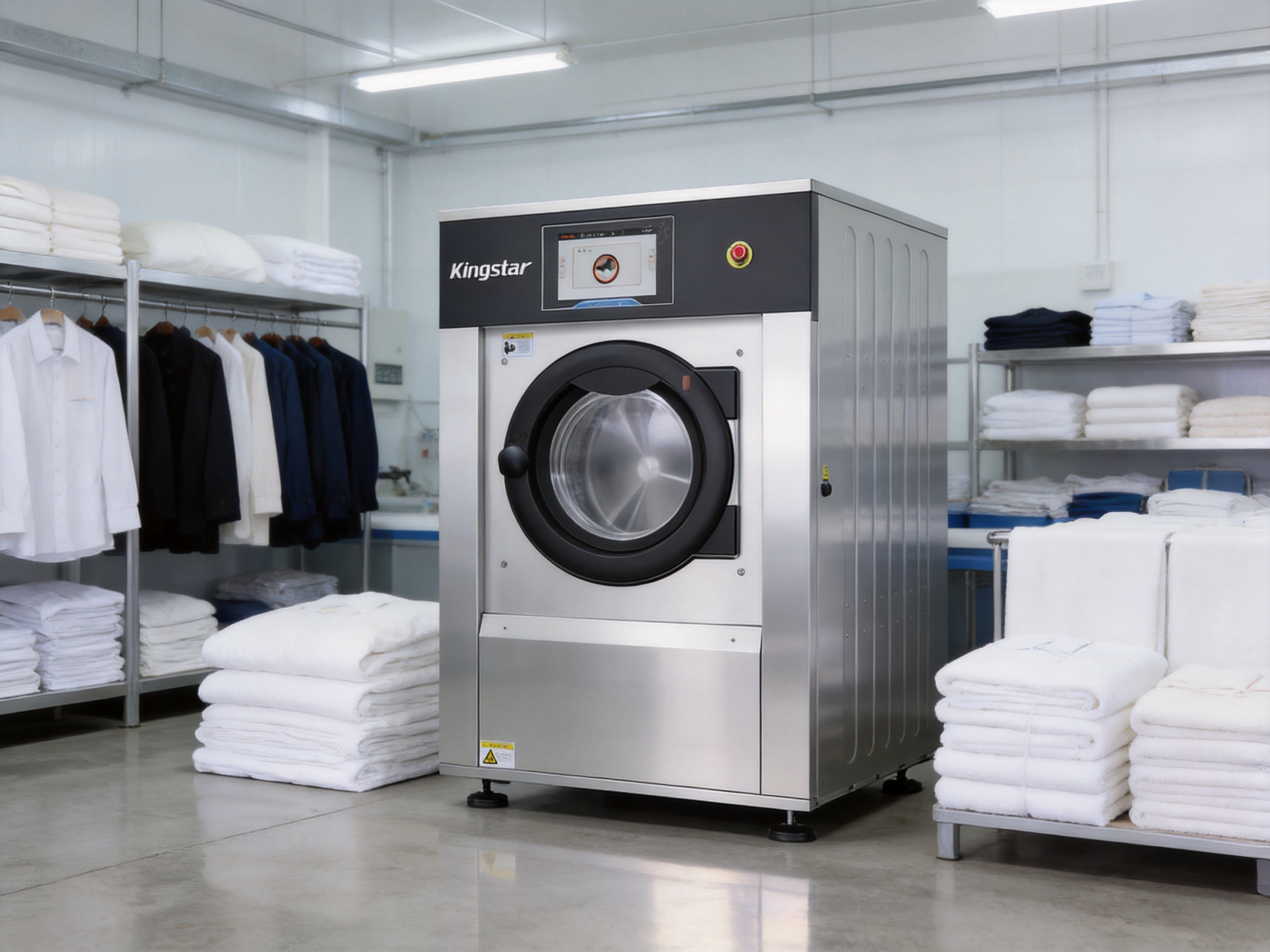
3. Advanced Inner Drum and Sprinkling System
The inner drum is a major factor in washing performance. Its shape, perforation pattern, surface finish, structural strength, and interaction with the textile load determine how effectively water and detergent reach the fabric. The professional washer uses a drum developed through mold technology and specialized manufacturing equipment.
The drum has a seamless and robust structure intended for long-term service. A stable drum structure helps maintain balanced rotation and reduces unnecessary vibration during washing and extraction. It also supports consistent mechanical action across the load.
Diamond-Patterned Perforations
The drum surface uses a diamond-patterned perforation structure with openings of approximately 3 mm in the detailed design description. The pattern increases the contact area between the laundry, water, and drum surface. This promotes effective movement of the load and helps washing liquor circulate through the textiles.
The perforation design is also intended to reduce fabric wear. A well-engineered drum should provide sufficient mechanical action without creating sharp or aggressive contact points. Smoothly formed perforations and a carefully finished surface help protect garments as they move through the wash cycle.
Integrated Spray Rinsing
An integrated spray rinsing system assists with the removal of lint, detergent residue, and suspended particles. Rinsing is a critical stage in commercial laundry because incomplete removal of chemicals can affect fabric feel, color stability, skin comfort, and finishing quality.
The spray system helps distribute clean water over the load and supports a more thorough rinsing process. It can be particularly useful when processing towels, workwear, healthcare textiles, or heavily soiled fabrics where residual detergent and loosened soil must be removed efficiently.
By combining effective drum movement with spray rinsing, the washer provides a more complete cleaning process than equipment that relies only on simple water filling and rotation.
4. Intelligent Weighing and Resource Efficiency
Water, detergent, steam, electricity, and labor are major operating costs in a commercial laundry. A machine that uses the same resources for every load may waste utilities when the drum is only partially filled. Intelligent weighing helps address this problem by measuring the actual load and adjusting the washing process accordingly.
The weighing system dynamically adjusts water, detergent, and steam usage based on the load quantity. This allows partial loads to be processed more efficiently while maintaining the required washing performance. It also reduces the risk of over-dosing detergent or using more water than necessary.
Accurate dosing offers several benefits. It can reduce chemical waste, improve rinsing results, lower the likelihood of detergent residue, and help maintain consistent fabric quality. In a high-volume laundry, even a small reduction in resource consumption per cycle can produce meaningful savings over a year.
High Extraction Performance
The washer provides an extraction factor of 400 G. High extraction performance removes more water from the textile load before drying. This is especially useful for thick fabrics, down jackets, towels, bedding, uniforms, and other materials that retain substantial moisture.
By reducing residual moisture, the machine can shorten the time required in a tumble dryer or finishing system. Shorter drying cycles reduce energy use and can increase the number of batches processed during a working day. High extraction can also improve production planning because less time is needed between washing and drying.
Effective extraction helps prevent water spotting on certain garments, including down jackets and other items where uneven moisture removal may affect appearance. It also supports more predictable drying results.
Compared with lower-speed washers, a 400 G extraction factor provides a significant operational advantage. A lower initial moisture level means that the dryer does not have to remove as much water using heat. This can lower total laundry energy consumption, particularly in facilities that process many loads each day.
5. Automation for Higher Laundry Productivity
Automation is a central advantage of the professional washer. Automated washing programs, weighing, detergent dosing, temperature control, extraction, and one-touch operation reduce the amount of manual work required for each cycle.
Automation also improves repeatability. Manual washing decisions can vary from one operator to another, especially when the laundry handles many fabric types. A programmed system allows the facility to document preferred settings and reproduce them consistently.
The machine provides nine automatic dosing ports. These ports allow different detergents and chemical products to be connected to the washer and introduced at programmed stages of the cycle. Automated dosing improves accuracy and reduces the chance of an operator adding the wrong chemical or incorrect quantity.
Precise chemical dosing is important for both cleaning quality and fabric protection. Too little detergent may leave behind soil, while too much can increase rinsing requirements and create residue. Automatic dosing helps establish a controlled balance based on the chosen program and load size.
One-Touch Operation
After loading the washer and selecting the appropriate cycle, the operator can start the process with minimal additional input. One-touch operation is helpful in busy laundry environments where staff must manage several machines at the same time.
Reduced intervention can also improve safety. Operators have less need to open the machine during a cycle or manually adjust settings while the drum is moving. The machine’s programmed sequence manages washing, rinsing, and extraction in the correct order.
Program Transfer and Standardization
Customized programs can be transferred across devices. This function supports consistent operation when a laundry uses multiple washers or expands its equipment fleet. A facility can establish a validated program for a specific textile and apply it to other compatible machines.
Standardization is especially valuable for multi-site operators. Central management teams can develop washing procedures and distribute them to different branches, reducing variation in quality and simplifying employee training.
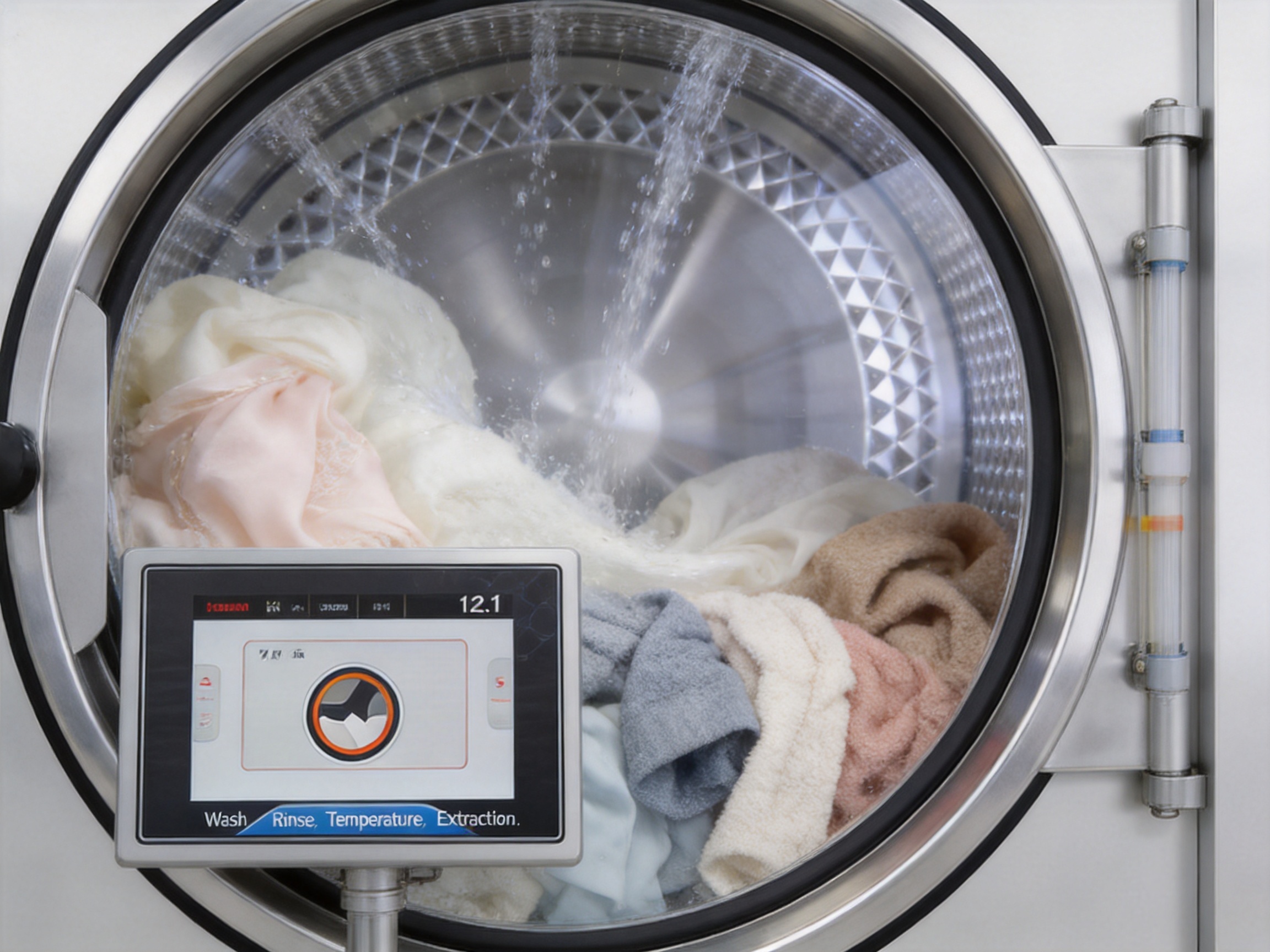
6. Manufacturing Processes and Engineering Strengths
The performance of a commercial washer depends not only on its software and specifications but also on the quality of its manufacturing processes. The equipment described here incorporates several design and production approaches intended to improve stability, durability, and service life.
Weld-Free Frame Construction
The frame structure uses a weld-free process. Traditional welding can create localized heat-affected areas and internal stress. Over time, these stresses may contribute to deformation, especially when equipment is exposed to repeated vibration and heavy operating loads.
A weld-free structural process helps maintain dimensional stability and reduces the risk of large stress-related deformation. A stable frame provides a solid foundation for the drum, transmission system, motor, and other components. It also supports smoother operation during high-speed extraction.
Structural stability is important for both performance and noise control. When a frame remains rigid, the machine can better manage the dynamic forces generated by a rotating load. This helps reduce unnecessary movement, vibration, and mechanical stress.
Balanced High-Speed Extraction
The intelligent extraction design is engineered to support low vibration and stable operation during high-speed spinning. Commercial laundry machines must manage uneven loads, varying fabric weights, and high rotational forces. Proper balance and control are therefore essential.
Stable extraction improves the working environment by reducing noise and movement. It also helps protect the machine’s bearings, seals, drive components, and frame. A washer that extracts smoothly is less likely to transfer excessive vibration to the floor or surrounding equipment.
The stated noise level is no higher than 70 dB. Actual operating sound can vary depending on installation conditions, load balance, flooring, and building structure, but the specification indicates an emphasis on controlled noise performance.
Three-Bearing Transmission Design
The main transmission uses a three-bearing design. Multiple bearing support can improve load distribution across the transmission system and help maintain shaft alignment. This is particularly important during high-speed extraction, when rotating components are exposed to considerable forces.
The transmission bearings and oil seals are sourced from imported brands according to the supplied product information. The design is intended to provide long service life and reduce maintenance requirements. The stated engineering objective is extended operation without frequent bearing or oil seal replacement, subject to correct installation, loading, maintenance, and operating conditions.
Selected Electrical Components
The main motor is custom-made by a listed Chinese company. Circuit breakers, contactors, and relays are supplied by Schneider, while wires, plugs, fasteners, bearings, and other components are selected from established suppliers and imported brands according to the product description.
Using recognized electrical and mechanical components can improve consistency and simplify replacement or service procedures. Reliable contactors and relays support stable control of motors and heating circuits. Appropriate circuit protection also helps protect the machine from electrical faults and abnormal operating conditions.
Component selection is only one part of reliability. Proper assembly, wiring inspection, testing, grounding, and quality control are equally important. The manufacturing approach combines selected components with a structured equipment design to create a commercial washer intended for long-term use.
7. Electrical, Heating, and Utility Specifications
The standard operating voltage is 380 V, three-phase, 50 Hz. The machine also supports a range of available voltage configurations, including single-phase plus neutral, two-phase, three-phase, three-phase plus neutral, and 200–240 V or 380–415 V configurations depending on the selected electrical arrangement.
Because electrical requirements vary between countries and facilities, the final voltage configuration should be confirmed before ordering. Installation must be completed by qualified personnel who can verify incoming voltage, phase arrangement, protective devices, grounding, cable sizing, and local compliance requirements.
| Specification | SHS-2020P | SHS-2025P |
| Operating Voltage | 380 V / 3 phase / 50 Hz | 380 V / 3 phase / 50 Hz |
| Transmission Power | 2.2 kW | 3 kW |
| Electrical Heating Power | 18 kW | 18 kW |
| Steam Pressure | 0.2–0.4 MPa | 0.2–0.4 MPa |
| Inlet Water Pressure | 0.2–0.4 MPa | 0.2–0.4 MPa |
| Automatic Dosing Ports | 9 | 9 |
| Noise Level | ≤70 dB | ≤70 dB |
The 18 kW electrical heating system provides direct heating capability for facilities that require electrically heated wash cycles. The machine also supports steam pressure between 0.2 and 0.4 MPa, allowing facilities with a suitable steam supply to use steam heating where appropriate.
The required pipe connections include a DN15 steam pipe, DN20 inlet pipe, DN20 hot water pipe, and a drain pipe with a diameter of 76 mm. Correct pipe sizing and drainage design are important for maintaining filling speed, rinsing performance, heat transfer, and reliable wastewater discharge.
Installation Planning
Before installation, the laundry should verify available floor space, door access, drainage position, water supply pressure, steam or electrical heating requirements, ventilation, electrical capacity, and service access. The 20 kg and 25 kg models have different overall depths, so the selected model should be checked against the planned installation area.
| Dimension | SHS-2020P | SHS-2025P |
| Overall Dimension | 980 × 1050 × 1570 mm | 980 × 1160 × 1570 mm |
| Inner Drum Diameter × Depth | 750 × 455 mm | 750 × 566 mm |
| Total Weight | 455 kg | 465 kg |
| Drain Center to Floor Height | 181.5 mm | 181.5 mm |
The floor should be strong and level enough to support the machine and manage extraction forces. Adequate clearance around the equipment is recommended so that operators can load and unload safely and service personnel can reach electrical, mechanical, and plumbing components.
8. Applications Across Multiple Industries
The professional wet cleaning washer is suitable for organizations that need more than basic washing capacity. Its combination of programmable operation, fabric protection, high extraction, and automatic dosing supports a wide range of applications.
Hotels and Hospitality Facilities
Hotels, resorts, restaurants, and hospitality businesses process towels, sheets, pillowcases, table linen, uniforms, robes, and guest garments. These textiles may differ in weight, color, fiber content, and soil level.
The washer’s programmable cycles allow hotel laundries to create separate procedures for towels, bedding, uniforms, and delicate materials. High extraction helps reduce dryer time, which is useful when a hotel must turn around large quantities of linen between guest check-out and check-in periods.
Consistent washing also supports guest satisfaction. Clean, fresh, well-maintained linens contribute to the overall perception of a hotel and can reduce premature textile replacement.
Hospitals and Healthcare Facilities
Healthcare facilities require controlled processing for patient apparel, bedding, gowns, towels, and staff uniforms. The machine’s automatic dosing, programmable temperature control, rinse management, and stainless-steel water-contact surfaces support repeatable laundry procedures.
Healthcare operators should establish their own validated textile-processing protocols and comply with applicable local hygiene regulations. The washer can serve as an important part of that process, but equipment selection must be combined with proper sorting, chemical management, thermal control, handling procedures, and quality monitoring.
Commercial Laundry Service Providers
Commercial laundries often process goods from multiple customers. These loads may include hotel linen, restaurant uniforms, industrial workwear, household textiles, and specialty garments. The ability to create and store numerous customized programs allows service providers to adapt cycles to different customer specifications.
Load weighing and automatic dosing help manage costs across different order sizes. High extraction supports faster downstream drying and finishing. Program transfer helps maintain similar results across multiple machines.
Uniform and Workwear Services
Uniform rental companies and industrial workwear services need reliable removal of oil, dust, grease, soil, and other contaminants. Workwear can also include reflective strips, printed logos, fasteners, and mixed-fiber materials that require careful processing.
The washer’s adjustable mechanical action, temperature, detergent dosing, and extraction settings allow operators to create suitable procedures for different workwear categories. The protective drum and door design can reduce the risk of snagging garments with buttons, zippers, hooks, or accessories.
Dry-Cleaning and Wet-Cleaning Businesses
Businesses that traditionally focus on dry cleaning may use professional wet cleaning to process garments that are unsuitable for conventional washing but can be safely cleaned with controlled water-based methods. Delicate-speed programming, customized cycles, and careful extraction are important for such applications.
Wet cleaning can be integrated into a broader garment-care service when operators understand textile composition, finishing requirements, and appropriate chemical selection. The machine provides the control platform needed to manage these specialized processes.
9. Advantages Over Basic Commercial Washers
The professional washer offers several advantages over ordinary washing machines and entry-level commercial washers. These advantages are not based solely on capacity; they involve the entire operating process, from loading and weighing to dosing, washing, rinsing, extraction, and drying.
More Flexible Programs
Many basic washers offer a limited number of preset cycles. The professional system provides more than 70 customizable programs, enabling laundries to manage a broader range of fabrics and customer requirements.
Better Fabric Control
Adjustable drum speeds, pause ratios, temperatures, cycle durations, and extraction speeds allow operators to protect delicate fabrics while applying stronger action to heavily soiled textiles.
More Accurate Chemical Use
Nine automatic dosing ports support controlled introduction of detergents and chemical products. This improves repeatability and can reduce waste caused by manual dosing.
Lower Downstream Drying Costs
A 400 G extraction factor removes more water before drying than lower-performance systems. This can shorten dryer cycles, increase throughput, and reduce energy consumption.
Greater Structural Durability
The weld-free frame, stainless-steel water-contact surfaces, three-bearing transmission, selected components, and controlled extraction design are intended to provide long-term stability in demanding laundry environments.
Improved Operational Consistency
Touchscreen control, program transfer, automatic weighing, and one-touch operation help reduce differences between operators and shifts. This is especially valuable when the laundry employs multiple teams or processes goods for many customers.
10. Maintenance and Service Considerations
Professional equipment achieves its best service life when installation, operation, and maintenance are managed correctly. Operators should follow the manufacturer’s maintenance instructions and establish a regular inspection schedule.
Daily checks may include inspecting the door seal, removing lint and foreign objects, checking chemical connections, verifying that the drain is unobstructed, and ensuring that the machine is not overloaded. Operators should also monitor unusual noise, vibration, water leakage, error messages, and changes in extraction performance.
Regular inspections should cover electrical connections, dosing lines, valves, bearings, seals, belts or drive components where applicable, heating elements, steam connections, and drainage. The frequency of service will depend on load volume, operating hours, water quality, chemical formulation, and environmental conditions.
Correct loading is essential. Overloading can restrict textile movement, reduce cleaning quality, increase mechanical stress, and affect balance during extraction. Underloading may also create imbalance in some cases, so operators should follow recommended load ranges rather than using the drum without regard to capacity.
Water quality should be considered as part of the maintenance program. Hard water can contribute to scale formation in heating and water-contact systems. Appropriate water treatment and periodic descaling may help maintain heating efficiency and reduce deposits.
Chemical compatibility is also important. Detergents, bleaches, softeners, and other products should be selected according to textile requirements and equipment recommendations. Incorrect concentrations or incompatible chemicals may affect fabric quality, seals, stainless-steel surfaces, or dosing components.
The stated design life is approximately 20 years under appropriate operating and maintenance conditions. Actual service life depends on installation quality, operating frequency, load management, preventive maintenance, water and chemical conditions, and timely replacement of wear components.
11. How to Select Between the 20 kg and 25 kg Models
The decision between the SHS-2020P and SHS-2025P should be based on daily laundry volume, average batch size, available floor space, utility capacity, and future expansion plans.
The 20 kg model is suitable for operations with moderate production requirements or limited installation depth. It can also be useful as a dedicated machine for delicate garments, specialty orders, or smaller customer batches.
The 25 kg model provides additional load capacity and may be preferable for hotel laundries, hospitals, commercial laundry plants, and uniform service providers that regularly process larger quantities. Its greater drum depth requires slightly more installation space.
Facilities should avoid selecting a machine solely by maximum capacity. The most economical choice is the model that matches actual daily loads while maintaining proper textile movement and efficient utility use. A machine that is too large for the typical workload may not operate at its most efficient level, while a machine that is too small may create excessive cycles, labor demands, and bottlenecks.
It is also important to consider the complete laundry system. The washer should be matched with suitable dryers, folding equipment, finishing equipment, water heating systems, chemical systems, and ventilation. High extraction performance can reduce the required dryer capacity, but the entire workflow should be evaluated before final equipment selection.
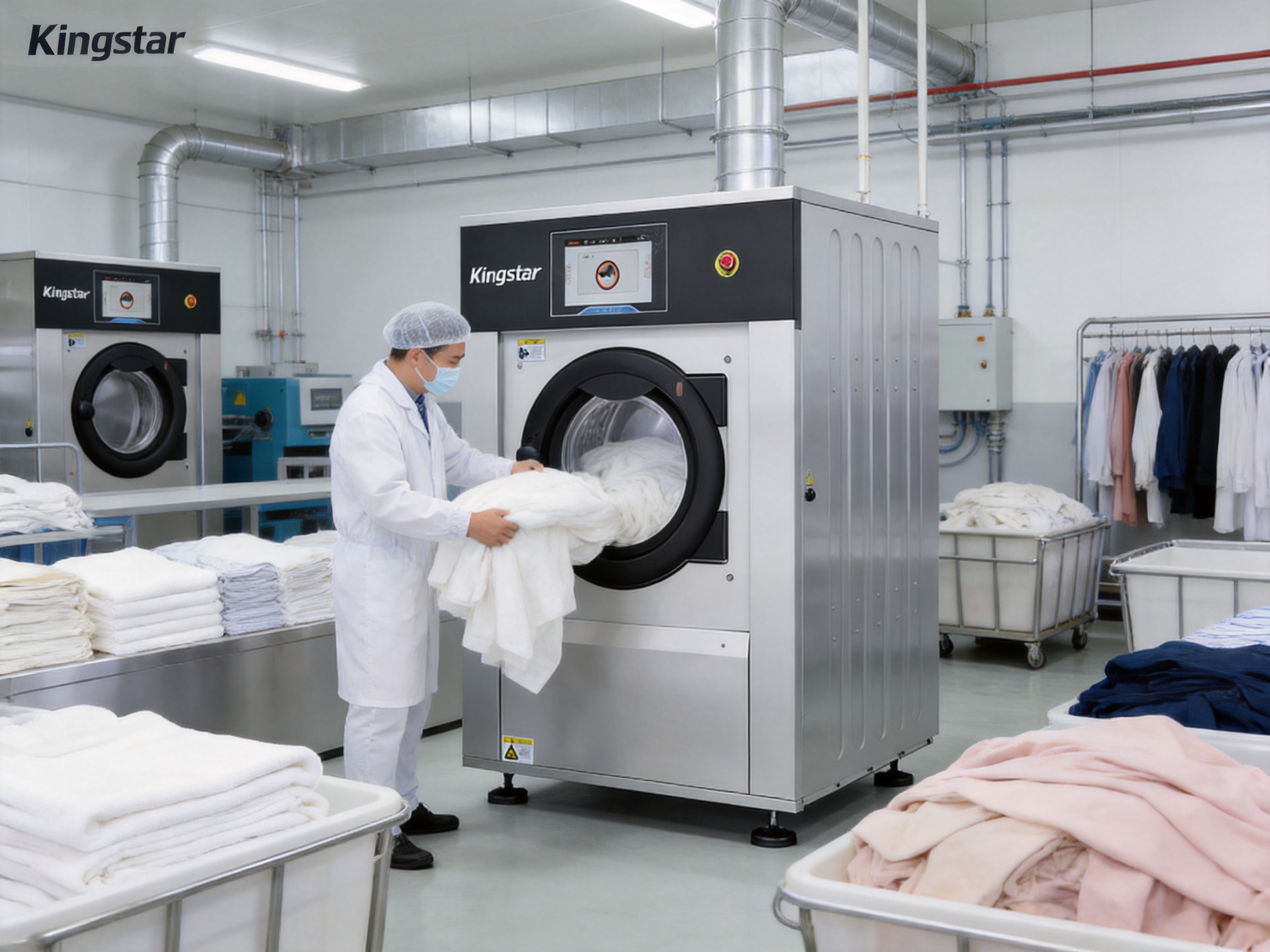
12. Recommended Operating Workflow
Step One: Sort the Laundry
Separate textiles by fiber type, color, soil level, customer order, and required treatment. Delicate garments should not be processed together with heavy industrial workwear unless the selected program is appropriate for both categories.
Step Two: Inspect the Load
Check pockets, remove foreign objects, close zippers where appropriate, and identify items with loose buttons, hooks, metal parts, or special finishing requirements. Proper inspection reduces the risk of damage to garments and equipment.
Step Three: Weigh and Load Correctly
Load the washer within the recommended capacity range. Avoid excessive compression and distribute textiles evenly. Intelligent weighing can then adjust resource consumption according to the actual load.
Step Four: Select the Program
Choose a validated program for the fabric type and soil condition. Review the temperature, washing speed, extraction speed, detergent sequence, and cycle duration before starting.
Step Five: Monitor the Cycle
Use the touchscreen to monitor progress and respond to alerts if they occur. Do not open the door or interrupt the cycle unless the control system and operating procedure permit it.
Step Six: Transfer to Drying or Finishing
After extraction, move the load promptly to the appropriate drying or finishing equipment. The high extraction factor helps reduce residual moisture and supports faster downstream processing.
Step Seven: Record Results
For commercial operations, recording cycle performance, chemical consumption, textile quality, and any operating issues can help improve programs over time. Data from routine production can be used to refine water, detergent, temperature, and extraction settings.
13. Quality, Safety, and Long-Term Value
A commercial washer should be evaluated not only by purchase price but also by total cost of ownership. Total cost includes utilities, detergent, labor, maintenance, downtime, textile replacement, and the cost of associated drying and finishing operations.
The professional wet cleaning washer is designed to create value in several of these areas. Intelligent weighing can reduce water, detergent, and steam consumption. Automatic dosing can limit chemical waste. High extraction can reduce dryer energy. Programmable operation can improve productivity and reduce processing errors. Durable construction can help limit downtime and replacement costs.
Fabric protection also has an economic impact. When garments are exposed to excessive mechanical action, high temperatures, or unsuitable extraction, they may wear out more quickly. A controlled wet cleaning process can help extend textile service life, reducing the frequency of replacement.
Safety features and controlled operation are equally important. The machine should be installed with suitable electrical protection, grounding, drainage, and access control. Operators should receive training in loading, chemical handling, emergency procedures, and routine inspection.
The combination of intelligent control, advanced drum design, careful material selection, and robust manufacturing makes the equipment suitable for organizations seeking a dependable long-term laundry asset rather than a basic washing appliance.
14. Frequently Asked Questions
Q1: What is the capacity range of the professional wet cleaning washer?
The SHS-2020P supports washing loads from 8 to 20 kg, while the SHS-2025P supports loads from 8 to 25 kg. The appropriate model depends on average batch size, daily production, available space, and future capacity requirements.
Q2: Is the machine suitable for delicate fabrics?
Yes. The machine supports low drum speeds and customized programs for delicate and high-value fabrics such as silk, wool, and cashmere. Operators should still select suitable detergents, temperatures, mechanical action, and extraction settings based on the care requirements of each textile.
Q3: How many washing programs are available?
The control system supports more than 70 customizable wash programs. Programs can be adapted for different fabrics, soil levels, temperatures, washing times, drum speeds, extraction speeds, and chemical sequences.
Q4: Does the machine dose detergent automatically?
Yes. The washer provides nine automatic dosing ports. These ports allow detergents and other chemical products to be introduced at programmed stages of the cycle.
Q5: What is the extraction factor?
The extraction factor is 400 G. This high extraction performance helps remove moisture before drying, which can reduce drying time and energy use.
Q6: What materials are used for the drum and water-contact surfaces?
The inner drum, outer cylinder, and other water-contact surfaces are made from 304 stainless steel. This material provides corrosion resistance and supports hygienic, long-term operation.
Q7: What heating options are supported?
The washer includes 18 kW electrical heating and supports steam pressure from 0.2 to 0.4 MPa. The final heating configuration should be selected according to the facility’s available utilities and installation requirements.
Q8: What voltage does the machine use?
The standard specification is 380 V, three-phase, 50 Hz. Other voltage configurations are available, including various 200–240 V and 380–415 V arrangements. The required electrical configuration should be confirmed before purchase and installation.
Q9: Is the washer suitable for hospitals?
The washer can be used for healthcare textiles such as bedding, gowns, uniforms, and towels. Healthcare facilities must establish their own validated laundry procedures and comply with applicable hygiene, chemical, temperature, and handling regulations.
Q10: How does intelligent weighing reduce costs?
Intelligent weighing adjusts water, detergent, and steam usage according to the actual load. This helps prevent overuse of utilities and chemicals when processing partial loads while maintaining consistent washing performance.
Q11: What installation requirements should be considered?
Facilities should verify floor strength, levelness, electrical supply, water pressure, drainage, steam or heating connections, ventilation, access space, and service clearance. The 25 kg model is deeper than the 20 kg model and requires appropriate installation space.
Q12: How long can the machine operate?
The equipment is designed for a long service life of approximately 20 years under suitable operating and maintenance conditions. Actual service life depends on installation quality, loading practices, usage intensity, water quality, chemical selection, and preventive maintenance.
Q13: What makes this washer different from a basic commercial machine?
Its main advantages include more than 70 customizable programs, intelligent weighing, nine automatic dosing ports, a 12.1-inch touchscreen, a 400 G extraction factor, advanced drum perforations, spray rinsing, stainless-steel water-contact surfaces, a weld-free frame, and a three-bearing transmission design.
Q14: Can customized programs be used on multiple machines?
Yes. Program settings can be transferred across compatible devices, helping operators standardize washing procedures and quality across multiple machines or laundry sites.
Conclusion
The 20/25 kg professional wet cleaning washer is designed for commercial and industrial laundries that require more control, efficiency, and durability than ordinary washing equipment can provide. Its flexible capacity range, intelligent washing system, touchscreen operation, automatic dosing, high extraction factor, and advanced drum construction make it suitable for a wide variety of professional textile applications.
The machine’s advantages extend beyond cleaning performance. Intelligent weighing helps reduce resource consumption, while high-speed extraction lowers residual moisture and supports faster, more economical drying. Adjustable programs help protect delicate fabrics, maintain consistent quality, and meet the specific requirements of hotels, hospitals, commercial laundry providers, uniform services, and wet-cleaning businesses.
Manufacturing strengths such as a weld-free frame, 304 stainless-steel water-contact surfaces, a three-bearing transmission, balanced extraction design, selected electrical components, and specialized drum production support long-term operating stability. These features position the washer as a complete professional laundry solution rather than a simple high-capacity washing appliance.
For facilities planning a new laundry installation or upgrading existing machinery, the final selection should consider load volume, textile types, utilities, floor space, labor requirements, drying capacity, maintenance support, and future expansion. When correctly installed and operated, the professional wet cleaning washer can improve productivity, protect textile quality, reduce operating costs, and provide reliable performance throughout demanding daily laundry production.
References
1. Product technical specification sheet for the SHS-2020P and SHS-2025P professional wet cleaning washer.
2. Commercial laundry equipment design principles for washer-extractors, extraction systems, and textile-care machinery.
3. General guidance on professional textile washing, wet cleaning, chemical dosing, and fabric protection.
4. Industrial equipment maintenance practices for stainless-steel washing systems, drainage assemblies, heating systems, and rotating machinery.
5. General principles of commercial laundry workflow planning, energy reduction, moisture extraction, and drying optimization.
Product: Professional Washer( Wet Cleaning Washer )20/25kg

ADD:No.388 Xinggang Road, Chongchuan District, Nantong City, 226000, Jiangsu Province, China.
-
Phone: +86-13917089379
-
Tel:+86-13917089379
-
Fax:+86-0513-85663366
-
E-mail:louislu@kingstarlaundry.com
products