英语
英语 俄语
俄语 西班牙语
西班牙语 德语
德语
Home / Author / Yutong Cai — Customer Solutions Specialist / 120kg Large Capacity Forward Tilting Washer Extractor: A Complete Guide to High-Productivity Industrial Laundry Processing

Kingstar is your trusted partner for industrial and commercial laundry equipment. We specialized in the R&D and manufacturing of high-end industrial washers, commercial washers and dryers. Meanwhile, we provide global clients with comprehensive planning, layout workflow design, and software-hardware integration services for smart laundry plants.
Yutong Cai — Customer Solutions Specialist
Sep 26,2026
120kg Large Capacity Forward Tilting Washer Extractor: A Complete Guide to High-Productivity Industrial Laundry Processing
Introduction
Industrial laundry operations require equipment that can process large volumes of textiles consistently, safely, and economically. Hotels, hospitals, textile-service companies, dry cleaners, ships, institutional laundries, and commercial laundry rooms all face the same basic challenge: a washing machine must deliver reliable cleaning performance while reducing handling time, water waste, labor requirements, and downtime.
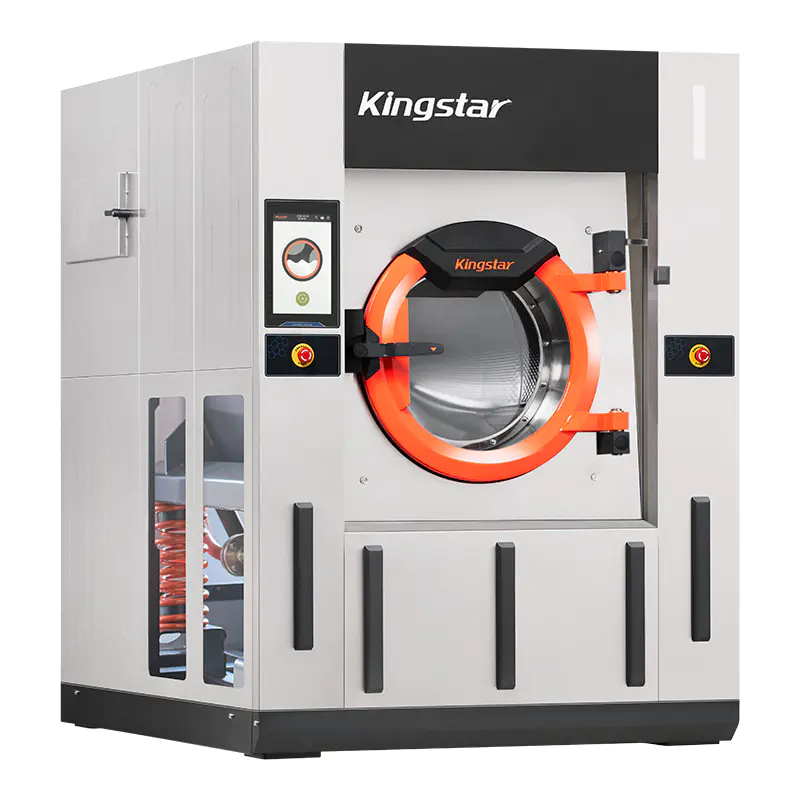
The 120kg Large Capacity Forward Tilting Washer Extractor is designed for demanding industrial washing applications where high throughput and efficient unloading are essential. With a rated capacity of 120 kilograms, a 1,200-liter drum volume, a maximum extraction speed of 745 revolutions per minute, and a G factor of 400, this model is intended for large-scale laundry processing. Its forward-tilting construction provides an important operational advantage by helping operators unload washed textiles more efficiently than with a conventional fixed-position washer extractor.
The machine is identified as model SHS-2120T. It is engineered for use in industrial laundry rooms, dry-cleaning facilities, ships, and other professional environments where washing capacity, extraction efficiency, and dependable operation are important. A robust drum, high-capacity structure, steam and water connections, and a forward tilt angle of 15 degrees combine to create a practical solution for heavy-duty laundry work.
This article examines the machine’s specifications, operating advantages, applications, manufacturing strengths, installation requirements, maintenance considerations, and purchasing value. It also explains how a large-capacity forward-tilting washer extractor can improve workflow compared with smaller machines or traditional non-tilting designs.
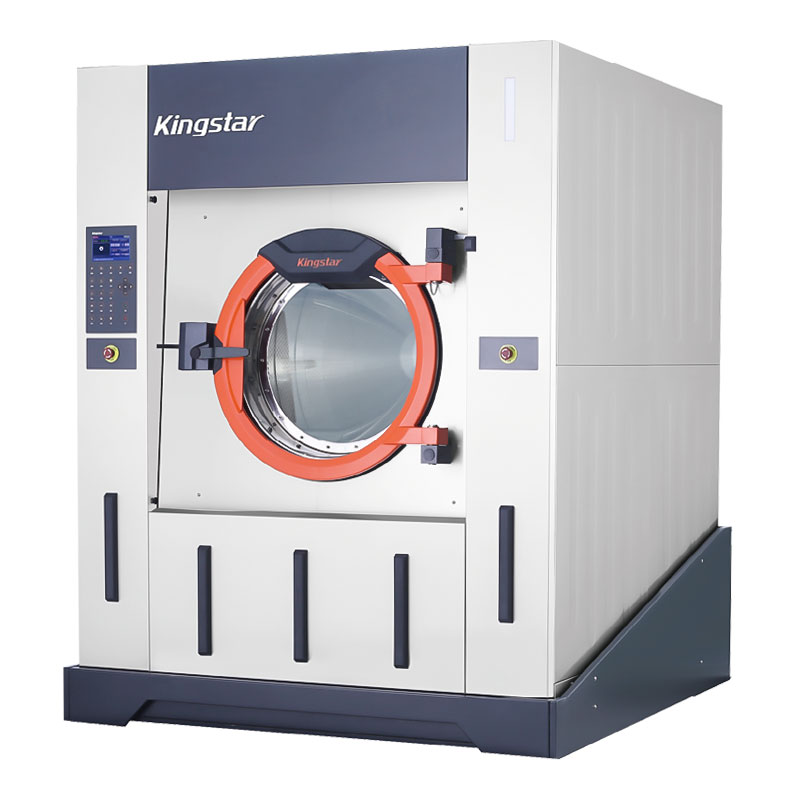
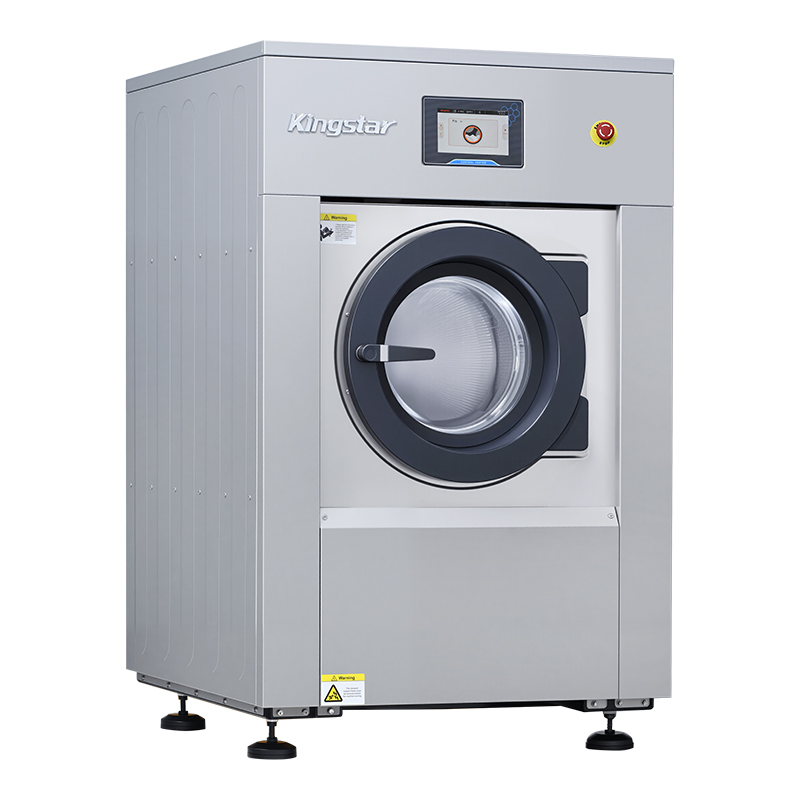
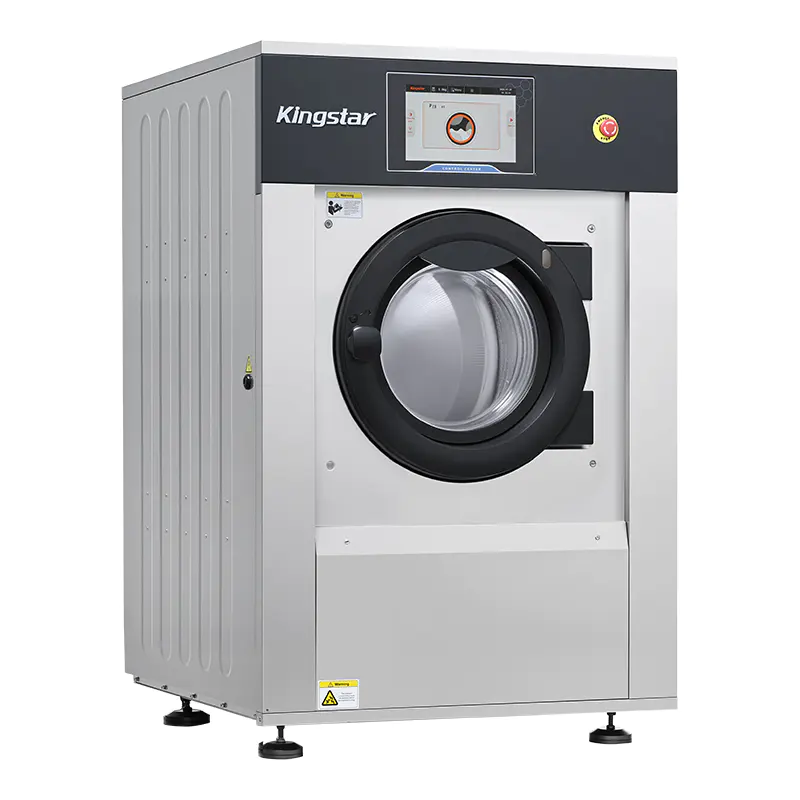
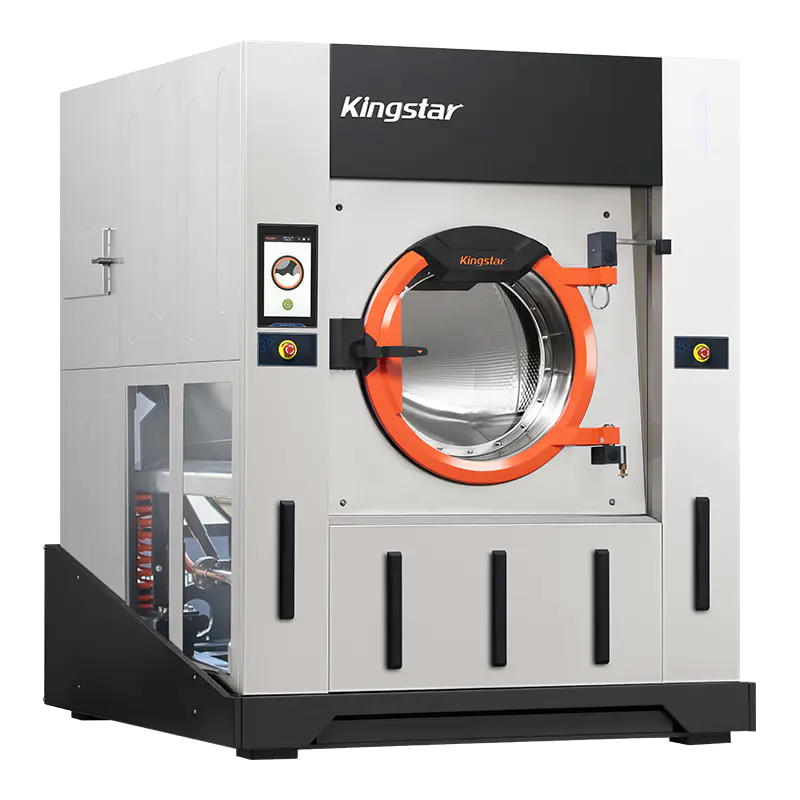
120kg Large Capacity Forward Tilting Washer Extractor
Product Overview
The SHS-2120T is a large industrial washer extractor built around a 120kg nominal textile capacity. Its size makes it suitable for operations that need to process substantial loads in fewer cycles. Instead of dividing one large batch into several smaller loads, a laundry can use the machine to handle a larger quantity of sheets, towels, uniforms, workwear, or other washable textiles in a single operation, provided that the materials and loading density are appropriate.
The 1,200-liter volume supports the machine’s 120kg capacity. A suitable relationship between drum volume and textile load is important because the washing process requires sufficient space for textiles to move through the wash liquor. Proper loading helps water, detergent, heat, and mechanical action reach the fabrics evenly. At the same time, the large drum allows the machine to handle bulky items that may be difficult to process in smaller commercial washers.
The machine uses a maximum speed of 745 rpm and provides a G factor of 400. Extraction speed and G factor are critical because they influence how much moisture remains in the textiles after the final spin. Effective extraction reduces the water load carried into the drying process. This can shorten drying time, improve dryer productivity, and reduce the energy required for subsequent finishing operations.
A forward tilt angle of 15 degrees supports unloading after the wash and extraction cycle. In a fixed washer extractor, staff may need to reach deeply into the drum, manually pull out heavy wet textiles, or use additional handling equipment. Forward tilting changes the unloading position and can make it easier to transfer the load into carts, conveyors, or other downstream equipment.
Key Technical Specifications
| Model | SHS-2120T |
| Rated capacity | 120 kg |
| Drum volume | 1,200 L |
| Voltage | 380 V |
| Maximum speed | 745 rpm |
| Motor power | 15 kW |
| G factor | 400 G |
| Steam pressure | 0.4–0.6 MPa |
| Water inlet pressure | 0.2–0.4 MPa as specified |
| Noise level | ≤70 dB |
| Steam pipe | DN25 |
| Water inlet pipe | DN60 |
| Hot water pipe | DN50 |
| Drain connection | ON110 as listed in the supplied specification |
| Drum diameter | 1,310 mm |
| Drum depth | 950 mm |
| Forward tilt angle | 15 degrees |
| Approximate weight | 3,830 kg |
| Overall dimensions | 2,100 × 1,850 × 2,350 mm |
All utility connections and structural requirements should be verified by the purchaser and installation contractor before commissioning. Actual site conditions, local regulations, water quality, electrical standards, drainage design, and steam-system configuration may require additional engineering review.
Why Large-Capacity Washing Matters
Large laundry facilities often measure productivity by kilograms processed per hour, not simply by the number of machines installed. A 120kg washer extractor can help increase output by processing more textiles per cycle. When the machine is correctly loaded and operated, fewer cycles may be needed to process the same daily volume.
Fewer cycles can provide several practical benefits. Operators may spend less time opening, loading, and unloading machines. Water and chemical dosing can be managed over larger batches. The number of transfers between washing and extraction stages can be reduced. In addition, a large machine can help centralize production in a professional laundry room instead of relying on numerous smaller units.
Capacity is especially important for businesses serving hotels, hospitals, restaurants, factories, schools, public institutions, and transportation facilities. These users often generate large quantities of similar textile products, including bed linen, towels, table linen, uniforms, protective clothing, and general workwear. A machine of this scale can be integrated into a planned production flow with sorting, washing, extraction, drying, ironing, folding, and dispatch areas.
However, large capacity should not be confused with simply filling the drum as much as possible. Different textiles have different densities, absorbency levels, and movement requirements. Towels, for example, may occupy a different practical volume than flat linen or uniforms. Operators should follow suitable loading practices and process textiles according to their composition, color, soil level, and finishing requirements.
Forward-Tilting Design and Workflow Efficiency
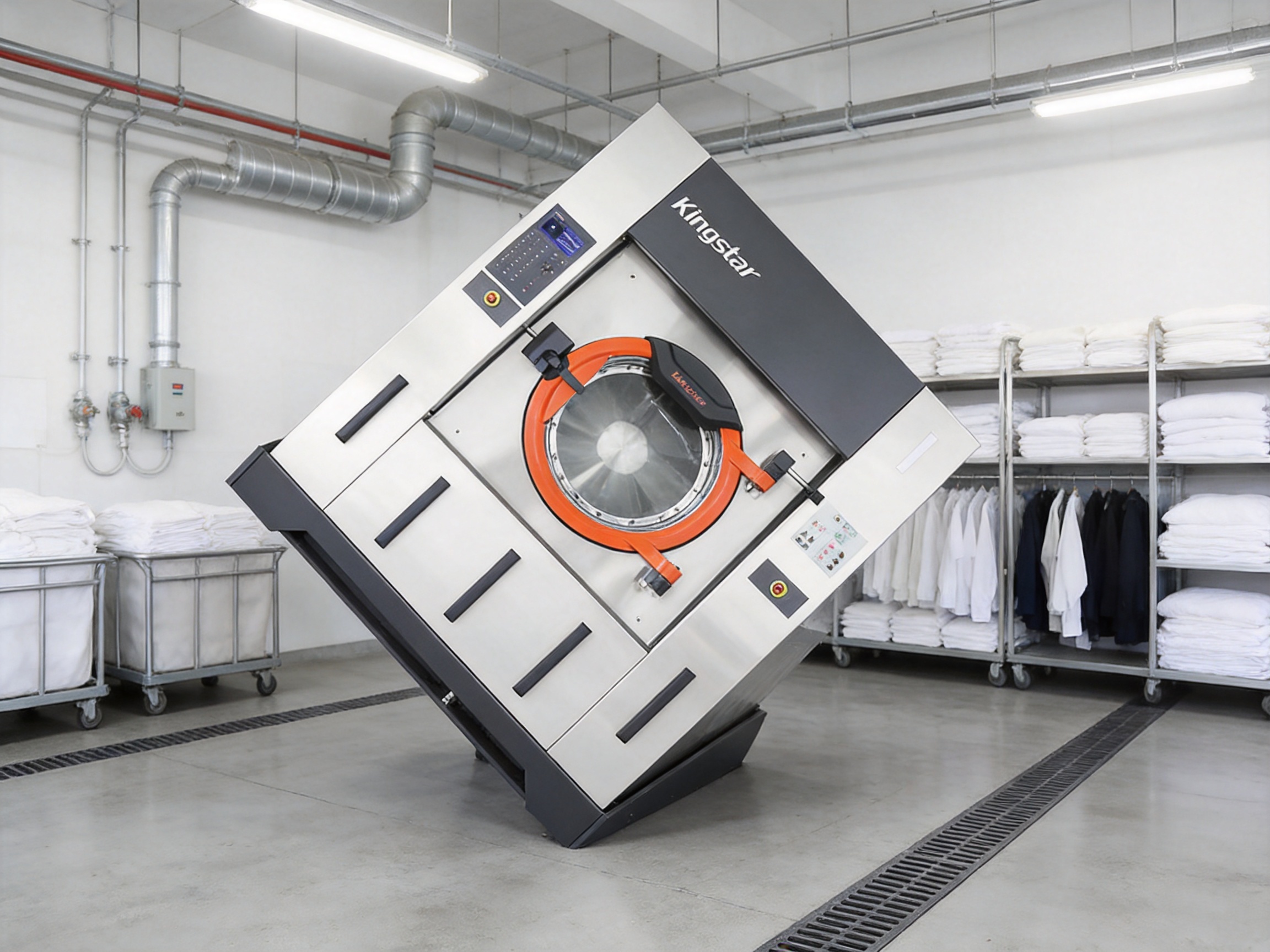
The forward-tilting structure is one of the most distinctive features of this washer extractor. The machine can tilt forward by 15 degrees to support unloading. This design directly addresses one of the most labor-intensive steps in industrial laundry processing: removing heavy, wet textiles from a deep drum.
Wet laundry can be significantly heavier than dry laundry because fabrics retain water after washing and extraction. Reaching into a large drum repeatedly can place stress on operators’ backs, shoulders, and arms. By changing the drum position during unloading, a forward-tilting machine can reduce the distance that workers need to reach and pull. This may help create a more comfortable and organized handling process.
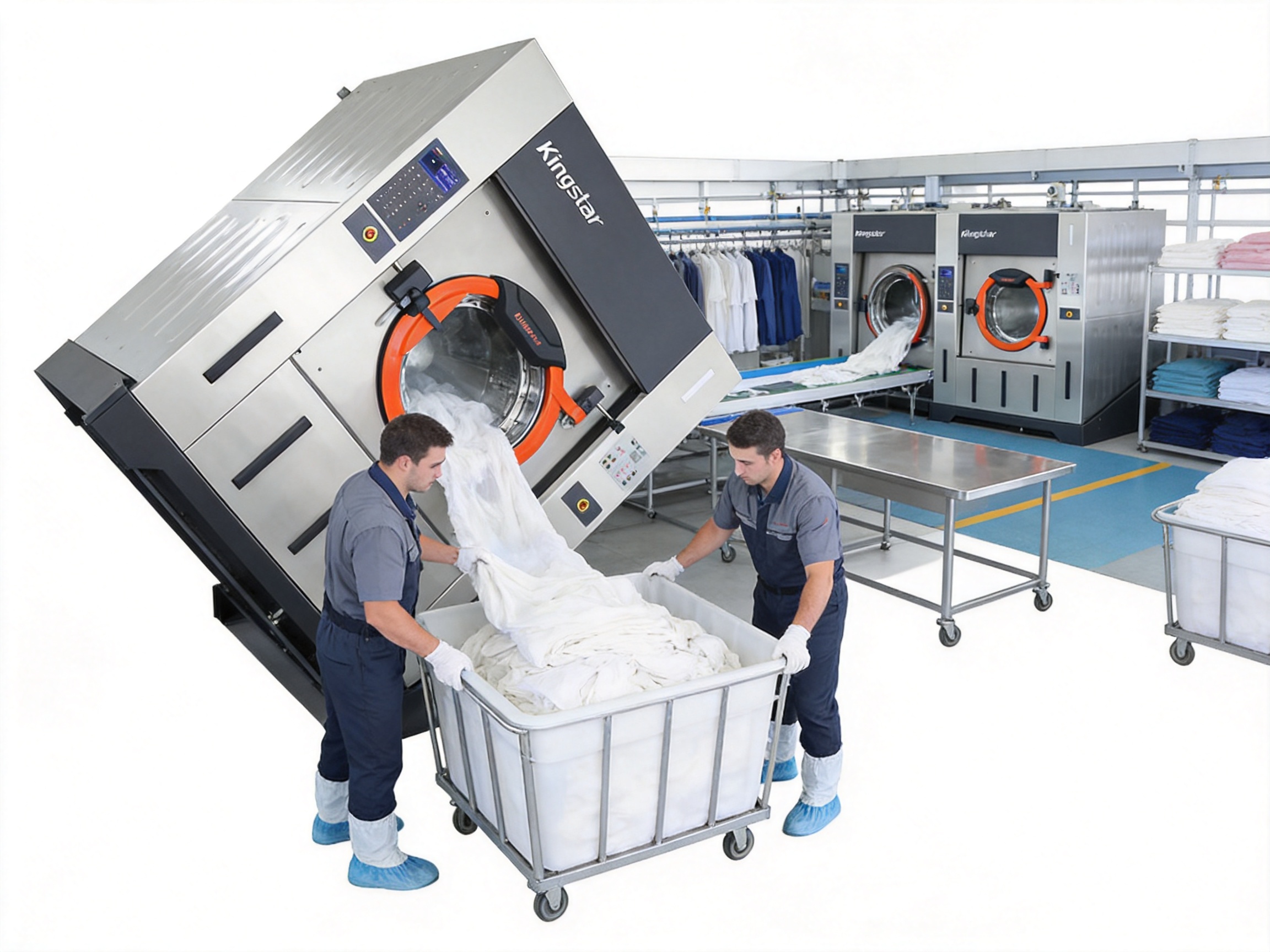
The tilting action can also improve compatibility with collection carts or transfer equipment. A laundry may position a cart in front of the washer extractor and move the load directly into it. The precise arrangement depends on the facility layout, cart dimensions, floor level, and the type of textiles being processed, but the forward discharge orientation offers more flexibility than a fixed machine.
In comparison, a conventional non-tilting washer extractor may require more manual intervention. Operators may need to remove the load in several stages or use additional tools to access textiles at the rear of the drum. For high-volume facilities, the time saved during repeated unloading cycles can become an important productivity factor.
Operational Advantages of the Tilting Function
The 15-degree forward tilt can support faster unloading.
It may reduce the need for deep manual reaching.
It can improve the transfer of wet textiles into carts or downstream handling systems.
It may help organize a clearer separation between the washing area and the clean-laundry handling area.
It can be valuable in facilities where labor efficiency and ergonomic workflow are major concerns.
The tilting function should always be operated according to the manufacturer’s procedures. The area in front of the machine must be kept clear, and staff should be trained to avoid standing in unsafe positions during movement. Safety interlocks, control procedures, and site-specific risk assessments are essential parts of an industrial laundry installation.
High-Speed Extraction and Downstream Drying Benefits
Washing and extraction are not isolated processes. The efficiency of the washer extractor directly affects the dryer, ironer, folder, and other finishing equipment that follow it. The SHS-2120T reaches a maximum speed of 745 rpm and provides a G factor of 400, supporting strong moisture removal from washed textiles.
The G factor represents the relative centrifugal force applied to the laundry during extraction. A higher extraction force generally helps remove more water, although the final result also depends on fabric type, load balance, extraction duration, drum design, and the textile’s moisture-retention characteristics. For commercial operators, the objective is not simply high speed; it is controlled, consistent extraction that prepares the load efficiently for drying or finishing.
Reduced residual moisture can provide several downstream benefits. A dryer may require less time to bring textiles to the desired moisture level. Energy consumption per kilogram of dried laundry may be reduced because less water must be evaporated. Drying capacity may increase without adding another dryer immediately. In some operations, lower moisture also improves the performance of ironing and folding equipment.
These benefits can be especially meaningful when energy costs are a major part of operating expenses. Drying water requires substantial thermal energy. Any improvement in extraction that reduces the amount of water entering the dryer can contribute to lower energy demand. The actual savings will depend on fabric type, wash formula, dryer efficiency, ambient conditions, steam or gas costs, and operating discipline.
Balancing Speed, Fabric Care, and Productivity
Not every textile should be processed at the same extraction speed. Heavy-duty cotton goods may tolerate a stronger extraction program, while delicate fabrics or structured garments may require a gentler setting. A programmable operating system can allow the laundry to select appropriate wash and extraction parameters for different textile categories.
Correct load balance is also important. Unevenly distributed textiles can create vibration, prolong cycle times, or cause the control system to adjust or interrupt operation. Operators should distribute the load properly and avoid mixing items with dramatically different weights or absorption characteristics unless the process has been validated.
The machine’s stated noise level of no more than 70 dB provides an important reference for the working environment. Actual noise may vary according to installation, floor conditions, building structure, load balance, maintenance, and surrounding equipment. A stable foundation and correct installation are necessary to support smooth operation.
Steam, Water, and Utility Integration
Industrial washing machines must be integrated into a facility’s utility network. The SHS-2120T is specified for steam pressure of 0.4–0.6 MPa and includes a DN25 steam pipe connection. This makes the model suitable for facilities that use steam as part of their heating and washing process, subject to verification of the local boiler system and pressure-control arrangement.
Steam heating can help a laundry achieve consistent wash temperatures when the facility has a properly designed steam supply. Temperature stability is important for detergent performance, soil removal, hygiene programs, and repeatable processing. The actual wash temperature should be selected according to the textile type, detergent chemistry, soil level, and applicable hygiene requirements.
The supplied specification also lists a water inlet pressure of approximately 0.2–0.4 MPa and a DN60 water inlet pipe. A DN50 hot water pipe is also provided for hot-water integration. Correct water pressure and adequate flow are important for filling, rinsing, and maintaining cycle productivity. If the facility’s water system cannot provide the required flow, filling times may increase and daily output may decline.
The drain system is equally important. The listed drain connection is ON110 in the supplied information. Because industrial drainage terminology and connection markings can vary, the purchaser should confirm the exact connection standard and diameter with the equipment supplier and installation contractor before construction. Drainage must be large enough to handle discharge volume without causing backflow, flooding, or slow emptying.
| Utility area | Listed requirement | Installation consideration |
| Electrical supply | 380 V | Confirm phase, frequency, protective devices, cable sizing, and local electrical regulations. |
| Steam supply | 0.4–0.6 MPa | Provide suitable valves, pressure control, condensate management, and safe insulation. |
| Water inlet | 0.2–0.4 MPa as specified | Verify pressure, flow rate, filtration, water hardness, and pipe sizing. |
| Hot water connection | DN50 | Confirm temperature control and compatibility with the facility’s hot-water system. |
| Steam connection | DN25 | Use appropriate fittings and ensure the supply can meet peak demand. |
| Main water inlet | DN60 | Design the inlet system to support fast and stable filling. |
| Drain connection | ON110 as listed | Confirm the exact specification before installation and provide adequate drainage capacity. |
A complete installation assessment should include floor loading, machine access, ventilation, water treatment, drainage, steam safety, electrical grounding, and service access. With an approximate weight of 3,830 kilograms and dimensions of 2,100 × 1,850 × 2,350 millimeters, the washer extractor requires careful planning for delivery, positioning, and building access.
Construction and Manufacturing Strengths
The product is supplied by Jiangsu Chuandao Intelligent Equipment Co., Ltd., a manufacturer focused on industrial laundry machinery and commercial washer extractors. The company’s product range includes industrial washing machines, hospital washing machines, industrial dryers, commercial washer extractors, stacked washer and dryer systems, stack dryers, and commercial dryers.
This product range indicates a manufacturing focus on complete laundry-processing equipment rather than a single isolated machine category. Such a product portfolio can help customers plan equipment combinations for different stages of the laundry workflow. A customer may require a washer extractor, dryer, and finishing equipment that operate within a coordinated production layout. Working with a manufacturer experienced in several laundry-machine categories can simplify technical communication and equipment planning.
The company’s stated manufacturing strengths include the ability to offer commercial washer extractors and OEM/ODM solutions. OEM and ODM capability can be valuable for distributors, project contractors, and laundry-equipment brands that require customized specifications, private labeling, regional electrical configurations, or project-specific arrangements. Any customization should be confirmed in writing, including the control system, drum configuration, utilities, safety functions, documentation, and delivery scope.
Manufacturing quality for a machine of this size depends on more than the visible exterior. The drum must be fabricated and assembled accurately. Rotating components must be aligned correctly. The frame and support structure must be capable of handling repeated loading and unloading forces. The tilting mechanism must operate smoothly and safely. Utility connections must be correctly positioned and sealed. Electrical and control components must be installed in a manner suitable for an industrial environment.
Process-Oriented Manufacturing
A professional manufacturing process normally includes engineering review, material preparation, fabrication, welding, surface treatment, mechanical assembly, electrical integration, functional testing, and final inspection. For a large washer extractor, each stage contributes to reliability.
Engineering review establishes the relationship between capacity, drum dimensions, drive power, extraction speed, tilt movement, frame strength, and utility requirements. At the stated 120kg capacity and 745 rpm maximum speed, the machine must be designed with attention to dynamic balance and structural stability.
Fabrication and welding influence the strength and long-term durability of the frame, drum housing, supports, and other load-bearing components. Consistent welding procedures and inspection help reduce the risk of defects that could become more serious under repeated industrial use.
Mechanical assembly requires accurate installation of the drive system, bearings, seals, doors, valves, tilt components, and other moving parts. Alignment is particularly important for high-speed rotation. A properly assembled drive system can help minimize vibration, noise, and unnecessary mechanical wear.
Electrical integration connects the motor, control system, sensors, valves, heating-related components, safety devices, and operator controls. Proper wiring, grounding, labeling, and testing support safe operation and easier maintenance.
Final testing should confirm that the machine responds correctly to operating commands, fills and drains properly, reaches the expected speed, performs the tilt movement, and stops under the required conditions. Customers should request applicable testing records, installation instructions, and operation manuals as part of the purchasing process.
Advantages of an Experienced Laundry-Machinery Manufacturer
An experienced manufacturer can better understand the practical relationship between washing, extraction, drying, and textile handling. This knowledge is useful when selecting equipment for a complete laundry room rather than purchasing a single machine without considering the rest of the process.
Manufacturing specialization can also support more consistent spare-parts planning. A company with a broad laundry-equipment portfolio may maintain knowledge of common valves, control components, doors, seals, filters, and service procedures across several product families. The specific availability of parts and service support should still be confirmed for the destination market.
Project experience may help the manufacturer advise on capacity selection, equipment arrangement, utility planning, loading patterns, and workflow design. These services are especially important for hospitals, hotels, ships, and industrial facilities where space, hygiene, access, and production scheduling must be considered together.
Applications in Different Industrial Environments
Industrial Laundry Rooms
Industrial laundry rooms process high volumes of textiles on a regular schedule. The 120kg capacity can support centralized washing for bedding, towels, uniforms, workwear, and other washable materials. The machine can be placed within a complete production line that includes sorting, pre-treatment, washing, extraction, drying, ironing, folding, and storage.
For industrial laundries serving multiple customers, load planning is important. Textiles should be separated according to customer requirements, color, fiber type, contamination level, and finishing standard. The high capacity of the washer extractor can support batch consistency, but operators should avoid combining incompatible textile categories simply to fill the machine.
Hotels and Hospitality Facilities
Hotels generate repetitive volumes of sheets, pillowcases, towels, bathrobes, table linen, and staff uniforms. A large washer extractor can reduce the number of cycles needed during peak periods such as morning linen collection or room-turnover schedules.
The forward tilt can also help hotel laundries manage labor. Staff can transfer heavy wet loads into carts more conveniently, reducing manual reaching and supporting a more orderly clean-laundry flow. Hotel operators should evaluate the machine according to expected daily kilograms, available steam and water capacity, dryer capacity, and floor space.
Hospitals and Healthcare Laundries
Healthcare facilities require carefully controlled textile handling. Bedding, patient garments, staff clothing, towels, and other items may require different wash formulas and separation procedures. The washer extractor can be used in a hospital laundry when the facility’s hygiene program, validation procedures, chemical system, and local regulations are properly addressed.
The machine itself does not replace a complete infection-control process. Hospitals must define clean and soiled zones, control textile movement, select approved detergents and disinfecting procedures, and establish documentation for temperature, chemical dosage, time, and process performance.
Dry Cleaners and Textile-Service Businesses
Although dry-cleaning businesses are associated with solvent-based cleaning, many facilities also process washable garments, uniforms, linens, and household textiles. A large washer extractor can support the wet-cleaning side of the operation and allow the business to expand its service range.
The machine is particularly relevant to textile-service companies that handle recurring contracts for restaurants, factories, workshops, and institutions. Large-capacity washing can improve batch productivity while the extractor reduces the moisture load before drying.
Ships and Marine Facilities
Ships and marine facilities may require industrial laundry equipment for crew uniforms, bedding, towels, and workwear. Space, access, water availability, drainage, vibration control, and electrical compatibility must be reviewed carefully before installation.
Because marine environments can impose special structural and corrosion-related requirements, the purchaser should confirm whether additional materials, coatings, mounting arrangements, or documentation are required. The machine’s dimensions and weight must also be compatible with the vessel’s access route and designated laundry-room structure.
Comparison with Conventional Non-Tilting Washer Extractors
The most direct comparison is between a forward-tilting washer extractor and a conventional fixed washer extractor of a similar capacity. Both machine types can be designed for industrial washing, but their workflow characteristics are different.
| Evaluation factor | Forward-tilting washer extractor | Conventional fixed washer extractor |
| Unloading position | Front position can be adjusted by tilting the machine forward. | Machine remains fixed in its installed position. |
| Manual reaching | May reduce the depth and effort required to remove wet textiles. | Operators may need to reach deeper into the drum. |
| Cart transfer | Can support direct front transfer into a suitable cart or handling system. | May require more manual pulling or additional transfer equipment. |
| Workflow flexibility | Useful where rapid unloading and ergonomic handling are priorities. | May be suitable where lower initial complexity or fixed handling is acceptable. |
| Space planning | Requires clear forward space for safe tilting and unloading. | May require less movement clearance in front, depending on the design. |
| Large-load handling | Combines large capacity with a dedicated discharge movement. | Can provide large capacity but may involve more demanding unloading. |
The forward-tilting design is not automatically the best choice for every facility. A purchaser should compare the total workflow, available space, labor model, loading and unloading equipment, installation cost, and maintenance plan. For high-volume operations where manual unloading is frequent, the productivity and ergonomic benefits may justify the additional design complexity.
Productivity and Total Cost Considerations
The purchase price is only one part of the financial evaluation. A professional laundry should assess the total cost of ownership, including utilities, labor, maintenance, downtime, spare parts, installation, and the effect of extraction performance on drying costs.
The 120kg capacity may reduce the number of cycles required for a given daily workload. If a facility previously used several smaller machines, consolidation may reduce loading and unloading events. However, the machine must be matched with adequate dryer and finishing capacity. If the washer extractor is much larger than the dryers, the washing stage may create a production bottleneck downstream.
The 400 G extraction performance can influence energy use in the dryer. The exact result depends on textile type and operating parameters, but effective moisture removal is generally an important strategy for reducing thermal drying demand. A laundry should measure actual residual moisture and drying time during commissioning to understand the equipment’s practical performance.
The forward tilt can influence labor productivity. If unloading is faster and less physically demanding, workers may process more batches during a shift. It may also reduce the risk of inefficient manual handling. Labor benefits should be evaluated through a realistic workflow study rather than assumed solely from the machine’s specification.
Maintenance costs should include routine inspection of seals, bearings, drive components, valves, electrical connections, safety systems, drain paths, and tilting mechanisms. A preventive-maintenance schedule can identify wear before it causes an unexpected production interruption.
Installation Planning
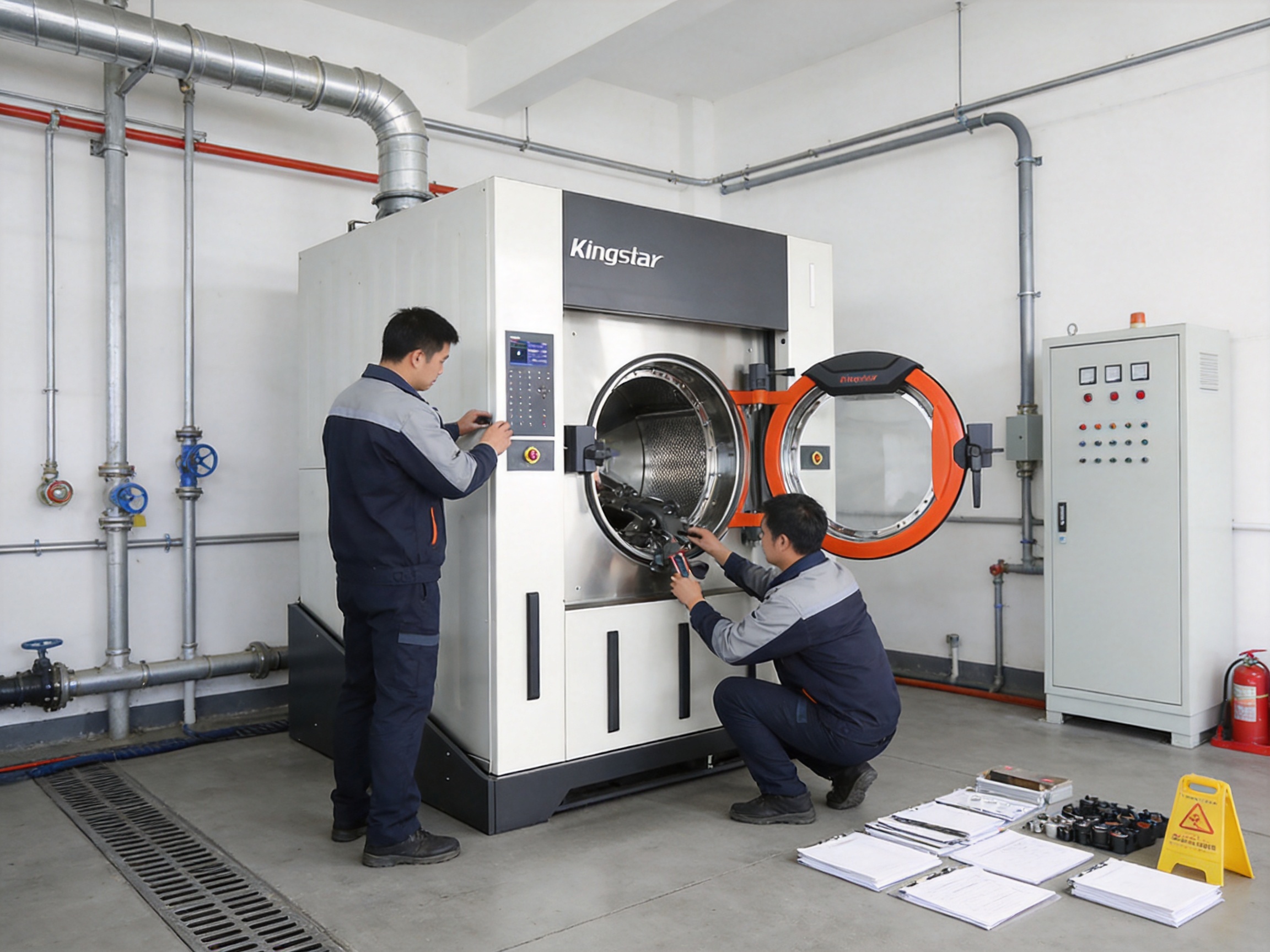
Installing a machine weighing approximately 3,830 kilograms requires professional planning. The building floor must be evaluated for load-bearing capacity and suitability for the machine’s dynamic forces. The installation contractor should confirm the foundation, level, anchoring method, vibration considerations, and access to service areas.
The stated dimensions are 2,100 millimeters in length, 1,850 millimeters in width, and 2,350 millimeters in height. These dimensions should not be treated as the only space requirement. Additional clearance is needed for operators, doors, utility connections, maintenance access, tilting movement, carts, and safe material flow.
The front of the machine must have enough open space for the 15-degree forward tilt and for the receiving cart or transfer equipment. The rear and sides should provide access to valves, electrical components, drain connections, and service panels. The final layout should separate dirty textile entry from clean textile exit wherever possible.
Electrical installation should be completed by qualified personnel. The listed voltage is 380 V, but the purchaser must confirm the required phase, frequency, current, protection, and grounding configuration. Electrical requirements can differ by market and project, so the final electrical diagram should be approved before installation.
Steam installation should include appropriate shutoff valves, pressure control, condensate handling, insulation, and protection from hot surfaces. Water systems should be checked for pressure and flow. Drainage should be sized to handle the machine’s discharge without backing up into the laundry room.
Commissioning Checklist
Confirm that the machine is positioned on a suitable foundation.
Verify that all transport restraints and packaging materials have been removed according to the installation instructions.
Check electrical voltage, grounding, protective devices, and control-panel connections.
Check steam pressure, pipework, valves, and condensate discharge where applicable.
Verify water pressure, inlet flow, hot-water connection, and filtration.
Confirm that the drain connection is correctly installed and free from obstruction.
Test the door, safety functions, emergency stop, tilt operation, filling, washing, draining, and extraction.
Run an initial test cycle without production textiles, followed by a controlled textile test.
Record water levels, cycle times, extraction performance, noise, vibration, and temperature behavior.
Train operators in loading, program selection, unloading, cleaning, and emergency procedures.
Maintenance and Long-Term Reliability
Industrial laundry equipment operates under demanding conditions. High moisture, heat, detergent chemicals, repeated loading, vibration, and daily cycling can affect components over time. A preventive-maintenance plan helps protect productivity and equipment life.
Operators should inspect the door seal and other accessible seals for damage or leakage. Leaks can waste water, create unsafe floor conditions, and allow moisture to reach components that should remain dry. Damaged seals should be replaced using suitable parts and procedures.
The drum and washing chamber should be cleaned regularly. Detergent residue, lint, mineral deposits, and soil can accumulate if the machine is not maintained. The cleaning frequency depends on water quality, chemical formulation, textile type, and daily use.
Drain paths and filters should be checked for lint, foreign objects, and blockages. A restricted drain can extend cycle times and reduce production capacity. Operators should never place hands inside the drum or drain area while the machine is energized or capable of movement.
Drive components, bearings, belts, fasteners, and structural connections should be inspected according to the maintenance schedule. Unusual noise, increased vibration, leakage, slow tilting, delayed draining, or inconsistent extraction should be reported promptly.
The forward-tilting mechanism deserves particular attention because it is central to the product’s workflow advantage. Operators should confirm that the movement is smooth, that the machine stops correctly at the intended positions, and that safety devices operate as designed. The tilt area must remain free from obstructions.
Electrical cabinets should be kept clean and dry. Inspections should be conducted by qualified technicians, especially when checking high-voltage connections, control components, sensors, and safety circuits.
How to Select the Right Configuration
Before purchasing, a laundry should calculate its expected daily textile volume, peak-hour demand, operating shifts, available utilities, and downstream finishing capacity. The 120kg model is most appropriate when the facility can regularly use its capacity without creating long idle periods or excessive underloading.
The textile mix is also important. A facility processing mostly towels may have different loading and drying requirements from one processing mostly flat linen. Garment loads may require more careful movement and extraction settings. The purchaser should discuss textile categories and process formulas with the equipment supplier.
The planned control system should be evaluated. Important questions include the number of wash programs, programmable water levels, temperature control, extraction settings, chemical-injection compatibility, cycle records, alarm functions, and operator access levels. The exact features available on a particular order should be confirmed in the technical offer.
Customers should also confirm delivery scope. This may include the machine, control cabinet, valves, manuals, installation guidance, spare parts, commissioning support, and training. International projects should review packaging, shipping dimensions, customs documentation, local service availability, and electrical conformity requirements.
Why This Model Can Be a Strong Competitive Choice
The SHS-2120T combines several features that are valuable in competitive industrial laundry environments. Its 120kg capacity supports high-volume batch processing. Its 1,200-liter drum provides the working volume needed for large textile loads. Its 745 rpm maximum speed and 400 G factor support moisture removal before drying. Its forward tilt improves access to the load during unloading. Its steam and water connections support integration into professional laundry utility systems.
Compared with smaller machines, it can reduce the number of batches required for large daily workloads. Compared with fixed-position machines of similar capacity, the forward-tilting design may improve unloading ergonomics and transfer efficiency. Compared with equipment that provides weak extraction, its stated G factor can help reduce the moisture burden entering the dryer.
The company’s broader laundry-equipment portfolio is another potential advantage for project customers. Buyers may be able to coordinate washer extractors with industrial dryers, commercial dryers, stacked systems, and hospital laundry equipment. A manufacturer capable of OEM and ODM cooperation can also be considered by distributors and project integrators seeking customized commercial solutions.
These advantages should be evaluated against the customer’s actual operating conditions. A professional comparison should include capacity, cycle time, extraction performance, utility consumption, loading and unloading labor, service response, spare-parts support, installation requirements, and expected operating life.
Safety and Operator Training
Industrial laundry equipment must be operated only by trained personnel. Operators should understand loading limits, textile sorting, chemical handling, door safety, extraction procedures, tilt operation, emergency stopping, and cleaning requirements.
The door must be fully closed and secured before starting a cycle. The machine should never be overloaded, and unsuitable objects should not be placed inside the drum. Operators should not attempt to open the door during movement or extraction unless the control system confirms that it is safe.
Personnel should remain clear of the tilt path. Carts must be correctly positioned, and the floor should be free of water, textile bundles, and other obstacles. Chemical products should be stored and dosed according to their safety data and the laundry’s approved procedures.
Lockout and isolation procedures should be used before maintenance. Electrical, steam, water, and mechanical energy sources must be controlled before technicians work on the machine. Safety training should be refreshed whenever new personnel join the team or operating procedures change.
Frequently Asked Questions
What is the rated capacity of the washer extractor?
The rated capacity is 120 kilograms. Actual loading should be adjusted according to textile type, density, moisture absorption, and the selected wash program.
What is the drum volume?
The listed drum volume is 1,200 liters. The drum diameter is 1,310 millimeters and the drum depth is 950 millimeters.
What does the forward-tilting function do?
The machine can tilt forward by 15 degrees to make unloading easier. This can reduce the need for deep manual reaching and may help transfer wet textiles into a cart or downstream handling system.
What is the maximum extraction speed?
The listed maximum speed is 745 rpm. The washer extractor also has a stated G factor of 400, supporting strong moisture removal during extraction.
How can extraction performance affect drying?
Effective extraction reduces the amount of water retained in textiles after washing. This may shorten dryer operating time and reduce the energy required for evaporation. Actual results depend on textile type, load balance, cycle settings, and dryer performance.
What voltage does the machine use?
The supplied specification lists 380 V. The purchaser should confirm phase, frequency, current, grounding, and local electrical requirements before ordering and installation.
Does the machine require steam?
The specification lists a steam pressure requirement of 0.4–0.6 MPa and a DN25 steam pipe. Facilities should verify that their boiler, pressure-control system, valves, and condensate arrangements are suitable.
What water pressure is required?
The supplied information lists water inlet pressure as approximately 0.2–0.4 MPa. The exact site requirement should be confirmed with the supplier, including flow rate, filtration, water hardness, and hot-water conditions.
Where can this machine be used?
It can be used in industrial laundry rooms, dry-cleaning businesses that process washable textiles, ships, hospitality laundries, institutional laundries, and other professional textile-processing environments.
Is the machine suitable for hospitals?
It can be considered for hospital laundry applications, but the facility must establish appropriate hygiene procedures, clean and soiled separation, chemical programs, temperature controls, validation, and regulatory compliance. The machine must be integrated into the hospital’s complete infection-control process.
What floor space is required?
The listed machine dimensions are 2,100 × 1,850 × 2,350 millimeters. Additional space is required for operators, maintenance, utility connections, carts, door access, and safe forward tilting. A detailed layout should be prepared before installation.
How heavy is the machine?
The approximate listed weight is 3,830 kilograms. The building floor, delivery route, lifting equipment, and foundation must be checked before the machine arrives.
What should be checked before purchase?
Buyers should check capacity, textile types, daily production, utilities, floor loading, drainage, available dryer capacity, installation support, control functions, spare parts, warranty terms, documentation, training, and after-sales service.
Can the manufacturer support OEM or ODM requirements?
The supplied company information states that OEM and ODM commercial washer-extractor solutions are offered. Customers should discuss customization details, branding, controls, electrical configuration, documentation, packaging, and minimum order requirements directly with the manufacturer.
Conclusion
The 120kg Large Capacity Forward Tilting Washer Extractor is designed for industrial laundry operations that need high-volume washing, effective extraction, and more efficient unloading. Its 1,200-liter drum, 745 rpm maximum speed, 400 G extraction factor, 15-degree forward tilt, and professional utility connections make it suitable for a broad range of demanding applications.
Its most important practical advantages are the combination of large batch capacity and forward discharge handling. Large capacity can support higher throughput, while the tilting system can improve unloading efficiency and reduce the physical demands placed on operators. Strong extraction can also help prepare textiles for faster and more economical drying.
Jiangsu Chuandao Intelligent Equipment Co., Ltd. supports this product with a broader portfolio of industrial washing, drying, stacking, and commercial laundry machinery. Its focus on laundry equipment and stated OEM/ODM capabilities may provide useful advantages for distributors, project contractors, institutional buyers, and complete laundry-room developers.
Successful results depend on more than the machine itself. Correct capacity planning, proper textile sorting, suitable wash formulas, adequate utilities, professional installation, operator training, and preventive maintenance are all necessary. When these factors are managed together, the SHS-2120T can become an important production asset for industrial laundry rooms, hospitality facilities, hospitals, ships, textile-service companies, and other high-volume operations.
References
1. Supplied product specification for model SHS-2120T, including capacity, drum volume, speed, power, utility connections, dimensions, and weight.
2. Supplied product information for the 120kg Large Capacity Forward Tilting Washer Extractor.
3. General industrial laundry equipment operating and maintenance principles.
4. General commercial washing, extraction, drying, and textile-handling engineering practices.
5. General workplace safety principles for industrial machinery, steam systems, electrical equipment, and manual textile handling.
Product: 120kg Large Capacity Forward Tilting Washer Extractor

ADD:No.388 Xinggang Road, Chongchuan District, Nantong City, 226000, Jiangsu Province, China.
-
Phone: +86-13917089379
-
Tel:+86-13917089379
-
Fax:+86-0513-85663366
-
E-mail:louislu@kingstarlaundry.com
products