英语
英语 俄语
俄语 西班牙语
西班牙语 德语
德语
Home / News / Industry News / Commercial Washer Machine Buying Guide: Choosing the Right Size, Features, and Laundry App for Maximum Efficiency

Kingstar is your trusted partner for industrial and commercial laundry equipment. We specialized in the R&D and manufacturing of high-end industrial washers, commercial washers and dryers. Meanwhile, we provide global clients with comprehensive planning, layout workflow design, and software-hardware integration services for smart laundry plants.
Industry News
May 21,2026
Commercial Washer Machine Buying Guide: Choosing the Right Size, Features, and Laundry App for Maximum Efficiency
Buying the Right Commercial Washer Machine Starts With Knowing Exactly What You Need
The right commercial washer machine for your operation depends on three things: how much laundry you process per day, what types of items you wash, and how your facility is equipped to handle water, drainage, and power supply. Get those three factors right and the rest of the selection process becomes manageable. Get them wrong and you end up with a machine that's either overwhelmed by daily demand or wastefully oversized — both of which hurt your bottom line. This guide walks through commercial washer sizes and their real-world applications, what to look for in a machine at each capacity level, and how modern commercial laundry apps are changing the way multi-machine operations are managed and monetized.
Commercial Washer Machine vs. Residential: What Actually Differentiates Them
The term "commercial washer machine" gets used loosely, but in the equipment industry it has a precise meaning. A commercial washer is engineered for continuous-duty operation — meaning it is designed to run multiple cycles back-to-back throughout the day, every day, for years. Residential machines are designed for intermittent use, typically one to two loads per day, with components rated accordingly. The structural and mechanical differences are significant.
- Frame construction: commercial machines use heavy-gauge steel frames and reinforced bearings capable of handling the vibration and torque of high-speed extraction; residential frames use lighter steel or plastic composites
- Motor design: commercial washers use direct-drive or inverter-controlled motors rated for continuous duty; most residential motors are designed for intermittent cycling and overheat under sustained commercial load
- Cycle count rating: commercial machines are rated for 10,000 to 30,000 lifetime cycles depending on model; a residential machine is typically rated for 500–1,500 cycles
- Extraction speed: commercial front-loaders spin at 1,000–1,200 RPM; most residential front-loaders peak at 800–1,000 RPM — higher extraction means shorter drying time and lower energy costs
- Serviceability: commercial machines are designed for on-site repair with modular components; residential machines increasingly require full-unit replacement when major components fail
Using residential machines in a commercial setting is a false economy. The repair and replacement cycle on a residential washer used commercially typically results in total cost of ownership 2–3× higher over a 10-year period compared to a properly specified commercial unit, even accounting for the higher upfront cost.
Commercial Washer Size: A Practical Breakdown by Capacity and Use Case
Commercial washer size is measured in pounds of dry laundry capacity — how much clean, dry laundry the drum can process per cycle. This is not the same as water fill weight or wet laundry weight. Understanding the capacity categories and which operations they serve is the foundation of correct equipment selection.
| Capacity Category | Dry Load Weight | Drum Volume (cuft) | Typical Applications | Approx. New Unit Cost |
|---|---|---|---|---|
| Light commercial | 18–25 lb (8–11 kg) | 3.5–4.5 cu ft | Small laundromats, B&Bs, apartments | $1,800–$3,500 |
| Medium commercial | 30–40 lb (14–18 kg) | 6.0–8.0 cu ft | Laundromats, clinics, gyms, hotels | $3,500–$6,500 |
| Large commercial | 55–80 lb (25–36 kg) | 12–18 cu ft | Laundromats (bulky items), care homes, sports facilities | $6,500–$12,000 |
| Industrial / on-premises | 100–400 lb (45–180 kg) | 22–80+ cu ft | Hospitals, large hotels, linen services, prisons | $15,000–$80,000+ |
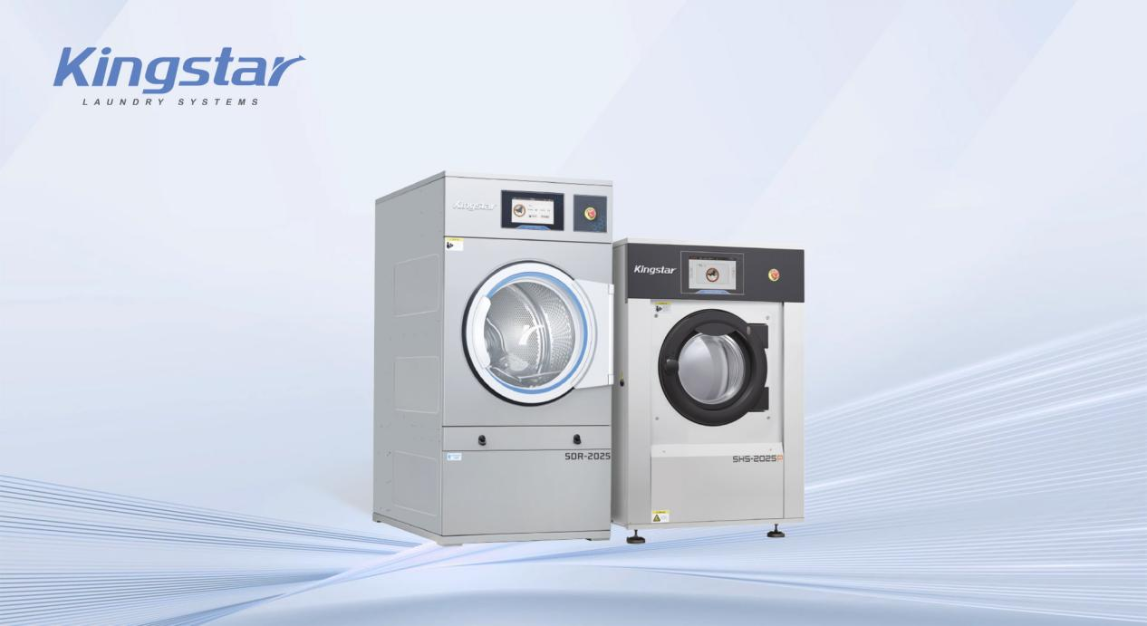
How to Calculate the Right Capacity for Your Operation
The standard formula used by equipment distributors and laundry consultants to size commercial washers is based on daily laundry volume and available operating hours. Start with your estimated daily pounds of laundry, then work backward:
- Estimate your total pounds of laundry per day (for hotels: roughly 12–15 lb per occupied room; for gyms: 0.5–1 lb per member per visit)
- Determine your available operating hours per day (a commercial washer cycle runs 35–55 minutes, yielding 10–16 cycles per machine per 8-hour shift)
- Divide total daily pounds by cycles per machine per day to get the required capacity per machine
- Add a 20–25% buffer for peak days, special items, and machine downtime
Example: a 100-room hotel at 70% occupancy generates approximately 1,050 lb of laundry per day. With a 40-lb washer running 12 cycles per 8-hour shift (480 lb/machine/day), you need approximately 2.2 machines — so 3 machines to maintain the buffer. This is why most mid-size hotels specify two to four 40–55 lb washers rather than a single large-capacity unit: redundancy protects against downtime.
Hard-Mount vs. Soft-Mount Commercial Washers: The Size-Dependent Decision
As commercial washer size increases, the choice between hard-mount and soft-mount installation becomes critical — particularly for upper-floor installations or older buildings with limited structural capacity.
- Hard-mount washers are bolted directly to a concrete floor; they transmit vibration directly into the structure and require significant floor reinforcement for machines above 50 lb capacity; lower unit cost but higher installation cost in many settings
- Soft-mount washers use internal suspension systems to absorb vibration; they can be installed on upper floors, wood-frame buildings, and mobile facilities without special reinforcement; typically cost 20–35% more per unit than equivalent hard-mount models but dramatically reduce installation complexity
For laundromats on ground-floor concrete slabs, hard-mount machines in the 18–55 lb range are standard and cost-effective. For any installation above ground level or in structures built before 1980, soft-mount machines are the safer and usually cheaper total solution once structural engineering costs are factored in.
Choosing a Commercial Washer Machine by Business Type
The optimal commercial washer machine specification varies significantly by business type because the laundry mix, throughput requirements, and operational constraints are fundamentally different. Here is a practical guide by sector:
Laundromats and Coin-Op Operations
Laundromats need a mixed-capacity fleet because customer load sizes vary from a single bag of gym clothes to a week's worth of family laundry plus comforters. A typical well-planned laundromat of 1,500–2,000 sq ft runs a mix weighted toward medium machines with a meaningful share of large-capacity units:
- 40–50% of machines: 18–25 lb (entry price point, highest customer volume)
- 30–35% of machines: 30–40 lb (versatile, family-sized loads)
- 15–25% of machines: 55–80 lb (comforters, rugs, bulk items; highest revenue per cycle)
The 55–80 lb machines deserve particular attention: they typically generate $8–$15 per cycle versus $2.50–$4.50 for small machines, while occupying comparable floor space. Laundromats that underinvest in large-capacity machines leave significant revenue on the table.
Hotels and Hospitality
Hotels running on-premises laundry (OPL — on-premises laundry) need consistent throughput for bed linens, towels, and staff uniforms. The laundry mix is more homogeneous than a laundromat, which allows more uniform machine sizing — typically two to four 40–60 lb washers for properties under 150 rooms. Key considerations specific to hospitality:
- Programmable wash cycles are essential — linens, towels, and delicates require different water temperatures and spin speeds
- Ozone or chemical injection systems can reduce hot water usage by 80–90%, significantly cutting energy costs for high-volume linen washing
- Redundancy is non-negotiable — a hotel cannot function with zero laundry capacity; always specify at least one more machine than daily minimum requirement
Healthcare and Care Facilities
Hospitals, nursing homes, and assisted living facilities have the most stringent laundry requirements of any sector. Infection control drives equipment specification more than throughput efficiency. Key requirements include:
- Barrier washer-extractors (also called pass-through washers): a machine with a door on each side that physically separates the "dirty" loading side from the "clean" unloading side — required in many healthcare laundry standards including those from the Healthcare Laundry Accreditation Council (HLAC)
- Programmable thermal disinfection cycles reaching 71°C (160°F) for 3 minutes or equivalent chemical disinfection protocols
- Documented cycle data for compliance and audit purposes — a requirement increasingly met by commercial laundry app integrations (covered in the next section)
Gyms, Spas, and Fitness Facilities
Towel rental and member amenity services drive laundry needs at fitness facilities. Volume is moderate but frequency is high — multiple loads per day during peak hours. A medium-capacity commercial washer (30–40 lb) is typically sufficient for facilities under 500 members, with the option to add a second machine as membership grows. The key performance metric here is cycle time: machines with shorter cycle options (30–35 minutes for light loads) significantly improve towel turnaround during busy periods.
The Commercial Laundry App: How Software Is Transforming Equipment Management
The integration of commercial laundry apps into washer and dryer operation represents one of the most significant shifts in the industry over the past five years. What began as a customer-facing convenience feature — mobile payment and machine availability notifications — has evolved into a comprehensive operational platform that affects revenue, maintenance scheduling, pricing strategy, and compliance documentation. For any operator running more than five machines, understanding what a commercial laundry app can do is now as important as understanding the machines themselves.
Customer-Facing Features That Directly Drive Revenue
The customer-side features of commercial laundry apps have a measurable impact on revenue and customer retention. Laundromats and multi-housing laundry rooms that have implemented app-connected payment systems consistently report revenue increases upon deployment:
- Mobile payment: eliminating the coin requirement removes the most common friction point that causes customers to postpone laundry or visit a competitor; operators report 15–30% revenue increases after moving from coin-only to mobile payment
- Machine availability in real time: customers can check available machines before traveling to the facility, reducing walk-away rates during peak periods
- Cycle completion notifications: push alerts when a wash cycle ends reduce machine idle time significantly — machines sitting full between cycles lose revenue capacity
- Digital loyalty programs: app-based reward points for frequent users increase visit frequency and average spend per visit
- Remote cycle start: customers can start their machine remotely after loading — particularly useful for multi-housing laundry rooms where the laundry facility is a shared amenity
Operator-Side Features That Reduce Cost and Downtime
The operator dashboard features of commercial laundry apps deliver value that is less visible to customers but arguably more important to business performance:
- Per-machine revenue tracking: real-time and historical revenue data by individual machine identifies underperforming units early — a machine showing declining cycle counts relative to adjacent machines is often developing a mechanical issue before it fails completely
- Error code alerts: app-connected machines push error codes directly to the operator's phone; a fault detected at 7 a.m. can be addressed before the morning rush instead of discovered by an angry customer mid-cycle
- Dynamic pricing control: operators can adjust pricing remotely — raising prices during peak hours, offering off-peak discounts to smooth utilization, or running promotional pricing for specific machine sizes without visiting the facility
- Cycle count and service alerts: machines can be programmed to send a service reminder at defined cycle intervals — for example, a PM reminder every 1,500 cycles — enabling genuine preventive maintenance rather than reactive repair
- Compliance reporting: for healthcare facilities, app-connected washers can log cycle temperature, duration, and chemical dosing data automatically — replacing manual logbooks with a tamper-evident digital audit trail
Leading Commercial Laundry App Platforms in 2024
The commercial laundry app market has consolidated around a handful of major platforms, each with different hardware compatibility and feature sets. The right platform depends on which machine brands you operate and your primary use case:
| Platform | Primary Market | Compatible Equipment | Key Differentiator |
|---|---|---|---|
| Speed Queen Connect | Laundromats, multi-housing | Speed Queen, Huebsch | Deep native integration; remote diagnostics; loyalty program built-in |
| Dexter Live | Laundromats | Dexter Laundry | Real-time machine monitoring; cycle data analytics; operator dashboard |
| Washlava / Laundryview | Multi-housing, universities | Multi-brand via API | Brand-agnostic; strong for shared laundry rooms; resident-facing UX focus |
| PayRange | Laundromats, vending | Multi-brand via Bluetooth adapter | Retrofit-friendly; works on older machines without native connectivity |
| Miele Professional App | Healthcare, hospitality, OPL | Miele Professional machines | Compliance logging; thermal disinfection documentation; HACCP-compatible |
For operators running a mixed-brand equipment fleet — common when existing machines are supplemented over time rather than replaced all at once — brand-agnostic platforms with Bluetooth or API adapters offer the most flexibility, even if they lack some of the deep native features available when the app and machines come from the same manufacturer.
Dynamic Pricing Through Commercial Laundry Apps: A Real Revenue Strategy
One of the most underused features of commercial laundry apps is dynamic pricing — the ability to charge different prices for the same machine at different times of day or week. Traditional coin-operated laundromats are locked into a fixed price the moment coins are loaded into the machine. App-connected machines can have their pricing changed remotely in seconds.
A simple dynamic pricing model for a laundromat might look like this:
- Peak hours (Saturday–Sunday 10 a.m.–6 p.m.): standard pricing or +10–15% surge pricing
- Off-peak (weekday mornings, late evenings): 15–20% discount to incentivize usage during underutilized periods
- Holiday surge: +10% on long-weekend days when demand spikes and alternatives are limited
A laundromat running 25 machines with 60% off-peak utilization that increases off-peak utilization to 75% through targeted discounting adds approximately 62 additional cycles per day at a 20% discounted rate. Even at reduced pricing, the marginal revenue from cycles that would otherwise not happen is pure incremental gain. Operators who have implemented dynamic pricing through commercial laundry apps report 8–18% total revenue increases within the first six months.
What to Look for When Purchasing a Commercial Washer Machine: A Specification Checklist
Buyers approaching commercial washer machines for the first time often focus almost exclusively on capacity and price. Experienced operators know that several other specifications determine the long-term performance and cost of ownership. Before finalizing any commercial washer purchase, verify the following:
Technical Specifications to Verify
- Extract speed (G-factor): higher G-force extraction (above 300 G) means significantly less residual moisture, shorter drying time, and lower energy costs per load; look for machines with G-factors of 300–400 for optimal efficiency
- Water factor (WF): gallons of water per cubic foot of drum capacity per cycle; lower is better; ENERGY STAR commercial washers must achieve a WF of 4.5 or below
- Number of programmable cycles: a minimum of 8–12 programmable cycle options is recommended for operations washing more than two different fabric types
- App connectivity standard: verify whether the machine uses proprietary connectivity (locked to one app platform) or an open protocol; open protocol machines offer more flexibility as your operation evolves
- Service parts availability: ask the distributor for the typical lead time on the three most commonly replaced parts (door seal, drain valve, control board); if lead times exceed 2 weeks, factor extended downtime risk into your purchase decision
Warranty and Service Terms That Actually Matter
Commercial washer warranties vary substantially in what they cover and for how long. Standard industry warranty terms as of 2024 run 1–3 years on parts and labor for most commercial machines, with some manufacturers offering 5-year warranties on the frame and drum (the most expensive components to replace). When comparing warranties, pay attention to:
- Whether the warranty covers parts only or parts and labor — labor costs for commercial appliance repair typically run $100–$200 per hour
- The warranty registration requirement — some manufacturers void warranties if the machine is not registered within 30 days of installation
- Exclusions for commercial use misuse — some warranties on "commercial-grade" residential crossover machines are voided if the machine is used in an actual commercial setting
- The local service network — a 3-year warranty from a manufacturer with no authorized service technician within 100 miles of your location is effectively worth less than a 1-year warranty from a manufacturer with a local dealer and same-week service availability
Energy and Water Efficiency: Where Commercial Washer Machines Pay Back Over Time
Utility costs — water, sewer, gas, and electricity — typically account for 65–70% of gross revenue in a laundromat and a significant share of operating costs in any commercial laundry facility. The efficiency gap between a high-performing ENERGY STAR commercial washer and an older or entry-level machine translates directly into operating cost differences that compound over years.
A practical illustration: replacing a 10-year-old top-load commercial washer (water factor 8.5) with a modern front-load machine (water factor 3.5) on a 30-lb machine running 12 cycles per day saves approximately 65 gallons of water per day per machine. At a combined water and sewer rate of $0.01 per gallon (a typical U.S. municipal rate), that is $237 in annual savings per machine — before accounting for the reduced energy cost of heating less water. Across a fleet of 20 machines, the cumulative utility savings can exceed $5,000 per year, which covers the premium cost of high-efficiency machines within 3–5 years.
Several U.S. states and municipalities offer rebate programs for commercial laundry equipment upgrades. California's utilities (PG&E, SoCalGas, SCE) have offered rebates of $50–$200 per qualifying commercial washer through their small business energy efficiency programs. Always check with your local utility before purchasing — rebates can offset 10–20% of equipment cost on qualifying machines.
ADD:No.388 Xinggang Road, Chongchuan District, Nantong City, 226000, Jiangsu Province, China.
-
Phone: +86-13917089379
-
Tel:+86-13917089379
-
Fax:+86-0513-85663366
-
E-mail:louislu@kingstarlaundry.com
products