英语
英语 俄语
俄语 西班牙语
西班牙语 德语
德语
Commercial Washing Machine vs. Residential Washing Machine
Structural and Capacity Differences: Understanding the Differences Based on Design Purpose
Commercial washing machines and residential washing machines are designed with distinct goals, leading to noticeable differences in structure, internal configuration, and capacity. A washing machine commercial or washing machine commercial grade model is typically engineered for high-frequency usage in environments such as laundromats, hotels, and dormitories. These machines prioritize continuous operation, stability, and load capacity. In contrast, residential washing machines are tailored for individual households, where the washing volume is smaller and the frequency of use is lower.
From a structural perspective, commercial washer dryer for laundromat systems often incorporate reinforced frames, thicker drum materials, and industrial-grade bearings. This design supports extended workloads and minimizes wear during repetitive cycles. Residential washing machines, while still reliable for everyday household tasks, rely on lighter materials and internal components because they are not expected to handle industrial-level throughput. Furthermore, many commercial washing machines include external access panels to simplify service operations, while residential models usually prioritize aesthetic integration and compactness.
Capacity further distinguishes the two categories. Commercial machines frequently offer larger drum volumes, enabling the cleaning of bedding, towels, uniforms, and large batches of garments. Residential machines generally offer mid-range capacities sufficient for family laundry tasks. The differences in drum volume and internal reinforcement directly relate to intended usage patterns, with commercial units optimized for maximum utility and residential units optimized for personal convenience and noise reduction.
|
Category |
Commercial Washing Machine |
Residential Washing Machine |
|
Structural Strength |
Reinforced frames and heavy-duty internal components |
Light to moderate structural reinforcement |
|
Drum Capacity |
Large capacity for bulk loads |
Medium capacity for family use |
|
Component Accessibility |
Designed for easy maintenance |
Optimized for compact appearance |
|
Expected Load Volume |
High and repetitive |
Low to moderate |
Durability and Duty Cycle: The Advantages of Continuous Operation in Commercial Equipment
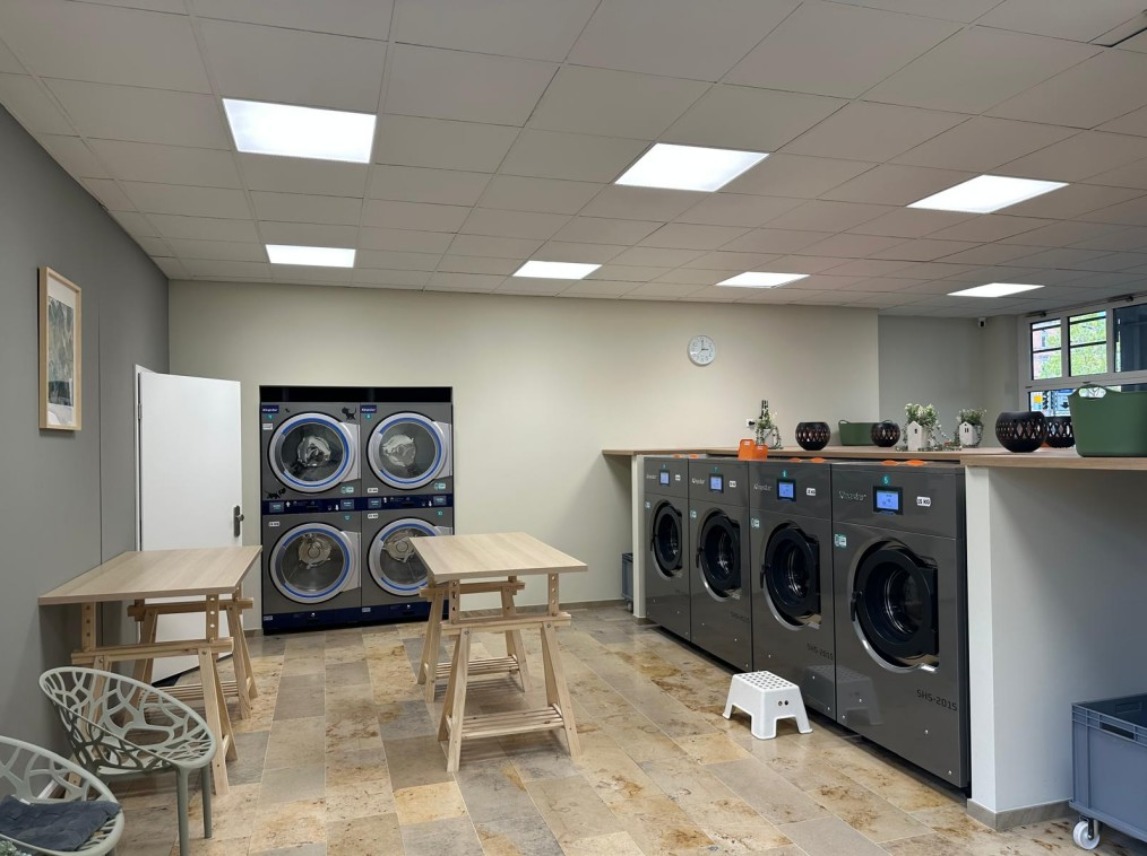
Durability serves as a major differentiating factor between commercial and residential washing machines. A washing machine commercial grade model is expected to operate for extended hours daily, sometimes continuously in laundromat settings. As a result, manufacturers design these machines with a focus on long service life, resistance to vibration, and sustained performance. Commercial washer dryer for laundromat equipment typically undergoes rigorous durability testing to ensure that essential components can withstand a demanding duty cycle.
Residential washing machines, on the other hand, face much lighter conditions. Most households run only a few cycles per week, allowing residential components to experience significantly less mechanical stress. Although many home units offer dependable performance, they are not created for uninterrupted use. Motor systems, belt assemblies, and electronic controls in commercial units are often larger and engineered to accommodate repeated cycles without overheating or accelerated wear.
In addition, commercial washing machines integrate cooling and ventilation systems that help maintain operational stability during continuous use. This ensures that laundromat operators or commercial facility managers can rely on consistent cleaning output. Residential machines feature different engineering priorities, such as quiet operation, space efficiency, and ease of installation. These priorities shape component choices, resulting in less robust internal structures compared to commercial models.
|
Factor |
Commercial Washing Machine |
Residential Washing Machine |
|
Duty Cycle |
Designed for long continuous operation |
Designed for occasional household use |
|
Motor Strength |
Industrial-grade motors |
Standard household motors |
|
Heat Management |
Enhanced cooling mechanisms |
Basic temperature control |
|
Lifecycle Expectation |
Optimized for heavy usage |
Optimized for moderate usage |
Energy Consumption and Efficiency: The Impact on Cost Control and Usage Scenarios
Energy consumption is another key distinction between commercial and residential washing machines. While it may appear that commercial models consume more energy due to their size, many washing machine commercial units actually use energy in a highly controlled manner to reduce long-term operational costs. This is particularly important in laundromats, where electricity and water consumption directly influence business performance.
Commercial washer dryer for laundromat systems often utilize advanced control panels that allow operators to optimize water levels, temperature settings, and cycle durations. These features help standardize usage and maintain consistent output across many cycles. Residential washing machines emphasize user-friendly presets that support household tasks and help reduce utility bills. Although energy efficiency ratings are common in both categories, the efficiency metrics reflect different usage environments.
Heating water constitutes a major portion of energy expenditure. Commercial units sometimes incorporate rapid-heating systems that enable temperature adjustments based on fabric type or sanitation requirements. Residential machines balance performance with energy-saving objectives to align with household expectations. The two categories do not compete directly in energy usage but instead cater to distinct functional demands.
|
Energy Aspect |
Commercial Washing Machine |
Residential Washing Machine |
|
Energy Control |
Advanced programmable settings |
User-friendly household settings |
|
Water Management |
Optimized for large and repeated loads |
Optimized for small to medium loads |
|
Cycle Efficiency |
Designed for cost control in commercial scenarios |
Designed for household energy savings |
Application Scenario Comparison: Differences in Needs Between Commercial and Home Environments
Commercial and household laundry environments require distinct machine characteristics. A washing machine commercial model must reliably handle high turnover, diverse fabric types, and continuous customer usage. Therefore, laundromats, hotels, gyms, and industrial facilities prioritize reliability and operational continuity. The commercial washer dryer for laundromat category emphasizes fast cycle times to accommodate multiple users and reduce waiting periods.
Residential washing machines are used in a controlled environment with predictable workloads. Families typically prioritize convenience, quiet operation, and a range of washing programs tailored for daily clothing care. Unlike commercial environments where machines operate for extended hours, household floors and utility rooms are not designed to support industrial vibration levels. Consequently, residential units incorporate noise-reduction features and compact dimensions to suit indoor living spaces.
Another difference appears in maintenance requirements. Commercial machines require routine inspections due to their usage frequencies, while residential machines need only occasional servicing. This shapes not just the machine’s construction but also the user's expectations when selecting the proper model for specific environments.
|
Environment |
Commercial Application |
Residential Application |
|
Usage Frequency |
High, continuous |
Low to moderate |
|
Noise Requirements |
Moderate priority |
High priority |
|
Maintenance |
Frequent and scheduled |
Occasional |
|
User Operation |
Varied, multi-user |
Single-family |
How to Choose the Right Washing Machine Type Based on Usage Scenarios
Selecting the right washing machine requires evaluating capacity needs, usage frequency, environmental constraints, and long-term operational expectations. A washing machine commercial grade model is the appropriate choice for laundromats, hotels, or rental properties with high turnover. Factors such as drum size, durability, and heating capabilities become essential considerations. Commercial washer dryer for laundromat systems must be able to withstand repeated cycles throughout the day while maintaining consistent cleaning results.
For home users, a residential machine is generally sufficient. Households should consider noise levels, wash program flexibility, and energy ratings. They may also prefer machines that integrate well into home interiors and offer convenient features such as quick-wash functions. Families with high laundry volumes might still consider higher-capacity units, but not necessarily commercial ones.
Both types of washing machines serve important roles in their respective environments. The key to selecting the right machine lies in identifying the nature of daily laundry requirements, expected duty cycles, and the importance placed on factors such as durability, efficiency, and serviceability. When these considerations align with the machine’s intended characteristics, the user can achieve consistent and cost-effective laundry performance over time.
ADD:No.388 Xinggang Road, Chongchuan District, Nantong City, 226000, Jiangsu Province, China.
-
Phone: +86-13917089379
-
Tel:+86-13917089379
-
Fax:+86-0513-85663366
-
E-mail:louislu@kingstarlaundry.com