英语
英语 俄语
俄语 西班牙语
西班牙语 德语
德语
Home / News / Industry News / Fabric Softener: The Invisible Value-Added Agent for Laundry Services and Its Scientific Application

Kingstar is your trusted partner for industrial and commercial laundry equipment. We specialized in the R&D and manufacturing of high-end industrial washers, commercial washers and dryers. Meanwhile, we provide global clients with comprehensive planning, layout workflow design, and software-hardware integration services for smart laundry plants.
Industry News
Dec 30,2025
Fabric Softener: The Invisible Value-Added Agent for Laundry Services and Its Scientific Application
In the laundry market with increasingly fierce competition, just getting clothes clean has been a basic service. Customers, especially high-end clients, more and more pursue the experience of laundry and care, whether clothes are fluffy and soft, whether they have a pleasant scent, or whether they are smooth and easy to iron. Behind this, fabric softener is important. For laundry industry practitioners, understanding how fabric softeners work and using them in the washing process is an effective way to improve service value and improve customer loyalty.
Why Do Clean Clothes Feel Rough?
Many laundry shops have faced the question of why some thoroughly cleaned clothes are still stiff and rough after washing. This is not due to poor cleaning, but rather a side effect of deep cleaning. There are three main scientific reasons.
● Loss of Natural Lubricants
Household and professional industrial laundry all have stronger cleaning power than traditional hand washing. Under the combined action of high-efficiency detergents and mechanical force, the natural wax, oily dirt, and clay originally present on the surface of cotton fibers are completely removed. The disappearance of this coating makes the fibers directly exposed, and results in a dry texture.
● Microfiber Barbs
Repeated washing and mechanical friction can cause tiny broken fibers (microfibers) to form on the surface of cotton fibers. During drying, microfibers stand upright due to static electricity and form a perpendicular state to the main fiber bundles. (just like tiny barbs) When the skin touches fabric, barbs stop the smooth sliding between fibers and create an itchy and rough sensation.
● Static Accumulation
Especially for synthetic fibers (polyester and nylon), washing friction forms great static electricity. Static electricity not only makes fabrics easily absorb dust but also makes mutual repulsion and adhesion between fibers worsen. This causes stiff, non-breathable clothes with a poor hand feel.

How Do Fabric Softeners Transform Roughness into Softness?
Fabric softeners are functional additives that adjust friction resistance between fibers and between fibers and skin. Their key ingredient can resolve the issues through three steps.
● Step 1:
During rinsing, positively charged cationic softener molecules are strongly adsorbed by the negatively charged surfaces of most textile fibers. (cotton, linen, synthetic fibers...) This forms a uniform, flexible film across the fiber surface.
● Step 2:
The hydrophobic ends of this film face outward, and it is like a very thin layer of lubricant. It greatly reduces the dynamic and static friction coefficients between fibers. Also, it neutralizes static electricity. The raised microfibers return to be parallel to the main fiber bundles. This completely removes the itchy sensation.
● Step 3:
High-quality fabric softeners have fragrances that leave a long-lasting fresh scent on clothes. They act as carriers for added ingredients (antistatic, anti-wrinkle, and ironing lubrication agents...) and comprehensively improve fabric performance.
Four Core Values of Fabric Softeners
For business operators, using fabric softeners is not only about improving fabric hand feel but also a high-return business decision.
● Improve Experience and Satisfaction
Soft, fluffy, and fragrant clothes are direct sensory enjoyment. This greatly improves customers’ recognition of the professionalism and value of laundry services, and pushes repeat purchases and word-of-mouth promotion.
● Protect Fabrics and Extend Service Life
By lubricating fibers, fabric softeners reduce fiber damage, breakage, and pilling during washing and drying. Fabrics are more durable.
● Improve Post-Process Efficiency
- Easier Ironing
Fabric softeners make fibers smoother, reduce resistance during ironing, and improve both ironing efficiency and quality.
- Shorter Drying Time
Treated fabrics have looser structures, so that moisture evaporates easily. This reduces drying cycles and saves energy consumption.
● Strong Antistatic Performance
Especially for synthetic fiber clothes such as sweaters and sportswear in autumn and winter, antistatic treatment solves the problems of clothes clinging to the body and attracting dust. It is an important value-added service feature.
Kingstar Equipment
Even the highest-quality fabric softeners rely on precise execution by professional equipment. Non-standard washing processes may instead lead to softener waste, uneven distribution, or even fabric staining.
● Thorough, High-Efficiency Rinsing
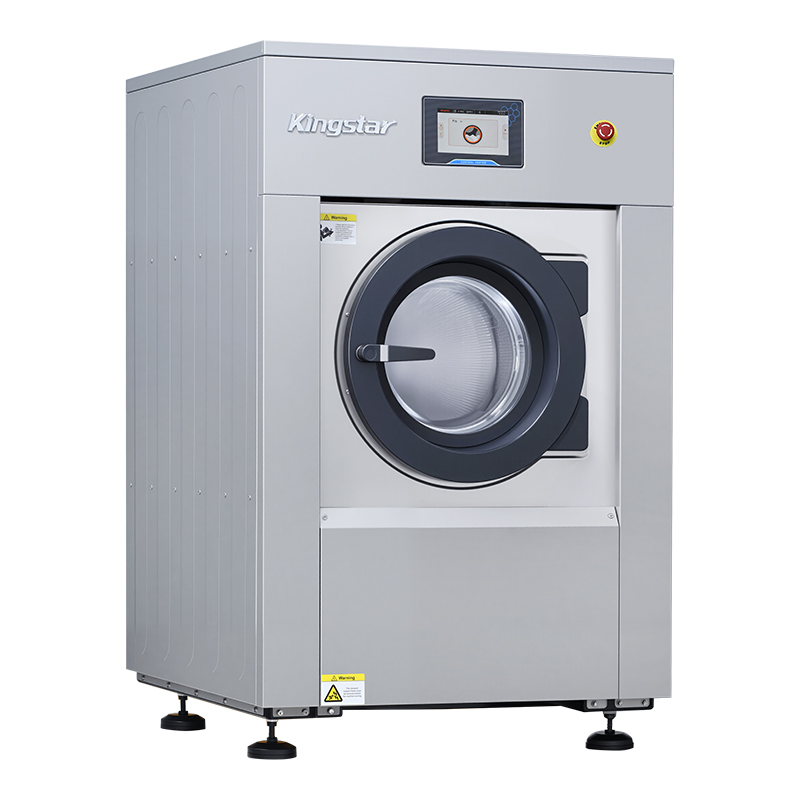
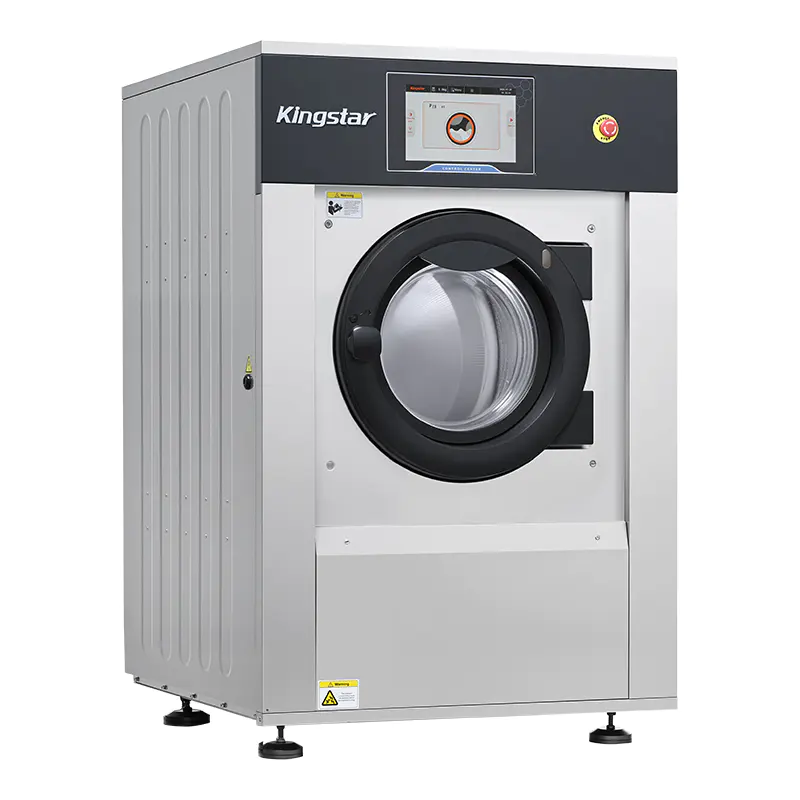
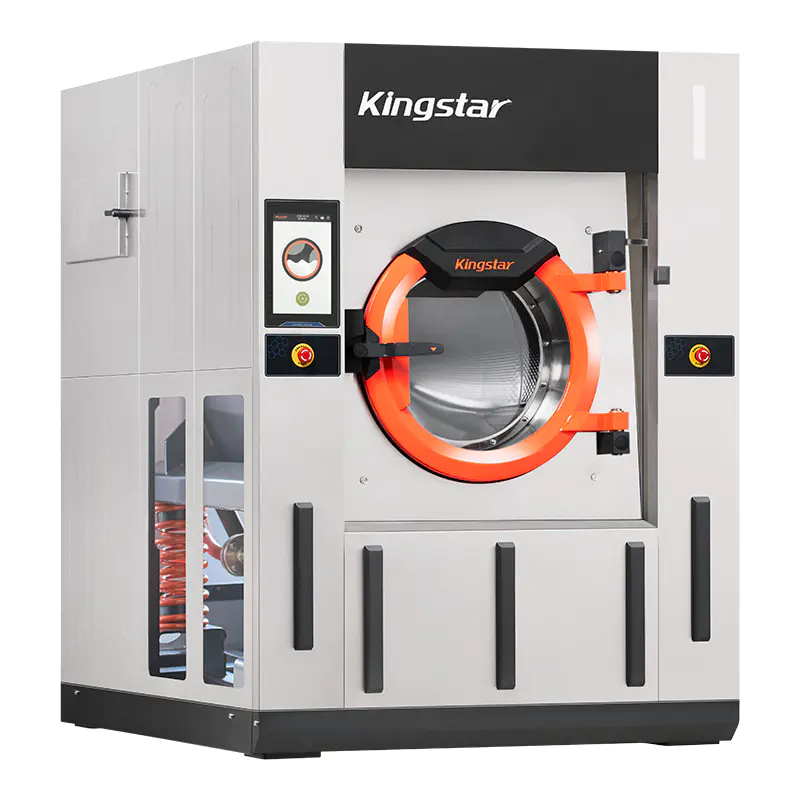
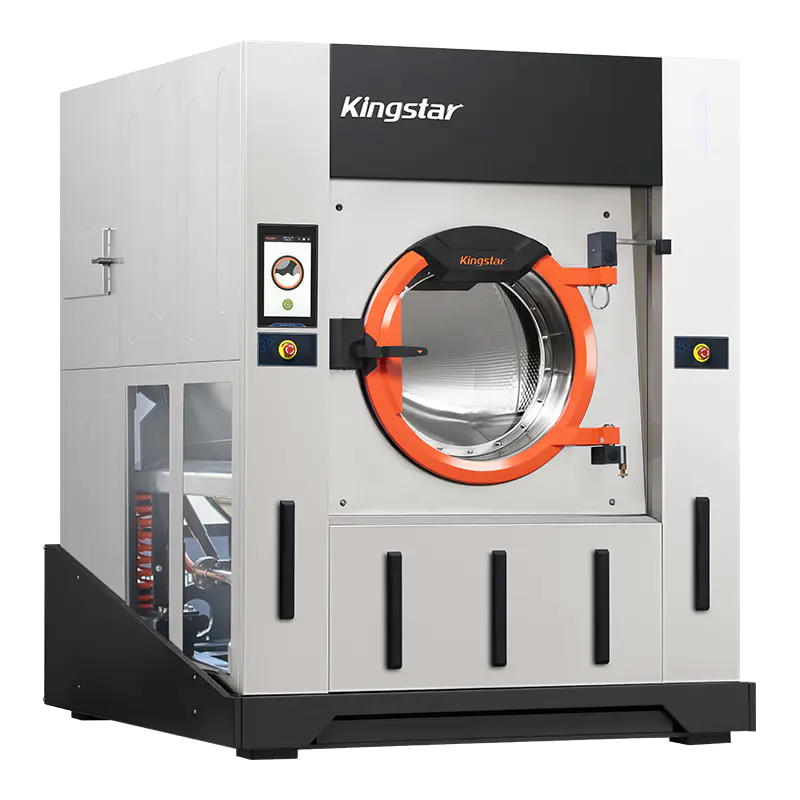
Fabric softeners must only be added after all detergent residues are fully rinsed away. Otherwise, residual anionic detergents will neutralize cationic softeners and form precipitates that stain fabrics. The Kingstar SHS-2040 washer has multi-stage high-water-level rinsing programs, plus precise water level and temperature control. These ensure the complete removal of detergent residues and help the performance of the softener.
● Precise Dosing
Fabric softeners require uniform contact with fabrics at a specific water temperature during the final neutralization and rinsing stages. The Kingstar SHS-2040 washer is equipped with an open chemical feeder interface. The precise timing and dosage of fabric softener can be precisely controlled by programming. Its inner drum rotates gently, uniformly, so that every fabric can fully and evenly absorb softener.
● Gentle Drying
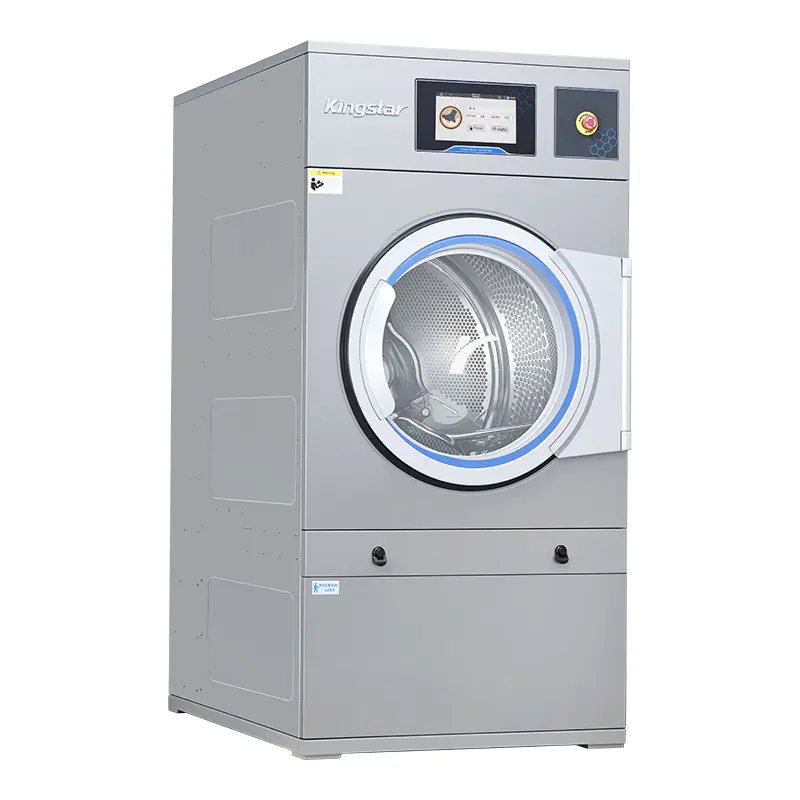
High-temperature drying damages the film formed by fabric softeners. The Kingstar SDR-2040 dryer offers multiple fabric-specific drying programs. These programs have matched gentle temperatures and air speeds. When drying clothes efficiently, it preserves the soft texture and fresh fragrance, and achieves a “1+1>2” washing and care effect.
ADD:No.388 Xinggang Road, Chongchuan District, Nantong City, 226000, Jiangsu Province, China.
-
Phone: +86-13917089379
-
Tel:+86-13917089379
-
Fax:+86-0513-85663366
-
E-mail:louislu@kingstarlaundry.com
products