英语
英语 俄语
俄语 西班牙语
西班牙语 德语
德语
Home / News / Industry News / Five Soft and Fluffy Fabrics: Understanding Their Materials and Proper Care for Laundries

Kingstar is your trusted partner for industrial and commercial laundry equipment. We specialized in the R&D and manufacturing of high-end industrial washers, commercial washers and dryers. Meanwhile, we provide global clients with comprehensive planning, layout workflow design, and software-hardware integration services for smart laundry plants.
Industry News
Jan 19,2026
Five Soft and Fluffy Fabrics: Understanding Their Materials and Proper Care for Laundries
In laundries, fabrics like velvet, gold velvet, polar fleece, coral fleece, and flannel are very common. They all feel soft and fuzzy, so in Chinese, they are often lumped together. Many of their names even end with the same character, “rong,” which means soft or fluffy. But this can be confusing. A lot of washing problems happen because people treat all these fabrics the same. The truth is, they are made from different materials, and each needs its own kind of care. This article breaks down what these five fabrics are really made of and gives laundry owners a simple way to identify, sort, and care for them properly.
Materials
The names of fabrics are just names for commercial use. Washing labels and fiber composition are their genetic code. Understanding the materials is the starting point of predicting all risks of laundry and care.
● Velvet
Its luxurious texture is based on its most delicate natural protein fibers, silk. Silk is afraid of alkali, high temperature, and strong friction. Also, the addition of cotton makes it thermally shrinkable.

● Gold velvet
Materials are silk and viscose. Silk is already delicate. The bigger issue is the viscose in the weft. When wet, viscose loses 40% to 60% of its strength and becomes very weak. Machine washing with tumbling or twisting can easily tear or stretch the fabric, and the damage can’t be fixed.
● Polar fleece
It is pure polyester. Polyester is sensitive to heat. If washed or dried above 60 to 70°C, the fibers soften and shrink. The fabric can become hard, stiff, smaller, and lose its warmth.
● Coral fleece
It is 100% microfiber polyester, so it’s also polyester, and it doesn’t like heat. The microfibers are very thin and have a large surface area, which makes them absorb a lot. Dirt and detergent can get trapped deep in the fibers, making the fabric look faded, feel stiff, or keep a bad smell after washing.
● Flannel
Traditional flannel is wool. Now, flannel is often cotton or blends. Real wool flannel can felt when it meets water, heat, alkali, or movement. This means it shrinks, thickens, and hardens. Many flannel pajamas today are actually cotton or cotton-polyester, so they should be sorted well according to the care label.
Precise Operations
Based on the analysis of materials, laundry shops should establish the following clear strategy process to achieve operations of zero risk.
Step 1: Key Inquiries and Inspections During the Collecting Section
● Label
People should always check the ingredient labels and washing labels of clothes first.
● History
People should ask about the customers’ history of washing ways: hand washing, machine washing, or washing at the laundry shops? This helps evaluate the current condition of the fabrics.
● Testing
People should use a wet cloth to do a wipe test in a concealed area to check the color fastness, and gently stretch to test the elasticity and strength of the fabric.
Step 2: A Three: Level Care System Based on Fabric Materials
● Level A
Delicate fabrics: velvet, gold velvet, real wool flannel
These fabrics are made with silk, wool, or viscose. They are very sensitive to water, heat, and movement.
- Professional dry cleaning
Laundry shops should always suggest dry cleaning to customers. It is the safest way to protect these delicate fibers and prevent problems like shrinking, stretching, or tearing.
- Water washing
Laundry shops should only wash these items by hand if the customer fully understands the risks and agrees in writing. When doing hand washing, staff should soak the item gently, press it softly, and never put it in a washing machine.
- Post-wash finishing
After cleaning, staff should lay the item flat to dry. After dry cleaning, a soft brush should be used to gently brush in the direction of the nap. This step helps the fabric recover its soft feel and shine, and it shows customers that the laundry shop provides professional service.
● Level B
Level B materials are synthetic fibers that are afraid of heat, like polar fleece and coral fleece. They are 100% polyester.
- Machine washing
The machine washing is okay, but the temperature should be low for the whole time. (cold or below 30 degrees Celsius). Staff should choose the “Gentle” program.
- Rinsing
The rinses should be strengthened, especially for coral fleece. The high-water-level washing should be added once or twice to ensure there is no detergent residue. A small amount of neutral softener should be added during the last rinses to reduce static electricity.
● Level C
Regular cotton fabrics, like cotton flannel pajamas and bedding, are usually made of cotton or cotton polyester blends. They can be treated like other good-quality cotton fabrics, but laundry shops still need to be careful with their soft, brushed surface.
- Machine washing
Laundry staff should use cold or warm water and choose a gentle cycle and a neutral detergent. This helps keep the color bright and the fabric soft.
- Wash inside out
The items should be turned inside out before washing. This protects the soft surface and keeps it looking nicer for a longer time.
- Drying
They can be put in the dryer, but staff should use medium or low heat to dry them and take them out in time to help them stay soft and prevent them from becoming stiff caused by over-drying.
Equipment
When facing such delicate sorting and strict requirements for temperature control and mechanical forces, the human experience has too many uncertainties. The value of the Kingstar professional laundry and care system is that it transforms above scientific decision logic into a standardized process that is programmable, repeatable, and error-free.
● Delicate fabrics
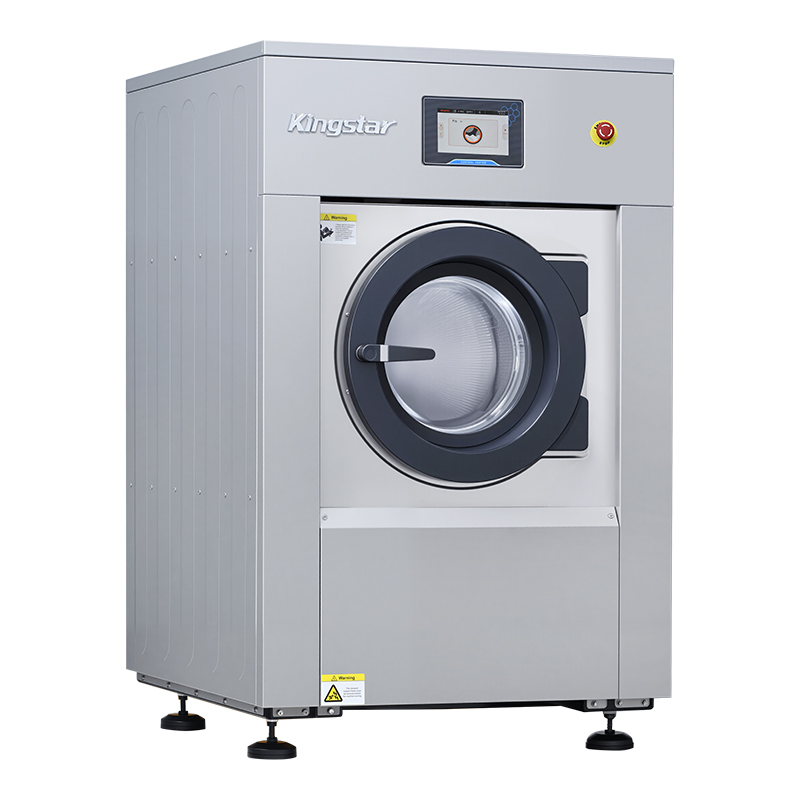
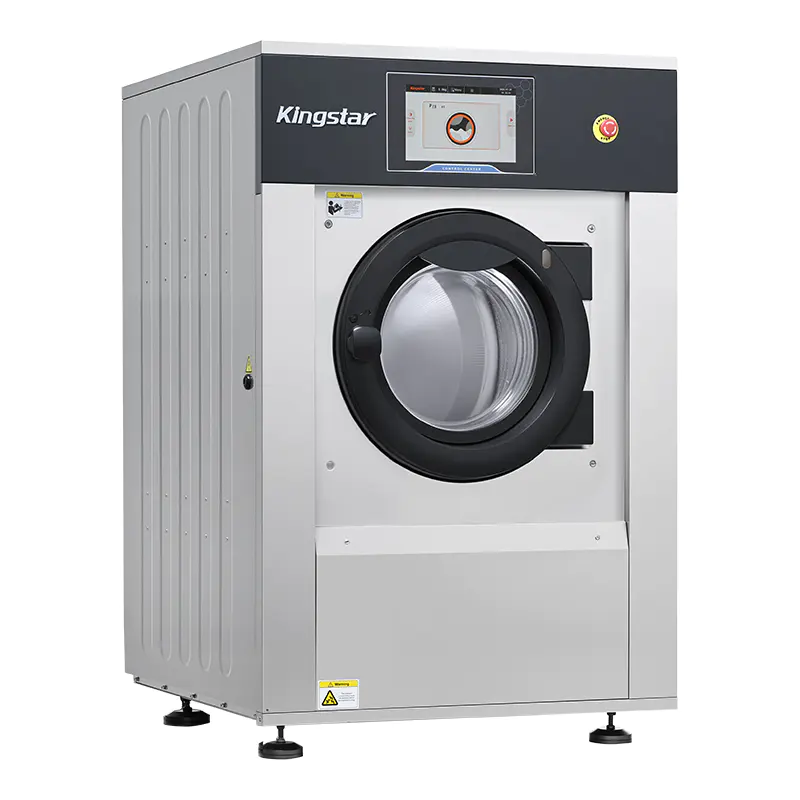
When treating fabrics of Level A, the Kingstar wet cleaning machine SHS-2025P can strictly control the spinning speed and the spin-stop ratio. Its extremely low tumbling force and adjustable ultra-slow spin reduce the risk of mechanical damage as much as possible. This kind of gentle care is something ordinary machines cannot provide.
● Synthetic fibers
When handling Level B, the biggest concern of operators is losing control of temperature. The Kingstar dryer SDR-2025 has a humidity control system that can monitor the humidity inside the dryer drum in real time and determine whether to stop the drying or not. This completely prevents polyester shrinkage or melting caused by human error or equipment fluctuations.
● Standardized process and traceable quality
Laundry shops can program the best practices for Level A, B, and C fabrics into the Kingstar wet cleaning machine SHS-2025P and Kingstar dryer SDR 2025 as expert programs such as “Luxury Velvet Care,” “Synthetic Low-Heat Care,” and “Cotton Care.” After the staff identify the fabric type, they only need to press one button to start the optimal process. This not only reduces reliance on experienced technicians but also ensures that quality remains consistent across different staff and different batches. It turns complex knowledge into a stable and reliable production capacity for the laundry.




ADD:No.388 Xinggang Road, Chongchuan District, Nantong City, 226000, Jiangsu Province, China.
-
Phone: +86-13917089379
-
Tel:+86-13917089379
-
Fax:+86-0513-85663366
-
E-mail:louislu@kingstarlaundry.com
products