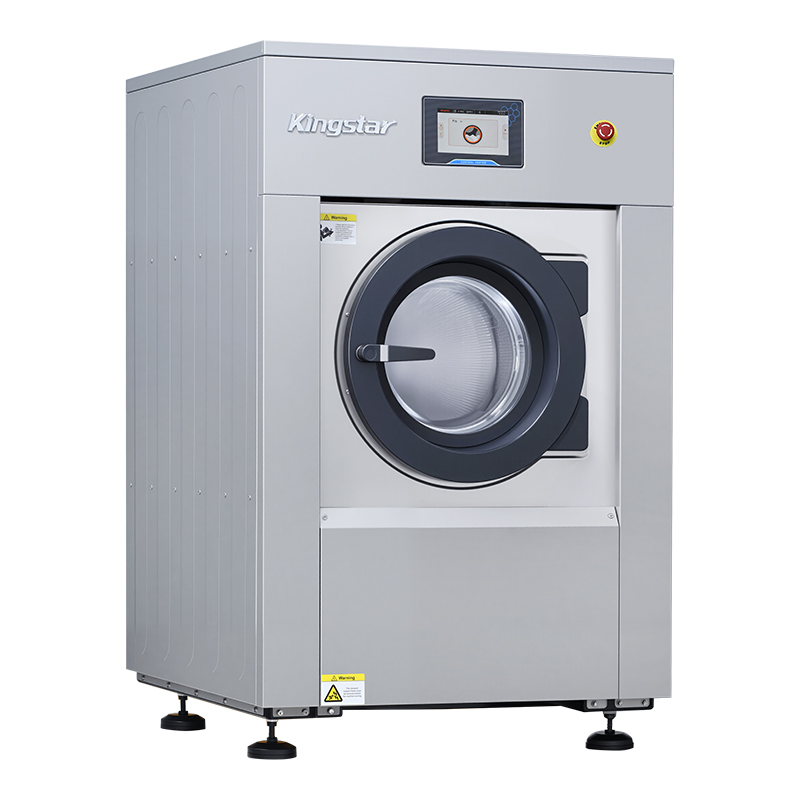
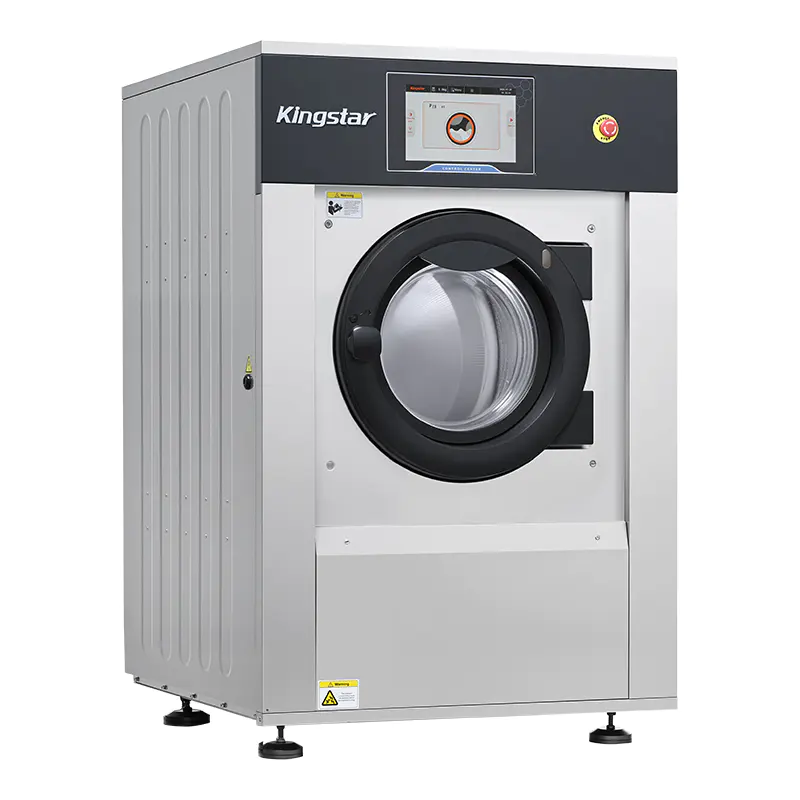
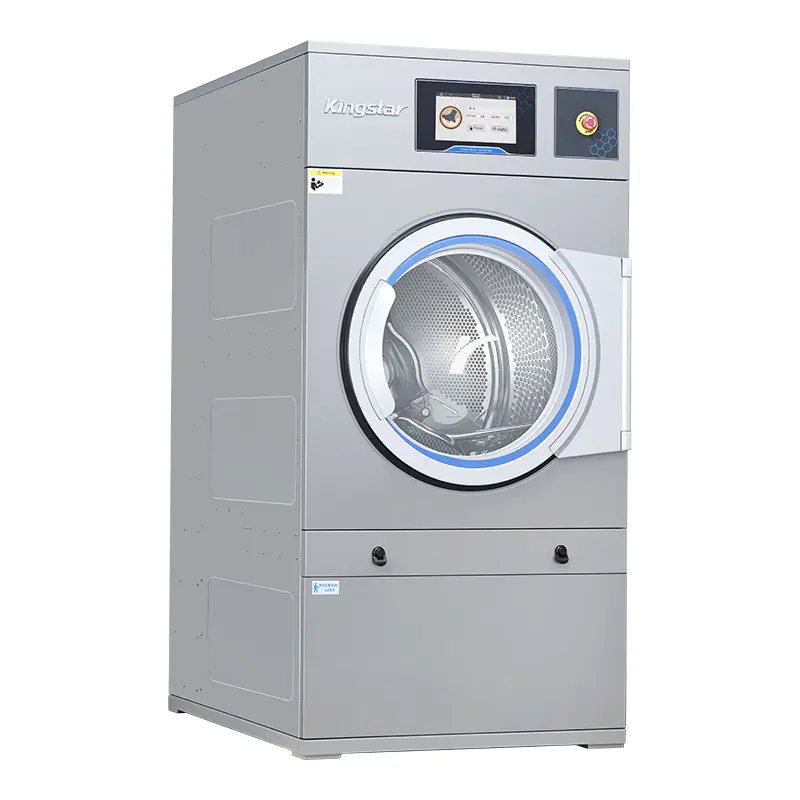
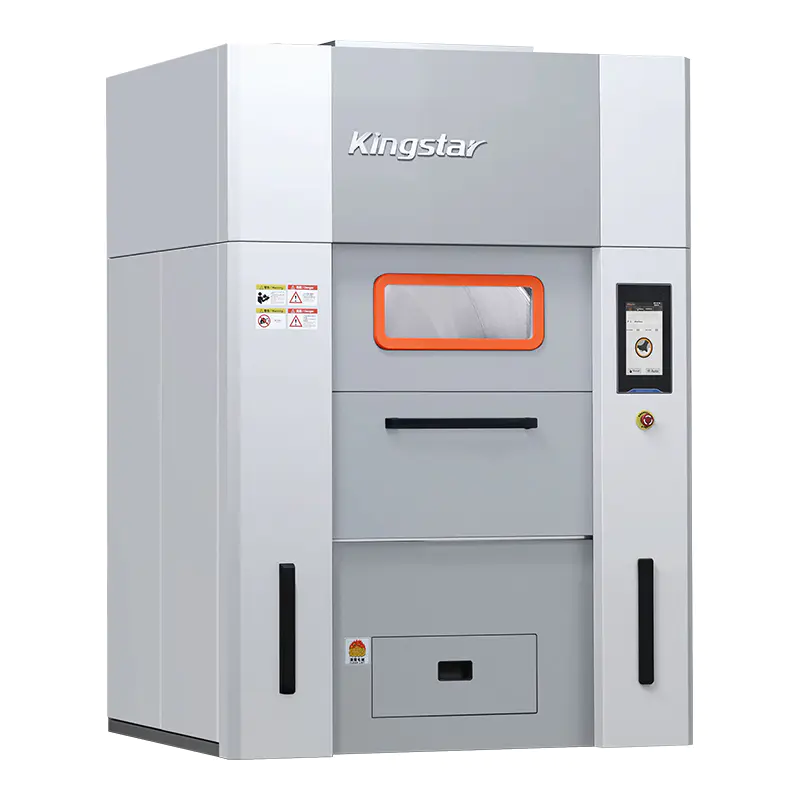
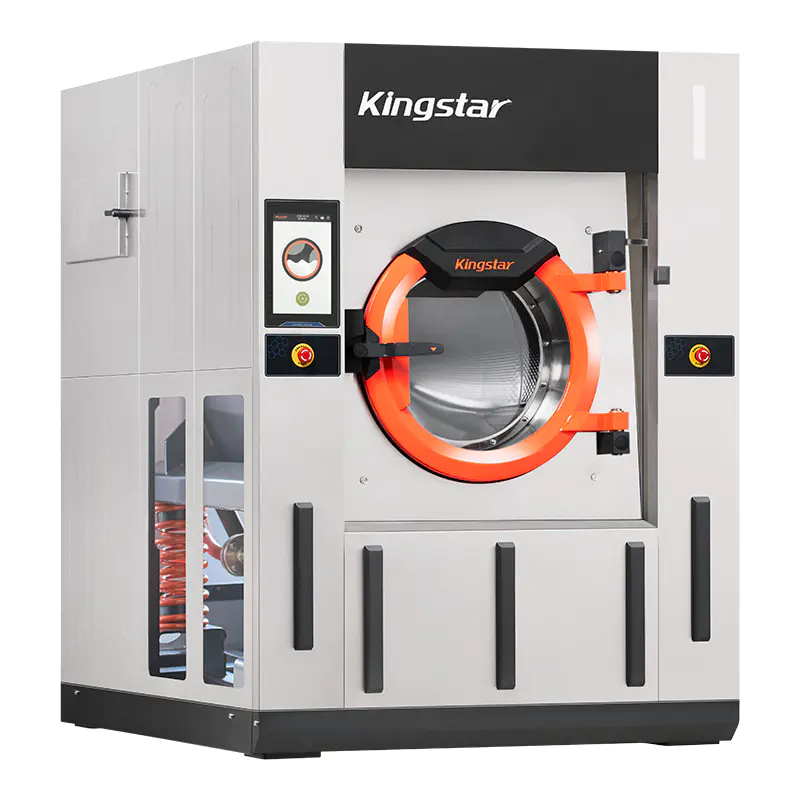
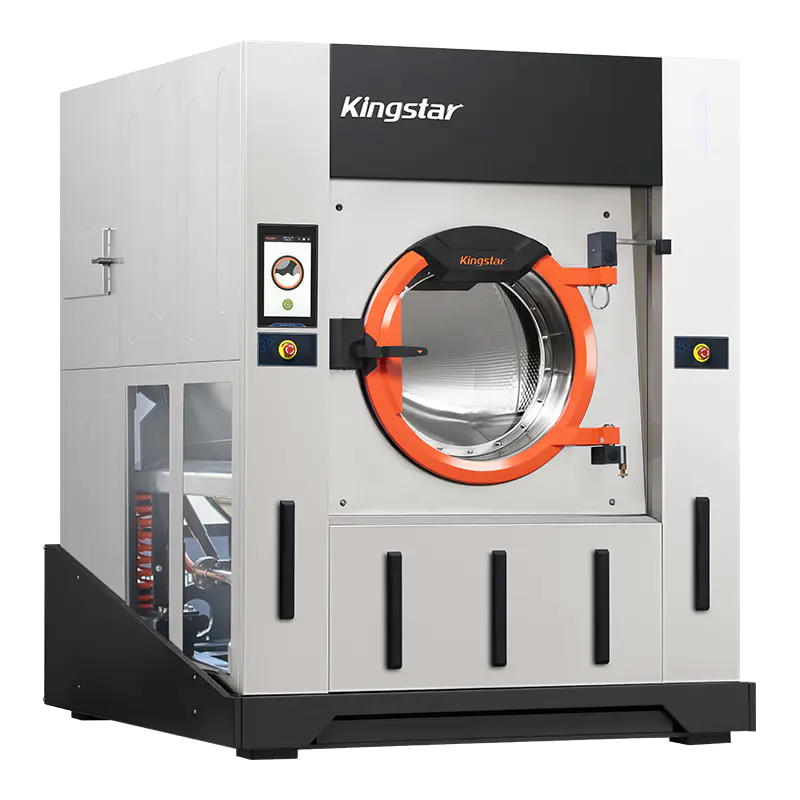
For decades, the industrial washing machine was defined primarily by mechanical reliability and load capacity. Early industrial laundry equipment focused on handling volume, resisting wear, and operating continuously in demanding environments. Intelligence, in the modern sense, was largely absent. Control panels offered limited programmability, and operators relied on experience rather than data to adjust washing parameters. As industrial washing machines became core assets in sectors such as healthcare, hospitality, and centralized laundries, the limitations of purely mechanical systems gradually became more apparent.
The introduction of sensors, digital controllers, and connectivity marked a shift from isolated machines to data-oriented systems. Industrial washing machines and dryers began to generate operational data related to temperature stability, water consumption, cycle duration, and mechanical stress. This change laid the foundation for a broader transformation in how laundry operations are managed. Intelligence did not replace mechanical strength but built on it, allowing industrial laundry machine operators to observe processes that were previously opaque.
Remote monitoring is often presented as a defining feature of intelligent industrial washing machines, but its practical value lies in addressing specific operational challenges. In large facilities using multiple industrial washer and dryer units, physical inspection alone is inefficient. Operators may not immediately notice deviations in cycle performance, delayed completion times, or abnormal energy usage. Remote monitoring allows supervisors to track machine status across an entire facility in real time.
For organizations managing wholesale washer and dryers across multiple sites, such as healthcare networks or franchised laundromats, centralized visibility becomes even more relevant. A single dashboard can display the operational state of each industrial washing machine, highlighting idle time, cycle interruptions, or unusual patterns. This visibility supports faster decision-making and reduces reliance on manual reporting. Rather than transforming operations overnight, remote monitoring reduces informational gaps that previously slowed response times.
Data collection is often described in abstract terms, but its impact becomes tangible when applied to process optimization. Industrial washing machines generate consistent streams of data related to load size, cycle frequency, water intake, and energy consumption. When analyzed over time, this data reveals patterns that are difficult to detect through observation alone. For example, facilities may discover that certain programs are overused for specific textile types, leading to unnecessary resource consumption.
In laundromat machine environments or equipment for laundry business operations, data helps align machine usage with demand cycles. Peak usage periods, average cycle completion times, and machine downtime can be quantified rather than estimated. This allows operators to adjust staffing, maintenance schedules, and machine allocation. In industrial laundry equipment settings, data-driven adjustments often focus less on individual cycle outcomes and more on cumulative efficiency across hundreds or thousands of loads.
Unplanned downtime remains one of the most disruptive factors in industrial laundry operations. A single heavy duty industrial washing machine failure can affect downstream processes such as drying, finishing, and distribution. Predictive maintenance aims to address this risk by using operational data to anticipate component wear and performance degradation. Sensors monitoring vibration, temperature, and motor load provide early indicators of potential issues.
Unlike traditional maintenance schedules based solely on operating hours, predictive approaches consider how machines are actually used. An industrial washing machine and dryer operating under heavier loads or harsher conditions may require attention sooner than expected. Predictive maintenance does not eliminate breakdowns entirely, but it shifts maintenance from reactive to planned. For facilities relying on industrial washing machines and dryers as infrastructure rather than optional equipment, this shift reduces operational uncertainty.
The growing presence of intelligent features raises an important question about whether these technologies represent genuine industry standards or primarily serve marketing narratives. In practice, adoption varies widely. Large centralized laundries and healthcare facilities are more likely to integrate intelligent industrial washer and dryer systems due to scale and regulatory pressure. Smaller laundromat washing machine operators may prioritize upfront cost and mechanical simplicity over advanced connectivity.
However, as intelligent components become embedded in standard control systems, the distinction between intelligent and non-intelligent machines becomes less clear. Many industrial washing machines now include baseline data logging and remote diagnostics by default. Rather than being optional add-ons, these features increasingly define what is expected from modern laundry equipment suppliers. Intelligence, in this context, evolves incrementally rather than through a single disruptive leap.
Commercial washer and dryer systems used in laundromats occupy a middle ground between household machines and large-scale industrial laundry machine installations. Intelligent technology influences this segment differently. Operators managing laundromat washer and dryer fleets benefit from usage data, payment integration, and remote fault alerts. These features support business management rather than process control.
Laundry machines for laundromat applications increasingly integrate connectivity to support pricing strategies, customer notifications, and usage analytics. While the mechanical core remains similar, intelligence reshapes how these machines contribute to the business model. In this sense, intelligent technology transforms not only machine operation but also revenue management and customer experience.
The role of laundry machine China manufacturing ecosystems cannot be ignored when discussing intelligent transformation. As one of the primary production centers for industrial laundry equipment, China combines scale manufacturing with growing investment in control systems and digital integration. Many laundry equipment suppliers based in China incorporate intelligent features to meet international market expectations.
Companies with long-term experience, such as Kingstar, approach intelligence as an extension of established manufacturing practices rather than a standalone concept. Material selection, mechanical design, and process stability remain central, while intelligent control layers are added to enhance transparency and adaptability. This approach reflects how intelligent technology often complements rather than replaces traditional engineering priorities.
| Aspect | Traditional Industrial Washing Machine | Intelligent Industrial Washing Machine |
| Process Visibility | Limited to local indicators | Real-time data access and historical records |
| Maintenance Approach | Scheduled or reactive | Condition-based and predictive |
| Operational Adjustment | Manual parameter changes | Data-supported optimization |
| Integration Capability | Standalone operation | Compatible with management systems |
Intelligent technology also affects how organizations evaluate the lifecycle of industrial washing machines. Access to long-term performance data allows operators to assess depreciation, energy efficiency trends, and maintenance costs with greater accuracy. Decisions about refurbishment, replacement, or expansion become data-informed rather than assumption-driven.
For industrial laundry equipment used in continuous operations, understanding lifecycle performance is essential. Intelligence does not necessarily extend physical lifespan, but it clarifies when performance declines below acceptable thresholds. This clarity supports capital planning and reduces the risk of unexpected capacity shortages.
Heavy duty washing machine design remains foundational in industrial contexts. Intelligent control systems rely on stable mechanical platforms to deliver consistent results. Without reliable drums, bearings, and frames, data-driven optimization loses relevance. Intelligent technology therefore amplifies the value of heavy duty industrial washing machine construction rather than substituting for it.
In industrial washer and dryer combinations, synchronization between washing and drying stages becomes more precise when supported by shared data. Load characteristics identified during washing can inform drying parameters, reducing unnecessary energy use. This coordination reflects how intelligence connects previously independent stages of the laundry process.
Laundry equipment suppliers increasingly frame industrial washing machines as components within broader systems. This perspective emphasizes compatibility, interoperability, and long-term support. Intelligent features facilitate this shift by enabling remote diagnostics, software updates, and performance benchmarking across fleets.
Manufacturers with extensive experience in industrial laundry equipment often integrate intelligence cautiously, prioritizing operational stability. Rather than introducing complex interfaces, they focus on practical functions that align with how machines are used daily. This approach supports adoption without overwhelming operators.
The transformation driven by intelligent technology in the industrial washing machine industry is gradual and layered. Intelligence enables visibility, predictability, and coordination, but it does not redefine the fundamental purpose of industrial washing machines. Cleaning textiles at scale, under controlled conditions, remains the core function.
As industrial washing machines and dryers continue to evolve, intelligent features are likely to become less visible as distinct innovations and more embedded as standard expectations. The industry shift is not about replacing mechanical systems with digital ones, but about integrating both to support stable, scalable, and transparent operations across diverse industrial contexts.
ADD:No.388 Xinggang Road, Chongchuan District, Nantong City, 226000, Jiangsu Province, China.
Phone: +86-13917089379
Tel:+86-13917089379
Fax:+86-0513-85663366
E-mail:[email protected]
Cookies give you a personalized experience,Сookie files help us to enhance your experience using our website, simplify navigation, keep our website safe and assist in our marketing efforts. By clicking "Accept", you agree to the storing of cookies on your device for these purposes. Click "Adjust" to adjust your cookie preferences.For more information, review our Cookies Policy.