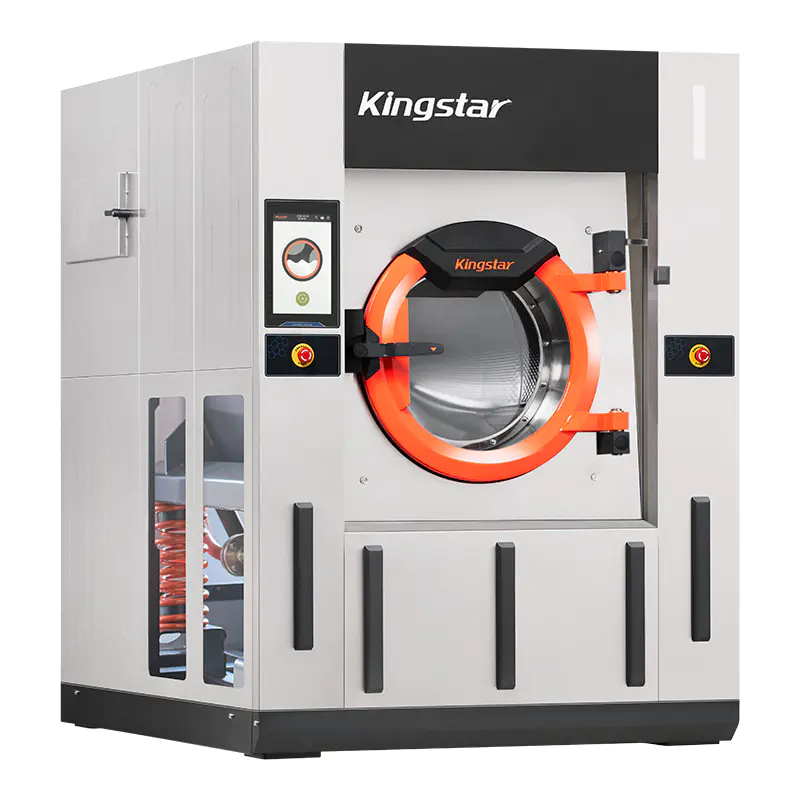
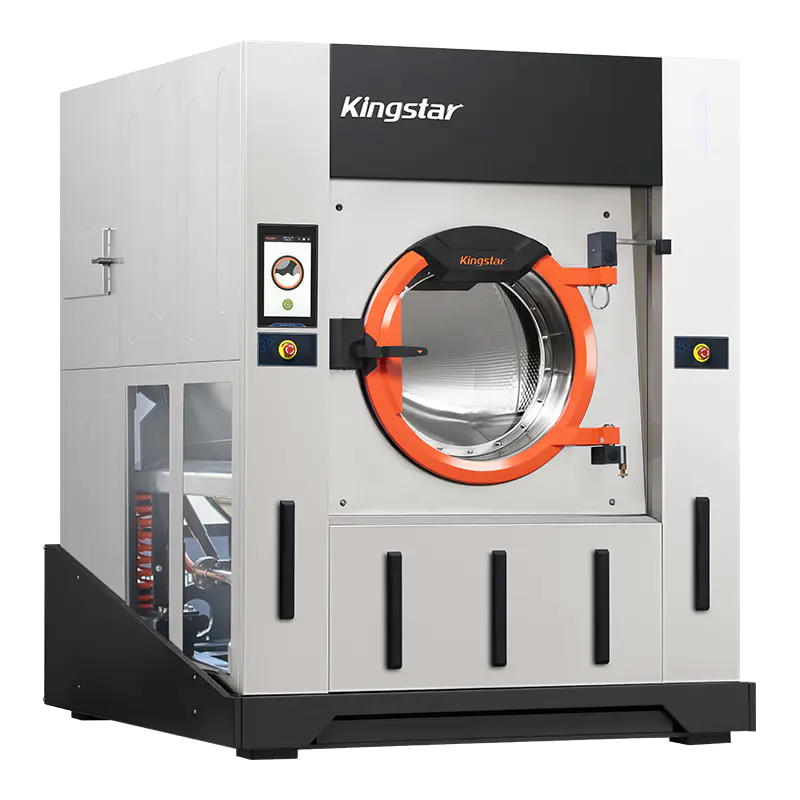
Equipping an apartment complex with laundry facilities involves more decisions than most property managers anticipate. The equipment vendor, machine size, room acoustics, and payment infrastructure all affect whether residents are satisfied — and whether the laundry room becomes a revenue asset or a maintenance headache. The right commercial washer and dryer setup for an apartment complex depends on unit count, building age, budget structure, and how much operational involvement the owner wants to maintain. This guide addresses each of those variables with specific data and practical guidance.
There are two distinct ways apartment complexes acquire laundry equipment: outright purchase and the managed lease model. In the lease model, a third-party laundry services company installs, maintains, and owns the machines — the building owner receives a percentage of revenue without any capital outlay or repair responsibility. In the purchase model, the owner buys machines directly and manages them independently.
Each approach suits different ownership profiles. Larger portfolios with on-site management often prefer ownership for higher long-term revenue. Smaller landlords or those without maintenance staff frequently find the lease model more practical.
The following companies specialize in installing and managing laundry rooms for apartment buildings and multifamily properties across the U.S.:
| Company | Coverage | Payment Options | Key Differentiator |
|---|---|---|---|
| CSC ServiceWorks | Nationwide | Coin, card, app | Largest U.S. provider; 24/7 tech support |
| WASH Multifamily Laundry | Nationwide | Coin, card, app | Strong resident app; real-time availability |
| Hercules Industries | Regional (Midwest/West) | Card, app, mobile | Flexible revenue split structures |
| Caldwell & Gregory | Southeast U.S. | Coin, card | Strong regional service network |
Revenue splits in managed arrangements typically run 50/50 to 70/30 in favor of the service provider, reflecting their capital investment and maintenance costs. Some contracts offer the building a flat monthly payment instead of a percentage — useful for budgeting but often less lucrative if the laundry room is heavily used.
When evaluating any managed laundry contract, pay close attention to contract length (commonly 5–10 years), equipment replacement schedules, response time guarantees for repairs, and exit clause terms. A contract that locks you into aging machines with slow repair response will frustrate residents for years.
For building owners who prefer to own their machines, the leading commercial washer and dryer brands used in apartment laundry rooms include Speed Queen, Maytag Commercial (Whirlpool Commercial), Electrolux Professional, and Huebsch. Speed Queen in particular has built a dominant position in the U.S. multifamily market, with machines rated for 10,000+ cycles and backed by 5-year parts warranties — critical for shared environments where machines run far more frequently than in a single household.
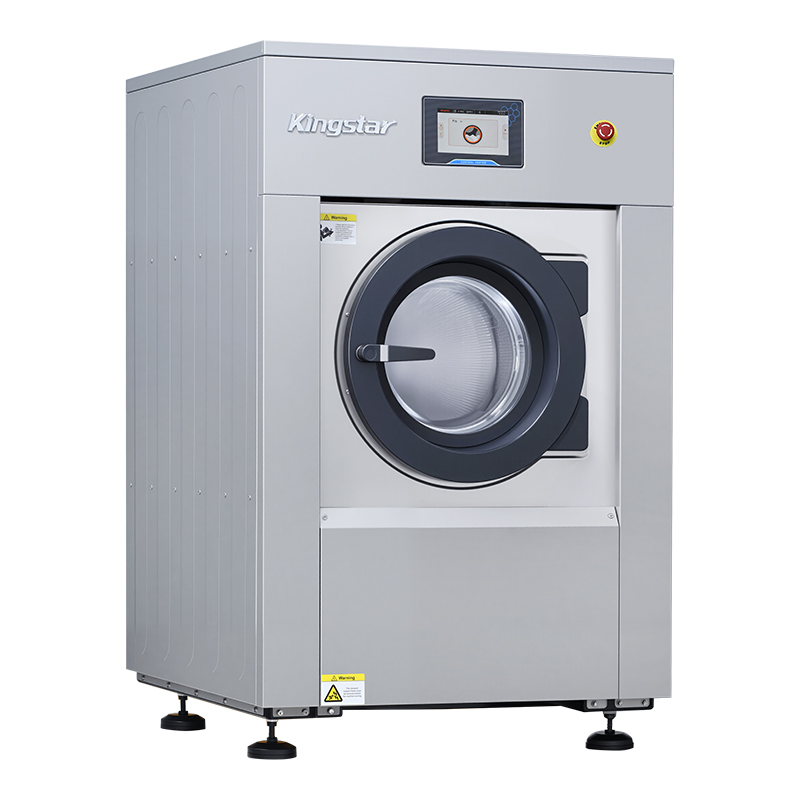
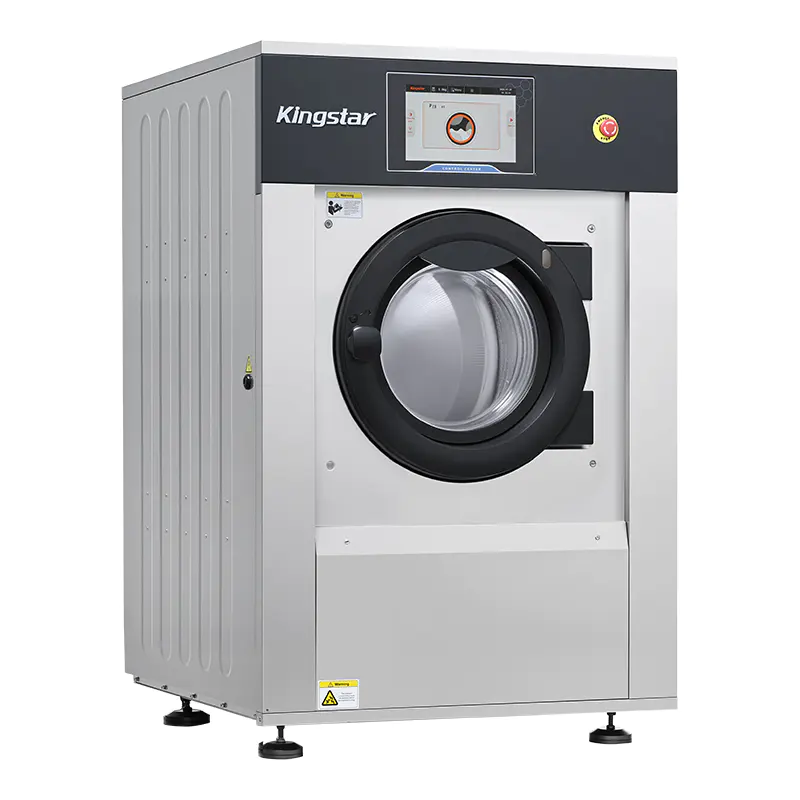
A commercial washer machine is not simply a larger or more durable residential unit — it is engineered from the ground up for continuous, multi-user operation. The distinctions affect purchasing decisions, installation requirements, and long-term operating costs in ways that matter significantly for apartment complex operators.
The most important structural differences between commercial and residential washers:
One spec that surprises many buyers is the G-factor — a measure of centrifugal force during the spin cycle. Higher G-factors (expressed as multiples of gravitational force) extract more water from clothes before the dryer cycle. Commercial washers typically achieve 200–400G, compared to 60–100G in most residential machines. Higher spin extraction means shorter dryer times, lower energy use, and a better experience for residents who have back-to-back loads to run.
Commercial washer size is measured in pounds of dry laundry capacity. Getting this right matters: machines that are too small create wait times and wear out faster from overuse; machines that are too large run partially empty and generate poor revenue per cycle relative to their cost.
| Capacity | Drum Volume (cu ft) | Best Suited For | Typical Cycle Price |
|---|---|---|---|
| 18–20 lb | 2.7–3.2 cu ft | Small buildings (under 20 units), light use | $2.50–$4.00 |
| 20–25 lb | 3.2–4.0 cu ft | Mid-size buildings (20–60 units), standard use | $3.50–$5.50 |
| 30–40 lb | 4.5–6.0 cu ft | Large buildings (60–150 units), heavy use | $5.00–$8.00 |
| 50–80 lb | 7.5–10.0 cu ft | Large complexes or bulk item use (comforters, rugs) | $8.00–$16.00 |
Industry guidelines generally recommend one washer-dryer pair for every 8–12 apartment units in a shared laundry room. A 48-unit building, for example, would typically need 4–6 washer-dryer pairs. But this ratio should be adjusted upward if the resident mix skews toward families, or if the building has no in-unit hook-up option whatsoever.
Mixing capacity sizes is a strategy used in higher-end laundry rooms — offering one or two large-capacity machines (40–60 lb) alongside standard 20–25 lb units gives residents the option to wash comforters and oversized items on-site, which is a genuine convenience differentiator that also commands higher per-cycle pricing.
Beyond laundry capacity, physical footprint matters for room layout. Standard commercial front-load washers in the 20–25 lb range typically measure around 27–28 inches wide, 30–32 inches deep, and 38–40 inches tall. Larger 40 lb units may run 32–36 inches wide. Stack configurations (washer below, dryer above) are available and widely used in space-constrained laundry rooms, with stacked pairs occupying roughly the same floor space as a single unit.
Always confirm utility rough-in locations — water supply, drain, gas or electric — before finalizing a floor plan. Moving plumbing to accommodate a different machine layout after construction is expensive and disruptive.
Noise from shared laundry rooms is one of the most persistent resident complaints in multifamily buildings — particularly when machines run evening and weekend cycles adjacent to living spaces. Soundproofing a laundry room is not optional in buildings where the laundry room shares a wall, floor, or ceiling with occupied units. Done properly, it protects sleep quality, reduces noise complaints, and can meaningfully influence resident satisfaction and lease renewal rates.
Laundry room noise travels in two forms: airborne sound (the hum and vibration of motors) and structure-borne impact noise (the mechanical vibration transferred through the floor and walls during spin cycles). Effective soundproofing must address both.
The most cost-effective first step is isolating each machine from the floor using anti-vibration pads or isolation feet. These dense rubber or composite pads sit beneath each machine and absorb mechanical vibration before it transfers into the building structure. Quality anti-vibration pads cost $20–$80 per machine and can reduce transmitted vibration noise by 30–50% on their own. This is the baseline intervention — not doing it is a mistake regardless of what else you invest in soundproofing.
For laundry rooms on upper floors — where spin-cycle vibration travels down into occupied units below — the floor assembly is the most critical element. Options include:
A full laundry room soundproofing project in a mid-size apartment building — including wall decoupling, MLV, anti-vibration pads, and ceiling treatment — typically runs $3,000–$12,000 depending on room size and construction complexity. For buildings with persistent noise complaints or units directly adjacent to laundry rooms, this is almost always a worthwhile investment relative to the cost of unhappy residents and turnover.
Not all commercial machines are equally loud. Direct-drive motors produce less vibration than belt-drive systems. Front-load washers are inherently quieter than top-loaders during agitation. When noise is a concern, specifying machines with inverter motors (which vary speed smoothly rather than switching between fixed speeds) can make a measurable difference. Electrolux Professional and Miele's commercial lines in particular are noted for quieter operation in multifamily contexts.
The laundry room of five years from now will look meaningfully different from today's — both in terms of machine capability and the resident experience around it. Several technologies currently in early or mid-adoption are on track to become standard features in multifamily laundry installations.
Network-connected machines that report real-time status to a building management system — and to residents' smartphones — are already available and increasingly expected. WASH and CSC ServiceWorks both offer resident-facing apps that show machine availability, send cycle completion notifications, and accept mobile payment. Buildings with smart laundry room apps report meaningfully higher resident satisfaction scores for their laundry amenity compared to buildings with equivalent equipment but no connectivity features.
Cycle completion notifications in particular address one of the most common shared laundry room frustrations — clothes sitting in a finished machine while someone waits. Automated reminders sent five minutes after cycle completion dramatically reduce this problem without requiring any staff intervention.
Heat pump dryers recirculate and reuse hot air rather than exhausting it to the outside. The efficiency advantage is substantial: heat pump dryers use 40–50% less electricity than conventional resistance-heated dryers. More importantly for apartment buildings — particularly older ones with limited exterior wall access — ventless heat pump dryers eliminate the need for external ductwork entirely.
This is a significant installation flexibility benefit. Buildings that currently can't add dryers due to venting constraints may be able to install heat pump units with only an electrical connection. As the technology matures and commercial heat pump dryers narrow their cycle time gap with conventional units, expect rapid adoption across multifamily laundry rooms through the late 2020s.
Washers with built-in sensors that detect load weight and fabric type — then automatically adjust water volume, temperature, and cycle length — are transitioning from residential to commercial applications. In a shared laundry environment, this matters because it removes user error from the equation: a machine that self-optimizes will deliver better wash results, consume fewer resources, and experience less wear from overloading than one that relies entirely on user input.
Auto-dosing systems — which dispense calibrated amounts of detergent automatically rather than relying on residents to add their own — are already available on some commercial platforms. Beyond convenience, these systems reduce the detergent overdosing that is extremely common in coin and card laundry environments, where residents often add far more soap than necessary. Overdosing accelerates drum seal wear and contributes to residue buildup that shortens machine lifespan.
For building owners operating their own laundry equipment, connected payment systems now enable dynamic pricing — automatically adjusting cycle costs based on time of day or day of week. Raising prices during Saturday morning peak hours and offering discounted rates on Tuesday afternoons can smooth usage distribution and increase total monthly revenue without adding machines. Early adopters of dynamic laundry pricing in multifamily settings have reported revenue increases of 10–20% without any change in machine count or resident base.
Among residents under 40, cashless payment is rapidly becoming a baseline expectation for shared laundry, not a premium feature. Buildings that still operate coin-only laundry rooms are at a measurable disadvantage when competing for renters who may be choosing between similar units in nearby properties.
Cashless laundry systems for apartment buildings generally operate through one of three approaches:
Hybrid systems that accept both cashless and coin payment are the safest approach for buildings with diverse resident demographics — particularly those serving older renters or residents without bank accounts, for whom cash remains the practical option.
ADD:No.388 Xinggang Road, Chongchuan District, Nantong City, 226000, Jiangsu Province, China.
Phone: +86-13917089379
Tel:+86-13917089379
Fax:+86-0513-85663366
E-mail:[email protected]
Cookies give you a personalized experience,Сookie files help us to enhance your experience using our website, simplify navigation, keep our website safe and assist in our marketing efforts. By clicking "Accept", you agree to the storing of cookies on your device for these purposes. Click "Adjust" to adjust your cookie preferences.For more information, review our Cookies Policy.