英语
 俄语
 西班牙语
 德语

How to Keep White Garments Bright After Dry Cleaning
In the dry cleaning industry, many operators face challenges with white garments. A customer sends a white coat for laundry, but finds it turning gray while collecting. This is far from customers’ expectations for dry cleaning results. Some laundry shops even refuse to handle white garments to avoid after-sales disputes. Why does dry cleaning cause issues with white garments? The root cause is the process itself, rather than a lack of operator experience.
This article explains the issue in principle, causes, and solutions. It provides references for laundry owners to handle garments and customer complaints.
Causes of Garment Graying
Dry cleaning uses chemical solvents like Perchloroethylene (PCE) and dry-cleaning auxiliary agents combined with mechanical action. They help dissolve and remove stains from garments. Then stains remain suspended in the cleaning solvent. During washing, the solution is circulated and filtered continuously. Insoluble soil is separated by filters, and the solvent becomes relatively clean.
However, this filtration system has obvious shortcomings. It is less effective in separating soluble soil. As wash batches increase, the dissolved stains in the cleaning solvent continue to accumulate. They adhere to the garment surface again during washing, causing soil redeposition. Thus, white garments directly turn dull and gray.
Besides, washing and drying are finished in the same drum. During drying, garment friction generates static electricity, which attracts the residual dust and lint in the drum. This further causes reduced cleanliness and loss of luster to the white garment surface. Thus, white garment graying is caused by solvent redeposition and electrostatic attraction. It is limited by dry-cleaning processes.
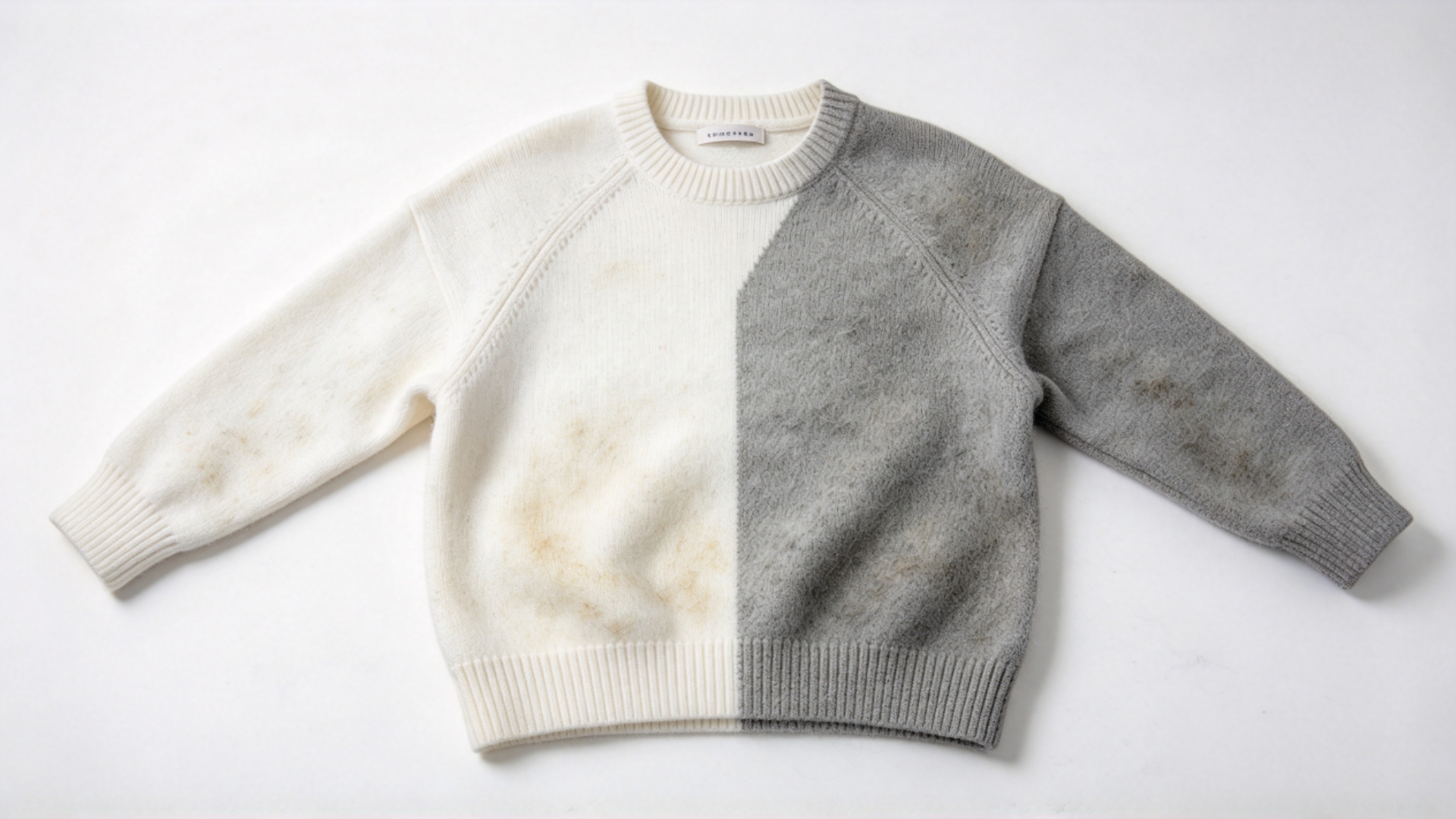
Solutions for Improving Wash Quality
Despite dry cleaning limitations, laundry shops can improve the wash quality of white garments through standardized handling.
● Pretreatment
This can remove dirt, oil, and pigment stains from garments. The amount of soil entering the dry-cleaning solution can be reduced. It also minimizes soil redeposition at the source.
● Keep dry-cleaning solvent and piping clean
Try to use distilled dry-cleaning solvents. Add dry-cleaning detergents as required. Clean piping and drums before washing. Use a short circulation cycle for washing.
● Clean the air ducts and drums
Remove lint from lint collectors and condensers regularly. This effectively reduces dust and lint on garments due to static electricity during drying. It is critical to maintain white garments’ surface cleanliness.
● Cautious cleaning methods
Soak garments in the distilled dry-cleaning solvent. Then wear silicone gloves to rub them. After cleaning, flush them with clean dry-cleaning solvent. Finally, use a dry cleaning machine for high-speed extraction and drying. This method is complex, but it can protect white garments’ color and fabrics.
However, the above are only remedial measures at a process level. They can improve wash quality. But the dry-cleaning effect on white garments cannot be eliminated. This is why some laundry shops avoid handling white garments. This is not a cautious operation, but a practical consideration based on risk and cost control.
Industry’s Response to Dry-Cleaning Risks
Dry cleaning white garments requires higher skills, and this easily causes laundry issues. This has been widely recognized in the industry. Laundry shops may face higher rework rates, more frequent customer complaints, and more direct compensation costs. Laundry owners need to devote more energy to pretreatment, solvent management, and equipment cleaning. Thus, laundry issues can be controlled.
In recent years, there has been a notable trend in the industry. Some white garments are handled by water washing or wet cleaning. Water washing can help reduce soil redeposition and static electricity issues during dry cleaning. It helps maintain white garments’ whiteness and luster. But mechanical action and drum speed need to be controlled. Otherwise, this can cause garment deformation, wrinkles, and damage. Thus, the requirements for equipment and processes are relatively higher.
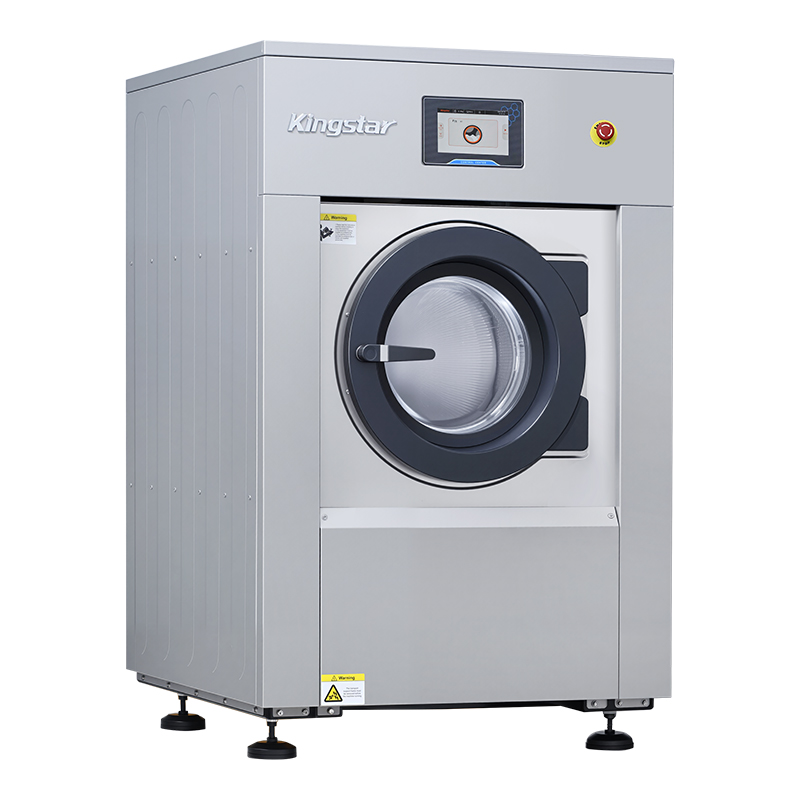
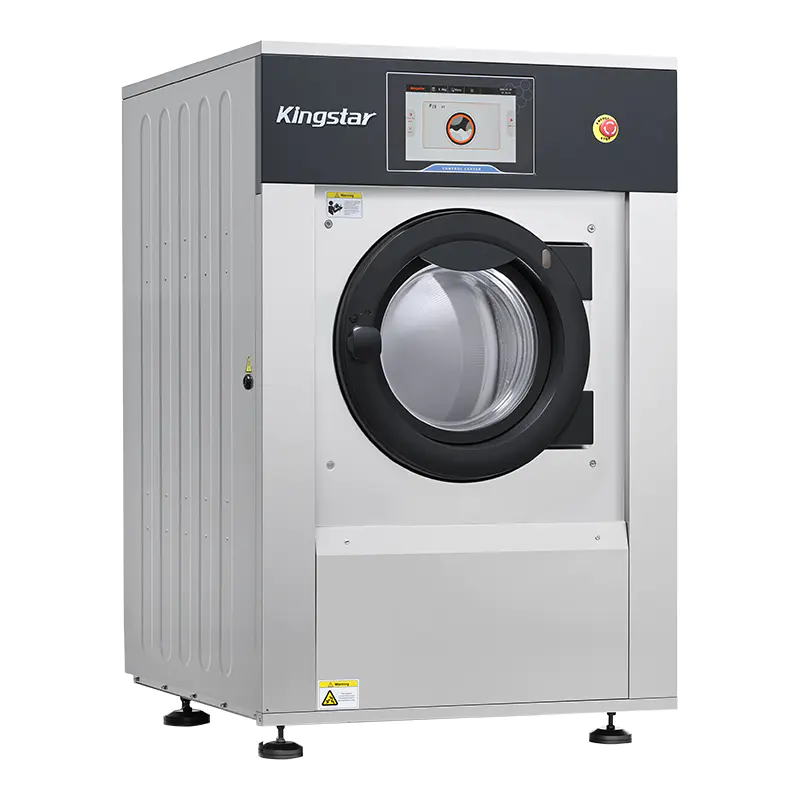
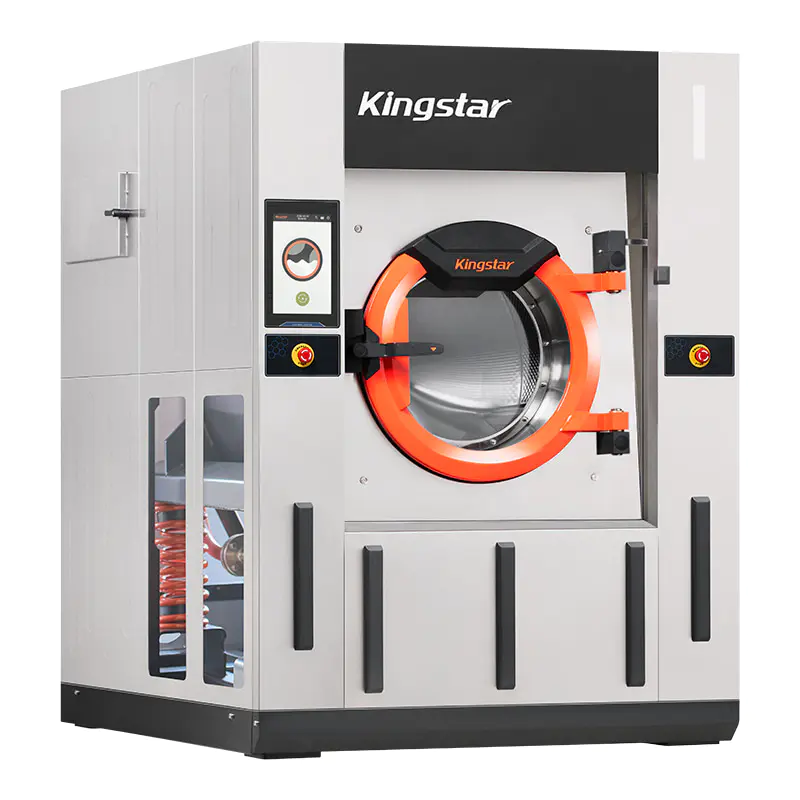
In this context, laundry shops focus more on cleaning performance and garment safety when selecting laundry equipment. For example, the Kingstar wet cleaning machine is developed by professional software engineers and experienced laundry professionals. Drum speed and pause-to-rotation ratio are set based on different garment fabrics. It is designed for ideal cleaning performance while reducing damage. The minimum drum speed is 15rpm. So, it is suitable for high-end fabrics, such as mulberry silk, wool, and cashmere. Besides, it supports over 70 wash programs. Parameters (main-wash speed, extraction speed, water level, time, and temperature) can be customized via a 12.1-inch LCD touchscreen. With automatic chemical dosing, the machine finishes the wash cycle at the touch of a button. This function is designed for white and delicate garments. It provides more stable process support.
Conclusion
White garments turn gray after dry cleaning. The root cause is dry cleaning processes’ limited capabilities for filtering soluble stains, along with electrostatic attraction during drying. This is an industry-level technical challenge, not a casual mistake in a single store. However, laundry shops can improve wash quality via standardized pretreatment, solvent and equipment cleaning, and cautious wash methods for some garments. For high-demand white and premium fabrics, use water-based processes like wet cleaning and program-controlled equipment. This is an approach worth attention. Laundry owners should consider daily quality management and equipment selection. This is related to one garment’s cleaning performance. It also has an impact on the store’s reputation and long-term competitiveness.
Q&A
Q1: Why is pretreatment important for white garments before dry cleaning?
A1: Before cleaning, remove dirt, oil, and pigment stains from garments. This can significantly reduce the amount of soil entering the dry-cleaning solution and soil redeposition at the source. It is essential for improving white garments’ cleaning performance.
Q2: Can white garments turning gray after dry cleaning be completely avoided?
A2: It is difficult to avoid at the process level. Regular dry cleaning often has an impact on white garments. Thus, keep the solvent clean. Remove lint. Use cautious washing methods. These can improve cleaning quality. Also, wet cleaning (water-based washing) can be used for high-demand whiteness.
Q3: What methods are suitable for a few white garments?
A3: Use a cautious method. Soak garments in the distilled dry-cleaning solvent, and wear silicone gloves to rub them. Then flush them with clean dry-cleaning solvent. Finally, use a dry cleaning machine for high-speed extraction and drying. This method is complex, but it can protect white garments’ color and fabrics.
ADD:No.388 Xinggang Road, Chongchuan District, Nantong City, 226000, Jiangsu Province, China.
-
Phone: +86-13917089379
-
Tel:+86-13917089379
-
Fax:+86-0513-85663366
-
E-mail:louislu@kingstarlaundry.com