英语
英语 俄语
俄语 西班牙语
西班牙语 德语
德语
Home / News / Industry News / Industrial Dryers Explained: Types, Costs, and How to Build the Right Washer-Dryer System

Kingstar is your trusted partner for industrial and commercial laundry equipment. We specialized in the R&D and manufacturing of high-end industrial washers, commercial washers and dryers. Meanwhile, we provide global clients with comprehensive planning, layout workflow design, and software-hardware integration services for smart laundry plants.
Industry News
Jun 04,2026
Industrial Dryers Explained: Types, Costs, and How to Build the Right Washer-Dryer System
What an Industrial Dryer Actually Is — and Why It's Not Just a Bigger Home Appliance
An industrial dryer is a heavy-duty tumble or conveyor drying machine engineered to process large volumes of laundry continuously in commercial and institutional environments. Unlike residential dryers designed for one household's weekly load, industrial dryers are built to run 10 to 20 cycles per day, handle loads from 30 lbs to over 900 lbs per cycle, and withstand decades of near-constant operation in demanding settings — hotels, hospitals, linen rental facilities, correctional institutions, and large-scale commercial laundries.
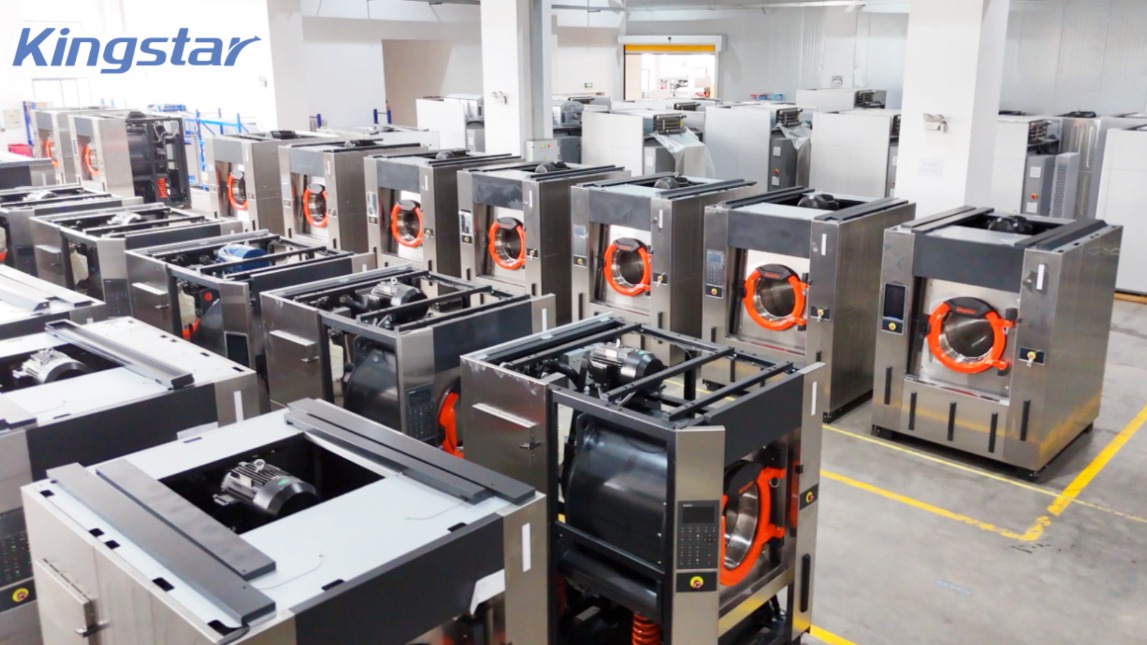
The distinction matters because treating an industrial dryer as a scaled-up home appliance leads to systematic underestimation of both its capabilities and its operational requirements. Industrial dryers involve different heat sources, airflow engineering, moisture control systems, and safety standards than anything found in a residential laundry room — and selecting the right unit has a direct impact on throughput efficiency, energy costs, and fabric longevity across thousands of cycles per year.
For operations that run both washing and drying in-house, industrial washer dryer machines — whether paired washer-extractor and dryer sets or integrated combo units — form the backbone of an on-premise laundry (OPL) system. Getting that combination right is where efficiency gains or losses compound most visibly.
Types of Industrial Dryers and How They Differ
Industrial dryers are not a single product category. The right type depends on your facility's volume, available floor space, utility infrastructure, and whether your operation is vended, on-premise, or full-scale industrial.
Tumble Dryers (Single Pocket)
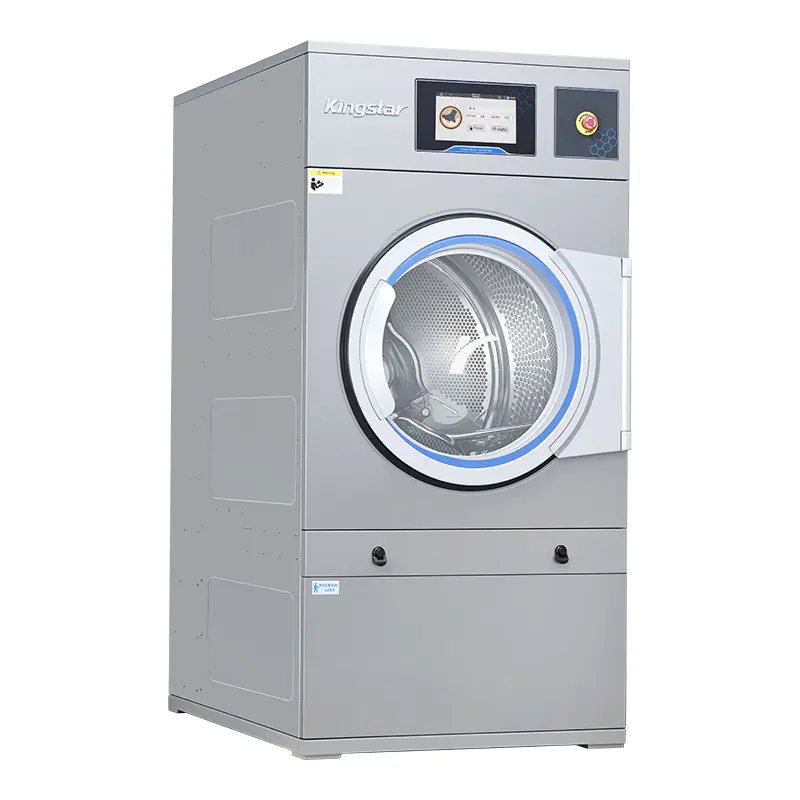
The most common type across laundromats, hotels, and medium-volume OPL facilities. A single rotating drum tumbles fabric through heated air until the target moisture level is reached. Capacities range from 30 lbs to 120 lbs, and most use natural gas, liquid propane, or electric heating elements. Gas-fired models are preferred in most commercial settings due to faster heat recovery and lower per-cycle energy cost — typically 30–50% cheaper to operate than electric equivalents at commercial utility rates.
Multi-Pocket (Double and Triple Pocket) Dryers
Multi-pocket dryers stack two or three independent drying chambers within a single housing unit. Each chamber operates independently, allowing different load types or temperature programs to run simultaneously. A triple-pocket dryer can process three separate 30 lb loads at once within the same floor footprint as a single large-drum unit — making them highly space-efficient for high-throughput operations with mixed fabric types.
Pass-Through (Tunnel) Dryers
Used in high-volume linen plants and large institutional laundries, pass-through dryers link directly to the discharge end of a tunnel washer (continuous batch washer). Wet linen enters one end and exits the other fully dry in a continuous flow, eliminating manual transfer between machines. These systems can process 1,500–4,000 lbs of laundry per hour and are essential infrastructure for commercial linen rental businesses and large hospital laundry departments.
Flatwork Ironers (Roller Ironers)
Technically drying-finishing machines rather than dryers in the tumble sense, flatwork ironers dry and press sheets, pillowcases, tablecloths, and other flat linen simultaneously. They're standard equipment in hotel and hospitality linen operations where presentation quality matters. A single chest ironer can finish 300–600 pieces per hour depending on fabric type and operator speed.
Stackable Dryer Units
Designed for facilities with limited floor space — apartment buildings, smaller hotels, and satellite laundry rooms within larger institutions. A stacked washer-dryer pair occupies roughly the same footprint as a single front-load washer, making this configuration essential wherever square footage is constrained. Stackable industrial units typically handle 18–30 lb loads and are soft-mounted for upper-floor installation.
Industrial Dryer Cost: Purchase Price Ranges by Type
Equipment costs vary significantly by capacity, technology, and brand. The table below reflects 2024–2025 market pricing for new commercial and industrial dryers across common categories:
| Dryer Type | Capacity Range | Price Range (New) | Typical Application |
|---|---|---|---|
| Single Pocket Tumble Dryer (electric) | 30–50 lbs | $1,200 – $3,500 | Laundromats, small gyms, salons |
| Single Pocket Tumble Dryer (gas) | 30–75 lbs | $2,000 – $6,500 | Hotels, nursing homes, restaurants |
| Double/Triple Pocket Dryer | 2–3 × 30–50 lbs | $4,500 – $12,000 | High-volume laundromats, mid-size hotels |
| Large Capacity Single Dryer | 100–200 lbs | $8,000 – $25,000 | Hospitals, large hotels, linen services |
| Industrial Pass-Through Dryer | 500–2,000+ lbs/hr | $80,000 – $300,000+ | Commercial linen plants, large hospitals |
| Flatwork Ironer (chest ironer) | 300–600 pcs/hr | $5,000 – $60,000 | Hospitality, healthcare linen finishing |
Installation adds $500–$8,000 beyond the purchase price, depending on whether new gas lines, electrical panels, or exhaust ducting must be run. Facilities replacing an existing dryer with the same utility type typically face the lowest installation costs; new-build or utility-conversion installs can push well into four figures before the machine turns its first load.
Gas vs. Electric Industrial Dryers: The Real Cost Difference
This is consistently one of the most impactful purchasing decisions for commercial laundry operations, yet it's often treated as a utility-availability question rather than a financial one. Both heat sources work — but the economics diverge substantially at commercial scale.
A gas dryer heating element typically costs $0.15–$0.35 per cycle in fuel, while an equivalent electric dryer running on commercial rates of $0.10–$0.15/kWh costs $0.40–$0.75 per cycle. The gap compounds quickly: a laundromat running 100 cycles per day saves $25–$40/day with gas over electric — roughly $9,000–$14,600 per year on fuel costs alone for a single high-volume location.
When Electric Makes Sense
Electric industrial dryers are the right choice in specific circumstances: where natural gas infrastructure doesn't exist and propane installation isn't cost-effective, in jurisdictions where electricity rates are subsidized or unusually low, or where all-electric facility mandates apply (increasingly common in new construction under building electrification codes in states like California). Heat pump dryer technology — where the dryer recycles heat rather than exhausting it — is narrowing the operating cost gap, with energy consumption 40–60% lower than conventional electric resistance models.
Heat Recovery and Exhaust Ducting Considerations
All conventional tumble dryers require exhaust ducting to vent humid, lint-laden air outside the building. Duct runs longer than 25–35 feet (accounting for elbows and bends) reduce airflow efficiency enough to increase cycle times noticeably. For facilities where exterior venting is difficult, condensing dryers — which cool exhaust air internally to extract moisture without requiring exterior ducting — are an alternative, though they carry a higher purchase price and slightly longer cycle times than vented equivalents.
Industrial Washer Dryer Machines: Pairing Washers and Dryers for Maximum Throughput
In an on-premise laundry setting, the washer and dryer don't operate in isolation — they form a production line. Mismatching their capacities is one of the most common and costly planning errors in commercial laundry setup.
The 1:2 Washer-to-Dryer Ratio Rule
The industry standard for OPL and laundromat capacity planning is to pair one washer with two dryers of equivalent total capacity. The logic: a commercial washer cycle typically runs 45–65 minutes including wash, rinse, and extraction. A dryer cycle for the same load runs 30–45 minutes. But drying extracts residual moisture, so damp loads from a 60-minute wash cycle take longer per unit than pre-dried throughput math suggests — particularly for heavier items like towels and denim.
By having two dryers per washer, you avoid the drying bottleneck: while dryer one processes the first load, dryer two is receiving the second load from the washer, keeping the entire system running without idle time on the wash side.
High-Extraction Washers and Their Impact on Dryer Performance
A washer-extractor rated at 300–400 G-force removes significantly more residual moisture from fabric than a machine rated at 100–150 G-force. The remaining moisture content (RMC) after extraction directly determines dryer cycle time. A load extracted at 100G may exit the washer at 60–70% RMC; the same load extracted at 350G may be at 45–50% RMC. That difference translates to 15–25 fewer minutes of drying time per load — a compounding efficiency gain across hundreds of weekly cycles.
This is why industrial washer dryer machine combinations are best evaluated as systems rather than individual units. A premium high-G washer paired with a standard gas dryer often delivers better throughput economics than two mid-grade machines at similar combined cost.
Integrated vs. Separate Washer-Dryer Units
Combination washer-dryer units — where a single machine both washes and dries — are available in commercial configurations up to approximately 20–25 lbs. These are practical for very space-constrained satellite laundry rooms (individual floors in care homes, for example) but are not suitable for high-throughput operations because the machine is occupied during the drying cycle, eliminating the ability to run continuous washing. Separate washer-extractor and dryer pairings remain the standard for any operation processing more than 200 lbs of laundry per day.
Key Technical Specifications That Determine Dryer Performance
Beyond capacity, several technical specifications separate high-performing industrial dryers from machines that look comparable on paper but underperform in daily operation.
- Airflow volume (CFM): Higher cubic feet per minute of airflow moves moisture out of the drum more efficiently. Industrial dryers typically move 600–1,200+ CFM depending on drum size. Insufficient airflow is one of the most common causes of unexpectedly long drying cycles.
- Drum-to-burner BTU ratio: Overpowered burners for small drums overheat fabric and increase wear; underpowered burners for large drums create extended cycles. A well-matched ratio is typically 10,000–15,000 BTU per 10 lbs of rated capacity for gas dryers.
- Moisture sensing vs. timed drying: Dryers with automatic moisture sensing terminate the cycle when the load reaches a target dryness level, rather than running for a preset time. This prevents over-drying (which causes fabric damage and excess energy use) and under-drying (which creates mold risk in stored linen). Moisture-sensing dryers can reduce energy consumption by 10–15% versus timed-only cycles.
- Drum speed (RPM): Tumble dryers run at lower RPM than washer-extractors — typically 35–50 RPM — to allow fabric to fall freely through the airstream rather than pin against the drum wall. Machines with variable drum speed allow operators to set gentler tumble rates for delicate synthetics and faster rates for heavy cotton loads.
- Programmable cycle controls: Commercial dryers in healthcare or hospitality settings often need multiple stored programs for different fabric types — high heat for cotton towels, medium heat for polyester blends, cool tumble for delicates. Machines with 10–50 programmable cycles give operators the flexibility to protect fabric quality across mixed-load environments.
- Drum construction material: Stainless steel drums resist corrosion, tolerate aggressive chemicals in healthcare laundry, and maintain structural integrity across 20,000+ cycles. Galvanized steel drums are common in budget commercial dryers but can rust and stain lighter-colored linens over time.
Leading Industrial Dryer Brands and Their Strengths
The commercial and industrial dryer market is served by a concentrated group of manufacturers, each with distinct market positioning and product strengths.
American Dryer Corporation (ADC)
One of the most widely installed brands in North American laundromats and OPL facilities, ADC produces single and multi-pocket gas and electric dryers from 30 lbs to 170 lbs. Their AD-series dryers are known for simple, robust controls and parts availability — a significant factor for operators managing maintenance in-house without specialized technicians on staff.
Speed Queen (Alliance Laundry Systems)
Speed Queen commercial dryers dominate the vended laundry (coin-op) market and are widely specified in multi-housing and hospitality OPL rooms. Their machines are built for minimal operator intervention — straightforward controls, durable components, and a service network that covers most of North America with same- or next-day parts availability.
Electrolux Professional
Electrolux Professional targets the hospitality and healthcare segments with dryers that emphasize energy efficiency and programmable cycle flexibility. Their T-series dryers include heat pump options and are frequently specified for LEED-certified or sustainability-focused facilities due to their energy recovery technology.
Milnor
Milnor focuses on large-capacity and industrial-scale dryers for high-throughput commercial laundries. Their dryers are commonly paired with Milnor tunnel washers in integrated linen plant systems. The brand is known for robust airflow engineering and high-BTU heating systems capable of processing heavy industrial workwear and thick terry products efficiently.
Girbau
A Spanish manufacturer with a strong presence in healthcare and hospitality OPL, Girbau dryers are available from 35 lbs to 220 lbs and are particularly well regarded for their precision moisture sensing and energy-efficient airflow design. Their systems are commonly paired with Girbau high-G washer-extractors as a matched system.
Huebsch
Another Alliance Laundry Systems brand, Huebsch targets the multi-housing and light commercial segment with dryers that offer simplified installation and competitive pricing for operators who need reliable performance without the premium features of healthcare-grade equipment.
Running Costs: What Industrial Dryer Operation Actually Costs Per Year
The purchase price of an industrial dryer is often the smallest financial element of its total lifecycle cost. Fuel, maintenance, and parts accumulate significantly over a 10–15 year operational lifespan.
| Cost Category | Gas Dryer (60 lb, 10 cycles/day) | Electric Dryer (60 lb, 10 cycles/day) |
|---|---|---|
| Annual Fuel/Energy Cost | $1,200 – $2,000 | $3,000 – $5,000 |
| Preventive Maintenance (service contract) | $250 – $600 | $250 – $600 |
| Unscheduled Repairs (average) | $200 – $500 | $200 – $500 |
| Lint Filter Replacement / Cleaning | $50 – $150 | $50 – $150 |
| Estimated Total Annual Operating Cost | $1,700 – $3,250 | $3,500 – $6,250 |
Over a 10-year lifespan, the fuel cost difference between a gas and electric dryer of equivalent capacity can exceed $20,000–$30,000 per machine — a figure that dwarfs the initial purchase price premium for a higher-quality gas model. This calculation is why most high-volume commercial laundries default to gas where infrastructure allows.
Sizing Industrial Dryers Correctly for Your Operation
Undersizing dryer capacity relative to washer output creates a production bottleneck that undermines the entire OPL investment. Oversizing wastes capital and inflates utility costs on machines running below optimal load. A systematic approach to sizing avoids both problems.
- Calculate daily linen poundage. Use industry benchmarks: hotels produce 10–14 lbs of laundry per occupied room per day; hospitals generate 12–20 lbs per bed per day; restaurants average 3–5 lbs per table per day for linens and uniforms.
- Determine the available drying window. How many hours per day will dryers operate? At 10 cycles per machine per 8-hour shift, a 60 lb dryer processes 600 lbs/day at full capacity.
- Apply the 1:2 washer-to-dryer ratio. For every washer you're running, plan for two dryers of equivalent total drum capacity to prevent drying becoming the production constraint.
- Add a 20–25% operational buffer. Account for peak demand periods, machine downtime, and irregular load weights. Running dryers at 75–80% of rated capacity is more sustainable than pushing maximum load every cycle.
- Account for fabric type mix. Heavy items (towels, duvets, work uniforms) require 50–80% longer drying times than lightweight items (sheets, shirts). If your operation processes a heavy-fabric-dominant mix, reduce throughput estimates accordingly.
For a 150-room hotel at 80% occupancy generating roughly 1,500 lbs of laundry daily, a well-sized OPL setup might include two 75 lb washer-extractors paired with four 75 lb gas dryers — providing capacity headroom and redundancy if one unit requires service.
Safety and Compliance Requirements for Industrial Dryers
Industrial dryers operate with high heat, substantial airflow, and in many cases open-flame gas burners — creating safety requirements that go well beyond what residential appliance installation involves.
Lint Management and Fire Prevention
Lint accumulation in exhaust ducting is the leading cause of commercial dryer fires. The U.S. Fire Administration attributes roughly 2,900 dryer fires per year to commercial laundry settings, with lint buildup cited as the primary factor in most cases. Industrial operations should clean lint screens after every cycle, inspect and clean exhaust ductwork at minimum quarterly, and install lint detection or duct temperature monitoring systems for high-volume facilities.
Gas Line Requirements
Gas-fired industrial dryers require properly sized supply lines, regulators, and pressure testing to code. Most commercial dryers operate at 3.5–14 inches water column (IWC) gas pressure, and insufficient supply pressure causes extended cycle times and incomplete combustion. All gas connections must be inspected by a licensed plumber or gas fitter and permitted according to local building codes.
Electrical and Ventilation Code Compliance
Electric industrial dryers typically require 208–240V, 3-phase electrical service with dedicated circuits — not shared with other equipment. Exhaust ducting for vented dryers must use smooth-bore metal ductwork (not flexible vinyl, which collapses and traps lint), terminate outside the building away from air intakes, and be protected with a backdraft damper to prevent cold air, pests, and moisture from entering when the dryer is idle.
Make-Up Air Requirements
A 75 lb commercial dryer exhausts approximately 800–1,000 CFM of air per cycle. In a sealed laundry room, this creates negative pressure that starves the dryer of combustion air (for gas models) and makes the room uncomfortable and potentially hazardous for staff. Properly sized make-up air systems — passively through louvers or actively through supply fans — are required by most local mechanical codes and are essential for consistent dryer performance.
Maintenance Practices That Protect Your Industrial Dryer Investment
A well-maintained industrial dryer can operate reliably for 15–25 years. The following maintenance schedule reflects best practice for commercial tumble dryers operating 8+ hours daily:
- After every cycle: Clean the lint screen. A partially blocked lint screen reduces airflow by 20–40%, directly increasing cycle time and energy consumption.
- Weekly: Wipe down drum interior, inspect door seal for wear or tearing, check that exhaust airflow feels strong at the exterior termination point.
- Monthly: Inspect and clean lint trap housing beyond the screen, check gas burner assembly (pilot, igniter, and flame sensor) for deposit buildup, verify drum belt tension and condition.
- Quarterly: Full ductwork inspection and cleaning from dryer to exterior termination, bearing inspection and lubrication per manufacturer specification, calibration check on thermostat and moisture sensors.
- Annually: Full service by a certified technician including gas valve testing (for gas models), electrical connection inspection, drum support roller replacement if worn, and a full cycle performance test against factory specifications.
Establishing a service contract with the equipment manufacturer or a certified independent laundry technician provides documented maintenance records that preserve warranty coverage and can increase the resale value of equipment by 15–25% versus undocumented machines of identical age and model.
When to Replace vs. Repair an Industrial Dryer
Industrial dryers reach a financial inflection point — typically between years 10 and 15 of operation — where repair costs begin to approach or exceed the cost of replacement. The following signals indicate it's time to evaluate replacement rather than continue investing in repairs:
- Repair costs exceeding 50% of replacement value in a single year. A repair bill of $2,500 on a dryer worth $5,000 new is a clear signal the machine is near end of economic life.
- Cycle times increasing by 25% or more without a clear cause. Gradual cycle time creep — even after maintenance — indicates worn components that collectively degrade airflow, heating, and drum performance.
- Parts availability becoming limited. Manufacturers typically support parts for 10–15 years post-production. Once OEM parts are discontinued, repair costs spike and downtime risk increases substantially.
- Energy consumption significantly above current models. A 15-year-old dryer may consume 20–35% more energy per cycle than a current-generation equivalent — a gap that alone can justify replacement on a 3–5 year payback calculation.
For businesses weighing end-of-life decisions, refurbished industrial dryers from reputable dealers offer a middle path — typically priced at 40–60% of new equipment cost with rebuilt heating systems, new bearings, and short-term warranties. This can extend operational life by 3–7 years while deferring the full capital cost of replacement.
ADD:No.388 Xinggang Road, Chongchuan District, Nantong City, 226000, Jiangsu Province, China.
-
Phone: +86-13917089379
-
Tel:+86-13917089379
-
Fax:+86-0513-85663366
-
E-mail:louislu@kingstarlaundry.com
products