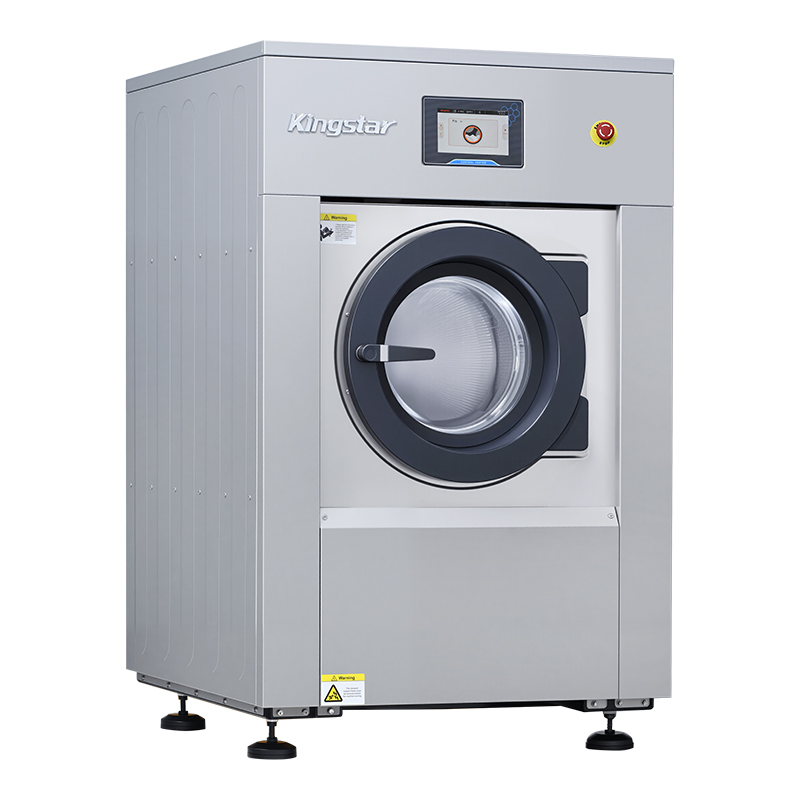
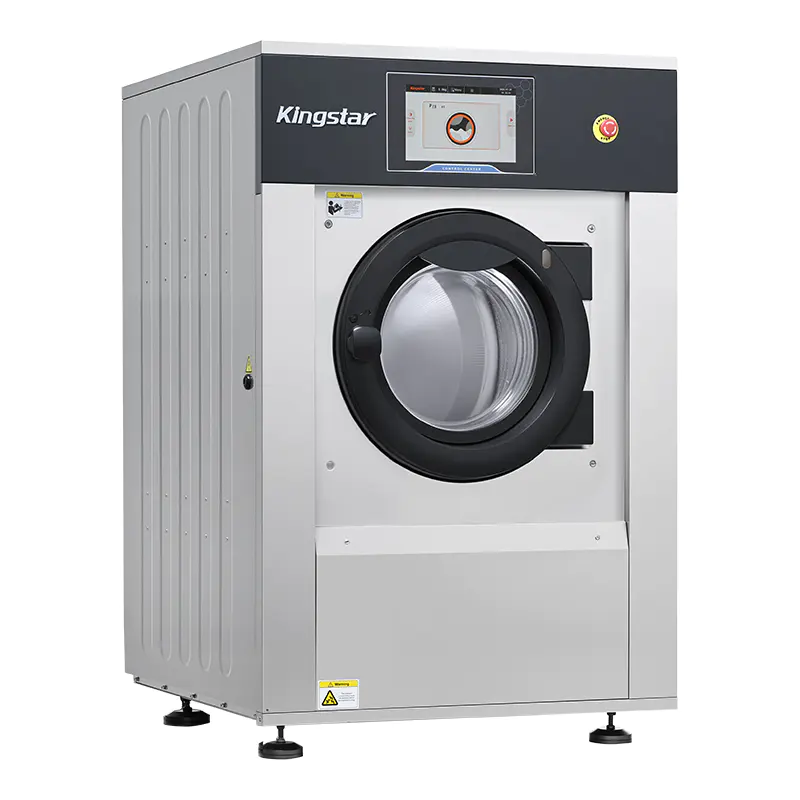
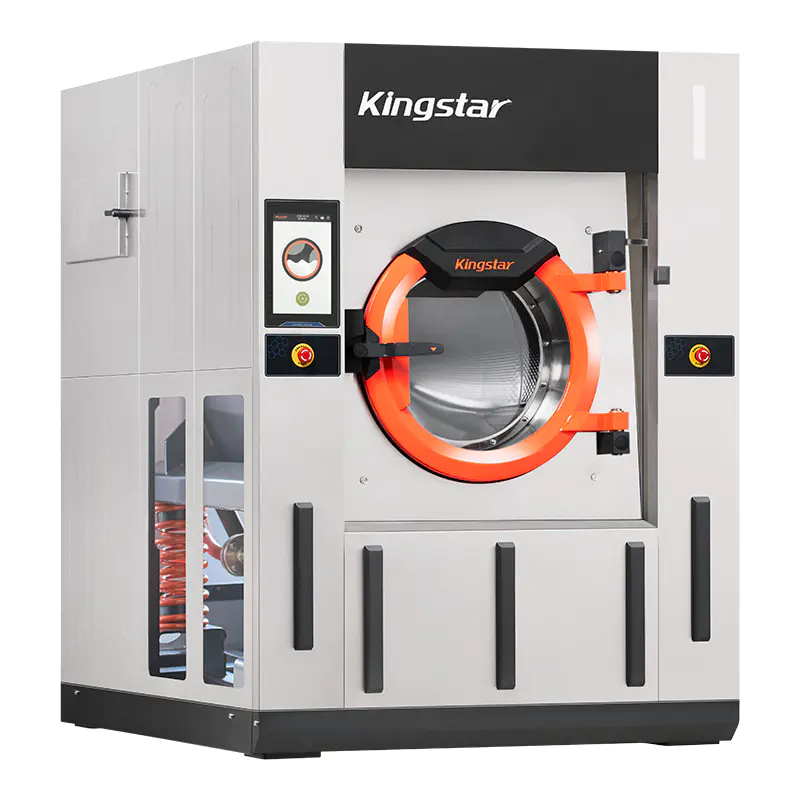
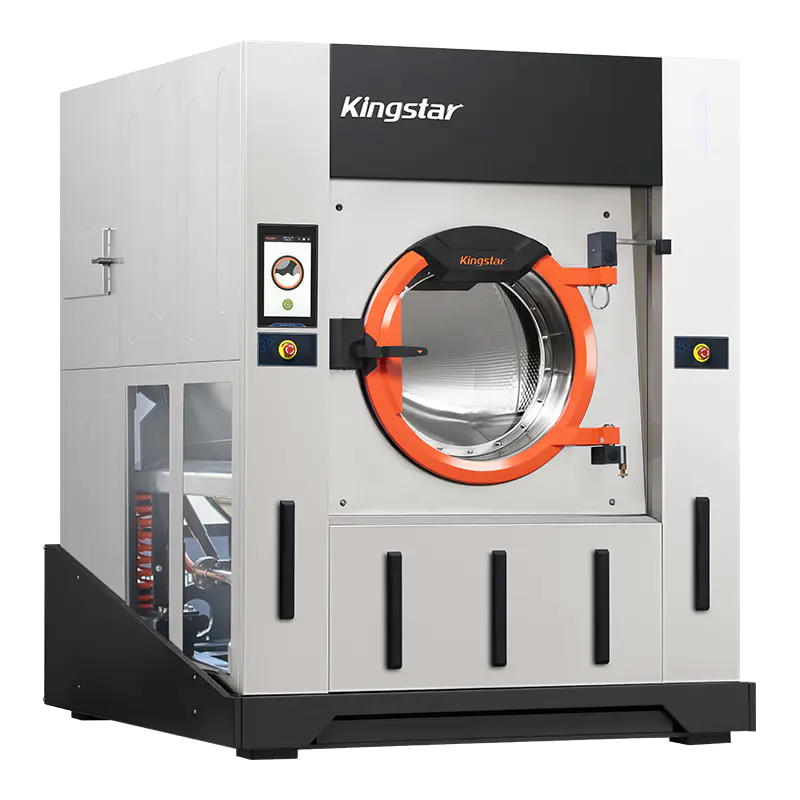
Commercial washer extractors are the foundational backbone of modern industrial laundry operations, uniquely combining intense mechanical washing cycles with high-velocity centrifugal water extraction within a single automated unit. By subjecting heavily soiled linens to forces exceeding 350 to 400 times the force of gravity (G-Force), these machines mechanically remove up to 75% of retained moisture before textiles ever reach a drying tumbler or ironer. Implementing high-performance extraction machinery directly translates to a 30% reduction in thermal drying energy consumption, slashes cycle turnaround times by up to 25 minutes per load, and significantly extends fabric longevity by minimizing heat exposure.
To understand the immense value of industrial laundry machinery, one must look beyond the wash chemistry to the physical forces at play during the final spin cycle. Standard domestic or light-commercial washing machines typically top out at extraction speeds generating roughly 100 G-Force to 200 G-Force. In contrast, heavy-duty industrial washer extractors are engineered to achieve speeds generating anywhere from 350 G-Force to 450 G-Force. This difference is not merely incremental; it fundamentally alters the physics of moisture retention within woven textiles.
When a blended cotton-polyester hotel sheet or a dense 100% cotton bath towel undergoes washing, the microscopic spaces between the fibers act as capillary reservoirs, holding onto water via surface tension. Low-speed extraction relies on basic draining, which leaves fabrics saturated with heavy, residual moisture. High G-force extraction utilizes pure centrifugal acceleration to break these capillary bonds, forcing water outward through the perforations of the inner stainless steel drum. For example, a 100-pound capacity machine spinning at 400 G-Force physically pulls water out of the load with a force equivalent to 40,000 pounds of pressure distributed across the cylinder wall.
The practical implication for a commercial facility processing 5,000 pounds of linen per day is staggering. Lower residual moisture content (RMC) means that textiles require substantially less time inside gas or steam-heated tumble dryers. Because thermal energy is vastly more expensive than the electrical energy required to spin a mechanical motor, optimizing the extraction phase is the single most effective way to lower a facility’s utility expenses while boosting total daily throughput.
Industrial facility managers evaluating new laundry machinery must choose between two distinct structural designs: rigid-mount (hard-mount) and suspended (soft-mount) architectures. This engineering choice impacts everything from initial concrete foundation installation costs to long-term facility flexibility.
Hard-Mount Systems: These units feature a solid steel frame bolted directly to a thick concrete foundation floor. Because there are no built-in shock absorbers or springs to absorb the violent kinetic energy generated during high-speed extraction, the building’s floor must act as the dampening agent. A typical 100-pound hard-mount washer extractor requires a dedicated, reinforced concrete pad at least 8 to 12 inches deep, tied directly into the facility's structural sub-base. Hard-mount machines are highly durable and mechanically simple, but they generally top out at extraction speeds of 150 G-Force to 200 G-Force to prevent structural damage to the facility.
Soft-Mount Systems: These advanced machines utilize a heavy-duty cradle suspended by an intricate network of industrial-grade springs and heavy-duty hydraulic shock absorbers. This internal suspension system isolates up to 95% of the dynamic vibrational forces generated during the spin cycle. Consequently, soft-mount units do not require specialized, ultra-thick concrete foundations and can be safely installed on upper floors, wood-framed structures, or in spaces where drilling into the floor is prohibited. More importantly, because the suspension manages the vibration, soft-mount machinery can safely reach ultra-high extraction speeds of 400 G-Force or greater, maximizing moisture removal efficiency.
| Engineering Attribute | Hard-Mount (Rigid) Extractors | Soft-Mount (Suspended) Extractors |
|---|---|---|
| Maximum G-Force Speed | Typically 150G – 200G | Typically 350G – 450G+ |
| Foundation Requirements | Requires 8-12" reinforced concrete bolted to bedrock/slab | Standard industrial concrete floor; no special bolting needed |
| Installation Versatility | Ground floors or basements only | Multi-level buildings, elevated platforms, upper tiers |
| Relative Initial Equipment Cost | Lower initial purchase price | Higher initial capital cost due to complex suspension |
| Average Moisture Retention | Approximately 60% – 65% RMC | Approximately 40% – 45% RMC |
Modern industrial washer extractors have evolved far beyond simple mechanical timers and basic temperature dials. Today's high-capacity machinery relies on sophisticated programmable microprocessors capable of fine-tuning every single variable within a wash cycle. This extreme degree of control is crucial because different stains, fabric blends, and soil levels require highly specific combinations of mechanical action, chemical concentration, thermal exposure, and time.
Advanced controllers allow plant operators to program up to 100 unique, multi-stage formulas. For instance, a cycle designed for surgical linens in a healthcare facility will require a multi-stage process involving a cool water flush to dissolve proteins and blood without setting them, followed by a high-temperature chemical disinfection phase, multiple rinses, and a final ultra-high-speed spin. Conversely, delicate table linens from a fine dining restaurant require precise temperature stepping to prevent thermal shock and wrinkling in polyester-blend fibers.
When upgrading commercial laundry machinery, the purchasing decision must be guided by a clear return on investment (ROI) calculation based on resource conservation. Water consumption, sewer discharge fees, gas consumption, and labor are all escalating operational costs that can be controlled with the right machine configurations.
Consider the operational impact of a high-efficiency 150-pound washer extractor running 10 cycles per day over a 300-day working year. Older, legacy commercial washers often consumed up to 3 to 4 gallons of water per pound of linen processed. Modern engineered washer extractors utilize advanced cylinder designs with tighter tolerances between the inner drum and outer shell, drastically reducing dead-space water volume. These modern units operate efficiently on 1.5 to 2.2 gallons of water per pound of linen.
Let us break down the tangible annual savings achieved by upgrading from a standard low-spin rigid washer to an ultra-high-efficiency soft-mount extraction system:
The violent mechanical environments within industrial laundry facilities require rigorous preventive maintenance routines to safeguard equipment investments. Washer extractors are subjected to corrosive chemicals, extreme thermal shifts, and intense mechanical stresses several times every hour. Neglecting basic maintenance tasks drastically curtails machine life and risks catastrophic component failures.
Daily maintenance protocols must include checking the pneumatic air pressure lines that control the water inlet valves, inspecting the heavy door seals for micro-tears or debris accumulation, and ensuring that the main drain valve opens and closes completely without binding. Debris like paperclips, coins, or stray screws left in pockets can easily wedge into the drain valve seat, causing thousands of gallons of heated, chemically treated water to slowly leak down the sewer drain completely unnoticed during the wash cycles.
On a weekly and monthly schedule, technical staff must focus heavily on lubrication and belt tensioning. The main bearings supporting the rotating inner cylinder endure the brunt of the high G-force spin cycles. These bearings must be greased with high-temperature, water-resistant lithium lubricants according to strict runtime-hour milestones. Furthermore, drive belts must be checked for proper deflection alignment. A slipping belt reduces extraction RPMs, which quietly drives up drying times and erodes the facility's utility efficiency over time.
ADD:No.388 Xinggang Road, Chongchuan District, Nantong City, 226000, Jiangsu Province, China.
Phone: +86-13917089379
Tel:+86-13917089379
Fax:+86-0513-85663366
E-mail:[email protected]
Cookies give you a personalized experience,Сookie files help us to enhance your experience using our website, simplify navigation, keep our website safe and assist in our marketing efforts. By clicking "Accept", you agree to the storing of cookies on your device for these purposes. Click "Adjust" to adjust your cookie preferences.For more information, review our Cookies Policy.