英语
英语 俄语
俄语 西班牙语
西班牙语 德语
德语
Home / News / Industry News / Stain Removal Methods for Commercial Laundry Shops: Cold Water First, Hot Water Later

Kingstar is your trusted partner for industrial and commercial laundry equipment. We specialized in the R&D and manufacturing of high-end industrial washers, commercial washers and dryers. Meanwhile, we provide global clients with comprehensive planning, layout workflow design, and software-hardware integration services for smart laundry plants.
Industry News
Aug 07,2026
Stain Removal Methods for Commercial Laundry Shops: Cold Water First, Hot Water Later
Many laundry operators have long believed that hot water washing removes stains more effectively. However, this common belief has been questioned by modern science. In some cases, hot water may not improve cleaning performance. It may even cause stains to become set on garments, which cannot be removed. Cold water is effective in removing these stains.
Why This Misconception Exists
Hot water can dissolve grease as well as enhance detergent performance. It is noticeably effective in cleaning kitchen cloths or grease-stained uniforms. Therefore, people believe that it can be used for removing all stains. But the results are often depressing. Fabrics become increasingly yellow after repeated washing. Stains become deeply set due to improper scrubbing.
Stains contain different chemical components. Temperature has different impacts on each component.
Three Special Stain Types
● Protein-based stains
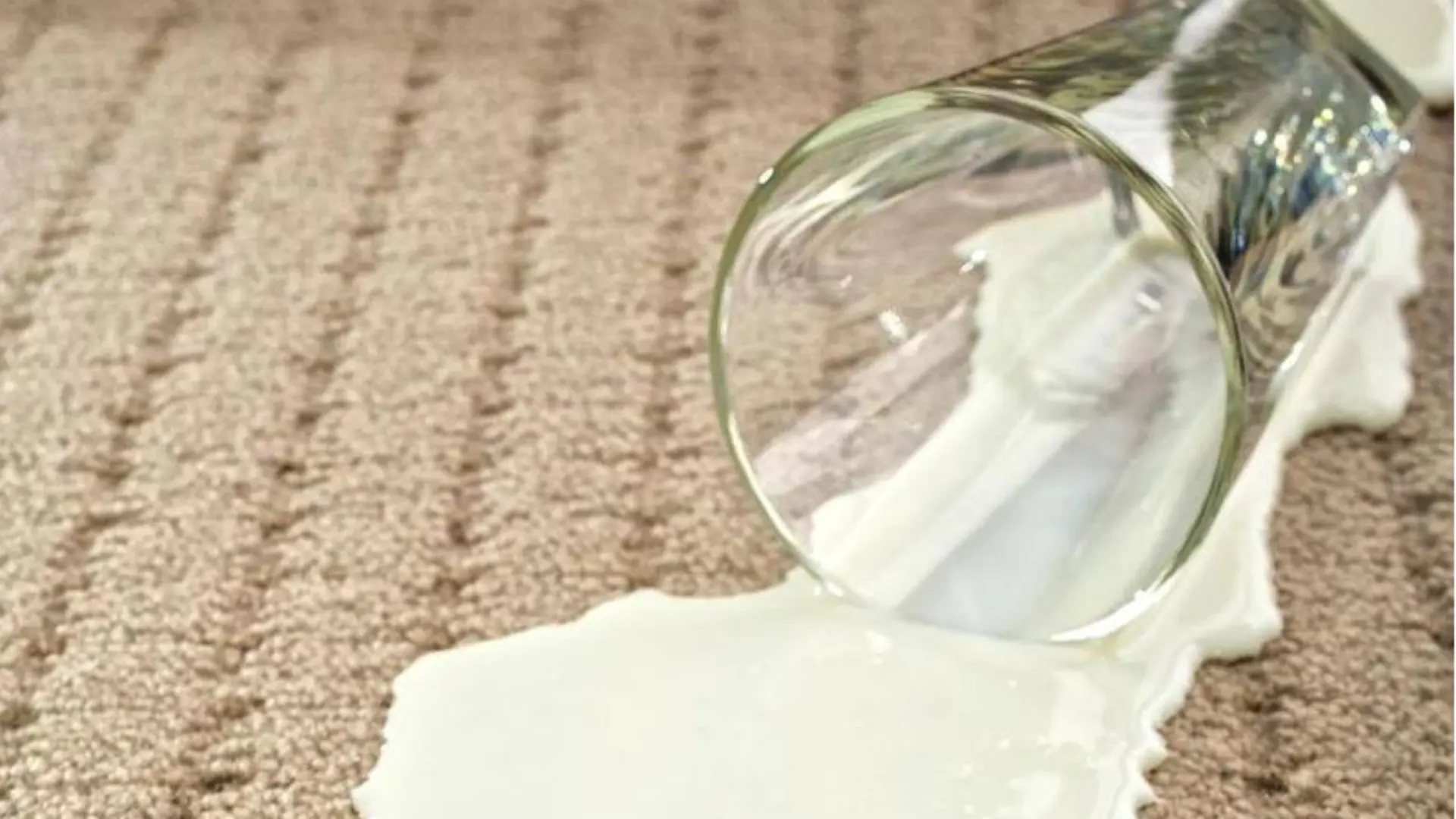
Blood, sweat, milk, egg, and meat juice stains.
When the temperature exceeds 60℃, protein molecules start to denature. It is just like cooking eggs, changing from a soluble state into a solid state. These coagulated proteins adhere inside the fibers. They may even form glue-like stains. At this moment, scrubbing causes fabric damage. However, stains still remain.
● Tannin-based stains
Tea, wine, coffee, juice, and berries.
This type of stain contains a large number of polyphenolic compounds. Under high temperatures, oxidation reactions accelerate to generate higher-molecular-weight insoluble colored polymers. They become embedded between fabric fibers like dyes, which are insoluble in water. Colors also become darker and the stains become set.
● Synthetic dye stains
Modern garment dyes require heat fixation. Dyeing factories use heat to fix the color on fabrics. Hot water washing is similar to a secondary color fixation. Dye stains become firmly fixed during washing.
Cold Water Stain Removal
Cold water can slow down chemical reactions. Under a low temperature, proteins do not coagulate. Tannin does not undergo excessive oxidation. Dyes do not create new chemical links. Stains remain in a loose and suspended state. They are more likely to be wrapped and dispersed by surfactants. Then they are flushed away with water flow.
In 2023, a large-scale research published in the Journal of Textile Science and Engineering has confirmed this conclusion. This study included 1,200 independent test, 43 common stains, and 27 different fabrics. The result shew that 92.3% of stains can be completely or nearly removed in cold water. In the hot water treatment group, 68% of protein, tannin, and dye stains become significantly worse.
In 1975, a research from Texas Tech University indicated that hot water is effective in removing pure grease stains. It fails to remove protein-based stains.
In 2024, the latest research provides further evidence. Although a high temperature can increase detergent penetration speed, for complex combined stains, it cannot convert this penetration ability into cleaning power. It will accelerate the solidification, making cleaning power ineffective.
Expert Suggestions
A lot of famous lifestyle bloggers recommend the same principle. Use cold water first if unsure.
Hot water still has its advantages. It can help remove grease stains (pure fat, cooking oil, engine oil, hair conditioner, and liquid makeup). High temperature can reduce grease viscosity to form micelle, which removes oil droplets. But actually, stains contain various components.
Chili oil: fat, protein, and pigments.
Latte: protein and coffee tannin.
Protein-based stains can firmly adhere to garments with hot water washing.
Professional Stain Removal Rules
Based on a large number of experience and frontline operations, experts develop reliable operating processes.
● Promptly rinse with running water.
The sooner the treatment is applied, the better the result. Surface stains are removed through water flow which inhibits chemical reactions.
● Identify stain types
Warm water can remove grease stains. Use cold water during the entire process for removing protein, tannin, and dye stains.
● Use warm water in the later stage
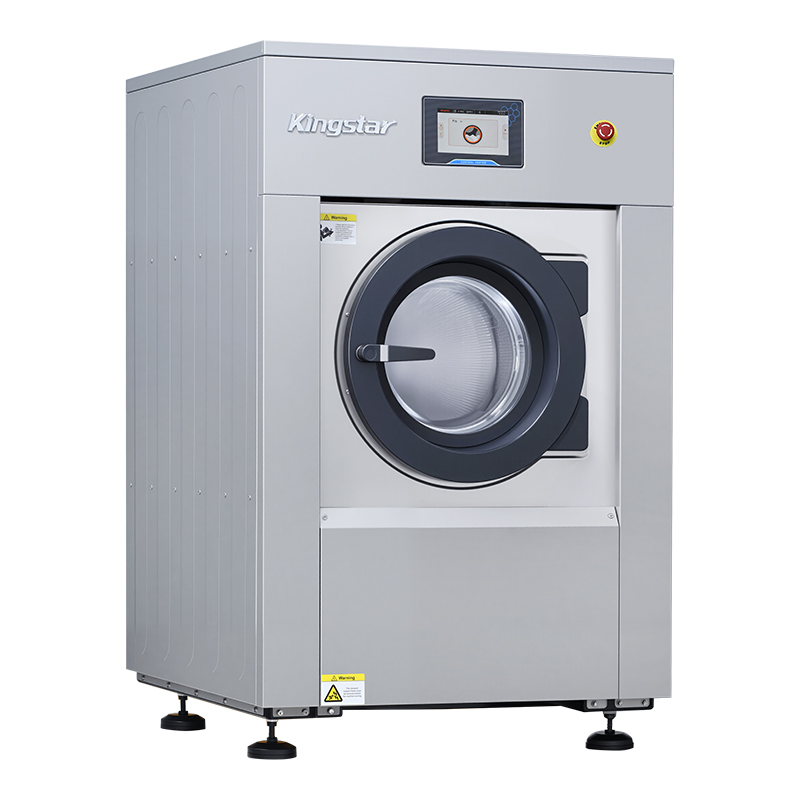
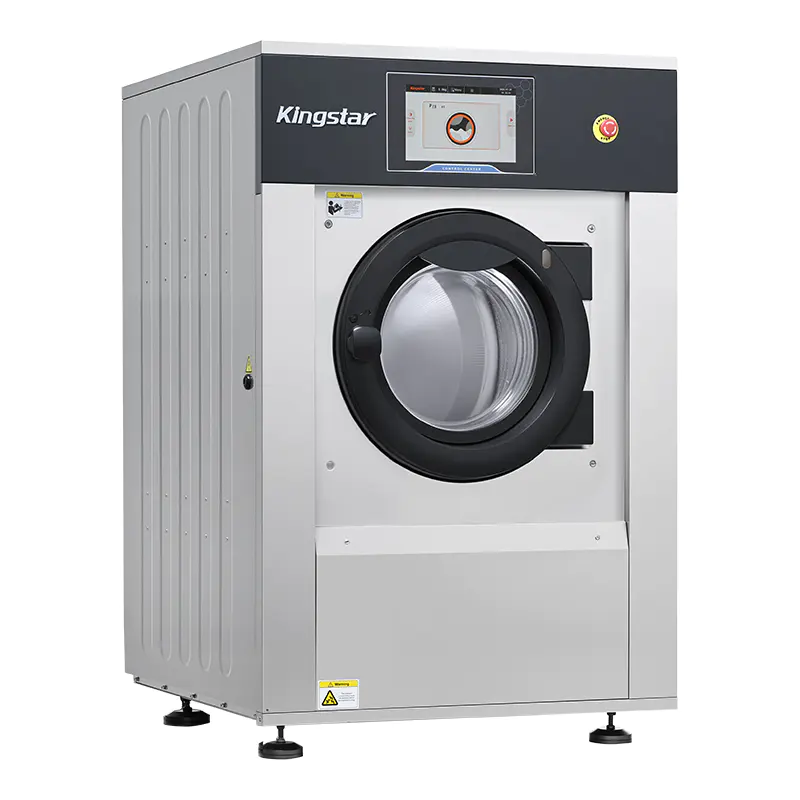
When most stains have been dispersed, rinse garments with warm water. The temperature should be controlled within 40℃. The Kingstar wet cleaning machine uses a staged main wash program.
- Main wash stage 1
Room temperature washing. Do not drain water.
- Main wash stage 2
Wash at the temperature below 40℃.
Conclusion
This “cold water first, hot water later” method can significantly reduce permanent stain risks. At the same time, it protects fabric elasticity and colors as well as extends garment lifespan. Cold water washing can help laundry shops save more energy. This further reduces washing costs.
Hot water cannot be completely ignored. It is an effective way to remove grease stains. But it is not good at removing all stains. Most daily stains may penetrate into fibers with hot water washing.
In most garment treatment applications, cold water washing is a safer and more effective choice. Each laundry operator should identify stain components and take different targeted measures. When processing soiled garments next time, try to perform a cold water washing rather than hot water. Therefore, laundry shops can effectively remove stains. At the same time, garments can maintain bright colors and soft hand feel. Laundry shops will acquire more customers praise.
Q&A
Q1: Which stains are not suitable for hot water washing?
A1: Protein-based, tannin-based, and synthetic dye stains.
Q2: How to process garments that require hot water stain removal and color bleeding prevention?
A2: Perform separate stain removal treatment. Place a clean towel underneath the garment. During the washing cycle, Kingstar wet cleaning machine starts the cooling function to reduce color bleeding.
Q3: Many chemicals can perform best at certain temperatures. Will the washing performance be affected with cold water washing?
A3: Low-temperature cold water detergents can be chosen. This type of detergent contains low-temperature active enzymes (protease and lipase) and surfactants. Under normal temperatures (20℃-30℃), it can effectively break down stains. Besides, Kingstar wet cleaning machines can achieve stain removal and protect garments.
ADD:No.388 Xinggang Road, Chongchuan District, Nantong City, 226000, Jiangsu Province, China.
-
Phone: +86-13917089379
-
Tel:+86-13917089379
-
Fax:+86-0513-85663366
-
E-mail:louislu@kingstarlaundry.com
products