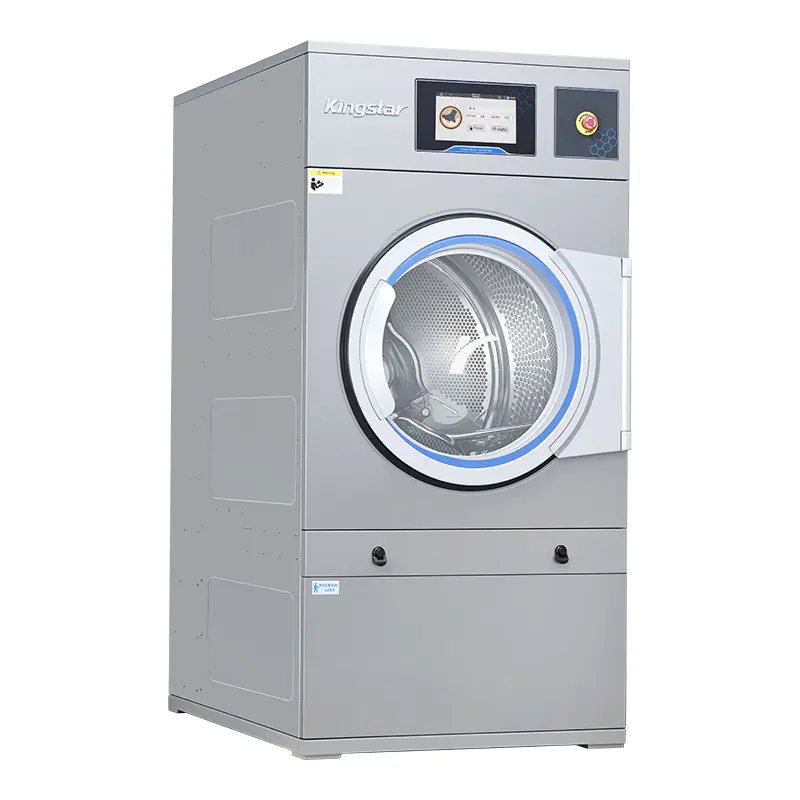
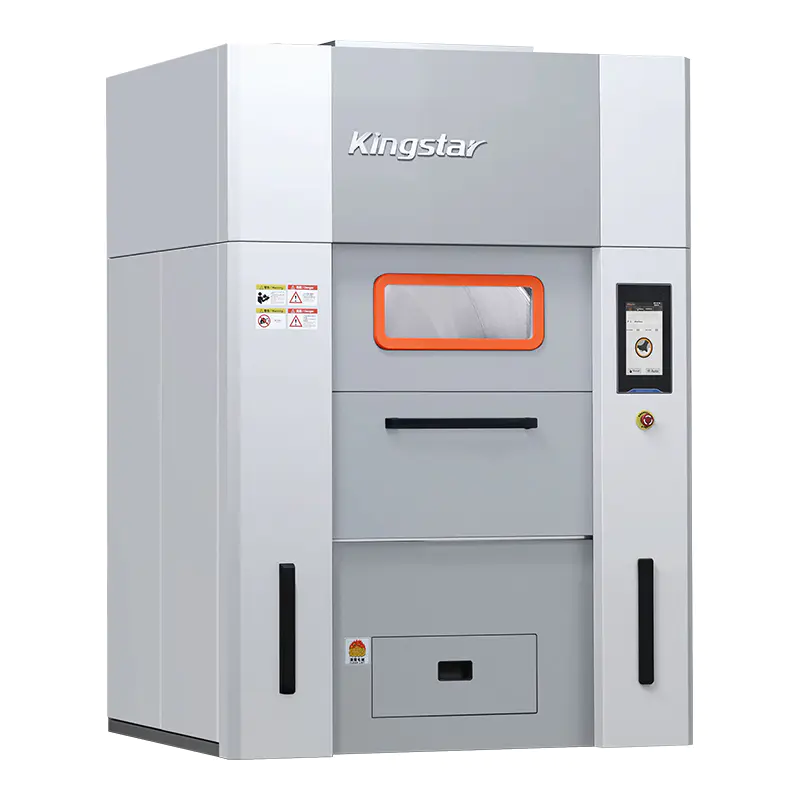
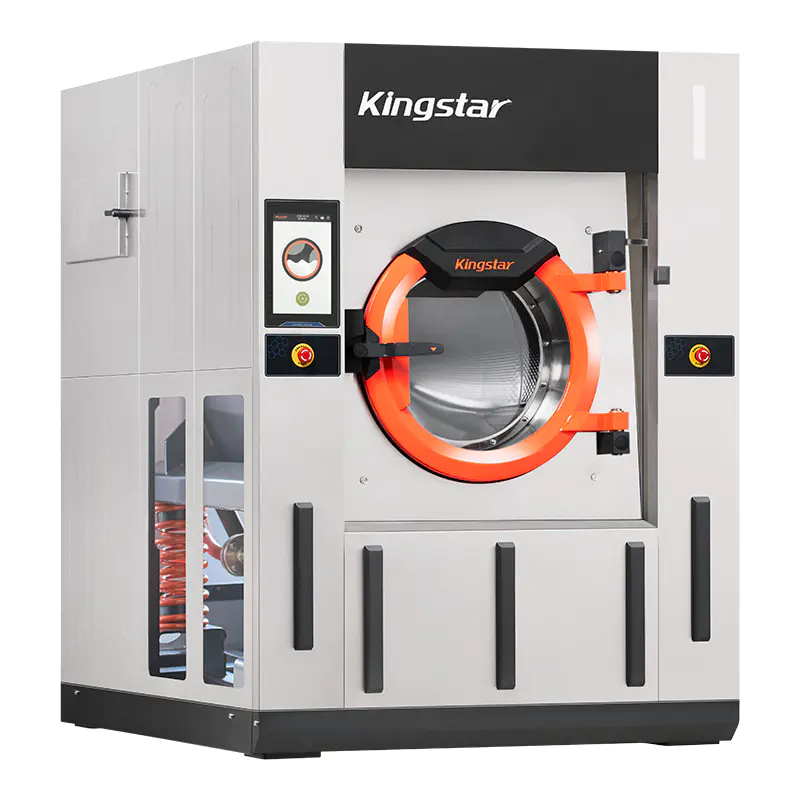
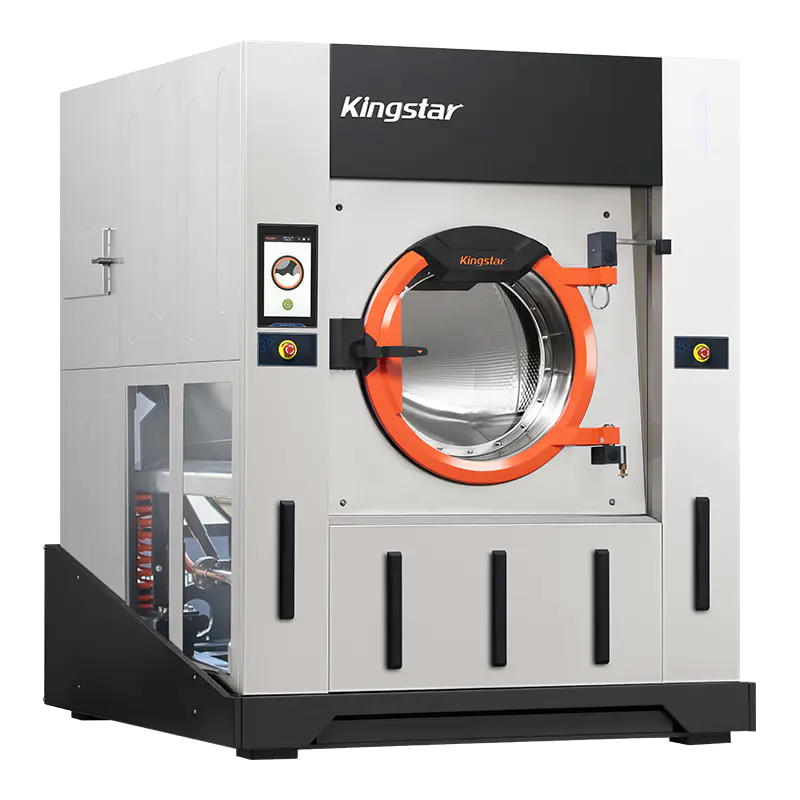
Most industrial dryer failures aren't sudden — they're the end result of a maintenance habit that quietly slipped for months. A dryer that gets a two-minute daily walk-through, a properly logged parts history, and a clear emergency shutdown procedure will typically run for a decade or more without a major failure. One that runs on "we'll deal with it when it breaks" logic usually doesn't make it past three or four years before a component failure takes it offline for days rather than hours — and for an industrial double stack dryer, where two drying pockets share a single utility hookup, a poorly maintained shared component can take out both loads at once instead of just one.
A dryer without a proper parts list and user manual on hand is a dryer that gets fixed by guesswork. Keeping a maintained parts list — bolt sizes and grades, fastener specs, tolerances, hardness ratings, lubrication types — turns a repair from a multi-hour diagnostic exercise into a fifteen-minute part swap. New technicians learn the machine faster from a well-organized manual than from watching someone else troubleshoot it under pressure, and supervisors make better call on repair-versus-replace decisions when the specs are actually written down somewhere instead of remembered by whoever's been there longest.
Recordkeeping isn't just about compliance, though it does cover that too — permits, inspection reports, certifications, and any regulatory paperwork tied to gas lines or exhaust venting. The bigger practical value shows up when something goes wrong and a technician needs to trace exactly what installation drawings, prior repairs, and component specs apply to this specific unit. A facility with scattered records loses hours just figuring out what they're even working with before repair work can start.
A short daily inspection routine does more to prevent downtime than most facilities give it credit for. It doesn't need to be elaborate — checking for unusual noise, verifying the lint or debris filter isn't restricting airflow, confirming exhaust venting is clear, and noting anything that looks or smells off compared to yesterday. These quick checks are what let a facility schedule a repair on its own terms instead of discovering a failure mid-cycle with laundry stuck inside a dead machine.
| Check Frequency | What Gets Inspected | Why It's Scheduled This Often |
| Daily | Lint/debris filter, unusual noise, exhaust airflow | Catches the fastest-developing issues before they cause a shutdown |
| Weekly | Belt tension, drum rotation smoothness, door seals | These wear gradually and rarely fail without warning signs first |
| Monthly | Burner assembly (gas units), electrical connections, bearing lubrication | Slower-developing wear that still needs regular attention |
| Annually | Full component inspection, exhaust duct cleaning, gas line certification | Matches most compliance and warranty inspection requirements |
Emergency procedures matter precisely because nobody has time to figure out the right response while a machine is actively overheating. A defined pathway — what temperature triggers an automatic shutoff, who gets notified, what the restart checklist looks like before the unit goes back into service — keeps a bad moment from turning into a bad week. Skipping this step doesn't just risk the machine; it risks whoever's standing near it when something finally does go wrong.
For an industrial double stack dryer specifically, the emergency procedure needs to specify whether an overheat event in one pocket requires shutting down the other too, given the shared utility connections. Leaving that ambiguous means either an overcautious full shutdown every time, or worse, a technician assuming the second pocket is unaffected when it isn't.
The core maintenance principles — documentation, daily checks, logging — apply to both configurations. What changes is the complexity and the stakes when something shared fails.
| Factor | Single-Pocket Industrial Dryer | Industrial Double Stack Dryer |
| Utility connections to maintain | One gas/electric/exhaust hookup per machine | One shared hookup serving two independent drying pockets |
| Impact of a shared-component failure | Affects one drying cycle only | Can potentially take both pockets offline simultaneously |
| Floor space per drying pocket | One full footprint per pocket | Half the footprint per pocket compared to two separate units |
| Maintenance log complexity | Straightforward — one unit, one history | Needs clear separation between shared-component and pocket-specific logs |
For a facility processing high daily volume, the floor-space efficiency of a double stack configuration is usually worth the added logging discipline it requires. But that efficiency only holds up if maintenance records are structured correctly from day one — treating a double stack unit's records exactly like two separate single dryers is how facilities end up confused about which log entry applies to which pocket six months down the line.
A maintenance log only has value if someone actually updates it consistently, and if the next person can find what they need in under a minute. Operation, maintenance, and lubrication logs that get updated in real time — rather than reconstructed from memory a week later — are what let a facility make an informed call on whether to repair a failing component, schedule a fuller overhaul, or start budgeting for replacement.
None of this is complicated in isolation — a parts list, a daily walk-through, an emergency protocol, a log that gets updated. What's hard is doing all of it consistently, month after month, especially once a facility gets busy and the daily checklist starts feeling optional. The dryers that run for fifteen years without a major failure are almost never the ones with the newest features — they're the ones where somebody kept doing the boring parts of maintenance long after it stopped feeling urgent.
ADD:No.388 Xinggang Road, Chongchuan District, Nantong City, 226000, Jiangsu Province, China.
Phone: +86-13917089379
Tel:+86-13917089379
Fax:+86-0513-85663366
E-mail:[email protected]
Cookies give you a personalized experience,Сookie files help us to enhance your experience using our website, simplify navigation, keep our website safe and assist in our marketing efforts. By clicking "Accept", you agree to the storing of cookies on your device for these purposes. Click "Adjust" to adjust your cookie preferences.For more information, review our Cookies Policy.