英语
英语 俄语
俄语 西班牙语
西班牙语 德语
德语
Home / News / Industry News / The Ultimate Guide to Industrial Laundry Solutions: Equipment, Processes, and Efficiency

Kingstar is your trusted partner for industrial and commercial laundry equipment. We specialized in the R&D and manufacturing of high-end industrial washers, commercial washers and dryers. Meanwhile, we provide global clients with comprehensive planning, layout workflow design, and software-hardware integration services for smart laundry plants.
Industry News
Feb 12,2026
The Ultimate Guide to Industrial Laundry Solutions: Equipment, Processes, and Efficiency
Key Components of an Industrial Laundry System
An industrial laundry system is built to support the operational needs of facilities that process large textile volumes, including hotels, hospitals, factories, and commercial service providers. Compared with a standard washer commonly used in residential settings, industrial laundry systems integrate a wider range of components designed to enhance stability, reduce downtime, and maintain continuous workflow. These systems are often deployed in in-house laundry rooms or managed by commercial washer and dryer rental companies that supply turnkey solutions. The inclusio·n of industrial washing machines, professional washer technology, and smart high-speed washer systems ensures that textiles move efficiently through each stage of the washing cycle. The following sections examine the key components that form the core of an industrial laundry system and how they contribute to operational continuity.
Washer-Extractors
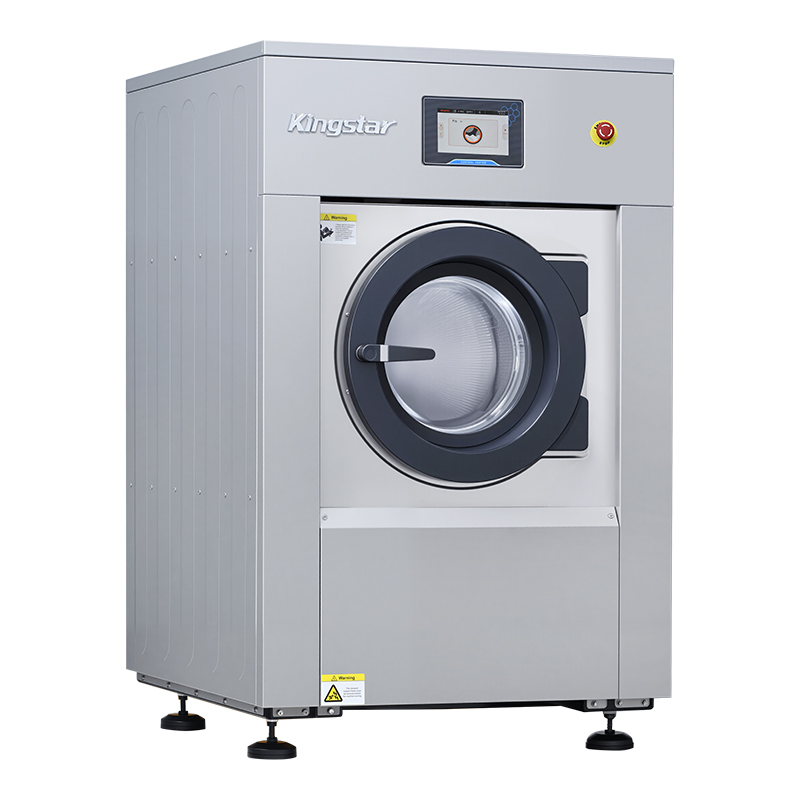
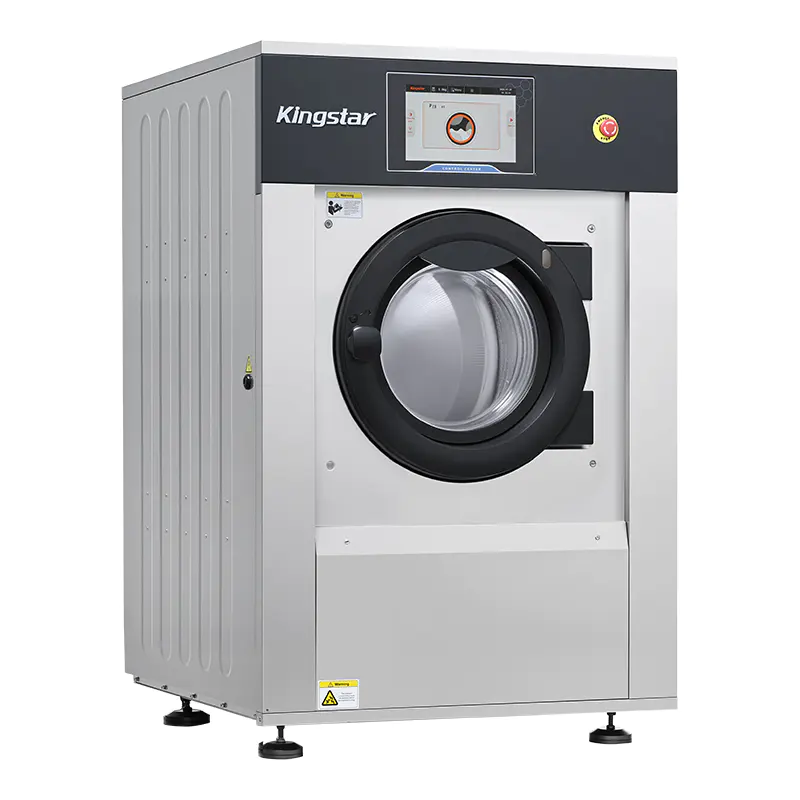
A washer-extractor serves as one of the primary components in any industrial laundry setup, offering both washing and high-speed extraction within a single unit. The design of a washer-extractor allows facilities to save time by reducing the need to transfer textiles between washing and spinning equipment. In many industrial laundry settings, smart high-speed washer models are selected because their control systems allow operators to customize cycles based on fabric type, soil level, and moisture retention requirements. Facilities that rely on commercial washer and dryer rental companies often choose washer-extractors with programmable logic controllers to align washing procedures with standardized workflows. Compared with a standard washer, these machines can operate for long periods with steady mechanical performance, making them suitable for environments that prioritize predictable throughput and consistent cleaning results.
Tunnel Washers
A tunnel washer is designed to support large-scale continuous washing, making it essential for industrial laundry facilities that process thousands of kilograms of textiles daily. The internal layout of a tunnel washer divides the washing process into multiple zones, enabling fabrics to move continuously from pre-washing to rinsing without interruption. This design reduces labor requirements because operators do not have to load individual batches into separate machines. Tunnel washers also help in-house laundry operations regulate water and energy consumption through their recirculation systems. Compared with multiple professional washer units operating independently, a tunnel washer improves workflow consistency by allowing textiles to pass through controlled mechanical and chemical environments. Facilities choosing between purchasing and leasing often use commercial washer and dryer rental companies to acquire tunnel systems due to the high initial investment required.
Drying Systems
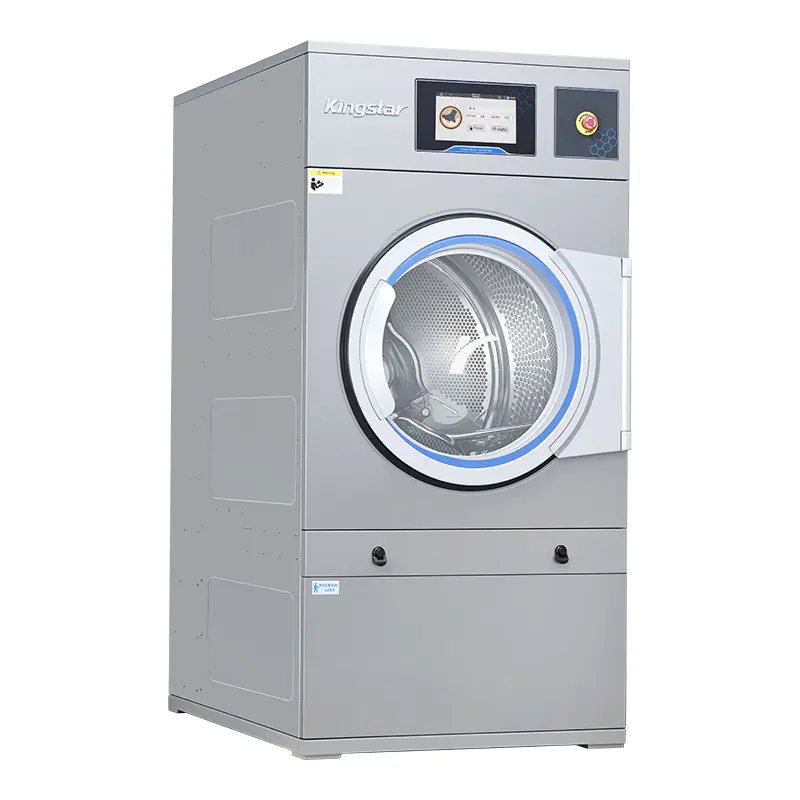
Industrial drying systems are designed to remove moisture from textiles while maintaining fabric integrity. Unlike a standard washer paired with a household dryer, industrial laundry facilities rely on large-capacity tumblers equipped with temperature control, airflow management, and moisture sensors. These systems prevent over-drying while maintaining uniform heat distribution throughout the drum. In environments where high-volume drying is required, facilities may use multiple tumblers positioned in parallel to maintain production flow. Drying systems also have programmable features that help regulate cycle duration according to textile type. This allows operators to handle diverse material categories, such as towels, linens, uniforms, and synthetic fabrics. The reliability of industrial drying systems ensures that cleaned textiles move efficiently to the finishing stage without unnecessary delays.
Finishing and Ironing Equipment
After textiles are washed and dried, finishing equipment helps restore their shape, appearance, and tactile properties. Flatwork ironers are commonly used in industrial laundry facilities to process sheets, pillowcases, and tablecloths. These machines incorporate heated rollers that smooth the fabric surface while removing residual moisture. Folding machines work alongside ironers to automate the arrangement of finished textiles into organized stacks. Professional washer and dryer configurations often include automated finishing stations to reduce labor requirements. Finishing equipment ensures that textiles meet presentation standards for industries such as hospitality and healthcare, where fabric appearance contributes to customer perception and hygiene compliance. The integration of finishing machines within an industrial system allows textile flow to remain steady from washing to delivery.
Sorting and Conveying Systems
Sorting and conveying systems form the organizational backbone of an industrial laundry facility. These systems help separate textiles by type, color, soil level, or customer group before they enter the washing cycle. Automated conveyors reduce manual handling and support predictable movement between washing, drying, and finishing stations. In-house laundry operations that manage high textile volumes depend on these systems to maintain order and prevent misrouting. Conveyors can be configured to deliver textiles directly into industrial washing machines or to staging areas that prepare loads for tunnel washers or washer-extractors. Because industrial laundry workflows depend on timing and coordination, efficient sorting and conveying systems help reduce bottlenecks that could slow production.
Chemical Dispensing Units
Chemical dispensing units ensure that detergents, disinfectants, and specialized additives enter the washing process in precise quantities. Industrial laundry environments use controlled dispensing because it supports consistent cleanliness while minimizing chemical waste. A professional washer or smart high-speed washer typically integrates with automated dosing systems, allowing technicians to program chemical levels according to textile requirements. For facilities served by commercial washer and dryer rental companies, chemical dispensing units are often calibrated during installation to match machine specifications. This coordination enhances washing effectiveness while preventing issues that may arise from irregular dosing. Automated chemical systems also reduce direct contact between staff and concentrated cleaning agents, contributing to workplace safety.
Water Heating and Recovery Systems
Reliable water heating is essential for industrial laundry operations because water temperature influences hygiene standards and washing efficiency. Centralized boilers or heat exchangers supply consistent temperatures for washer-extractors, tunnel washers, and pre-treatment cycles. To reduce resource consumption, many facilities integrate water recovery systems that capture and reuse water from previous cycles. This helps regulate overall consumption in in-house laundry environments where operational costs are closely monitored. Industrial washing machines that support heat recovery can reduce overall heating demands because incoming water is pre-warmed using residual thermal energy. These systems form an important link between environmental management and day-to-day laundry operations.
Control and Monitoring Systems
Modern industrial laundry systems incorporate digital control platforms that allow managers to oversee equipment conditions, cycle progress, and productivity metrics. Smart high-speed washer units often include touch interfaces that simplify cycle selection and maintenance scheduling. In larger facilities, centralized control software collects data from washer-extractors, drying systems, finishing machines, and conveyors. This data helps identify patterns that may influence maintenance planning or cycle optimization. For facilities using commercial washer and dryer rental companies, the service provider may remotely monitor machine performance and coordinate preventive servicing. Control systems give operators the ability to align workflow timing with equipment capacity, which contributes to consistent production levels.
Preventive Maintenance Infrastructure
A planned preventive maintenance system supports stable operation of industrial laundry equipment. Maintenance teams rely on schedules that address lubrication, belt and bearing inspection, alignment checks, and software updates. Professional washer systems often include sensors that alert technicians to irregular vibrations, temperature changes, or load imbalances. Developing a reliable maintenance routine helps reduce unplanned downtime that may disrupt production. Some commercial washer and dryer rental companies provide on-site technicians who manage equipment servicing according to predefined intervals. Preventive maintenance infrastructure ensures that the industrial laundry system continues to perform reliably even in high-demand environments.
Storage and Staging Areas
Storage and staging areas support the organized flow of textiles through an industrial laundry facility. These areas can include shelving, carts, and bins that hold textiles before and after washing. Staging areas help operators maintain separation between soiled and cleaned textiles, reducing the risk of cross-contamination. Facilities that rely on in-house laundry systems often designate specific zones for sorting incoming textiles, holding processed items, and preparing deliveries for distribution. These organizational structures allow staff to coordinate logistics efficiently, ensuring that washed and finished textiles return to their designated departments or customers without delay.
Example Configuration Table
The following table illustrates an example configuration of key industrial laundry components and their primary functions within a standard facility layout.
|
Component |
Primary Function |
Typical Placement |
|
Washer-Extractor |
Batch washing and moisture extraction |
Main wash zone |
|
Tunnel Washer |
Continuous high-volume washing |
Centralized processing area |
|
Tumble Dryer |
Moisture removal with controlled heating |
Drying section |
|
Flatwork Ironer |
Finishing of linens and flat textiles |
Finishing zone |
|
Chemical Dispenser |
Automated dosing of cleaning agents |
Adjacent to washing equipment |
Integration of Components in Operational Workflows
The effectiveness of an industrial laundry system depends on how well its components integrate into a coordinated workflow. Industrial washing machines process textiles in cycles that must align with drying capacity, finishing output, and sorting schedules. In-house laundry facilities often design workflows to minimize idle time between stages, ensuring that washer-extractors or tunnel washers do not create backlogs that slow downstream operations. Facilities that partner with commercial washer and dryer rental companies often receive system planning assistance to match equipment selection with expected textile load. When each component functions in harmony, the industrial laundry system can operate continuously throughout daily production hours.
By understanding the key components that form an industrial laundry system, facility managers can align equipment choices with production requirements, operational budgets, and efficiency objectives. The integration of professional washer technology, smart high-speed washer systems, and supportive infrastructure helps maintain consistent textile quality across diverse industry settings.
The Industrial Laundry Process: A Step-by-Step Guide
The industrial laundry process involves a coordinated sequence of steps designed to handle large textile volumes with consistency, efficiency, and hygiene control. Facilities that manage industrial laundry operations may operate through in-house laundry departments or work with commercial washer and dryer rental companies that supply specialized equipment and maintenance support. Unlike a standard washer used in residential settings, industrial washing machines, professional washer systems, and smart high-speed washer units are engineered for continuous use and structured workflows. Understanding each stage of the process helps organizations maintain textile quality while aligning operations with industry standards.
Sorting and Inspection
The first stage of industrial laundry processing begins with sorting and inspection. In industrial environments, textiles arrive from multiple departments or clients, which makes proper categorization essential. Sorting usually separates items based on fabric type, colorfastness, soil level, and intended washing temperature. By organizing textiles before loading them into industrial washing machines or tunnel systems, facilities prevent issues such as dye transfer, abrasion, or improper wash cycles. Inspection accompanies the sorting stage to identify damage, stains, or foreign objects embedded in pockets, seams, or folds. This proactive approach helps maintain equipment stability by reducing incidents such as blocked drains or drum impact caused by small objects. Facilities using in-house laundry operations often incorporate conveyor systems and sorting tables to structure this phase, while commercial washer and dryer rental companies may provide additional tools or automated systems to support organized sorting activities.
Washing and Disinfection
The washing and disinfection stage forms the core of industrial laundry operations. Textiles are loaded into washer-extractors, tunnel washers, or other industrial washing machines designed to manage heavy loads with consistent mechanical action. A professional washer typically includes multiple programmable cycles that manage temperature, rotation speed, chemical dosing, and water levels. Facilities using smart high-speed washer units benefit from advanced controls that monitor drum balance, extract moisture at controlled speeds, and reduce water consumption through precision settings. Disinfection protocols vary depending on industry requirements, with healthcare facilities requiring higher temperature exposure or chemical sanitization. Automated chemical dosing units play a critical role in regulating detergent, disinfectant, and neutralizing agents, preventing human error and maintaining consistent fabric hygiene. Facilities relying on commercial washer and dryer rental companies may have their machines calibrated for specific textile categories, ensuring standardized outcomes across loads.
Drying
After washing and disinfection, textiles advance to the drying stage. Industrial drying equipment, including high-capacity tumblers and moisture-controlled dryers, removes residual water efficiently. Compared with a standard washer paired with a household dryer, industrial drying systems support higher loads, stronger airflow patterns, and careful temperature regulation. Sensors help maintain consistent moisture levels and prevent over-drying, which protects fabric structure. In-house laundry operations often use multiple dryers arranged in parallel to synchronize with washer-extractor output. Moisture extraction efficiency is a key factor in reducing total processing time, as shorter drying cycles help achieve balanced production flow. Some industrial laundry environments use heat reclaim systems to improve energy efficiency during this stage, redirecting residual thermal energy to incoming air streams. The drying stage ensures textiles are prepared for the subsequent finishing phase without retaining unnecessary moisture.
Ironing and Finishing
The ironing and finishing stage enhances the appearance and dimensional stability of textiles. For flat items such as sheets, tablecloths, pillowcases, and certain uniforms, finishing equipment includes heated flatwork ironers that smooth and dry the fabric simultaneously. Industrial laundry facilities use these machines to create consistent results across large quantities, aligning with hospitality and healthcare standards. Professional washer and dryer arrangements often integrate ironers into a linear workflow that minimizes handling time. For garments requiring contour finishing, steam mannequins, presses, and form finishers help restore garment structure. This stage is essential for organizations that prioritize presentation and hygiene, especially where textiles contribute to customer satisfaction or regulatory compliance. Finishing equipment accommodates diverse textile categories, ensuring that each item achieves its required appearance and shape before entering the folding and packaging stage.
Folding and Packaging
Once textiles have been washed, dried, and finished, they move to the folding and packaging stage. Folding machines automate the arrangement of linens and garments into standardized stacks, helping reduce manual labor and maintaining uniform appearance. Facilities with in-house laundry operations often use a combination of manual and automated folding stations depending on textile variety and production volumes. Packaging procedures vary depending on customer or departmental requirements. In some industrial laundry environments, items may be wrapped, cart-staged, or labeled for delivery routes. Automated labeling and sorting systems also play a role in ensuring items return to their correct destination. By maintaining an organized folding and packaging process, facilities help reduce sorting errors and streamline final delivery or storage logistics.
Quality Control
Quality control is the final stage of the industrial laundry process, ensuring that finished textiles meet hygiene, appearance, and logistical accuracy standards. Inspectors review items for stains, tears, uneven drying, or finishing inconsistencies. In environments using smart high-speed washer units or advanced industrial washing machines, diagnostic data from washing cycles may also contribute to quality evaluations. In-house laundry operations typically maintain checklists or digital tracking systems to document quality outcomes. Facilities that collaborate with commercial washer and dryer rental companies may integrate additional monitoring tools that track machine performance, cycle durations, and error alerts. The quality control stage maintains operational reliability by ensuring consistent processing outcomes and reducing the likelihood of customer complaints or textile returns.
Example Industrial Laundry Workflow Table
The following table illustrates an example workflow showing the relationship between each processing stage within an industrial laundry environment.
|
Processing Stage |
Primary Activity |
Typical Equipment |
|
Sorting and Inspection |
Separating textiles and identifying issues |
Sorting tables, conveyors |
|
Washing and Disinfection |
Removing soil and sanitizing textiles |
Industrial washing machines, smart high-speed washer |
|
Drying |
Moisture removal |
Tumble dryers, moisture-controlled drying units |
|
Ironing and Finishing |
Smoothing, shaping, and restoring textiles |
Flatwork ironers, presses, finishing stations |
|
Folding and Packaging |
Arranging cleaned items for delivery |
Folding machines, labeling systems |
|
Quality Control |
Inspection and approval |
Checklists, monitoring systems |
Integration of Equipment Across the Process
The effectiveness of the industrial laundry process depends on the seamless integration of equipment and workflow timing. Industrial washing machines, professional washer systems, and drying units must be calibrated to balance load capacities across all stations. In-house laundry operations typically coordinate equipment output using production planning tools that monitor cycle durations and machine readiness. Smart high-speed washer units support this integration by completing extraction cycles that reduce drying time, allowing downstream operations to proceed without delay. Facilities that partner with commercial washer and dryer rental companies often receive equipment selection assistance to ensure that washer, dryer, and finishing capacities match anticipated textile volumes. This structured approach helps maintain efficient throughput across every stage of the industrial laundry process, from sorting to final quality inspection.
By understanding each step of the industrial laundry process and the role of specialized equipment, organizations can design workflows that support hygiene standards, operational efficiency, and consistent textile quality across diverse industry applications.
Factors to Consider When Choosing Industrial Laundry Equipment
Laundry Volume and Throughput
Understanding laundry volume and throughput is one of the central considerations when selecting industrial laundry equipment. Different facilities, whether they operate as in-house laundry departments or rely on commercial washer and dryer rental companies, experience varying levels of daily load, and this directly influences the type of machinery that is suitable. Facilities with steady or high-volume industrial laundry operations require machines with greater capacity to maintain consistent workflow. Businesses that operate hospitality services, healthcare centers, or manufacturing plants usually process sizeable amounts of linens, garments, and specialty fabrics, which makes industrial washing machines preferable over a standard washer due to durability and cycle efficiency. Evaluating throughput also helps determine how many loads must be completed within a specific timeframe. A professional washer or a smart high-speed washer can support facilities with fast turnover requirements by reducing cycle times and maintaining steady productivity. Choosing the appropriate equipment requires a clear understanding of how daily or weekly volume affects operational continuity, staffing, and overall energy consumption. When machines match the volume needs, workflow becomes more predictable, and the laundry environment maintains consistent output levels.
|
Volume Level |
Recommended Machine Type |
Typical Applications |
|
Low Volume |
Standard washer or basic professional washer |
Small clinics, boutique hotels, small in-house laundry units |
|
Medium Volume |
Professional washer or compact industrial washing machines |
Mid-size hotels, schools, medium healthcare facilities |
|
High Volume |
Smart high-speed washer or large industrial washing machines |
Large hotels, hospitals, rental textile services, manufacturing plants |
Throughput also affects drying, folding, and finishing steps. When washer capacity increases, supporting equipment such as dryers, folders, and press machines must align with throughput expectations to prevent bottlenecks. Companies that collaborate with commercial washer and dryer rental companies often evaluate throughput assessments before deciding on leasing equipment. The rental model helps minimize upfront investment and allows facilities to scale gradually as demand changes. In-house laundry managers benefit from evaluating equipment specifications such as drum capacity, cycle speed, mechanical action, and expected hourly performance. By focusing on throughput, facilities can maintain steady operational rhythms and avoid downtime caused by equipment mismatch.
Types of Fabrics Processed
Understanding the types of fabrics processed in a facility is another essential factor when choosing industrial laundry equipment. Different materials—such as cotton, polyester blends, microfiber, delicate linens, and specialized fabrics used in healthcare or industrial environments—have different wash requirements. A standard washer may be suitable for lightweight linens, small clothing items, or limited material diversity, but industrial washing machines are generally more compatible with diverse loads. These machines support customizable cycles, controlled drum movement, and advanced water extraction capabilities, making them well-suited for varied textile categories. A professional washer provides more options for adjusting temperature, wash speed, chemical dosing, and mechanical agitation, which benefits facilities that process sensitive fabrics. A smart high-speed washer extends these advantages by integrating programmable wash formulas, automated load sensing, and chemical injection systems that safeguard textile integrity. Selecting the right equipment ensures that materials are cleaned thoroughly without excessive wear, which influences replacement costs and fabric lifespan.
The range of fabrics also determines which auxiliary systems or optional features may be beneficial. For example, garments requiring disinfection cycles benefit from washers with precise temperature control and extended sanitation programs. Microfiber cloths used in cleaning services require controlled mechanical action to prevent fiber damage. Textiles used in healthcare settings often require documented wash processes to comply with hygiene standards. In-house laundry departments that handle various categories of uniforms, linens, towels, or protective fabrics must select machines offering consistent wash quality without compromising textile structure. Commercial washer and dryer rental companies often provide consultation based on fabric type to help facilities select equipment that aligns with fabric performance needs. Selecting compatible machinery based on fabric characteristics ensures operational consistency, quality preservation, and reduced maintenance complexity.
|
Fabric Type |
Recommended Features |
Notes |
|
Cotton and Linens |
High-temperature capability, strong agitation |
Common in hotels and residential services |
|
Microfiber |
Gentle mechanical action, lower temperature |
Used in cleaning services and healthcare |
|
Polyester Blends |
Moderate agitation, adjustable spin speed |
Common in uniforms and apparel services |
|
Specialty Healthcare Fabrics |
Sanitation cycle, programmable controls |
Requires consistent hygiene standards |
Available Space and Layout
Available space and layout considerations significantly influence the selection of industrial laundry equipment. Facilities with limited space must pay attention to equipment dimensions, required clearance, and workflow direction to ensure that laundry operations remain safe and efficient. A standard washer or compact professional washer may be sufficient for smaller spaces, but operations with high laundry demand typically require full-sized industrial washing machines, which need adequate installation areas. In-house laundry rooms should consider airflow, drainage systems, electrical connections, and ergonomics when determining equipment placement. Commercial washer and dryer rental companies often perform site assessments before recommending a layout plan that aligns with the building infrastructure.
Equipment layout also influences operational efficiency. Placing washers, dryers, folding tables, and sorting areas in a logical sequence minimizes unnecessary movement and supports a steady workflow. High-volume facilities often use side-by-side or tunnel-style arrangements, where machines are aligned to support smooth material flow from washing to drying and finishing. Smart high-speed washer models often require specific installation conditions due to their advanced mechanical and electronic components. Proper ventilation is essential for dryer installation, and floor loading capacity must support heavy industrial equipment. Evaluating layout ensures that both current and future equipment configurations remain functional as operational needs evolve.
|
Facility Size |
Layout Consideration |
Machine Suggestions |
|
Small Rooms |
Compact layouts, stacked systems |
Standard washer, small professional washer |
|
Medium Spaces |
Side-by-side workflow, ergonomic spacing |
Professional washer, mid-size industrial washing machines |
|
Large Facilities |
Full workflow zones, high-capacity installations |
Smart high-speed washer, large industrial washing machines |
Energy Efficiency Requirements
Energy efficiency is a central consideration for facilities aiming to reduce operational costs and environmental impact. Industrial laundry processes consume significant amounts of water, electricity, and heat, and selecting equipment that optimizes consumption can improve long-term performance. A smart high-speed washer often includes features such as automatic load management, optimized drum rotation patterns, advanced motor control, and water-saving mechanisms. These allow facilities to maintain consistent cleaning results while minimizing resource usage. Professional washer models also provide efficiency advantages through variable spin speeds and time-controlled washing programs. In-house laundry operations that adopt energy-conscious strategies benefit from lower utility expenses and longer equipment lifespan due to reduced operational strain.
Energy-efficient dryers, heat recovery systems, and programmable controls further support sustainable industrial laundry operations. Facilities that collaborate with commercial washer and dryer rental companies often gain access to newer models that incorporate improved energy-saving technologies. Equipment with documented energy ratings helps managers assess long-term cost performance and determine whether the investment aligns with business goals. Evaluating energy efficiency also involves reviewing how well the machine handles different fabric types without excessive energy demand. Smart sensors that regulate water temperature, wash dosing, and cycle duration help maintain consistent energy usage while providing reliable cleaning results.
|
Energy Feature |
Benefit |
Machine Type |
|
Automatic Load Adjustment |
Adjusts water and energy use based on load size |
Smart high-speed washer |
|
Variable Spin Speed |
Reduces drying time and energy consumption |
Professional washer |
|
Heat Recovery System |
Reuses generated heat to improve dryer efficiency |
Industrial washing machines and dryers |
Budget and ROI
The final key factor when selecting industrial laundry equipment is understanding budget limitations and the expected return on investment (ROI). Upfront costs vary depending on machine size, features, technology level, and brand reputation. A standard washer represents a lower-cost option but may not provide the durability or efficiency needed for sustained industrial laundry operations. Professional washer models offer improved reliability and a balanced cost-performance ratio, while smart high-speed washer units usually involve a higher initial investment due to advanced features. Industrial washing machines designed for heavy-duty cycles often yield stronger long-term ROI because they operate efficiently under continuous use, reducing repairs and replacement frequency.
Budget considerations can also include equipment financing, leasing, and rental arrangements. Commercial washer and dryer rental companies provide flexible solutions for businesses that want to minimize capital expenditure while maintaining access to efficient equipment. Rental agreements often include maintenance and service plans, reducing unexpected costs and allowing facilities to focus on operational output. In-house laundry departments must evaluate not only the initial purchase price but also long-term maintenance, energy usage, water consumption, detergent requirements, and expected machine lifespan. By examining all financial aspects, businesses can determine which equipment configuration supports sustainable cost management. A well-balanced ROI analysis includes operational savings, productivity improvements, staff efficiency, and the ability to maintain consistent laundry quality across diverse fabric categories.
Common Problems and Solutions in Industrial Laundry
Stain Removal Challenges
Stain removal is one of the most frequent concerns encountered in industrial laundry operations, whether the facility functions as an in-house laundry department, a commercial cleaning service provider, or a rental operation working with commercial washer and dryer rental companies. The diversity of textiles and the variation in stain types—ranging from oils, dyes, and proteins to chemicals and industrial residues—require clear and consistent treatment methods. A standard washer may not always offer the advanced control needed for these processes, leading many facilities to adopt professional washer units or industrial washing machines with programmable chemical dosing systems. Stain removal challenges often arise when fabrics are processed using incorrect water temperatures, insufficient pre-treatment, or wash cycles that are not suited to the material type. High-volume industrial laundry environments also encounter situations where stains become fixed due to delays between soiling and washing, further complicating the process.
Facilities benefit from developing structured stain identification procedures to determine whether stains originate from food, grease, ink, medication, or industrial materials. Once categorized, the textile can be routed through the appropriate treatment process. The growing use of a smart high-speed washer allows operators to automate formula selection for specific stain categories, reducing errors caused by manual settings. Proper chemical management is also important, as incorrect dosing may leave residue or fail to fully remove contaminants. Staff training plays a role in ensuring that each load is processed using a suitable washing formula, temperature setting, and cycle duration. In industrial laundry environments where large loads move quickly through production, precise systems help maintain consistency and fabric integrity.
|
Stain Category |
Potential Cause |
Recommended Action |
|
Oil and Grease |
Industrial workwear, kitchen use |
Use warm water and targeted degreasing chemicals |
|
Protein Stains |
Food residue, organic matter |
Enzyme-based pre-treatment and moderate agitation |
|
Ink and Dye |
Pens, markers, dyes |
Oxidizing agents and controlled temperature cycles |
|
Rust or Metallic Marks |
Equipment contact or water impurities |
Specialty rust removers and water filtration systems |
Equipment Malfunctions
Equipment malfunctions present operational disruptions that significantly affect the workflow of industrial laundry facilities. Industrial washing machines, dryers, folders, and finishing equipment operate for extended hours each day, increasing the likelihood of mechanical wear. Issues such as incorrect drum rotation, unusual vibration, water drainage problems, control panel errors, or temperature inconsistencies may arise over time. Facilities relying on commercial washer and dryer rental companies often benefit from maintenance plans included in their agreements, helping reduce downtime caused by unexpected failures. In-house laundry departments that operate their own equipment must follow structured maintenance schedules to keep machines functioning consistently.
Many malfunctions stem from misaligned loads, worn components, improper chemical usage, or inadequate cleaning of machine interiors. A standard washer may not withstand heavy continuous use, which is why many industrial laundry operations upgrade to a professional washer or smart high-speed washer designed for extended-duty operation. The advanced systems in these machines often incorporate real-time monitoring features that detect imbalances, blocked drains, overheating, or reduced water flow. Early identification of problems allows operators to intervene before significant damage occurs. Staff training also contributes to equipment reliability, as improper loading, incorrect cycle selection, or inconsistent detergent dosing can accelerate wear and cause performance irregularities.
Maintenance teams should maintain service logs documenting inspections, part replacements, calibration checks, and software updates. These records help managers assess when a machine may require refurbishing or replacement. Continuous investment in structured maintenance contributes to steady productivity and aligns with long-term operational planning.
|
Equipment Issue |
Possible Cause |
Solution |
|
Machine Vibration |
Load imbalance or worn suspension |
Redistribute load or replace stabilizing components |
|
Drainage Problems |
Blocked filters or pump failure |
Clean filters and inspect drainage pump |
|
Temperature Irregularities |
Sensor issues or heating element failure |
Calibrate or replace heat control components |
|
Control Panel Errors |
Software fault or electrical issues |
Reset system or conduct electrical diagnostics |
Lint Control
Lint control is an important part of maintaining industrial laundry efficiency and preventing equipment blockages. During washing and drying cycles, fibers separate from fabrics and accumulate in filters, ducts, and machine interiors. In industrial laundry settings, where loads are processed at high speed and large volume, lint accumulation increases rapidly. Without proper management, lint build-up can reduce airflow in dryers, cause overheating, or interfere with drainage systems. Facilities using a standard washer may encounter lint build-up less frequently due to smaller loads, but industrial washing machines handle significantly greater fiber volume and therefore require consistent filter cleaning routines. Professional washer units often include optimized filtration systems, while smart high-speed washer designs may incorporate advanced lint control systems and monitoring sensors.
Dryers in particular require systematic lint removal to maintain airflow efficiency and safe operating temperatures. Lint buildup increases energy consumption by slowing the drying process and forces machines to work harder to reach appropriate temperatures. This can lead to long-term wear or unexpected malfunctions. In-house laundry facilities must create schedules for clearing lint traps between cycles and conducting deep cleaning at regular intervals. The arrangement of ventilation ducts also influences lint management, as bends or restricted sections allow material to accumulate more quickly. When facilities collaborate with commercial washer and dryer rental companies, they often gain access to lint-control guidance and periodic servicing to maintain machine efficiency.
Consistent lint control supports improved productivity, reduced energy consumption, and a safer working environment. It also extends machine lifespan and supports predictable workflow in industrial laundry operations.
|
Lint Source |
Impact |
Recommended Management |
|
Terry Towels |
High lint generation during washing |
Increase filter checks and dryer duct cleaning frequency |
|
Microfiber Cloths |
Fine lint particles |
Use specialized filter inserts |
|
Mixed Laundry Loads |
Lint transfer between materials |
Sort loads by fabric type to reduce cross-contamination |
Water Quality Issues
Water quality plays a direct role in the performance of industrial laundry systems, and issues related to mineral content, sediment, pH balance, or chemical composition can impact wash outcomes. Facilities that rely on untreated hard water often experience mineral deposits on fabrics, reduced detergent effectiveness, and build-up inside machines. These issues affect equipment such as industrial washing machines, professional washer units, and smart high-speed washer systems by reducing cleaning efficiency and increasing maintenance needs. Minerals in water may cause stiffness in linens or discoloration when combined with detergents and heat. Improper water treatment can also shorten the lifespan of heating elements, valves, and internal components.
Monitoring and managing water quality helps facilities maintain consistent wash results, especially in high-volume industrial laundry environments. Many operations install filtration systems to reduce sediment or remove minerals that interfere with detergents. Some facilities incorporate softeners to lower mineral content and enhance chemical performance. pH-balanced water helps ensure that textiles maintain color stability and fabric strength. Facilities that operate as in-house laundry departments benefit from regular testing, which supports quality control. Commercial washer and dryer rental companies sometimes provide recommendations on water treatment systems that reduce wear on machines.
Temperature control also interacts with water quality. Hard water combined with high heat increases the risk of mineral scaling, which affects machine heating efficiency. Regular descaling procedures are necessary to prevent residues from accumulating inside pipes and heating elements. Attention to water quality supports predictable washing performance, reduces the frequency of rewash cycles, and ensures that textiles retain their intended appearance and feel.
|
Water Issue |
Effect on Laundry |
Solution |
|
Hard Water |
Mineral deposits on fabrics and machine parts |
Install softening or filtration system |
|
High Sediment Levels |
Clogged valves and reduced detergent efficiency |
Use sediment filters and schedule inspections |
|
Unbalanced pH |
Color fading or fabric wear |
Maintain consistent pH through chemical adjustments |
|
Temperature Inconsistency |
Reduced stain removal effectiveness |
Calibrate water heating systems |
ADD:No.388 Xinggang Road, Chongchuan District, Nantong City, 226000, Jiangsu Province, China.
-
Phone: +86-13917089379
-
Tel:+86-13917089379
-
Fax:+86-0513-85663366
-
E-mail:louislu@kingstarlaundry.com
products