英语
英语 俄语
俄语 西班牙语
西班牙语 德语
德语
Home / News / Industry News / Washer Extractors: A Practical Buying Guide for Commercial Laundry Operations

Kingstar is your trusted partner for industrial and commercial laundry equipment. We specialized in the R&D and manufacturing of high-end industrial washers, commercial washers and dryers. Meanwhile, we provide global clients with comprehensive planning, layout workflow design, and software-hardware integration services for smart laundry plants.
Industry News
Oct 08,2026
Washer Extractors: A Practical Buying Guide for Commercial Laundry Operations
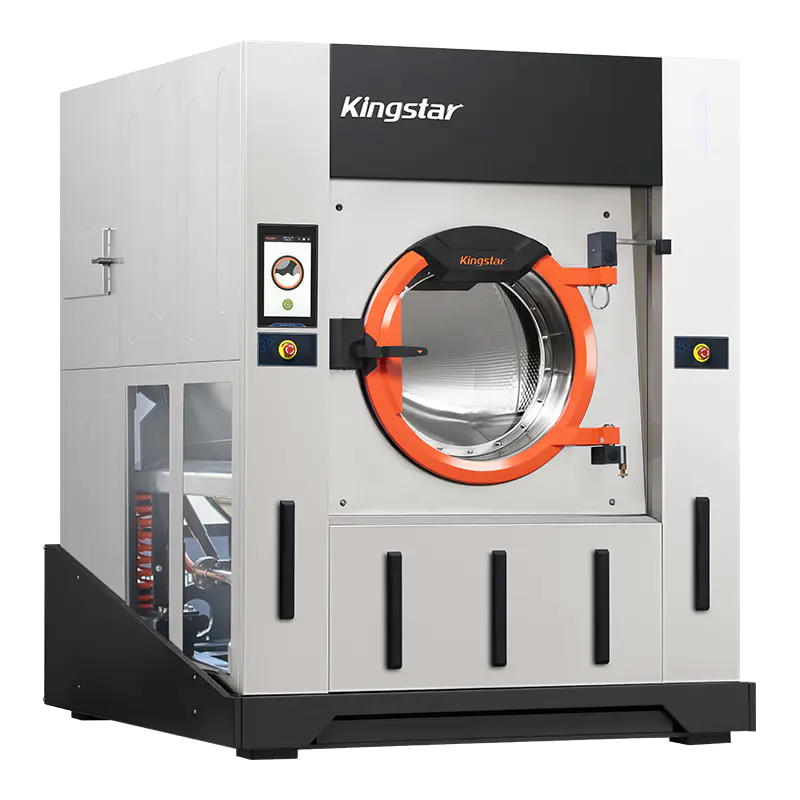
The maintenance manager at a 120-room hotel noticed the same complaint every month: bed linen came out of the dryer still damp in the middle, gas bills kept creeping up, and the washroom kept falling behind schedule. The real problem was not the dryer. It was the washing machine leaving too much water in the fabric. The practical fix is a washer extractor: a machine that washes, rinses, and then spins at high speed to squeeze excess moisture out of every load. One machine, therefore, decides how fast your laundry dries and how much energy the drying step consumes.
If you are buying commercial laundry equipment, a washer extractor is the core investment. It determines daily throughput, utility costs, and how often staff have to handle wet linen. So before you compare models, it helps to understand the technology, the sizing logic, and the installation constraints that separate a good purchase from an expensive mistake.
What a Washer Extractor Actually Does
A washer extractor performs two jobs inside one cylinder. First, it washes and rinses the load just like any other washing machine. Second, it switches to extraction mode and spins the drum at high speed to force water through the perforated drum and out of the machine. In a commercial unit, that extraction phase runs fast enough to generate a centrifugal force far beyond what a residential machine can produce.
The difference shows up in the moisture left in the fabric. A standard washing machine typically leaves textiles with high moisture retention, forcing the dryer to run longer and burn more gas or electricity. A correctly selected washer extractor lowers that retained moisture, so each load spends less time in the dryer. This one effect often matters more than the wash program itself. For a more detailed comparison of how the two machine types behave, see this review of commercial washer extractors versus regular washing machines.
| Feature | Standard washer | Commercial washer extractor |
|---|---|---|
| Wash and high-speed dewatering in one drum | Usually separate or low-speed only | Integrated extraction cycle |
| Typical moisture retention after spin | 55% or higher | Around 45-50% on high-speed models |
| Dryer time for the same load | Longer | Shorter |
| Energy cost per dried kilogram | Higher | Lower |
| Built for daily multi-cycle operation | No | Yes |
Size the Machine to Your Peak-Day Volume
Capacity is the first decision, and the most common mistake is buying for an average day. Laundry volume is never average: hotels run near full occupancy on weekends, schools reach peak at the end of term, and self-service shops get busiest in bad weather. Size the machine for the busiest day you can realistically handle.
You can estimate the required capacity in three steps:
- Estimate the daily linen or garment weight in kilograms.
- Decide how many shifts and how many cycles per machine you want to run each day.
- Divide the peak-day weight by the number of cycles available, then add 10-15 percent headroom.
With a 45 to 60 minute wash-extract cycle, one 100 kg unit processes roughly 100 to 130 kg per hour including loading and unloading. A 200-room hotel generating around 500 kg of linen per day would plan for one or two 100 kg machines across a full shift. For hotels that wash towels, sheets, and softer fabrics in the same washroom, a 100 kg energy-efficient washer extractor is a common workhorse for the main volume.
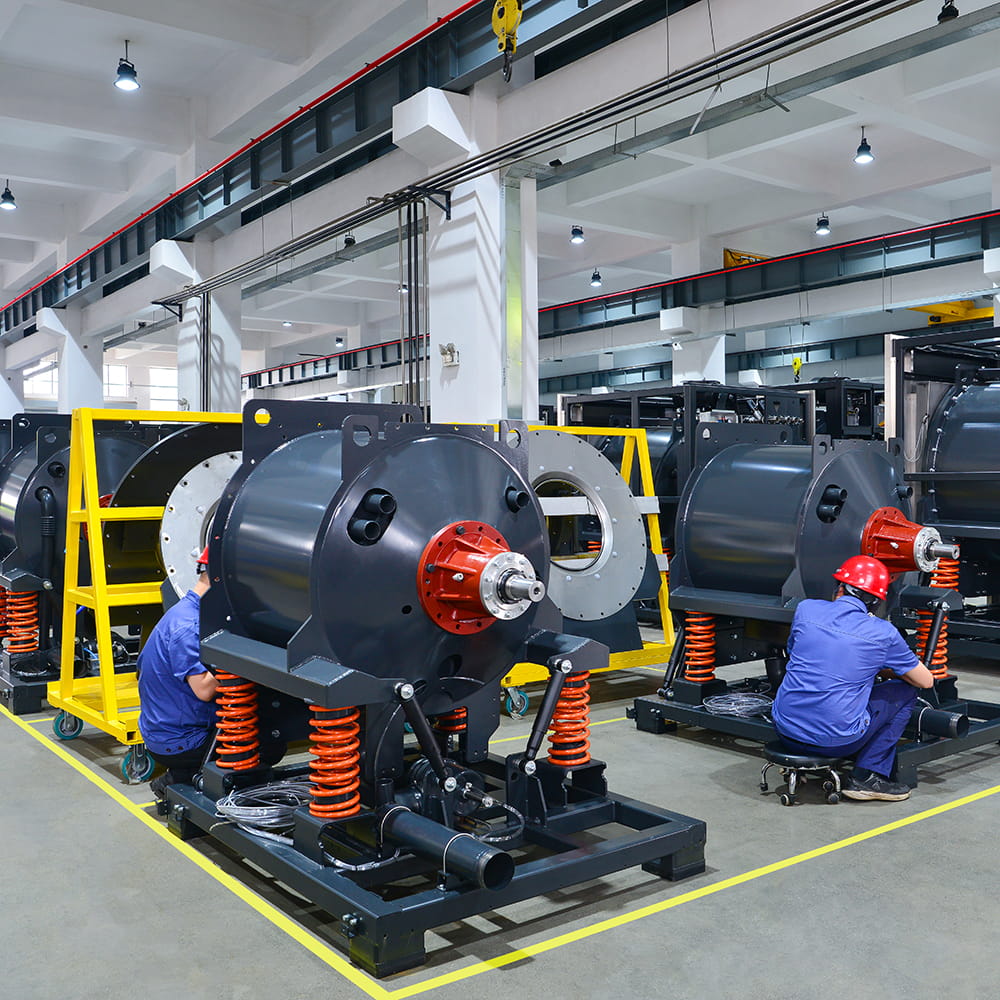 Smart High-Speed Washer-Extractor for Hotel LaundryThis washer-extractor suits high-volume hotel laundries, using intelligent weighing and 400G extraction to process linen efficiently.View Product →
Self-service laundromats need smaller batches that match what customers bring, typically in the 12 to 25 kg range. Schools and boarding facilities usually fit in the 18 to 40 kg range. In all cases, one size class above the average is a safer purchase than one size below. An overloaded machine washes poorly, extracts less water, and wears out its suspension faster.
Water and Energy: Where Operating Costs Are Decided
After capacity, the next decision is consumption. In commercial laundry, energy cost is determined less by the wash motor and more by two factors: how much hot water each cycle uses, and how much moisture the dryer must remove after extraction. Choose a washer extractor that performs well on both and you control the largest variable costs in the washroom.
Modern machines use variable water levels, load sensors, and spray rinse systems to avoid filling the drum more than necessary. Spray rinse showers fresh water over the tumbling load instead of using a full bath, which measurably cuts rinse water use. The effect compounds over dozens of cycles per day.
Extraction performance matters even more. A machine with a higher dehydration factor removes more water before the load enters the dryer. Some commercial washer extractors reach a dehydration factor around 400, which shortens drying time noticeably compared with machines that spin at lower speed. Lower retained moisture also shortens tumbling time, which reduces the chance of creases setting into the fabric during drying.
For a self-service laundromat, every paid cycle has a fixed income but a variable water and gas cost. Coin-operated soft-mount washers in the 12 to 25 kg range are built for this business model, and their programmable pricing needs to work together with extraction performance to protect the margin on each load.
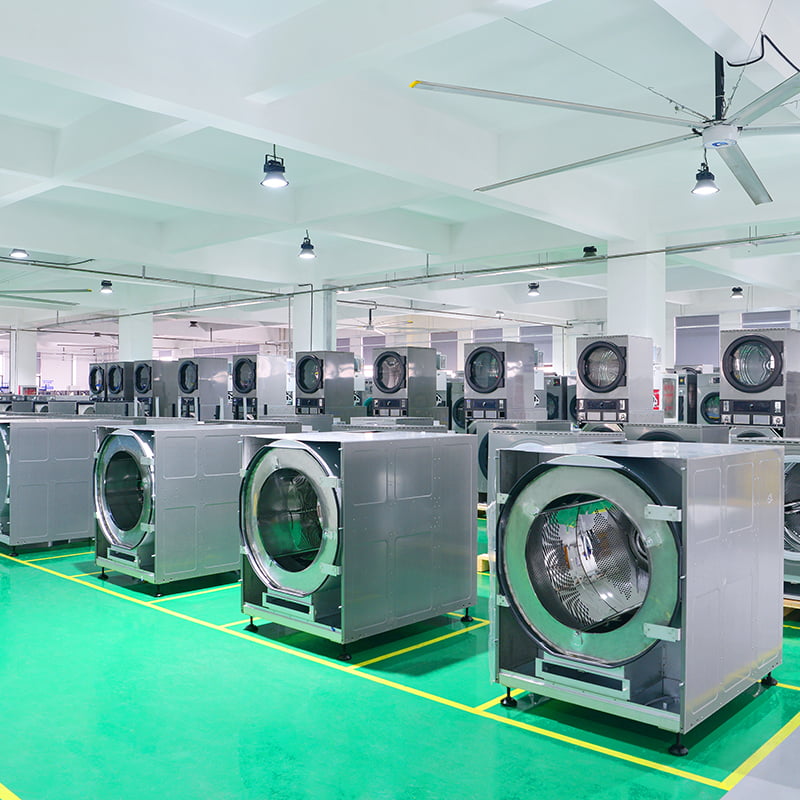 Coin-Operated Soft-Mount Washer for Self-Service LaundromatsThis soft-mount coin washer suits self-service laundromats, with coin/card payment, smart weighing, and high-speed extraction to keep each cycle cost-efficient.View Product →
If your site has a steam boiler, steam-heated units often give the lowest operating cost at high volume. If not, electric-heated models simplify installation and deliver predictable year-round performance without boiler maintenance.
Installation: Vibration, Noise, and Utility Requirements
Buyers often focus on drum size and forget the floor underneath. A washer extractor spinning at high speed produces a dynamic force far larger than its static weight. Install a hard-mount unit on a weak floor and the whole building will feel it during extraction.
Two mounting styles dominate commercial machines:
- Hard-mount: lower initial cost, but needs a concrete floor thick enough to absorb vibration. Best for ground-floor industrial plants.
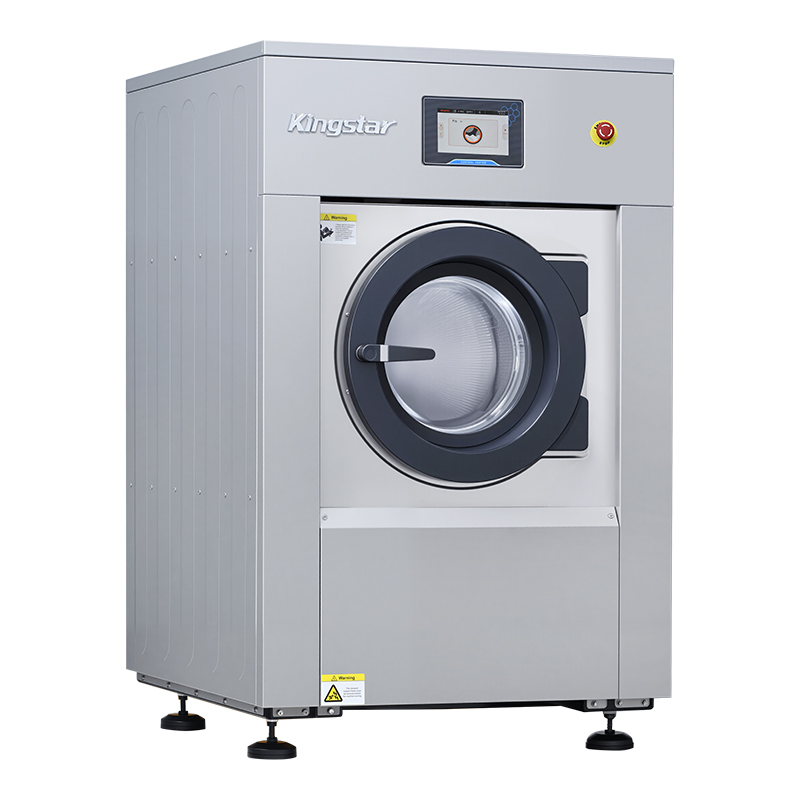
- Soft-mount: uses springs and shock absorbers to isolate vibration. Suitable for upper hotel floors, apartments, and other noise-sensitive locations.
Noise is a related but separate factor. Soft-mount models reduce structure-borne noise, and a properly balanced load prevents the thumping sound during the spin cycle. For hotels and laundromats near residential areas, this can be the difference between an approved installation and a rejected one.
Utility planning needs to happen before the machine arrives. Check the water inlet size, drain line capacity, electrical phase and amperage, and whether the unit needs steam or can run on hot and cold water alone. Many schools, for example, have no steam boiler, which makes electric-heated models the practical choice on campus.
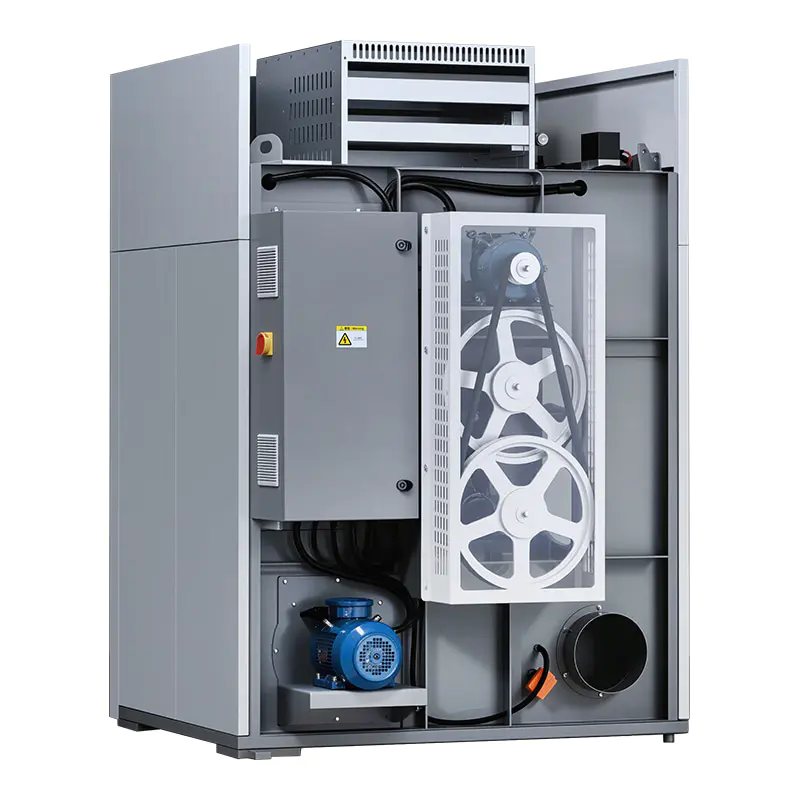 Industrial DryerThe Kingstar electric industrial dryer is suitable for hotel laundries, hospital laundries, and self-service laundromats. It can handle large loads of linens in a sing...View Product →
Maintenance Planning and Expected Service Life
A commercial washer extractor is designed to run for many years, but only if maintenance is planned rather than improvised. The components that wear first are drum bearings, suspension springs, door seals, water valves, and the drive system.
Set a simple schedule:
- Daily: inspect and wipe the door seal, remove any debris from the drum, and confirm the machine drains completely.
- Monthly: check suspension springs, belt tension, and hoses for wear.
- Quarterly: verify extraction speed, inspect heating elements or steam valves, and test safety switches.
The drum material is a strong durability signal. Stainless steel resists the corrosive combination of bleach, detergent, and water far better than painted or enamelled surfaces. The suspension system matters just as much, because it absorbs the imbalance created by dense loads such as wet towels.
The main procurement risk is not breakdowns but spare parts availability. Machines built with standard valves, bearings, and commercially available controllers are cheaper to maintain than machines that require proprietary parts. Ask the supplier for a parts list and typical response times before you sign.
Choosing a washer extractor comes down to four numbers: capacity per day, moisture retention after extraction, water consumption per cycle, and the number of cycles the machine can complete over its working life. A model that scores well on all four will lower the cost per kilogram of clean linen, which is the only number that matters at the end of the month.
Kingstar has manufactured commercial washing equipment for more than 25 years and currently ships machines to more than 70 countries. That operating base covers hotel laundries, self-service shops, and school campuses, and it gives the engineering team real feedback on how machines behave under years of daily use.
Before you commit, verify the extraction speed, confirm the utility connections, and ask how the supplier will support installation and servicing. Our laundry equipment solutions overview walks through the planning steps in more detail.
ADD:No.388 Xinggang Road, Chongchuan District, Nantong City, 226000, Jiangsu Province, China.
-
Phone: +86-13917089379
-
Tel:+86-13917089379
-
Fax:+86-0513-85663366
-
E-mail:louislu@kingstarlaundry.com
products