英语
英语 俄语
俄语 西班牙语
西班牙语 德语
德语
Home / News / Industry News / Buying a Commercial Dryer? The Capacity Math Matters More Than the Price Tag

Kingstar is your trusted partner for industrial and commercial laundry equipment. We specialized in the R&D and manufacturing of high-end industrial washers, commercial washers and dryers. Meanwhile, we provide global clients with comprehensive planning, layout workflow design, and software-hardware integration services for smart laundry plants.
Industry News
Aug 27,2026
Buying a Commercial Dryer? The Capacity Math Matters More Than the Price Tag
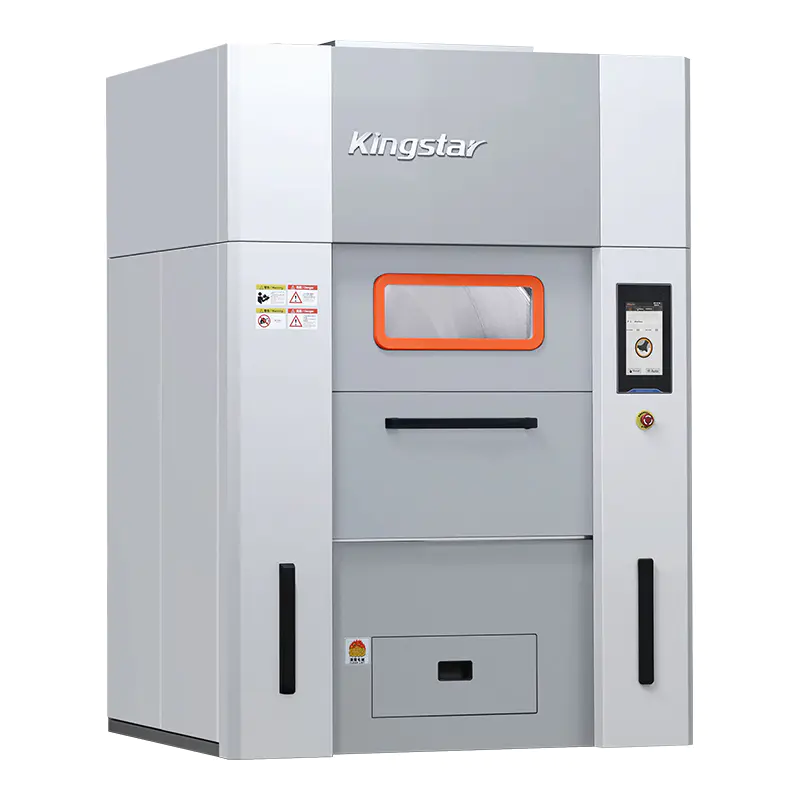
The right commercial dryer isn't the biggest one on the floor — it's the one sized to match what your washer actually processes each day. Undersize it and laundry backs up behind a bottleneck; oversize it and you're heating an half-empty drum on every cycle, burning gas or electricity for nothing. Getting that match right, along with choosing gas or electric correctly for your utility setup, matters more to your long-term operating cost than almost any other single decision in the buying process.
Start With Real Laundry Volume, Not a Guess
Before comparing a single model, figure out how many pounds of laundry your operation actually generates on a typical day — and on your busiest one. A single occupied hotel room, for example, commonly produces somewhere between 6 and 12 pounds of laundry daily. Scale that across a 50-room property running near full occupancy, and you're looking at north of 500 pounds of towels and sheets needing to be dried in a single day.
The capacity math that follows from this is simple but frequently ignored: dryer capacity should run roughly 1.5 to 2 times your washer's rated load size, giving clothes enough room to tumble freely and air to circulate properly. A 40-pound washer pairs well with a 50- to 75-pound dryer — pairing it with something smaller creates a permanent drying bottleneck no matter how efficient the washer itself is.
1.5–2x recommended dryer capacity relative to washer load size
500+ lb daily laundry volume for a mid-size hotel at near-full occupancy
6–12 lb laundry generated per occupied hotel room, per day
Why a Residential Dryer Doesn't Belong in a Commercial Setting
It's tempting to save money by picking up a big-box residential dryer instead of a purpose-built commercial dryer, and it's almost always a costly mistake once daily-use math kicks in.
| Factor | Residential Dryer | Commercial Dryer |
| Rated operating life | Roughly 2,500 hours | Roughly 30,000 hours — about 12 times longer |
| Motor, belt, and bearing build | Built for occasional home use | Built for continuous, all-day cycling |
| Warranty in commercial use | Typically voided outright | Valid — built and rated specifically for it |
A machine rated for occasional home laundry simply wasn't engineered to run back-to-back cycles ten or twelve hours a day. Once it fails — and it typically does, well before a commercial-rated unit would — you're not just facing a repair bill, you're facing it with no warranty coverage to fall back on.
Gas or Electric: Where the Real Cost Difference Shows Up
Heat source is the single biggest fork in the road when specifying a commercial dryer, and the two options split cleanly on upfront cost versus running cost.
- Gas dryers heat faster and typically cost less to run — one commonly cited comparison puts annual energy cost around $290 for a gas unit versus roughly $520 for a similarly sized electric model. The trade-off is a higher purchase price and the need for a professional gas line hookup plus proper exhaust venting.
- Electric dryers install more simply wherever adequate voltage (usually 208–240V) is already available, and cost less upfront. Running cost per load tends to be higher, which matters more the higher your daily cycle count climbs.
For a business running dryers most of the day, every day, the gas option's lower operating cost usually overtakes its higher purchase price within a couple of years. For lower-volume operations where a gas line isn't already in the building, electric remains the more practical starting point.
Features That Actually Justify a Higher Price
Not every added feature on a spec sheet pays for itself, but a few genuinely do.
- Reversing drum: periodically changes rotation direction so sheets and large linens don't twist into a single dense ball, letting hot air reach fabric evenly and cutting overall dry time.
- Moisture sensors: shut the cycle off the moment laundry is actually dry instead of running a fixed timer, which prevents over-drying — a habit that quietly shortens fabric life and wastes energy on every load that finishes early but keeps tumbling anyway.
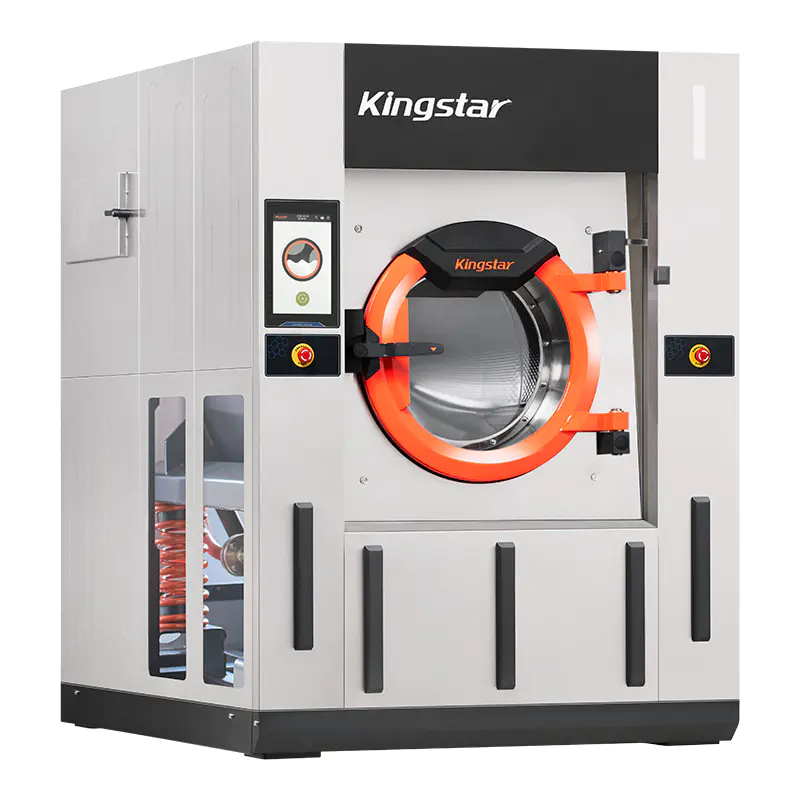
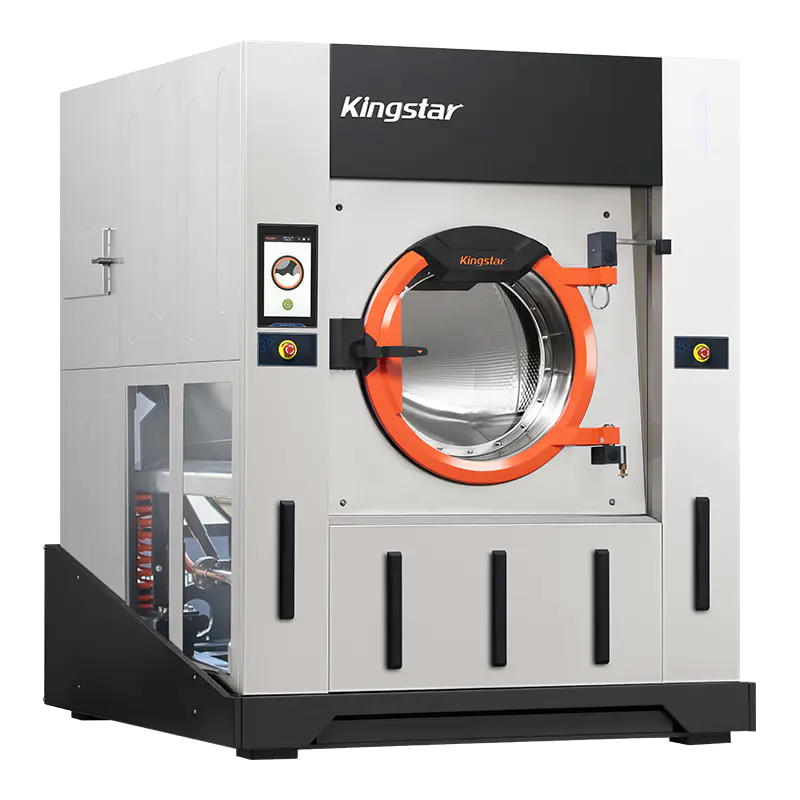
- Pairing with a high-extraction washer-extractor: this is the feature most operators overlook, even though it affects the dryer more than any onboard dryer feature does. A commercial washer-extractor spinning at 300+ G-force pulls dramatically more water out of a load before it ever reaches the dryer, which shortens the drying cycle that follows regardless of how advanced the dryer itself is.
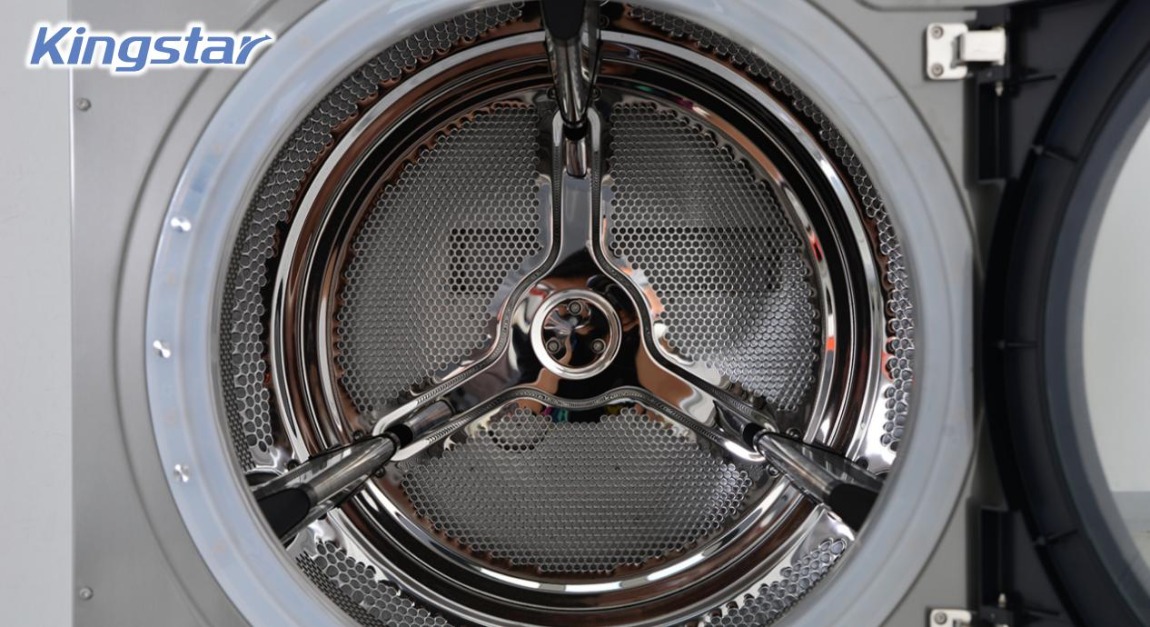
How Washer-Extractor Spin Speed Changes Dryer Workload
This pairing deserves its own breakdown, since a commercial dryer's real-world performance depends heavily on how wet the load already is when it arrives.
| Upstream Washer Type | Typical Extraction Force | Effect on Dryer Cycle |
| Standard commercial washer | Around 100 G-force | Longer dry times, higher gas or electric draw per load |
| Commercial washer-extractor | 200 to 450 G-force depending on mount design | Noticeably shorter dry cycles, lower per-load energy use |
In practice, this means a facility that upgrades its washing equipment to a higher-extraction commercial washer-extractor often sees its existing dryer fleet run faster cycles without touching a single dryer setting — the water simply isn't there to remove in the first place.
Getting the Machine Through the Door — Literally
Commercial dryers are large, heavy, and unforgiving of last-minute measurement mistakes. A common 50-pound gas unit can run roughly 34.5 inches wide and 72 inches tall — dimensions that catch plenty of buyers off guard when the delivery crew reaches a standard interior doorway.
- Measure every doorway, hallway turn, and stairwell along the actual delivery path before ordering, not after.
- Account for the clearance a dolly or pallet jack needs, not just the machine's own footprint.
- Where site access is tight, a professional delivery and placement service — sometimes called white-glove delivery — handles uncrating and positioning, which is usually worth the added fee compared to a failed delivery attempt.
Financing the Purchase Without Draining Cash Reserves
A commercial dryer is a meaningful capital expense, and most businesses don't pay for one outright. Close to eight in ten U.S. businesses use some form of financing for equipment purchases like this, spreading the cost into a predictable monthly payment instead of a single large outlay. Done right, the efficiency gains from a properly sized, well-featured dryer start offsetting that monthly payment almost immediately through lower utility bills and reduced staff time spent babysitting slow-drying loads.
What a Warranty Actually Needs to Cover
Purchase price tells only part of the story — long-term support matters just as much once the machine is running daily cycles. When comparing options, look specifically for:
- Multi-year coverage on core components — heating elements, drum bearings, and motors are the parts most likely to fail under heavy use.
- Separate, shorter coverage windows for general parts is normal, but core components deserve the longest protection.
- Access to responsive technical support — a machine down for days while waiting on a callback costs far more in lost laundry throughput than most people initially budget for.
A dryer bought slightly cheaper but backed by weaker warranty terms often ends up the more expensive choice once a single major component fails outside of coverage — the sticker price was never the whole cost equation to begin with.
ADD:No.388 Xinggang Road, Chongchuan District, Nantong City, 226000, Jiangsu Province, China.
-
Phone: +86-13917089379
-
Tel:+86-13917089379
-
Fax:+86-0513-85663366
-
E-mail:louislu@kingstarlaundry.com
products