英语
英语 俄语
俄语 西班牙语
西班牙语 德语
德语
Home / News / Industry News / Commercial Dryer Selection Guide: Capacity, Efficiency, and Operating Costs

Kingstar is your trusted partner for industrial and commercial laundry equipment. We specialized in the R&D and manufacturing of high-end industrial washers, commercial washers and dryers. Meanwhile, we provide global clients with comprehensive planning, layout workflow design, and software-hardware integration services for smart laundry plants.
Industry News
Sep 17,2026
Commercial Dryer Selection Guide: Capacity, Efficiency, and Operating Costs
When a laundry room upgrades from heavy-duty household dryers to a commercial unit, the first surprise is usually not the faster cycle—it is the spec sheet. A 15 kg commercial dryer may visually resemble a residential machine, but its drum volume, airflow, and duty rating belong to a different class of machinery. If you choose solely by rated weight, you risk ending up with equipment that dries too slowly, runs too hot for the fabrics, or exceeds the available gas or electrical supply. The practical approach is to evaluate commercial dryers through six lenses: load profile, heat source, airflow, controls, energy cost, and maintenance access.
Why Commercial Dryers Are Rated Differently
Consumer dryers are built for intermittent use with lightweight drums and relatively low BTU input. A commercial dryer, by contrast, is expected to run for several hours at a time, process hundreds of loads per week, and withstand the abrasive effect of metal zippers, buckles, and industrial wash-house chemicals. Manufacturers such as Kingstar apply ISO9001 quality procedures during design and production, with stainless steel drums, reinforced frames, and continuous-duty motors. That makes the commercial unit heavier and more expensive upfront, but it is the only way to get predictable throughput in a hotel laundry, school dormitory, or coin laundromat.
The key ratings to compare are not just capacity but also drum volume, heat input, airflow, and moisture-sensing accuracy. A dryer with high airflow and a well-designed exhaust path will remove moisture faster at a lower temperature, reducing fabric wear and energy consumption.
Start with Throughput and Load Profile
Before looking at individual models, calculate how many kilograms of dry laundry you must produce per hour at peak time. For example, a hotel laundry processing 3,000 pieces daily with eight operators will need a very different dryer bank than a small laundromat serving walk-in customers. In general:
- Peak daily laundry weight (kg) = pieces per day ÷ average pieces per kg of dry linen.
- Required drying capacity (kg/h) = peak daily laundry weight ÷ available drying hours.
- Number of dryers = required drying capacity ÷ nominal dryer capacity × a utilization factor, normally 70–85%.
Using 25 kg capacity as a building block is common in hotels and schools because it balances cycle time with floor space, but a laundromat may prefer 15 kg stacked dryers to serve two customers at once without doubling the footprint. The table below gives rough capacity suggestions by application.
| Application | Typical Load Size | Recommended Dryer Capacity | Notes |
|---|---|---|---|
| Hotel on-premise laundry | Sheets, towels, duvet covers | 25–50 kg per machine | Pair with large washer extractors and rapid turnaround schedules |
| School dormitory laundry | Mixed student clothing | 15–25 kg per machine | Stacked dryers often fit existing dorm space |
| Coin-operated laundromat | Customer self-service loads | 12–20 kg per pocket; stacked units to double throughput | Short cycles and simple controls matter more than maximum load |
| Industrial laundry plant | Uniforms, mats, bulk linen | 50–100+ kg tumble dryers | High airflow and heat input are essential; consider drying cabinets for heat-sensitive items |
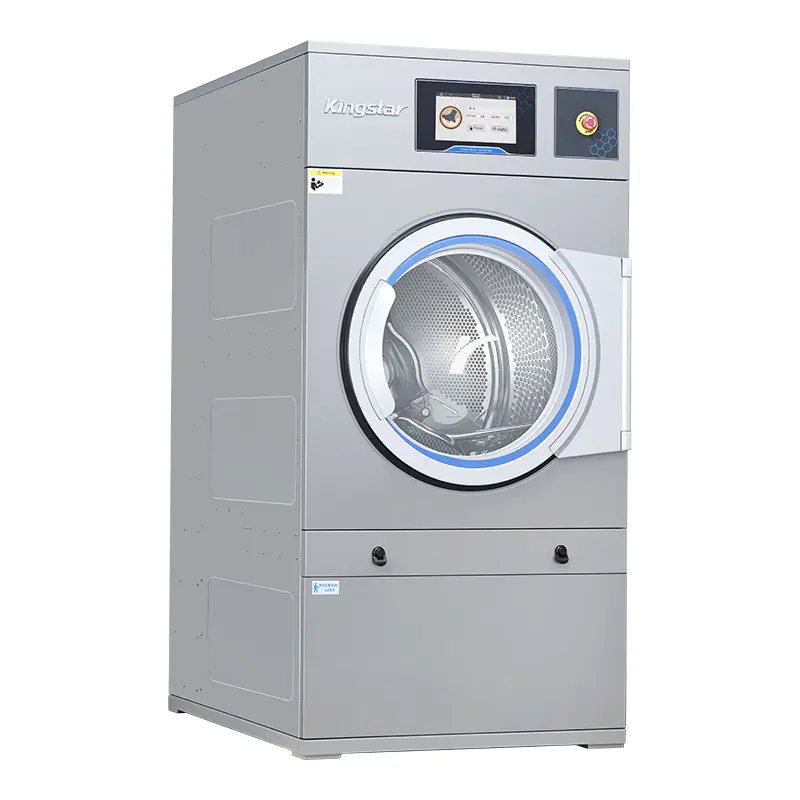
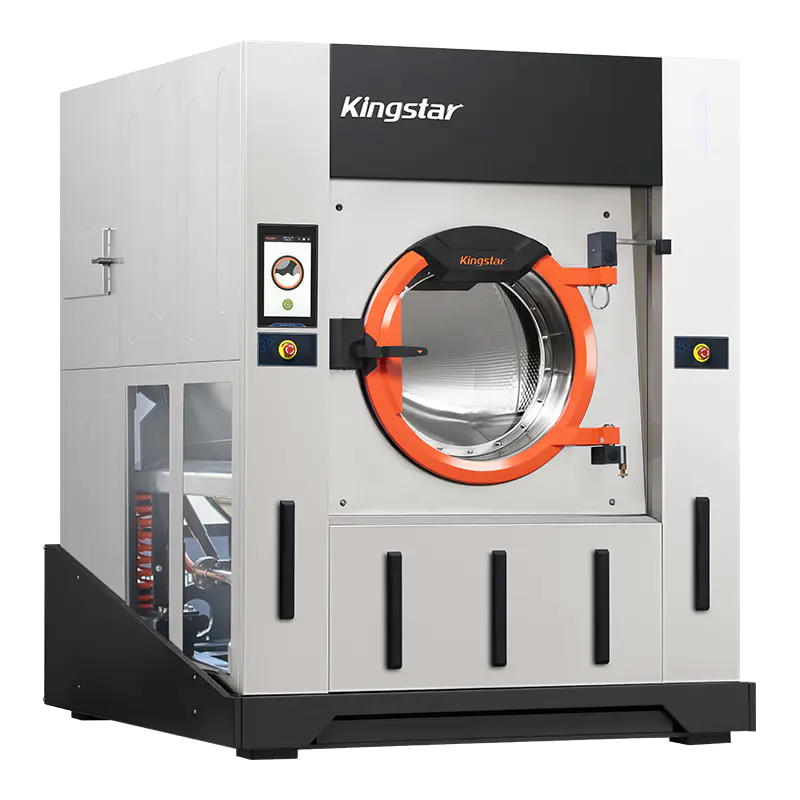
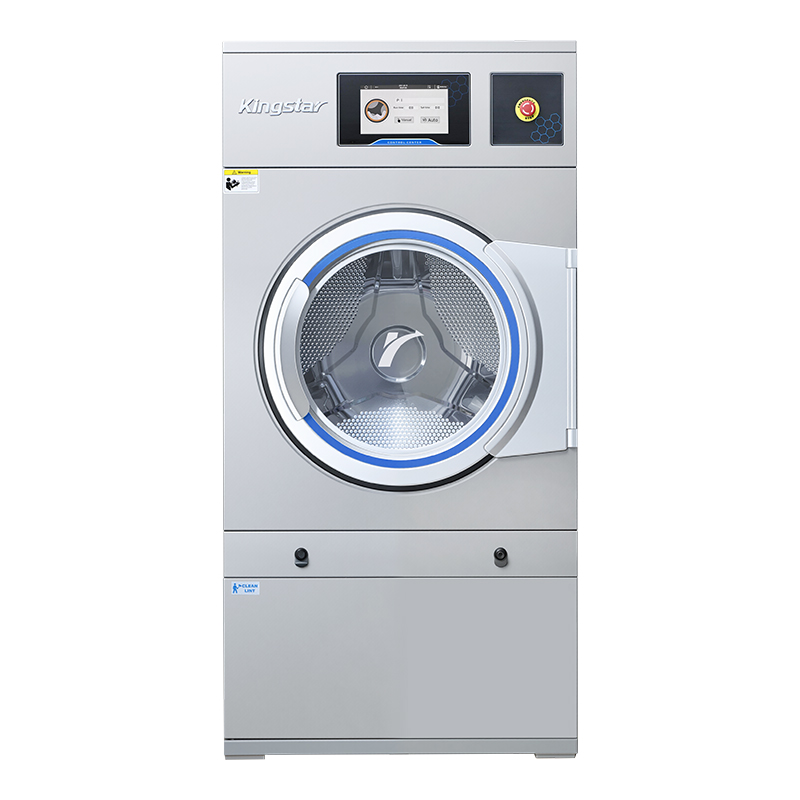 Commercial Dryer with Multiple Heating Options and Touchscreen ControlThis dryer accommodates gas, electric, or steam heating to match your utility setup, while its 10-inch touchscreen and 99 programs simplify operation across various fabric types.View Product →
Choose the Right Heat Source
Heat source is a utility decision as much as a machine decision. Gas-heated dryers usually have the lowest operating cost per kilogram and the fastest heat-up time, but they require a natural gas line, combustion air, and a dedicated exhaust system. Electric dryers are simpler to install and safer in buildings without gas, yet electricity is typically the most expensive way to remove water, especially in regions with time-of-use tariffs. Steam dryers make sense where a boiler already supplies steam for washers and ironers, because the same steam loop can feed dryers with very little additional infrastructure.
| Heat Source | Relative Operating Cost | Heat-Up Speed | Installation Requirements | Best Fit |
|---|---|---|---|---|
| Gas | Low | Fast | Gas line, combustion vent, adequate fresh air | Laundromats, hotels, and plants with gas utilities |
| Electric | High | Medium | Heavy electrical supply and breaker | Small-to-medium laundries and sites without gas |
| Steam | Medium, often using waste heat from a boiler | Medium | Steam piping, condensate return, pressure controls | Facilities with existing boiler plants |
For laundromats where users expect fast, consistent cycles, coin-operated single tumble dryers with either gas or electric heating are popular because they keep the control logic simple. If your site already has coin payment systems, choose a dryer with compatible meter options so maintenance staff does not need to learn a second control platform.
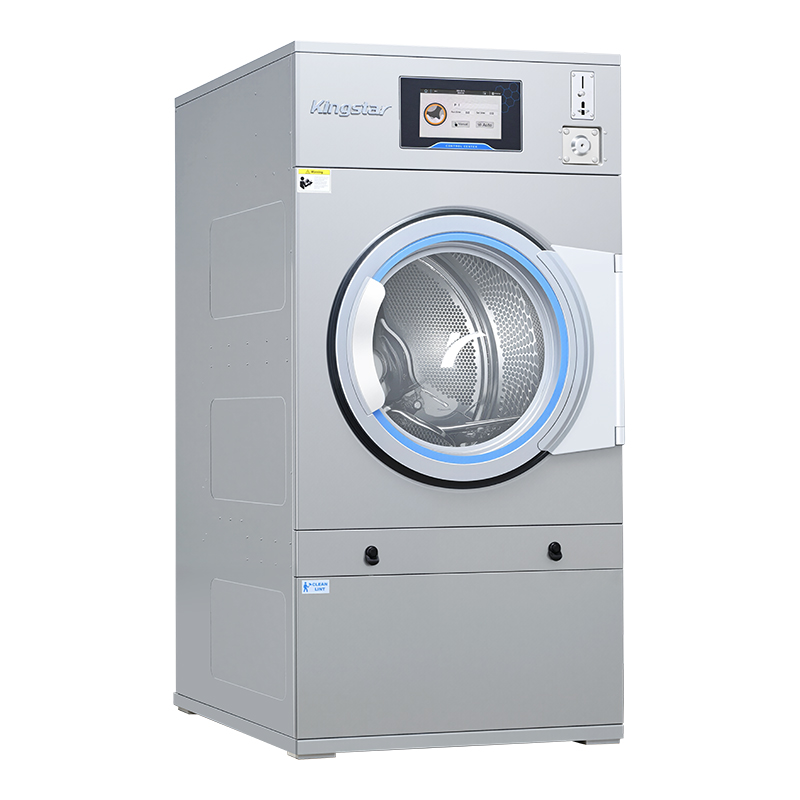 Coin-Operated Single Tumble Dryer with Gas/Electric HeatingDesigned for laundromats, this dryer offers gas or electric heating, a 7-inch touchscreen with 99 programs, and a 1:20 load ratio for efficient drying.View Product →
Airflow and Moisture Sensors Decide Drying Speed
BTU input alone does not dry fabric; airflow does. A commercial dryer pulls in fresh air, heats it, forces it through the tumbling load, and exhausts humid air through a lint filter and vent. If the vent is too long, has too many elbows, or is undersized, the resulting back pressure reduces airflow and slows drying dramatically. Some manufacturers publish target exhaust static pressure; ideally the installed vent should not exceed the value in the dryer manual. In practical terms, keep the duct run as straight and short as possible, and clean the lint filter at least once per shift.
Moisture-sensing controls prevent over-drying by stopping the cycle when the return air or fabric reaches a target humidity. This matters for cost because over-drying by just 5–10 minutes on every load can raise energy usage by a significant margin and cause heat damage to elastic bands and synthetic blends. A dryer with automatic moisture shutoff, reverse tumbling, and temperature limits gives operators control over both fabric care and utility bills. For more detail on efficiency principles, see this explanation of how a commercial dryer achieves high efficiency and energy savings.
Calculate Energy Cost, Not Just Purchase Price
The purchase price of a commercial dryer is often less than a third of its lifetime ownership cost. Energy, maintenance, water where steam is used, and labor to clear jams and clean lint all accumulate quickly. Comparing models by annual drying cost per kilogram is more meaningful than comparing initial quotes. For a rough estimate:
- Determine moisture load: wet laundry weight minus dry weight, often 50–60% of dry weight for a typical washer-extractor extraction cycle.
- Calculate required heat energy: roughly 0.8–1.0 kWh equivalent per kilogram of water removed, depending on machine efficiency.
- Multiply by local gas or electricity tariff and annual volume.
- Add venting loss and idling time, especially if the dryer is undersized and runs multiple partial cycles.
High-efficiency insulation, direct-drive motors, and variable-frequency drives are not marketing extras; they change the payback period. Kingstar's commercial dryer line, for example, includes insulation and airflow designs aimed at lowering drying energy consumption per load. When comparing quotes, ask for the machine's heat input, claimed efficiency, and expected cycle time at a defined remaining moisture content.
Installation, Safety, and Maintenance Checklist
Installation mistakes account for a large share of dryer problems. Before delivery, confirm the following items with the manufacturer or service provider:
- Electrical supply: voltage, phase, and breaker size must match the nameplate.
- Gas supply: pipe size and pressure must be sufficient for the dryer's BTU input.
- Exhaust vent: diameter, maximum length, number of elbows, and material, with metal preferred.
- Floor loading and anchoring: vibration on upper floors requires soft-mount or properly anchored hard-mount installation.
- Clearance for service: front and side access for drum removal and lint system cleaning.
- Fire protection: lint accumulation is the leading cause of commercial dryer fires; plan for daily lint filter checks and periodic cleaning of the exhaust duct.
Stacked dryers are a common solution for laundromats and school dorms where floor space is tight. A 15 kg stack dryer fits roughly the same footprint as a single large dryer but offers two drying pockets, letting one operator process two loads simultaneously. That configuration is especially effective when paired with stacked washers in a compact self-service layout.
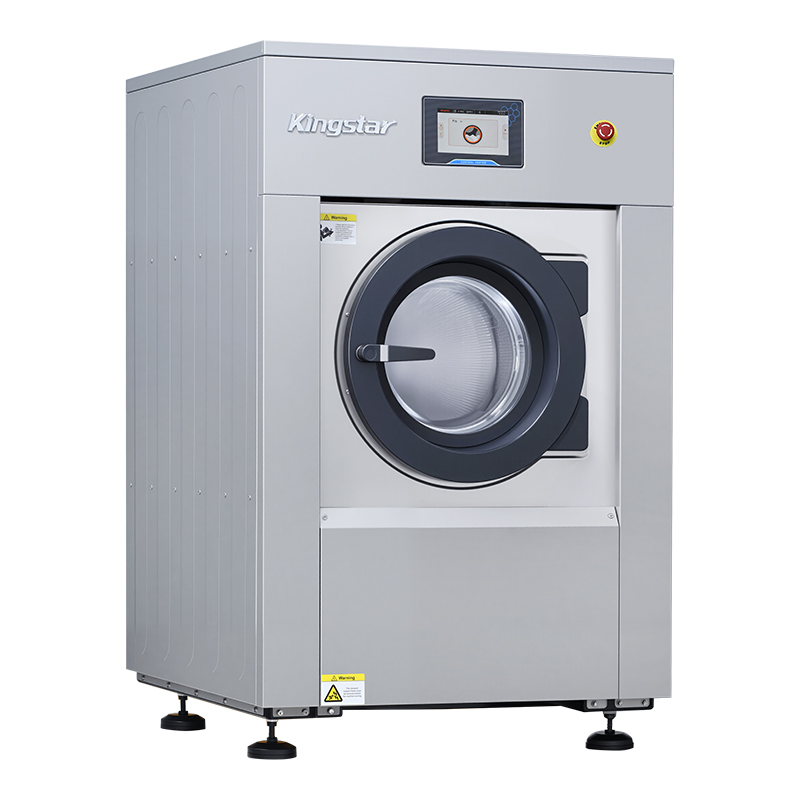
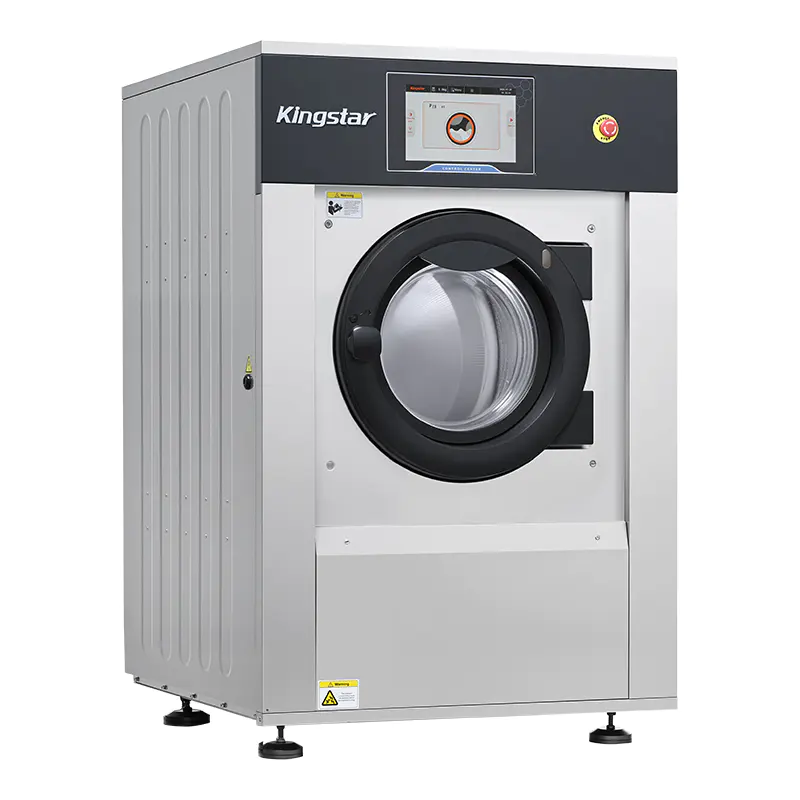
 Coin-Operated Hardmount Washer with Intelligent FeaturesThis hardmount washer features intelligent weighing to adjust water usage and an optional automatic dosing system, reducing operating costs for laundromats and hotels.View Product →
A Practical Selection Sequence
To turn all of this into a purchasing decision, follow this sequence:
- Estimate peak daily dry linen weight and available working hours.
- Choose a rough capacity bracket and decide between single pocket and stacked configurations.
- Verify your utility supply against gas, electric, and steam options.
- Shortlist models with an adequate drum volume-to-load ratio and high airflow.
- Check controls, moisture sensors, safety interlocks, and manufacturer support.
- Calculate total ownership cost over 7–10 years, including energy, maintenance, and downtime.
- Ask the supplier for reference installations that operate under a similar load profile.
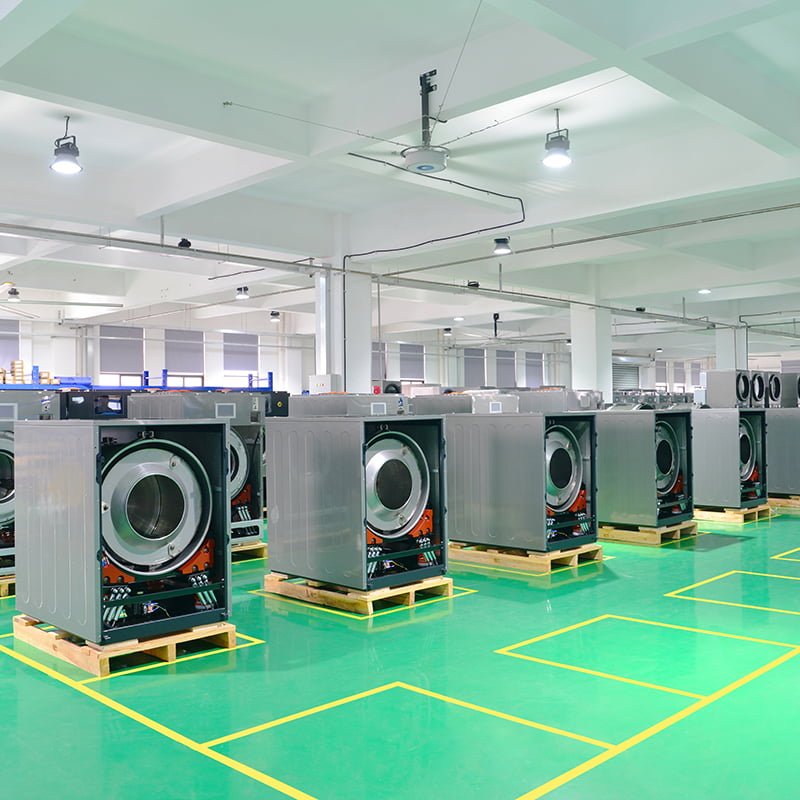
Working with a manufacturer that has produced commercial laundry equipment for more than 25 years reduces the risk of discovering poor service support late. The company behind Kingstar operates a 130,000-square-meter facility with around 700 employees and ships to over 70 countries, which matters when you need spare parts, installation guidance, or after-sales service. You can review the company profile to confirm the manufacturer's background, and use the efficiency article linked above to identify which technical features deserve the most attention. In the end, a commercial dryer purchase should be judged by certainty of throughput and cost per kilogram, not by the largest load number on the brochure.
ADD:No.388 Xinggang Road, Chongchuan District, Nantong City, 226000, Jiangsu Province, China.
-
Phone: +86-13917089379
-
Tel:+86-13917089379
-
Fax:+86-0513-85663366
-
E-mail:louislu@kingstarlaundry.com
products