英语
英语 俄语
俄语 西班牙语
西班牙语 德语
德语
Home / News / Industry News / Professional Stain Removal Guide for Laundry Shops: Standardized Procedures and Targeted Techniques (Part 1)

Kingstar is your trusted partner for industrial and commercial laundry equipment. We specialized in the R&D and manufacturing of high-end industrial washers, commercial washers and dryers. Meanwhile, we provide global clients with comprehensive planning, layout workflow design, and software-hardware integration services for smart laundry plants.
Industry News
Sep 17,2026
Professional Stain Removal Guide for Laundry Shops: Standardized Procedures and Targeted Techniques (Part 1)
Garment stain removal is a key step in garment care. Standardized procedures can effectively remove various stubborn stains. They can also protect garment fibers, color, and shape. Meanwhile, they can prevent color fading, garment damage, secondary contamination, and stain setting. Many laundry mistakes, garment damage, and ineffective stain removal are mainly due to improper procedures, inappropriate chemical dosage, and poor handling techniques. This article provides a general, standardized stain removal guide for laundry shops. It is suitable for most daily garment care applications.
General Stain Removal Procedures
Every stain removal treatment should follow standardized procedures. Laundry shops cannot rely only on their experience when treating stains.
● Procedure 1
Identify the fabric before testing chemicals. This step can prevent garment damage. Stain removers on the market contain different components. Their suitability varies depending on fiber types (such as wool, silk, acetate, and synthetic). They may also affect garment dyes. Before stain removal, identify the fabric types. If the fabric cannot be precisely identified, test on an inconspicuous, unworn area (such as the inside of garments, seams, and hems). Use the same stain removers, handling techniques, and chemical dosages. Allow the treated area to sit for a certain period. If fiber damage, color fading, whitening, and discoloration do not occur, then remove stains.
● Procedure 2
Start with light mechanical action, and gradually increase the force. During the cleaning process, use mechanical action (such as pressing, rubbing, and brushing) to remove stains. The entire process should follow the principle “from light to heavy, proceed gradually”. Do not start with rubbing or scrubbing vigorously. This can easily cause fabric pilling, snagging, and damage. Stains may also penetrate deep into fibers. Use pressure to loosen stains. Gradually adjust the force according to the cleaning performance.
● Procedure 3
Remove stains from the reverse side of garments. Replace the absorbent cloth to prevent secondary contamination. Except for napped fabrics, place the stained side face down. Treat the stains from the reverse side. Place a clean, soft cloth under the stained area. Apply stain removers from the reverse side. This prevents stains from penetrating into fabrics. This also helps reduce stain spreading and penetration. After each chemical application as well as mechanical stain removal, promptly replace the absorbent cloth. This prevents stains from transferring onto the garments again. Otherwise, this may cause re-contamination.
● Procedure 4
Apply chemicals from the outside toward the inside. This prevents stain spreading. Regardless of stain types, do not directly apply stain removers to the center of stains. Apply chemicals gradually from the outer edge toward the center. This can dissolve stains. This also prevents the stained area from spreading or bleeding. Otherwise, it may leave a larger stained area.
● Procedure 5
Do not use strong/corrosive chemicals to remove unknown stains. Perform a spot test with neutral mild stain removers. Then take other proper stain removal measures. Blind use may cause color fading or fabric damage.
● Procedure 6
Soften stubborn stains first. Do not treat them aggressively. For dry, hardened, and stubborn stains, do not brush and rub them vigorously. Choose suitable dedicated stain removers to saturate the stained area. Allow stains to soften and dissolve completely. Then perform the following cleaning methods. Vigorous treatment can easily tear fibers and damage fabric structures.
● Procedure 7
Do not heat unknown stains. They cannot be treated with high-temperature steam guns. High temperatures can bond stains with fibers. This accelerates stain setting. Easy-to-clean stains may become set-in stains that are difficult to remove.
● Procedure 8
Replace ineffective methods in time. This prevents repeated fabric damage. If the cleaning performance has not improved after 2-3 cycles, promptly stop this treatment. Switch to suitable chemicals and treatment methods. Do not treat stains repeatedly. This prevents garment damage caused by chemical residues and mechanical friction. Besides, thoroughly rinse the treated area after stain removal. This can remove chemical residues. This can also prevent fiber corrosion, fabric yellowing, aging, and discoloration caused by prolonged exposure to chemical residues.
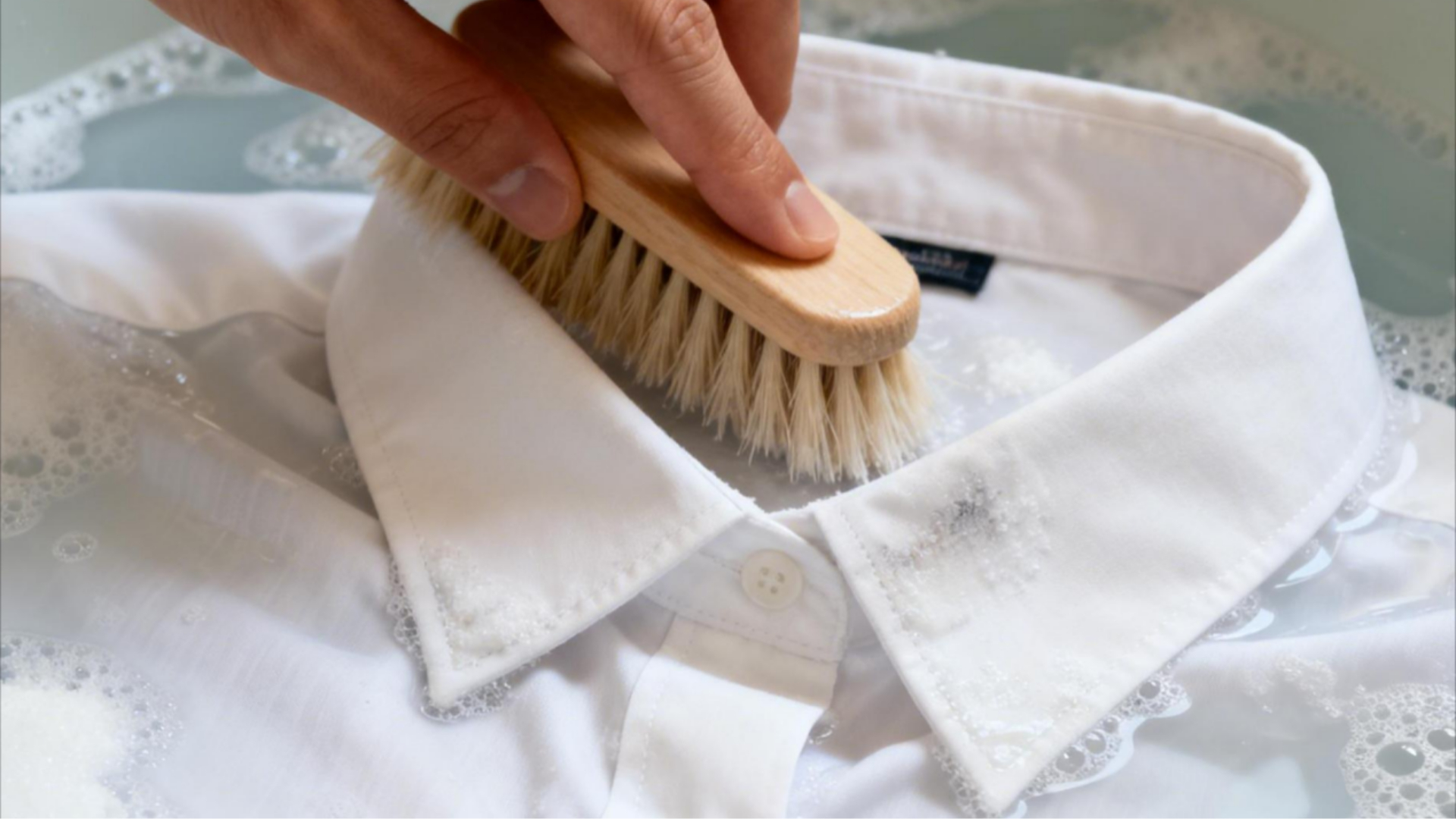
Cleaning Methods for 10 Common Stains
Based on frequent daily laundry requirements, laundry shops can use targeted cleaning methods for common stains.
● Sweat stains
They can be treated with an ammonia soap solution or hot saline solution. Stubborn sweat stains can be neutralized with acetic acid. Sweat protein residues can be broken down by protease.
● Blood stains
Do not use hot water during the entire process. Rinse the surface stains with cold water. Then use a 26% ammonia solution or an ammonia water alcohol soap solution. Old blood stains should be removed with a protease.
● Mildew stains
Light mildew stains can be dissolved by an ammonia solution. Stubborn mildew stains can be removed from white garments with 3% hydrogen peroxide. It helps restore fabric whiteness.
● Paint stains
Choose an organic solvent (such as gasoline) to dissolve the paint. Residual traces can be cleaned with an alcohol soap solution.
● Rust stains
Specialized oxalic acid and citric acid are preferred choices. Heavy rust stains require special treatment. Thoroughly rinse garments after safety procedures.
● Coffee/juice stains
Choose neutral detergents to clean first. Residual pigments can be treated with 23% acetic acid and ammonia soap solution. Stubborn stains can be broken down with oxalic acid and an oxidizing agent. For coffee stains on white poly-cotton shirts, add 2–3 capfuls of hydrogen peroxide to 70–80°C water. Soak garments in the solution for around 20 minutes, then clean them. This can deliver excellent cleaning results.
● Cyanoacrylate adhesive stains
Thoroughly saturate adhesive stains with acetone. When the adhesive has become loosened and dissolved, clean the residual traces with an ammonia soap solution.
● Animal/vegetable oil stains
This type of oil stain can be dissolved by perchloroethylene (PCE). Then use an alcohol soap solution to remove stains. This can also restore fabric brightness.
● Blue ink stains
Pre-treat them with a neutral detergent. Ink stains can be dissolved with 28% acetic acid and an alcohol soap solution. Residual stubborn pigments can be removed by an oxidizing agent.
● Ink stains
Clean them with a neutral detergent and a concentrated alcohol soap solution. Residual ink marks can be repeatedly brushed with 4% sodium thiosulfate solution.
This article has introduced cleaning methods for some common stains. In the next article, Kingstar will share more cleaning methods.
Q&A
Q1: Should garments be washed separately after stain removal?
A1: Yes. Kingstar industrial washers can store different garment wash programs. Choose the program as required.
Q2: Can slightly stained garments be washed directly in a machine?
A2: No. Some stains become obvious after heating or being washed with alkaline detergent. For example, blood and tannin stains require pre-treatment. Set-in stains will become more difficult to remove.
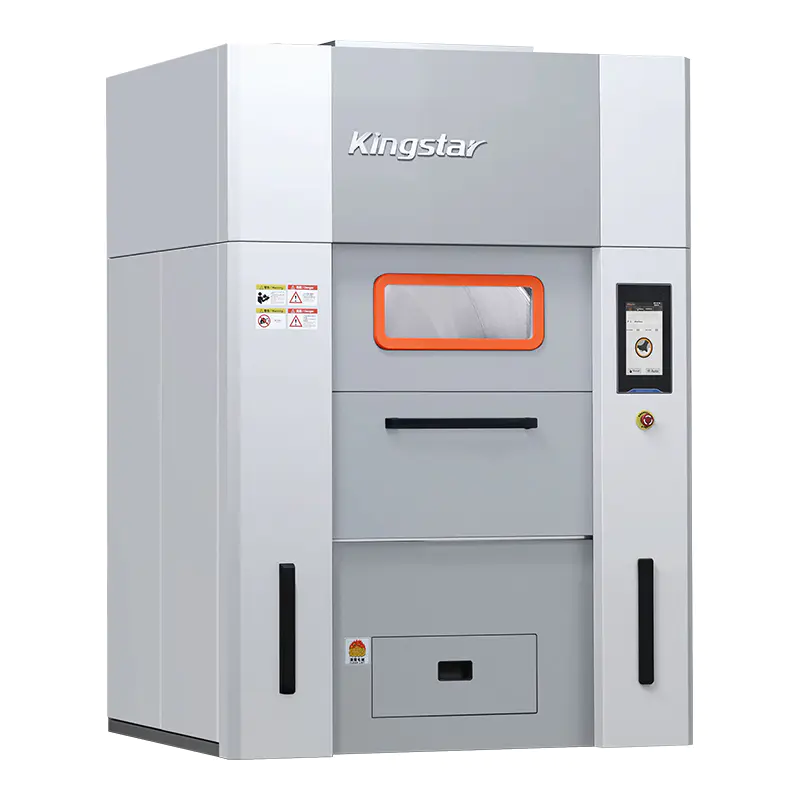
Q3: Should a wet cleaning machine be used with relevant auxiliaries?
A3: This helps achieve stable garment care results. Thus, laundry shops are advised to use specialized wet cleaning agents, anti-shrinkage agents, and color-fixing agents. The equipment provides the foundation for the laundry process. Cleaning agents help preserve color, prevent garment shrinkage, and protect fibers. Regular laundry detergent easily causes fabric stiffening and color fading. It cannot maximize the advantages of wet cleaning machines.
ADD:No.388 Xinggang Road, Chongchuan District, Nantong City, 226000, Jiangsu Province, China.
-
Phone: +86-13917089379
-
Tel:+86-13917089379
-
Fax:+86-0513-85663366
-
E-mail:louislu@kingstarlaundry.com
products