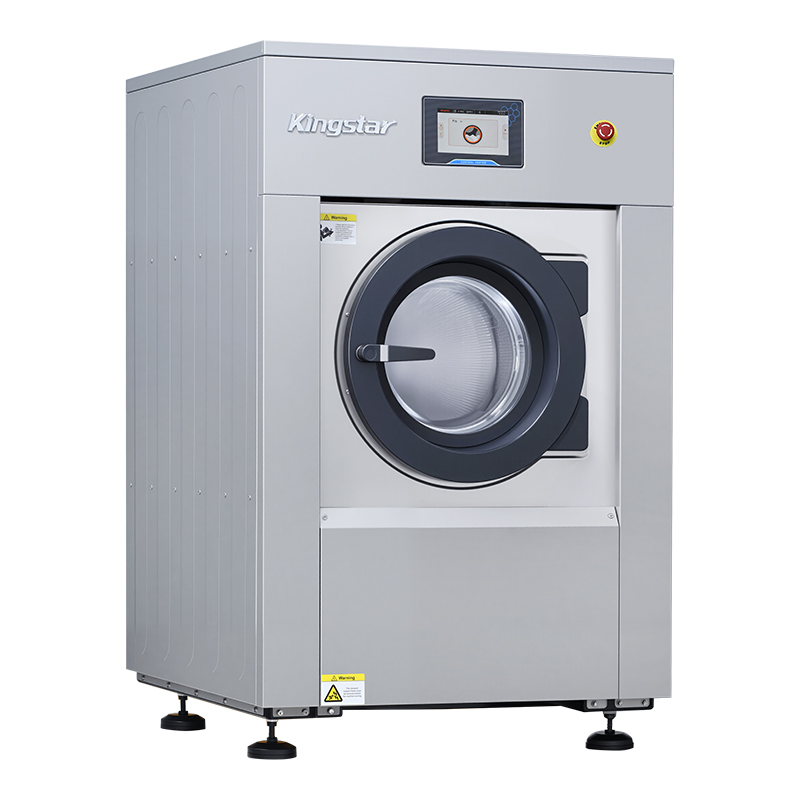
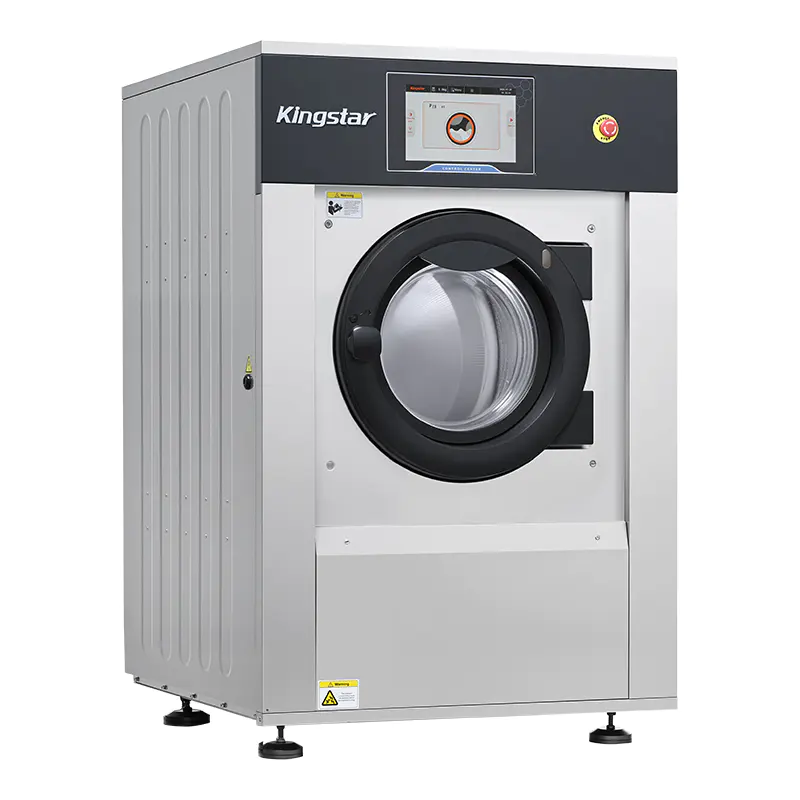
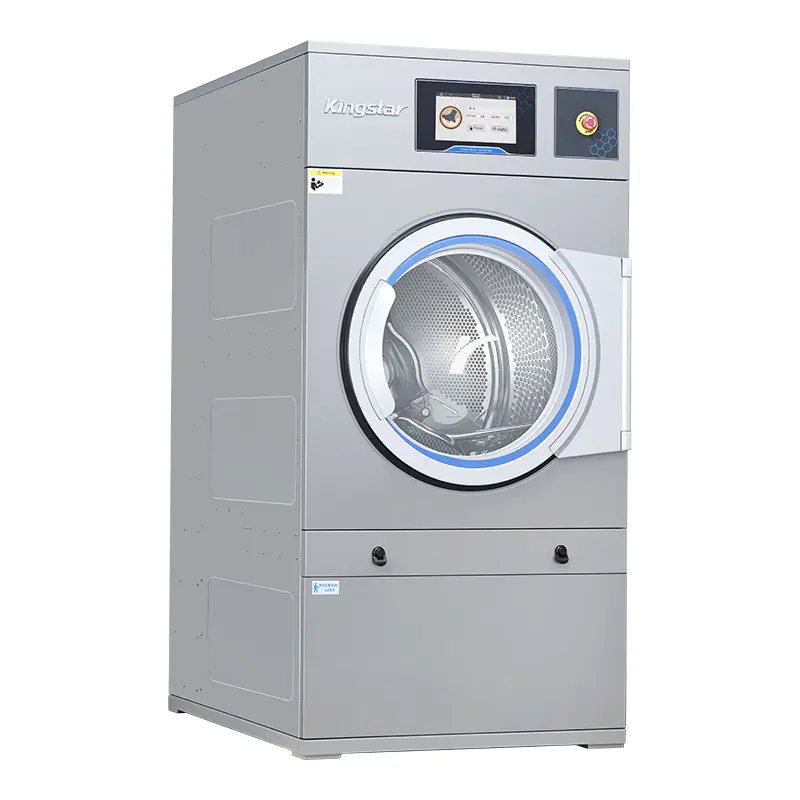
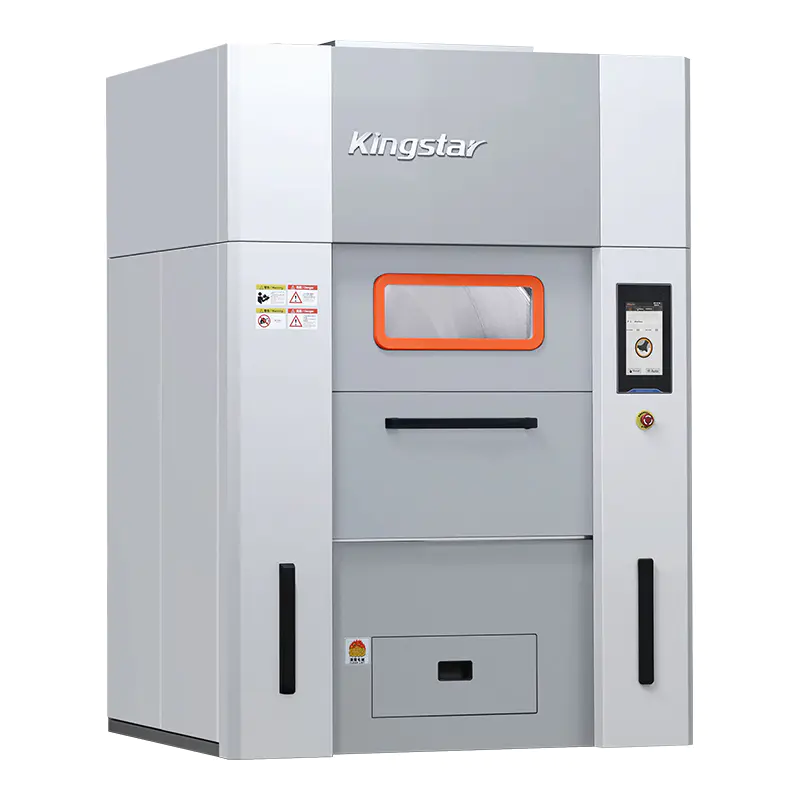
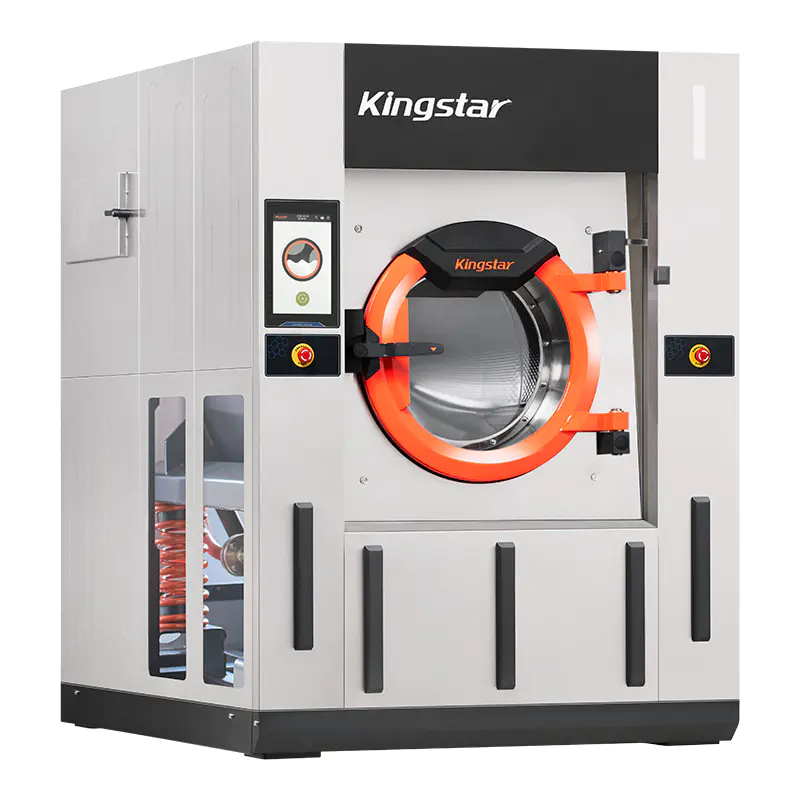
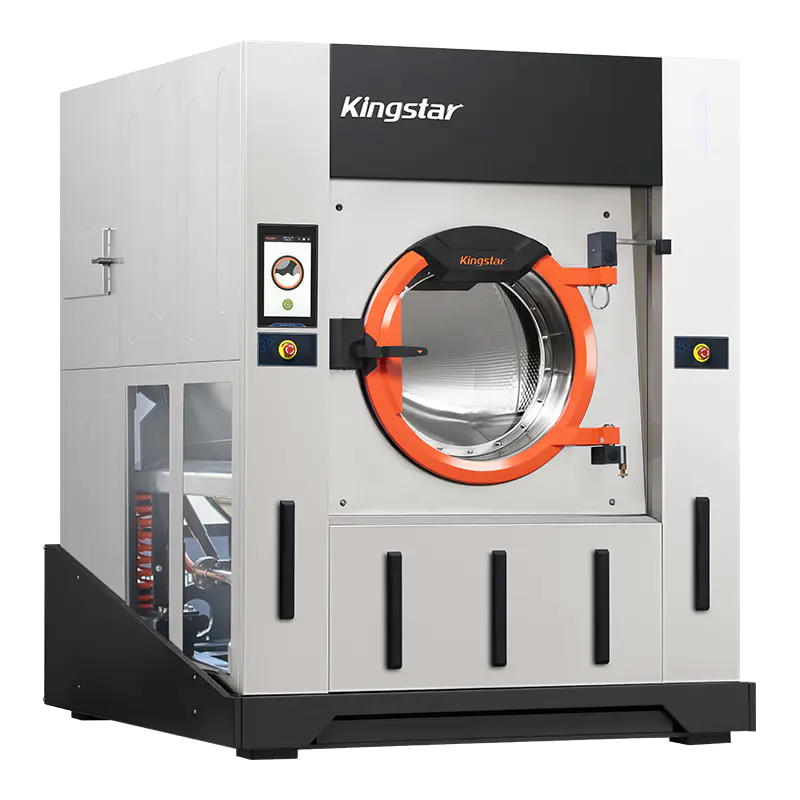
Whether you are setting up a commercial laundromat or running an industrial laundry facility, the washer-extractor determines throughput, water consumption, energy cost, and fabric care quality across every load. Unlike residential machines, commercial washer-extractors are built for continuous multi-shift operation, higher G-force extraction, and programmable cycle controls that match specific fabric types and soil levels. Getting this equipment selection right has a direct impact on operating margins for years.
A commercial washer-extractor combines the wash and high-speed spin extraction cycle in a single drum. Residential machines typically produce 100 to 200 G-force during extraction, while commercial washer-extractors operate between 200 and 400 G, removing substantially more residual moisture before the load moves to the dryer. This directly reduces drying time and energy consumption — a cost factor that compounds significantly in high-volume environments.
The choice between soft-mount and hard-mount designs is one of the first structural decisions in equipment planning. Soft-mount machines absorb vibration internally and require no floor anchoring, making them suitable for laundromats and upper-floor installations. Hard-mount machines require concrete anchor bolts but allow higher extraction speeds and are more common in industrial laundry settings on ground floors.
In a commercial laundromat, capacity planning centers on matching machine mix to peak-hour demand. A well-configured laundromat typically achieves a payback period of three to five years, depending on how well equipment capacity aligns with actual customer volume. Laundromat washer-extractors commonly range from 8 kg to 40 kg per load. A mixed-capacity layout — several 10 kg units alongside two or three 20 kg machines — serves a broader customer base than a uniform floor plan.
| Capacity | Avg Cycle Time | Cycles/Day | Kg Processed/Day |
|---|---|---|---|
| 10 kg | 45 min | 16 | 160 kg |
| 20 kg | 50 min | 14 | 280 kg |
| 40 kg | 60 min | 12 | 480 kg |
Most modern laundromat machines support card readers, mobile payment apps, or centralized payment kiosks. Cashless systems generate transaction data that helps operators track machine utilization by hour and adjust pricing during peak periods — an advantage coin-based systems cannot offer.
Industrial laundry operations serving hotels, hospitals, or workwear rental companies operate under fundamentally different constraints. Industrial facilities process anywhere from 500 kg to several tons of linen per day, requiring machines with capacities starting at 50 kg and extending to 120 kg or more. At this scale, the washer-extractor is one component within a larger automated workflow that includes tumble dryers, flatwork ironers, and folding machines.
Hospital laundry is one of the most demanding applications. Barrier washer-extractors used in healthcare settings have separate loading and unloading doors on opposite sides of a partition wall to prevent cross-contamination. These machines typically operate at 71°C for a minimum of 25 minutes or 85°C for one minute to meet thermal disinfection standards.
Water consumption in a commercial washer-extractor typically ranges from 10 to 18 liters per kilogram of dry laundry, depending on rinse cycles, water hardness, and machine efficiency. The difference between a 10 L/kg and an 18 L/kg machine adds up to tens of thousands of liters over a full operating year at high volume. Heat recovery systems that capture thermal energy from outgoing hot wastewater can reduce heating energy consumption by 40 to 60 percent in industrial facilities running continuous shifts.
A commercial washer-extractor in the 18 to 40 kg range typically costs between $8,000 and $25,000 per unit, while industrial-scale equipment at 80 kg and above can reach $50,000 to $100,000 or more. Expected service life is 10 to 15 years in a laundromat setting and 8 to 12 years in continuous industrial operation. Components requiring the most attention include door seals, bearing assemblies, drive belts, and water inlet valves. Bearing failure is the most common cause of unplanned downtime — unusual vibration or noise during extraction is the earliest practical indicator.
ADD:No.388 Xinggang Road, Chongchuan District, Nantong City, 226000, Jiangsu Province, China.
Phone: +86-13917089379
Tel:+86-13917089379
Fax:+86-0513-85663366
E-mail:[email protected]
Cookies give you a personalized experience,Сookie files help us to enhance your experience using our website, simplify navigation, keep our website safe and assist in our marketing efforts. By clicking "Accept", you agree to the storing of cookies on your device for these purposes. Click "Adjust" to adjust your cookie preferences.For more information, review our Cookies Policy.