英语
英语 俄语
俄语 西班牙语
西班牙语 德语
德语
Home / News / Industry News / Commercial Washers Explained: Types, Costs, and How to Choose the Right Machine

Kingstar is your trusted partner for industrial and commercial laundry equipment. We specialized in the R&D and manufacturing of high-end industrial washers, commercial washers and dryers. Meanwhile, we provide global clients with comprehensive planning, layout workflow design, and software-hardware integration services for smart laundry plants.
Industry News
May 28,2026
Commercial Washers Explained: Types, Costs, and How to Choose the Right Machine
What Is a Commercial Washer?
A commercial washer is an industrial-grade washing machine engineered for high-volume, continuous-use environments — hotels, laundromats, hospitals, gyms, restaurants, and multi-unit residential buildings. Unlike a residential unit that handles 1–2 loads per day, a commercial washing machine is built to run 8 to 20 cycles daily without mechanical fatigue. Capacity starts at around 20 lbs and can exceed 400 lbs per cycle, making it an entirely different class of equipment from the machines found in a home laundry room.
The key distinction isn't just size — it's durability, cycle efficiency, and cost-per-load economics. A properly chosen commercial laundry machine pays for itself through lower water consumption, faster cycle times, and a lifespan that can stretch beyond 10,000 cycles with proper maintenance.
How Commercial Washing Machines Differ from Residential Units
The engineering gap between a home washer and a commercial washer is significant. Here's a side-by-side comparison across the factors that matter most to buyers:
| Feature | Residential Washer | Commercial Washer |
|---|---|---|
| Load Capacity | 10–20 lbs | 20–450 lbs |
| Daily Cycle Capacity | 2–5 cycles | 10–20+ cycles |
| Expected Lifespan | 5–12 years | 10–25 years |
| Spin Speed (RPM) | 800–1,200 RPM | 100–1,000 RPM (G-force rated) |
| Construction | Plastic tub, lighter frame | Stainless steel drum, reinforced frame |
| Controls | Consumer presets | Programmable industrial controls |
| Utility Connections | Standard 120V/240V | 208–480V, 3-phase often required |
One metric that commercial buyers pay close attention to is G-force extraction. Higher G-force during the spin cycle removes more moisture from fabric, which directly reduces dryer time and energy costs downstream. A commercial machine rated at 200–400 G-force can cut drying time by 30–50% compared to a residential unit spinning at 100–150 G-force.
Types of Commercial Washing Machines
Not all commercial washers are built for the same environment. Understanding the major categories helps you match the right machine to your operation's specific throughput, space, and budget constraints.
Front-Load Commercial Washers
The most common type in laundromats and hotel laundry rooms. Front-loaders use significantly less water than top-loaders — typically 15–30 gallons per cycle versus 40–55 gallons — and are gentler on fabric due to the tumbling action. They're also stackable, making them ideal for facilities with limited floor space.
Top-Load Commercial Washers
Found more often in coin-operated laundromats catering to budget-conscious users, or in facilities where loading height is a concern (e.g., for users with mobility limitations). They're faster to load and unload but consume more water per cycle.
Tunnel Washers (Continuous Batch Washers)
These are high-throughput industrial systems used in large linen supply companies, hospital laundries, and commercial laundry plants. A tunnel washer can process 1,000–3,000 lbs of laundry per hour, running continuously without stopping between loads. The upfront cost is steep (often $150,000–$500,000+), but the labor and utility savings at scale are substantial.
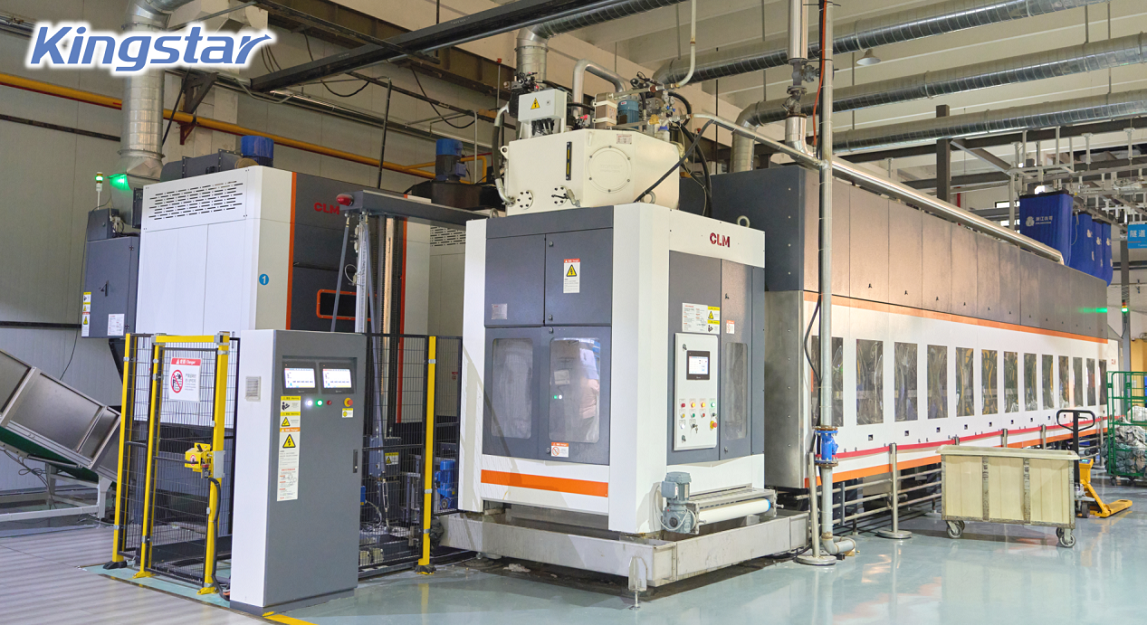
Washer-Extractors
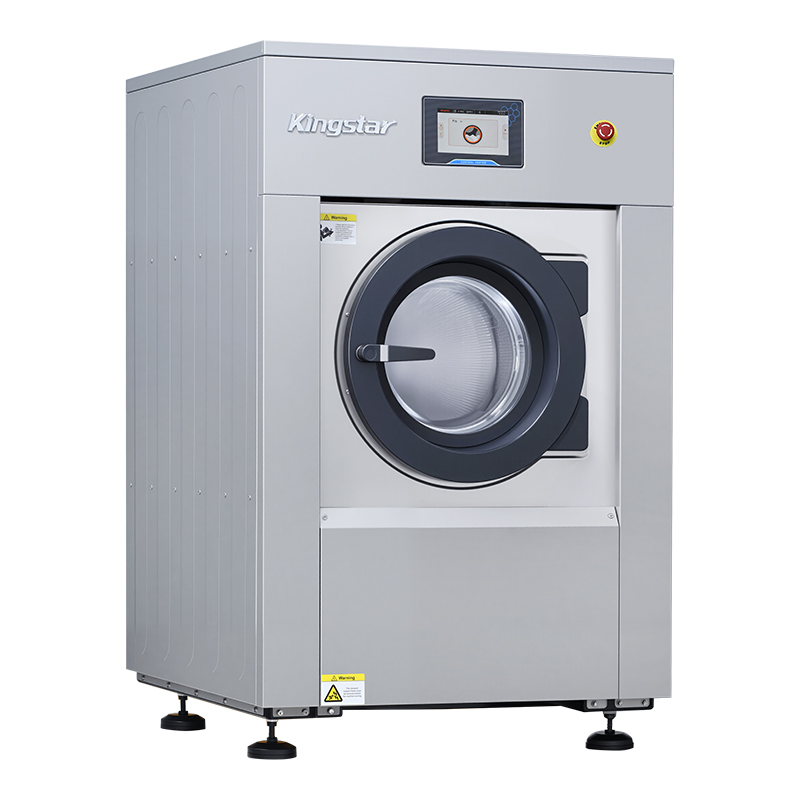
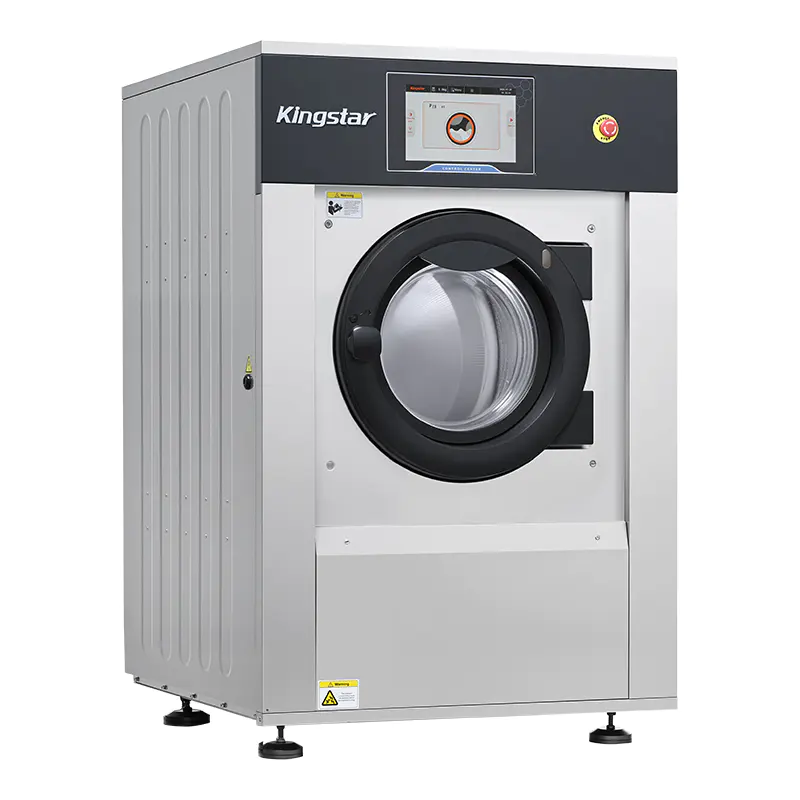
A washer-extractor combines washing and high-speed extraction in a single drum. These are the workhorse machines in most on-premise laundry (OPL) operations. They range from 20 lbs to 400 lbs capacity and are widely used in nursing homes, athletic facilities, and correctional institutions.
Barrier Washers (Pass-Through Washers)
Required in healthcare environments where infection control is critical. Soiled laundry is loaded from one side (the "dirty" room) and clean laundry exits the other side (the "clean" room), preventing cross-contamination. Hospitals, surgical centers, and long-term care facilities rely on these to meet hygiene standards.
Cost of Commercial Laundry Machines: What to Expect
The cost of commercial laundry machines varies enormously depending on type, capacity, brand, and features. Here's a realistic breakdown for 2024–2025 pricing:
| Machine Type | Capacity Range | Typical Price Range | Best For |
|---|---|---|---|
| Front-Load Washer-Extractor (soft-mount) | 20–35 lbs | $1,500 – $4,500 | Small laundromats, salons, gyms |
| Front-Load Washer-Extractor (mid-range) | 50–80 lbs | $5,000 – $12,000 | Hotels, nursing homes, restaurants |
| Large Capacity Washer-Extractor | 100–200 lbs | $12,000 – $35,000 | Hospitals, large hotels, linen services |
| Hard-Mount Washer-Extractor | 150–400 lbs | $20,000 – $60,000+ | Industrial laundry operations |
| Barrier / Pass-Through Washer | 30–125 lbs | $8,000 – $40,000 | Healthcare, infection-control environments |
| Tunnel Washer (Continuous Batch) | 1,000–3,000 lbs/hr | $150,000 – $500,000+ | Commercial linen plants, large hospitals |
These figures reflect equipment purchase prices only. Installation costs typically add $500–$5,000+ depending on whether new electrical panels, floor drains, or utility connections are required. For hard-mount machines, concrete anchoring and flooring reinforcement may be necessary.
New vs. Refurbished Commercial Washers
Buying refurbished is a viable cost-reduction strategy, particularly for businesses that are scaling up gradually. A refurbished commercial washer from brands like Milnor, Wascomat, or Speed Queen can cost 40–60% less than the equivalent new unit. The trade-off is a shorter remaining lifespan and potentially limited warranty coverage — typically 90 days on parts compared to 1–3 years for new equipment.
For businesses that prefer not to own equipment outright, leasing programs from manufacturers and distributors allow monthly payments ranging from $150 to $1,500+ depending on the machine, making commercial laundry accessible without a large capital outlay.
Hidden and Ongoing Costs Beyond the Purchase Price
The sticker price of a commercial washing machine is just the beginning of the financial picture. Savvy buyers evaluate total cost of ownership (TCO) over a 10-year horizon, which includes:
- Water consumption: A washer running 15 cycles/day at 25 gallons each uses roughly 137,000 gallons/year. At $0.005/gallon, that's ~$685/year — per machine.
- Energy costs: A 208V, 20-amp commercial washer running 8 hours/day consumes approximately 3,000–5,000 kWh/year. At $0.12/kWh, expect $360–$600/year in electricity per machine.
- Detergent and chemicals: Commercial operations typically spend $0.10–$0.35 per pound of laundry on chemicals, depending on fabric type and soil level.
- Preventive maintenance: Scheduled servicing typically costs $300–$800/year per machine for a service contract, less if done in-house.
- Parts and repairs: Budget 1–3% of equipment value per year for unscheduled repairs, rising as machines age past 7–8 years.
- Sewer/wastewater fees: Some municipalities charge based on water discharge volume, which can be a significant line item for high-volume laundry operations.
Energy Star-certified commercial washers can reduce water use by up to 35% and energy consumption by 20–30% compared to standard commercial machines, offering meaningful long-term savings even when the upfront cost is 10–20% higher.
Leading Commercial Washer Brands and What Sets Them Apart
The commercial laundry market is dominated by a handful of manufacturers, each with a distinct product focus:
Speed Queen
One of the most recognized names in commercial laundry, Speed Queen (Alliance Laundry Systems) offers a full range from small 18 lb washers to large 105 lb units. Their machines are known for robust mechanical simplicity and a reputation for minimal downtime in laundromat settings. The brand dominates the vended laundry market in North America.
Maytag Commercial
Positioned as the durable mid-market option, Maytag Commercial Laundry (now also under Alliance Laundry Systems) offers multi-load washers that are popular in apartment complexes and hospitality settings. Their machines frequently come with 10-year limited warranties on the outer tub, reflecting confidence in long-term durability.
Milnor
A premium industrial brand focusing on larger-capacity washer-extractors and tunnel washers. Milnor equipment is widely used in hospitals and large commercial linen operations. Their RinSave water-recycling system can reduce water use by up to 50% versus conventional rinsing methods.
Electrolux Professional
Known for their line of barrier washers and healthcare-grade machines, Electrolux Professional targets hotels, hospitals, and high-end hospitality operations. Their machines are often specified for hygiene compliance in European markets and feature advanced programmable dosing systems for chemical automation.
Girbau
A Spanish manufacturer with a strong global footprint, Girbau produces soft-mount washers from 13 lbs to 440 lbs. Their machines are popular in healthcare OPL settings and multi-housing laundry rooms, praised for high extraction G-force values (up to 400G) that significantly reduce drying time and energy costs.
How to Size a Commercial Washer for Your Operation
Buying the wrong size commercial washer is one of the most costly mistakes in laundry facility planning. Undersized machines create bottlenecks and staff overtime; oversized machines waste capital and inflate utility costs on underutilized equipment.
Use this framework to calculate your required capacity:
- Estimate your daily linen poundage. For hotels, a standard formula is 10–14 lbs of laundry per occupied room per day. A 100-room hotel at 80% occupancy generates roughly 800–1,120 lbs of linen daily.
- Determine your operational window. How many hours per day will the laundry room run? An 8-hour shift allows roughly 10–12 cycles per machine (assuming 45–50 minute cycles).
- Calculate cycles needed. Divide total daily lbs by the machine's rated capacity, then by cycles available per shift. For the hotel example with a 60 lb washer: 1,000 lbs ÷ 60 lbs = ~17 cycles needed. At 10 cycles/machine, you need at least 2 machines.
- Add a buffer. Always plan for 15–25% excess capacity to handle peak demand, linen shortages, or equipment downtime.
For healthcare environments, also factor in whether separate machine allocation is required for different fabric types or infection-risk categories — some facilities run dedicated machines for surgical linens, patient garments, and general textiles.
Soft-Mount vs. Hard-Mount: A Decision That Affects Your Building
This is a distinction many first-time commercial laundry buyers overlook until it creates expensive installation problems.
Soft-Mount Washers
These machines use internal suspension systems (springs and shock absorbers) to dampen vibration during high-speed extraction. They can be installed on upper floors or in buildings without reinforced concrete slabs. Soft-mount machines are the standard choice for most commercial installations because they offer installation flexibility without structural modifications.
Hard-Mount Washers
Hard-mount machines are bolted directly to a reinforced concrete floor. They achieve significantly higher extraction G-forces (300–500G versus 100–200G for soft-mounts) because there's no internal dampening to limit spin speed. The trade-off is that installation requires a solid concrete foundation, making them unsuitable for upper-floor or wood-framed installations. They're primarily used in ground-floor industrial laundries.
Key Features to Evaluate When Buying a Commercial Washer
Beyond size and mount type, these features have a meaningful impact on operational efficiency and long-term value:
- Programmable controls: Modern commercial washers allow operators to store 10–99 custom wash programs — critical for facilities handling multiple fabric types with different temperature, chemical, and cycle-time requirements.
- Variable frequency drives (VFDs): VFD motors ramp spin speed gradually rather than switching on at full power, extending bearing life and reducing electricity consumption during motor start-up by up to 30%.
- Water level sensing: Machines that auto-adjust water fill based on actual load weight (rather than operator selection) can reduce water use by 10–25% in mixed-load environments.
- Chemical injection compatibility: Integration with automated chemical dispensing systems ensures consistent dosing accuracy and reduces chemical waste, which matters especially in high-volume healthcare laundry.
- Remote monitoring and diagnostics: Many modern commercial machines are IoT-enabled, allowing service teams to diagnose errors remotely and schedule predictive maintenance before a breakdown occurs — a major operational advantage for multi-location laundry operators.
- Door and drum size: A larger door opening reduces loading time and physical strain on staff — a productivity factor that compounds across hundreds of cycles per week.
Industries That Depend on Commercial Washing Machines
The demand for commercial laundry equipment spans a surprisingly wide range of industries, each with specific hygiene standards, throughput demands, and regulatory requirements:
- Hospitality (Hotels and Resorts): A mid-size 200-room hotel can produce 2,000–3,000 lbs of laundry per day when at full occupancy. On-premise laundry is often more cost-effective than outsourcing for properties with consistent high occupancy.
- Healthcare (Hospitals and Nursing Homes): Infection control drives equipment specifications here. Facilities require machines capable of reaching thermal disinfection temperatures (71°C/160°F for 3 minutes or 65°C/149°F for 10 minutes, per most health authority guidelines).
- Food and Beverage (Restaurants, Catering): Chef coats, aprons, bar towels, and table linens require frequent washing with appropriate soil removal performance for greasy, food-stained fabrics.
- Fitness and Athletics: Gyms, sports teams, and athletic facilities deal with high volumes of synthetics and performance fabrics that require gentler wash actions to prevent fiber damage.
- Corrections and Government: Prisons and government facilities often require high-durability machines capable of running continuously with minimal maintenance intervention and basic, tamper-resistant controls.
- Vended Laundromats: Coin- or card-operated commercial washers require payment system integration, vandal-resistant construction, and simplified controls that non-professional users can navigate without instruction.
Maintenance Best Practices to Maximize Machine Lifespan
A commercial washer that receives proper preventive maintenance can operate reliably for 15–25 years. Neglected machines often fail within 5–8 years. These are the maintenance actions that have the highest impact:
- Monthly: Inspect and clean door gaskets, check chemical injection lines for blockages, inspect drain hoses and connections, verify water inlet screens are free of sediment.
- Quarterly: Inspect bearings and drive belts for wear, check shock absorbers on soft-mount machines, verify electrical connections are tight and corrosion-free, run an empty maintenance wash with drum cleaner.
- Annually: Full inspection by a qualified technician, replacement of wear items (seals, springs, belts) as a preventive measure rather than reactive repair, review of cycle programs to ensure they're optimized for current fabric types and soil loads.
- Water quality management: Hard water buildup (limescale) on heating elements and drum interiors is one of the leading causes of premature failure. Installing a water softener or running periodic descaling cycles can extend heating element life by 3–5 years.
Service contracts from the manufacturer or an independent laundry equipment service company provide documented maintenance records — which can significantly increase resale value when it's time to upgrade equipment.
Is It Better to Buy, Lease, or Outsource Commercial Laundry?
This decision depends on your volume, capital situation, and operational goals. Here's how the three approaches compare in practice:
Buying Equipment Outright
Best for high-volume operations with consistent laundry needs. Ownership eliminates recurring lease payments and provides full control over machine programs and maintenance scheduling. For a hotel processing 1,000 lbs/day, on-premise ownership typically delivers a payback period of 2–4 years compared to outsourcing to a commercial laundry service.
Leasing
Leasing preserves working capital and may include maintenance in the agreement, reducing the risk of unexpected repair bills. Monthly costs are predictable, which simplifies budgeting. The downside is that you build no equity, and total payments over a 5-year term typically exceed the purchase price by 20–40%.
Outsourcing to a Commercial Laundry Service
For facilities with inconsistent laundry volume, limited space, or insufficient utility infrastructure, outsourcing to a linen service can eliminate capital costs entirely. Typical pricing is $0.80–$2.00 per lb for commercial laundry services, depending on fabric type, turnaround time, and geography. At high volumes, this quickly becomes the most expensive option per pound processed.
ADD:No.388 Xinggang Road, Chongchuan District, Nantong City, 226000, Jiangsu Province, China.
-
Phone: +86-13917089379
-
Tel:+86-13917089379
-
Fax:+86-0513-85663366
-
E-mail:louislu@kingstarlaundry.com
products