英语
英语 俄语
俄语 西班牙语
西班牙语 德语
德语
Home / News / Industry News / How Professional Curtain Cleaning Facilities Clean and Care for Curtains

Kingstar is your trusted partner for industrial and commercial laundry equipment. We specialized in the R&D and manufacturing of high-end industrial washers, commercial washers and dryers. Meanwhile, we provide global clients with comprehensive planning, layout workflow design, and software-hardware integration services for smart laundry plants.
Industry News
Sep 22,2026
How Professional Curtain Cleaning Facilities Clean and Care for Curtains
Many people believe that curtain cleaning is just water-based cleaning, from soaking and washing to air drying. Actually, curtains are delicate soft furnishing textiles. Various fabrics, processes, and colors need different care procedures. Improper cleaning methods used by small stores easily cause shrinkage, color transfer, deformation, loss of drape, and embroidery damage. Professional curtain cleaning is not a routine washing process, but a refined and standardized cleaning and care process.
Pre-Cleaning Inspection
In the market, most laundry shops only remove and collect curtains. They do not check for any stains, damage, color fading, or aging. If curtains are damaged after washing, they blame this on the fabric. Thus, customers may bear the cost of any damage. Professional curtain cleaning builds a dedicated risk-control process before removing curtains. It provides an overall inspection for every curtain.
Technicians can inspect every detail of the curtains. They can identify fabric types for hidden issues (such as fabric wear, loose threads, holes, aging, and brittleness). They also test fabric colorfastness. This helps reduce the risk of color fading and color transfer. Technicians also focus on special processes (such as heat-set pleats, three-dimensional embroidery, color-blocked design, decorative trims and beads, as well as openwork design).
Customers are informed in advance about the cleaning performance, potential changes, and special cautions. For example, cotton and linen fabrics may slightly shrink after cleaning. Dark-blocked fabrics may release loose dyes. Old curtains may be damaged. All problems are explained and confirmed in advance. This helps prevent cleaning and care disputes. It also improves service efficiency.
Pre-Cleaning Dust Removal
Household curtains may seem to be clean. However, after long-term use, dust, lint, pet hair, dust mites, and airborne grease and pollutants can accumulate in fiber gaps. They penetrate deep into textiles over time. This can become a hidden source of pollution. Many people have a misconception. They think that curtains can be washed in water. But dry dust impurities can form dirt on fabric fibers when exposed to water. These stains are harder to remove. Dust and bacterial residues may cause many issues (dull appearance, curtain stiffening, and moldy odors).
The correct way is to remove dust before washing. With a dual process (high-frequency vibration and vacuum suction), stubborn dust, lint, dust mites, and minor impurities can be removed from the fabric surface and fibers. During refined wet cleaning, oil-based and sweat stains can be decomposed. This achieves overall cleaning of the curtain surface and fibers. Curtains become fresh and odor-free after cleaning. They are also free from visible odors.
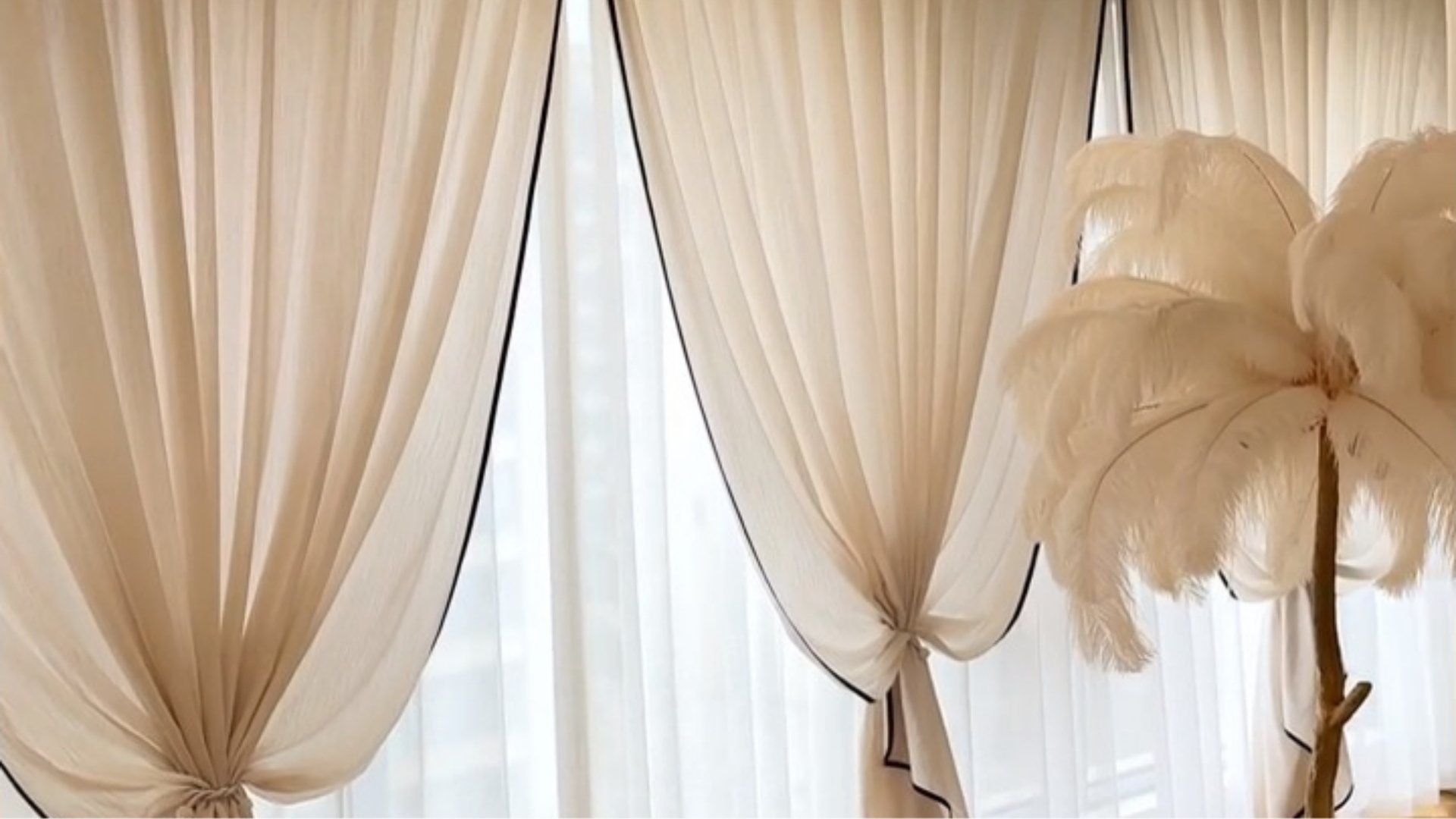
Customized Cleaning for Different Fabrics
The key to curtain cleaning and care is fabric-based cleaning. Fabrics differ in fiber characteristics, water temperature resistance, acid/alkali resistance, and wear resistance. The same cleaning method can cause curtain deformation, color fading, and damage. However, to save processing time, regular laundry shops do not sort curtains by fabric type, age, or color. They put curtains into a high-capacity washer. They choose common detergents and standardized programs. This can lead to many issues (color bleeding, lint transfer, cross-contamination, and fabric damage). Curtains can be sorted based on fabrics before cleaning.
● Natural cotton and linen fabrics
Low-temperature and gentle wet cleaning, mild neutral detergents
This can reduce curtain shrinkage. It can also maintain fabric softness.
● Delicate silk and chenille fabrics
Specialized gentle programs
Low-temperature, low-speed mode can reduce fiber damage, pilling, and fading.
● Heavy blackout curtains & floor-to-ceiling fabric curtains
Intensive cleaning cycles
It helps remove accumulated grease and dust.
● Curtains with coatings/embroidery/color-blocked designs
Manual pre-treatment
This can reduce fiber peeling or coating damage.
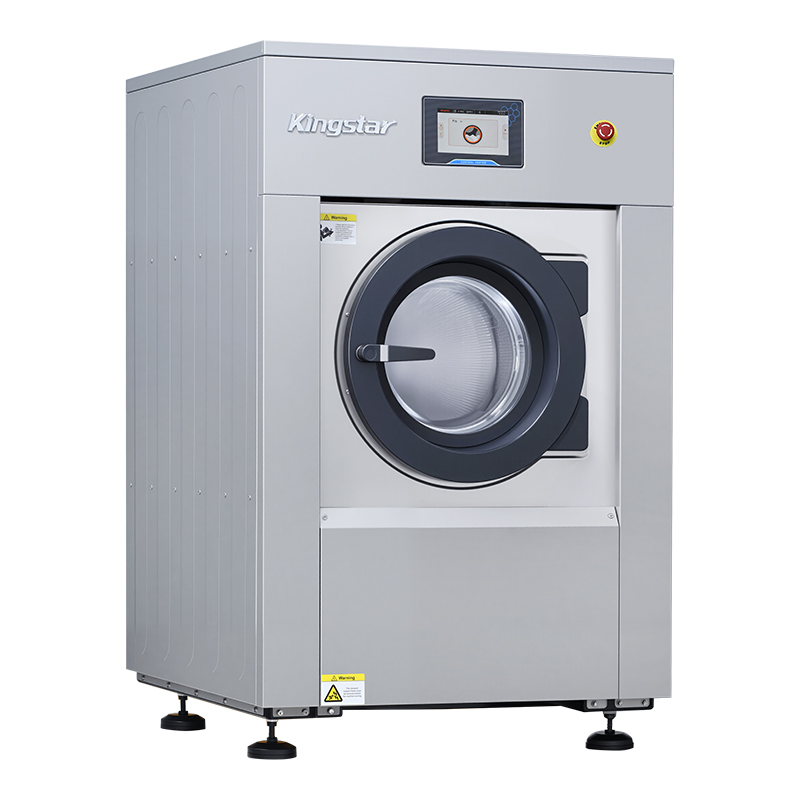
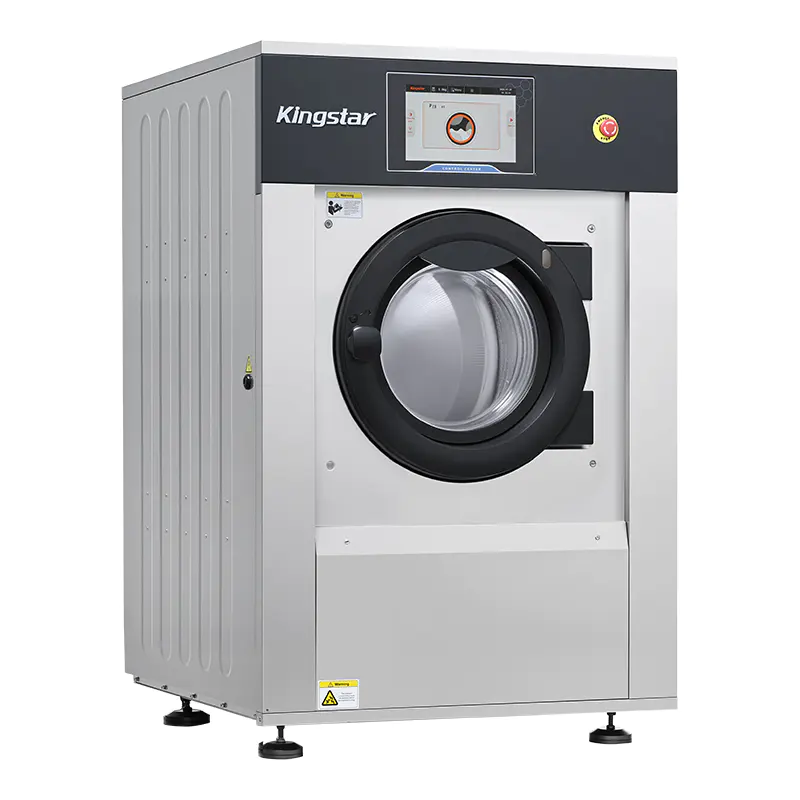
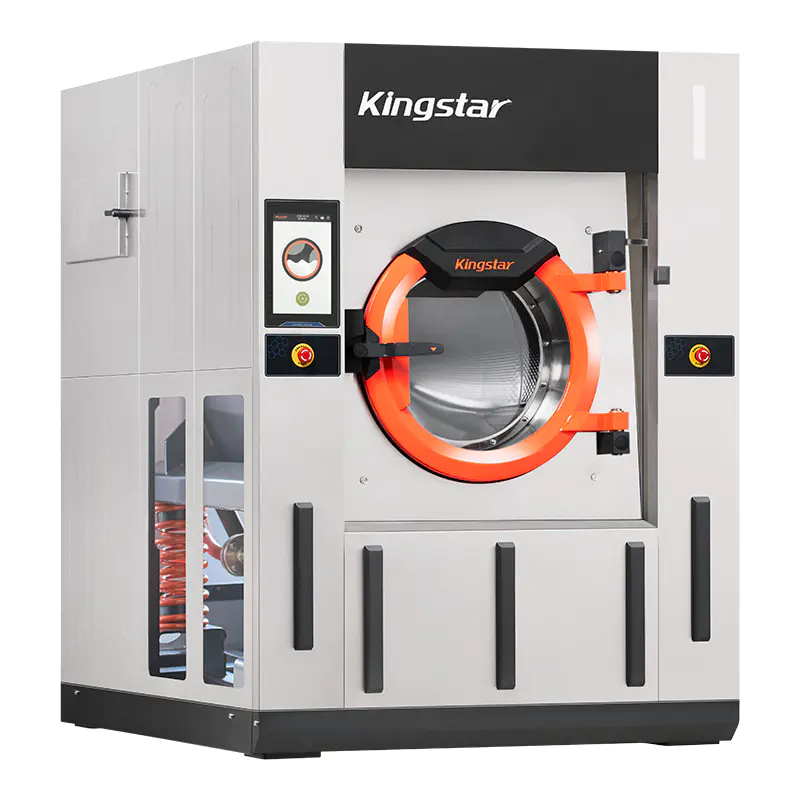
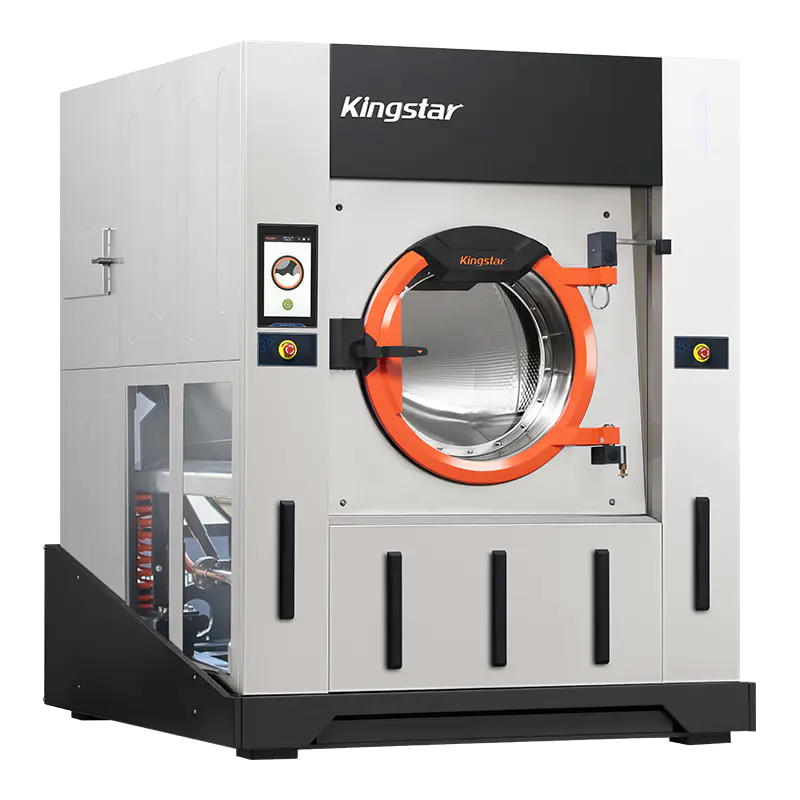
A Kingstar heavy-duty industrial washer can store up to 50 smart washing programs. It can offer customized cycles based on curtain fabrics, stain conditions, and curtain age. Besides, laundry facilities should follow the standard “one customer, one tracking number; one bag, one customer; and no mixed cleaning”. After removal, each household’s curtains should be packed separately with relevant numbers. They must be separately cleaned, dried, and stored. This can reduce the risk of most issues, such as color bleeding, dust contamination, and cross-contamination.
Heat Ironing and Setting
Most common laundry shops only dry, then pack and deliver curtains to customers after cleaning. They overlook the key step: curtain setting. After wet cleaning, curtain fibers can relax. This can lead to irregular pleat formation and loss of drape. Regular pleats can become uneven. High-end custom curtains will lose their original shape.
Ironing and setting help restore the original curtain shape. After finishing wet cleaning, drying, and disinfection, use a dual process (refined manual ironing and heat setting). Based on the curtains’ original installation style, professional technicians can adjust pleat spacing and hanging curve. Piece-by-piece manual steam ironing helps smooth out disordered pleats caused by wet cleaning. Deformed fibers become relaxed. Constant-temperature heat setting stabilizes fabric structure. It helps restore the curtains’ original draping and fabric crispness. After setting, curtains become smooth and wrinkle-free. Residual mites, bacteria, and odor molecules can also be effectively removed. After re-installation, curtains look fresh, smooth, and well-shaped.
Conclusion
Many laundry owners may wonder why consumers choose professional curtain laundry facilities even if curtains can be processed at common dry cleaners and laundry shops. The core cause is not whether curtains can be cleaned, but whether they can be well-cleaned, protected, and restored to their original shape. Common washing focuses on removing stains. But professional facilities provide one-stop refined services for cleaning, protecting fabrics, setting, and quality control.
The curtain laundry facility in Quzhou, Zhejiang Province, has been deeply involved in curtain cleaning and care for 24 years. They use more professional cleaning methods. They focus on standardized procedures, differentiated processes, and personalized door-to-door services. They provide one-stop services, from curtain removal, risk inspection, deep dust removal, refined cleaning based on fabrics, individual cleaning for each customer, to manual ironing and setting, followed by on-site re-installation. Consumers do not need to worry about the entire process.
With 24 years of craftsmanship and expertise, many customers still choose the plant’s services after moving several times. This is due to its professional cleaning and care capabilities, including consistent service quality, dispute control, and strong restoration to curtains’ original shape. The plant establishes a firm footing in the competitive soft furnishing cleaning and care industry. It has become a reliable choice for local customers.
Q&A
Q1: Can I open a shop only for curtain cleaning?
A1: Yes. Professional curtain laundry shops in China focus on curtain cleaning. Some custom curtain stores also offer a distinctive service: curtain cleaning.
Q2: What industrial washers are recommended for cleaning curtains?
A2: A 40 kg industrial washer. Household curtains should be processed separately. Thus, a larger washer is recommended. Curtains hang by windows. After long-term use and sunshine exposure, they show different levels of fading. They are also made of different fabrics. Thus, curtains for different households should be cleaned separately.
Q3: Can a Kingstar wet cleaning machine process curtains?
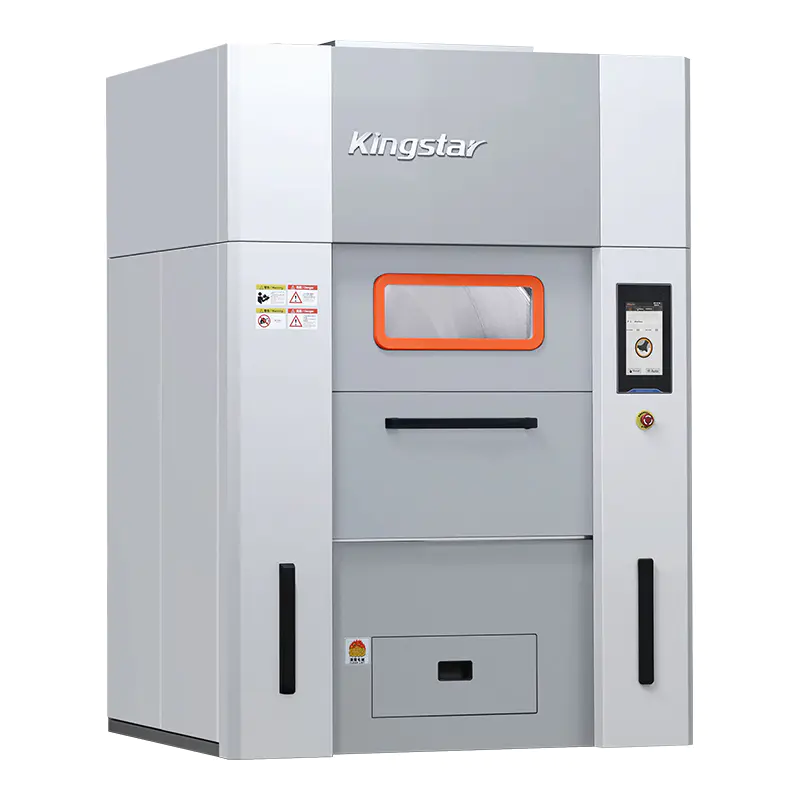
A3: Yes. A Kingstar wet cleaning machine is suitable for protecting high-end curtains.
ADD:No.388 Xinggang Road, Chongchuan District, Nantong City, 226000, Jiangsu Province, China.
-
Phone: +86-13917089379
-
Tel:+86-13917089379
-
Fax:+86-0513-85663366
-
E-mail:louislu@kingstarlaundry.com
products