Opening a laundromat is one of the more resilient small business investments available today — but success depends on far more than securing a lease and buying machines. The owners who thrive are those who choose the right commercial washers, adopt cashless payment systems from day one, and use laundry analytics to make smarter decisions about pricing, hours, and maintenance. This guide walks through each of those pillars in practical terms, with real numbers to help you plan.
Before selecting equipment or software, you need a realistic cost baseline. The upfront investment for a new laundromat typically falls between $200,000 and $500,000, depending on location, store size, and whether you're building out a raw space or taking over an existing laundry facility.
Here's a breakdown of where that money typically goes:
| Expense Category | Low Estimate | High Estimate |
|---|---|---|
| Commercial washers & dryers | $80,000 | $200,000 |
| Build-out & plumbing | $50,000 | $150,000 |
| Payment systems & POS | $5,000 | $25,000 |
| Signage, furniture & vending | $10,000 | $30,000 |
| Working capital & reserves | $20,000 | $60,000 |
Industry data consistently shows that laundromats have an average ROI of 20–35% annually — among the highest of any small retail business — largely because demand is non-discretionary. People do laundry regardless of economic conditions, which makes this a more recession-resistant investment than restaurants or boutique retail.
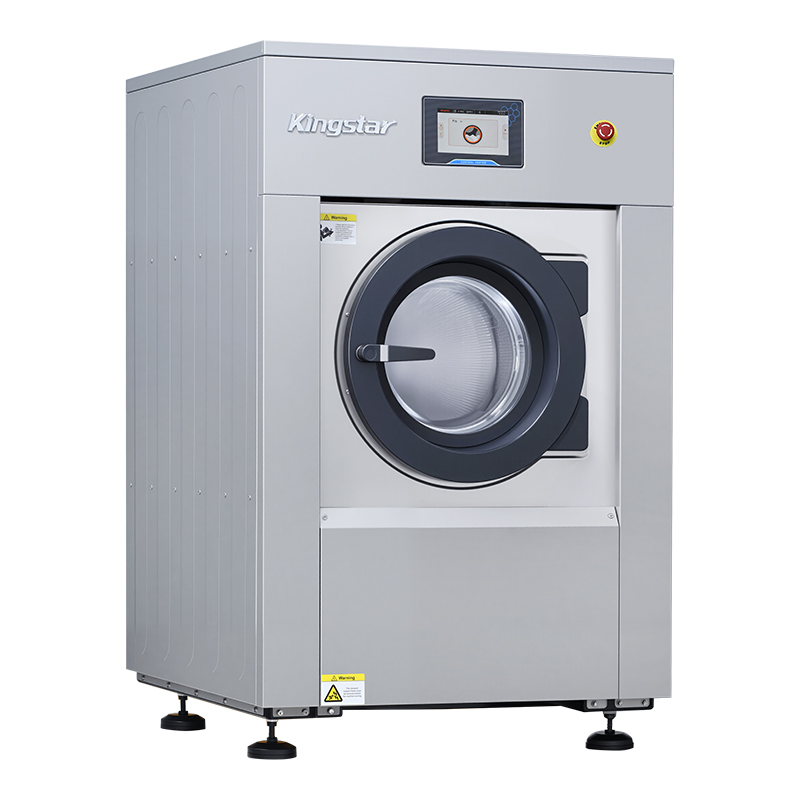
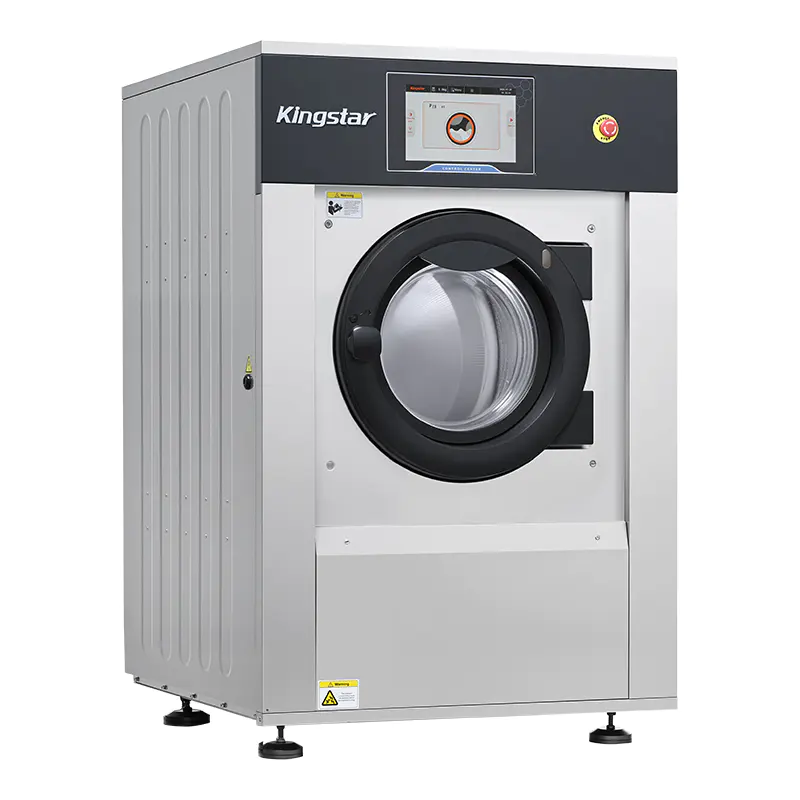
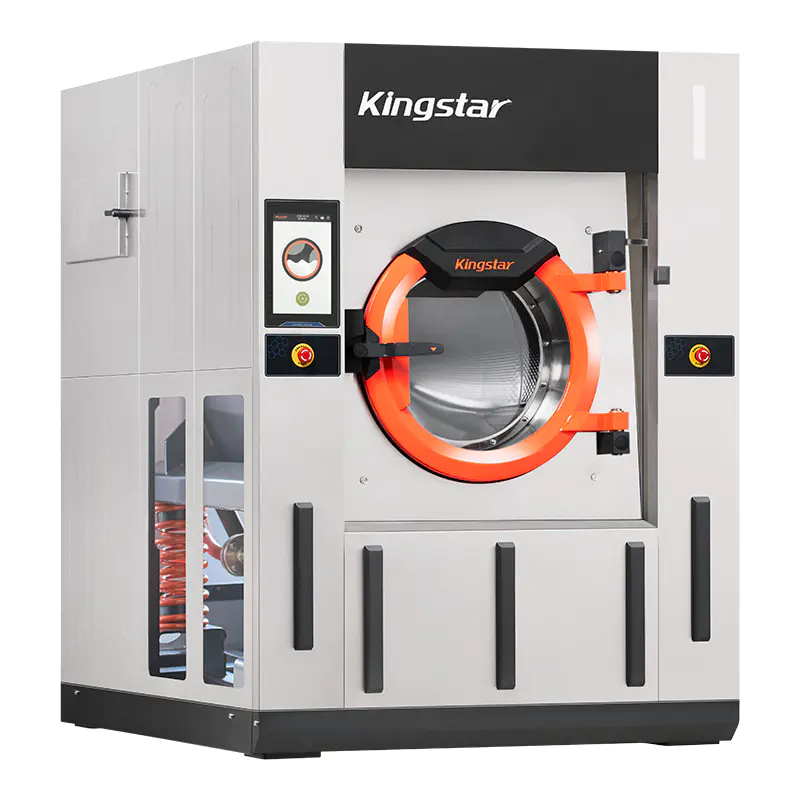
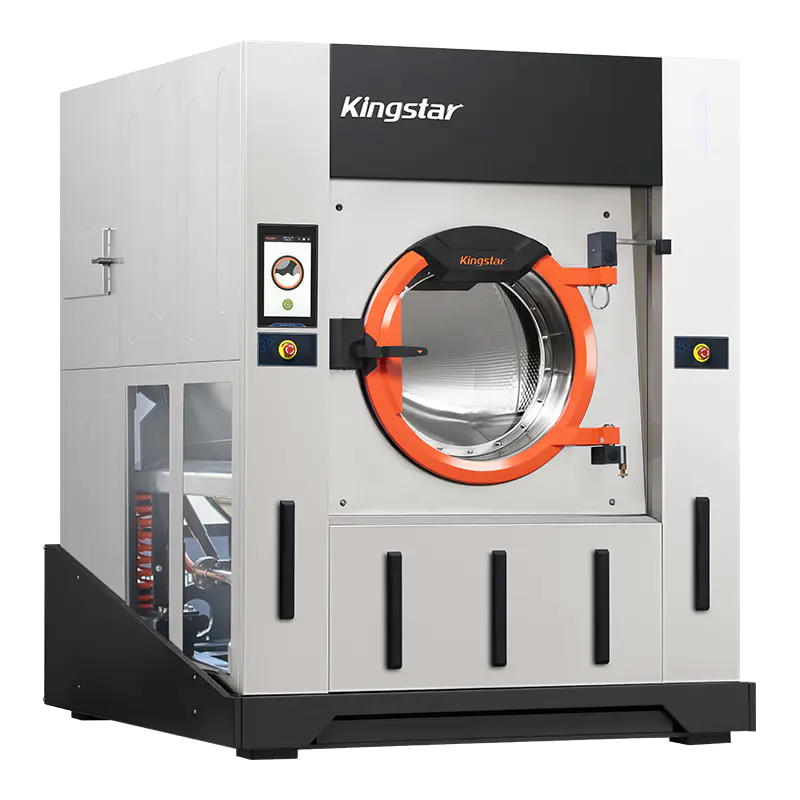
Your washer selection is the single most consequential equipment decision you'll make. The machines drive revenue, determine utility costs, and set the tone for your customer experience. There are two dominant formats in commercial laundry: top-load and front-load (also called front-mount). For laundromats, front-load commercial washers are overwhelmingly preferred — they use 40–50% less water, are gentler on fabrics, and handle larger load capacities that justify higher per-cycle pricing.
A well-designed laundromat offers a range of washer capacities. A typical machine mix for a 2,000 sq ft store might look like this:
Leading brands in commercial laundry equipment include Speed Queen, Electrolux Professional, Maytag Commercial (now part of Whirlpool Commercial), and Continental Girbau. Speed Queen is particularly dominant in U.S. laundromats due to its 25-year industry presence, robust parts network, and machines engineered for 10,000+ cycle lifespans.
Some people researching commercial washers are not planning a laundromat — they want heavy-duty performance at home. This is a legitimate but nuanced market. True commercial-grade washers (the type found in laundromats) are typically not designed for residential installation — they require three-phase electrical service, floor drains, and commercial water pressure that most homes don't have.
What's commonly marketed as "commercial washers for home use" are actually prosumer or semi-commercial machines — built to commercial durability standards but configured for standard 240V residential connections. Brands like Speed Queen's home line, Miele's W1 series, and Electrolux's EFLS617 are popular in this segment.
Speed Queen's TC5 top-load home washer, for example, carries a 5-year warranty with a rated life of 25 years — roughly triple the average residential machine lifespan. The upfront cost (~$1,000–$1,500) is offset by replacement savings over time.
Coin-only laundromats are losing customers to cashless competitors. A 2023 survey by the Coin Laundry Association found that over 60% of laundromat customers prefer or exclusively use digital payment methods. Among customers under 35, that number exceeds 80%. If your store only accepts quarters, you're turning away a significant portion of your potential market.
Cashless laundry systems generally operate in one of three models:
Many modern laundromats deploy a hybrid: a central kiosk that accepts cash (converting it to digital credit), alongside card readers and app payment on machines. This eliminates the coin vault entirely while still serving cash-dependent customers — an important equity consideration in lower-income communities where laundromats are often most needed.
Operators who have transitioned to cashless systems consistently report revenue increases. PayRange, one of the leading mobile payment platforms for laundromats, has cited average revenue increases of 15–25% after cashless adoption, attributed to reduced friction, higher average transaction values, and the ability to run promotions (e.g., "wash 5 loads, get the 6th free") that simply aren't possible with coins.
Going cashless also dramatically reduces theft risk and labor time spent on coin collection and counting — two hidden costs that quietly erode margins in coin-heavy operations.
Laundry analytics refers to data collected from networked machines and payment systems that gives owners visibility into exactly how their store is performing — in real time and historically. This isn't a luxury feature anymore; it's become a baseline expectation from major equipment manufacturers and a genuine competitive advantage for operators who use it well.
One multi-location laundromat operator in the Midwest used machine utilization data to discover that Saturday morning (8am–12pm) accounted for 38% of weekly revenue across just four hours. They implemented surge pricing — raising rates by $0.75 per cycle during peak windows — and used off-peak discounts (10am–2pm Tuesday through Thursday) to even out traffic. The result was a 12% increase in total monthly revenue without adding a single machine.
This kind of price optimization is only possible when your payment system and machines communicate — which brings the cashless and analytics pillars together into a unified operations platform.
Even the best equipment and technology can't save a laundromat in the wrong location. The industry standard is to look for dense residential areas where 60–70% of households are renters — renters are the primary laundromat customer base, since most don't have in-unit washer/dryer hookups.
Practical location criteria to evaluate:
Utility infrastructure is often the hidden dealbreaker. A space with insufficient gas pressure or inadequate drainage can require $30,000–$80,000 in infrastructure upgrades before a single machine goes in. Always get a utility assessment from a licensed plumber and electrician before signing any lease.
There are two primary operating models, each with distinct tradeoffs:
| Factor | Attended | Unattended |
|---|---|---|
| Labor costs | Higher (staff wages) | Minimal |
| Upsell potential | High (wash-dry-fold, dry cleaning drop-off) | Low |
| Customer experience | More personalized | Depends on facility quality |
| Owner time commitment | High | Low (semi-passive) |
| Reliance on technology | Moderate | Very high |
Unattended laundromats are particularly dependent on cashless payment systems and remote monitoring analytics, since there's no staff on-site to handle payment issues or spot machine problems. This makes technology investment even more critical for that model.
Attended stores have a significant edge in capturing wash-dry-fold (WDF) revenue — a service where customers drop off laundry and pick it up clean and folded. WDF typically charges $1.25–$2.50 per pound and has grown substantially in urban markets. A laundromat doing even 100 lbs of WDF per day at $1.75/lb generates $63,875 in additional annual revenue from that service alone.
Requirements vary by state and municipality, but most laundromat operators need to obtain:
From a business structure standpoint, most single-location operators form an LLC — it provides liability separation without the administrative complexity of a corporation and allows pass-through taxation. Consult a local business attorney before forming your entity, particularly if you're partnering with others.
ADD:No.388 Xinggang Road, Chongchuan District, Nantong City, 226000, Jiangsu Province, China.
Phone: +86-13917089379
Tel:+86-13917089379
Fax:+86-0513-85663366
E-mail:[email protected]
Cookies give you a personalized experience,Сookie files help us to enhance your experience using our website, simplify navigation, keep our website safe and assist in our marketing efforts. By clicking "Accept", you agree to the storing of cookies on your device for these purposes. Click "Adjust" to adjust your cookie preferences.For more information, review our Cookies Policy.