英语
英语 俄语
俄语 西班牙语
西班牙语 德语
德语
Home / News / Industry News / Key Points for Installing Exhaust Ducts of Industrial Dryers in Laundry Plants

Kingstar is your trusted partner for industrial and commercial laundry equipment. We specialized in the R&D and manufacturing of high-end industrial washers, commercial washers and dryers. Meanwhile, we provide global clients with comprehensive planning, layout workflow design, and software-hardware integration services for smart laundry plants.
Industry News
Apr 08,2026
Key Points for Installing Exhaust Ducts of Industrial Dryers in Laundry Plants
In the daily operation of central laundry plants, industrial washing machines are indispensable core equipment, which directly affects the drying efficiency of clothes, energy consumption costs, and the stability of the overall production of the workshop. In the initial planning and equipment installation stage, many laundry factories often pay more attention to the selection, placement, and capacity matching of industrial dryers themselves. They easily neglect the overall layout design of dryer exhaust outlets.
Actually, whether the exhaust system is reasonable not only affects the drying speed and energy consumption, but also directly affects the workshop environment and equipment service life. It even causes fire safety risks. As a result, making the scientific and standard layout planning is an important link in the construction and renovation of a laundry plant.
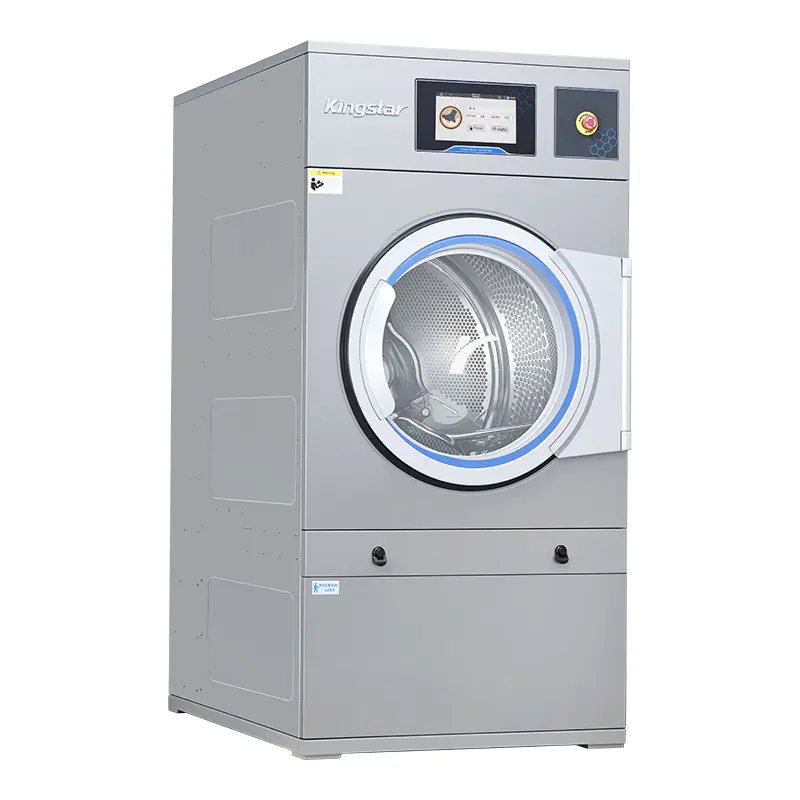
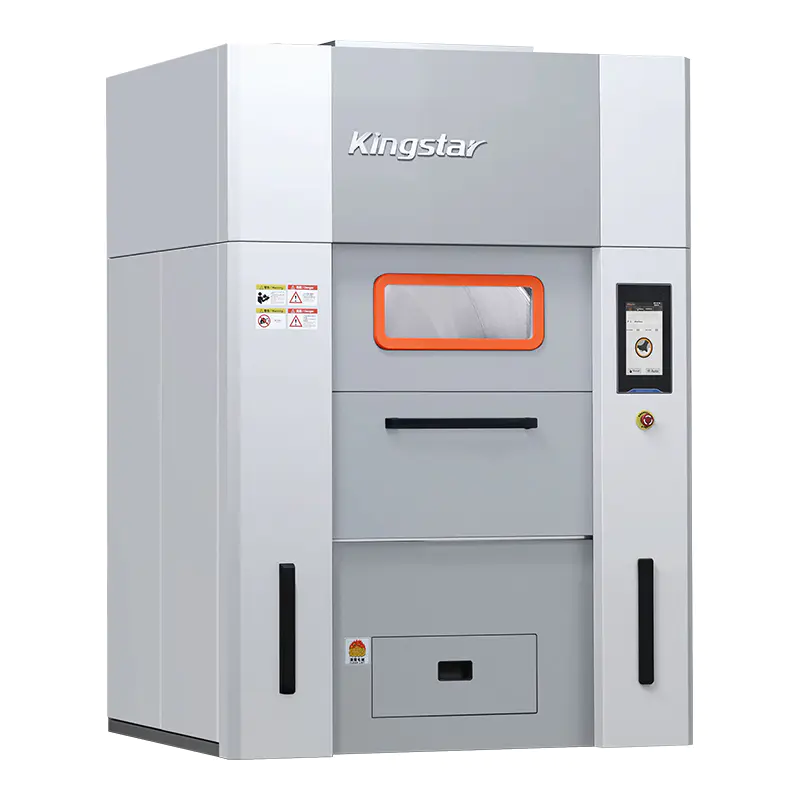
This article takes the Kingstar 100kg dryer as an example, and explains practical layout guidelines for industrial dryer exhaust systems in detail in terms of duct routing, multi-machine parallel connection, material selection, outlet installation, and insulation against condensation.
Duct Routing
First is duct routing and slope design, which is the basis for smooth exhaust. Industrial dryers produce high-temperature, high-humidity exhaust air with small amounts of lint and oil. Improper duct routing can easily lead to high air resistance, poor exhaust, heat recirculation, and reduced drying efficiency.
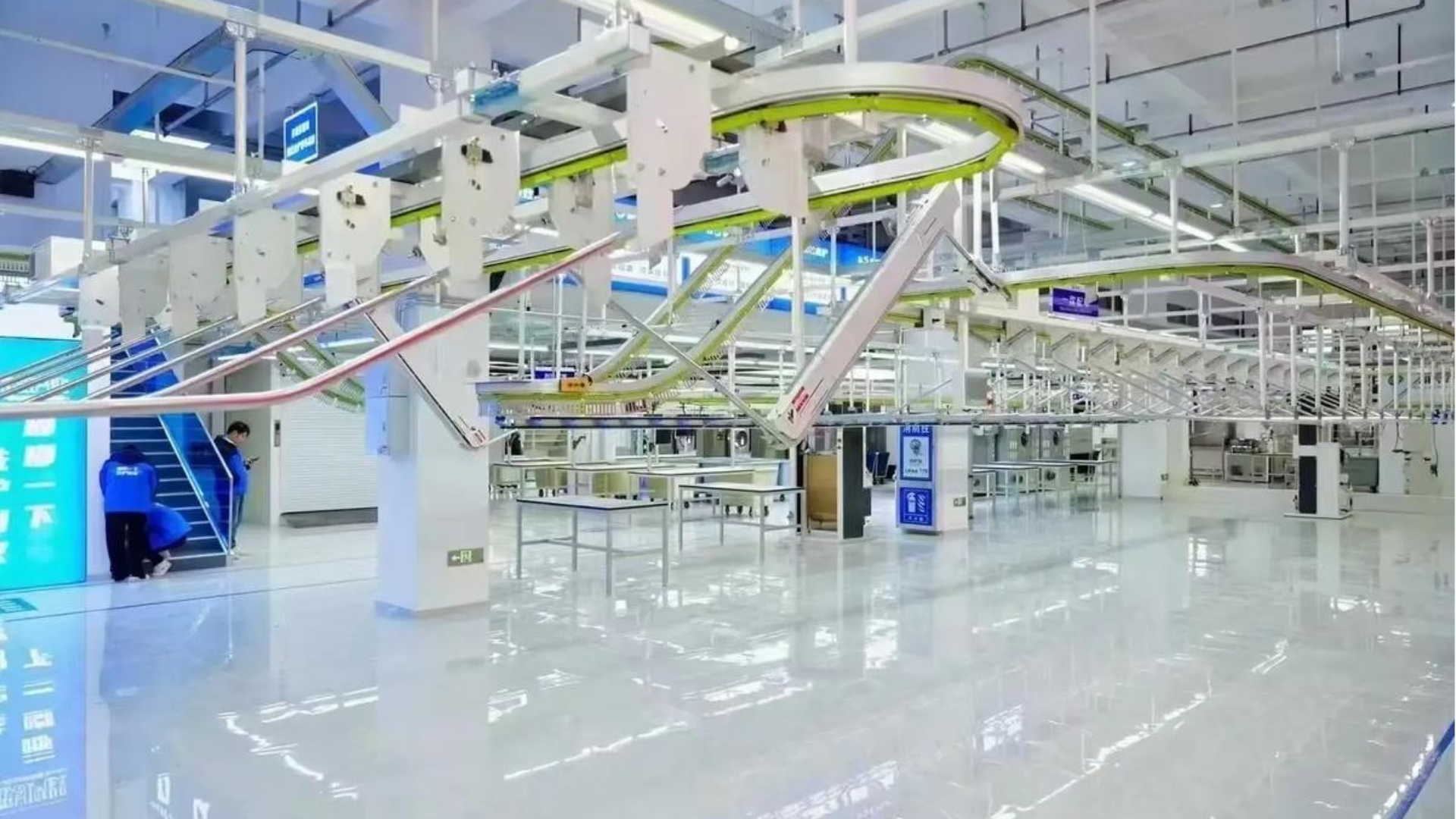
In actual installation, ducts should run vertically upward, or use a combination of horizontal and short vertical sections. Long-distance horizontal installation should be avoided as much as possible because it creates high air resistance and easily accumulates condensate, lint, and oil. In long-term use, it may cause blockages and reduced exhaust performance.
In addition, 45° elbows are recommended for bends. If 90° turns are necessary on-site, two 45° elbows should be used instead of sharp right-angle elbows. This greatly lowers airflow resistance, enables smoother hot air discharge, reduces energy loss, and improves drying performance.
Parallel Exhaust of Multiple Industrial Dryers
This is the most common layout in medium and large laundries. When multiple industrial dryers share a main exhaust duct, the connection method between branch ducts and the main duct is important. Each branch should connect to the main duct at a 45° angle. Vertical T-joints should be avoided because it creates high air resistance and airflow collision. It also disrupts exhaust for individual machines, raises workshop temperature, and spreads odors.
In addition, the lengths of the branch ducts should be kept as consistent as possible. This ensures uniform air volume distribution for industrial dryers and avoids different drying speeds. If an equal-length layout cannot be used, air volume control valves should be installed on shorter branches so the airflow can be balanced by adjusting opening degrees. Meanwhile, the cross-sectional area of the main duct must be at least 1.1 times the total cross-sectional area of all branch ducts. Sufficient margin avoids insufficient exhaust or excessive pressure under full-load operation.
Material and Thickness
The material and thickness selection of exhaust ducts are directly related to their usage, safety, and service life. The exhaust air temperature of the industrial dryer in the laundry factory is relatively high, and it has water vapor, oil stains, and lint. Therefore, the pipe material must be heat-resistant, corrosion-resistant, not prone to oil accumulation, and non-flammable.
Galvanized iron sheet pipes are generally recommended in the industry. They have high strength and high temperature resistance. They don’t easily deform. They have a long service life, and are easy to clean and maintain.
It must not use PVC pipes, ordinary aluminum foil hoses, or similar materials because they cannot withstand high temperatures and will soften, age, or crack over time. This leads to air and heat leakage. They also trap oil and lint, which pose serious fire risks when accumulated. In addition, a flexible connector must be installed between the dryer outlet and the rigid duct. High-temperature resistant canvas or silicon-coated fiberglass joints are recommended. The length should be under 300 mm to reduce vibration and noise, prevent air leaks, and ensure system tightness.
Exhaust Outlet Installation and Wind Protection Measures
As the end of the entire system, poorly designed outlets may cause backdraft, rainwater intrusion, and pest infestation. It badly affects normal equipment operation. Therefore, stainless steel wind caps or louver check valves must be installed at the outlets to effectively prevent backdraft, rainwater seepage, and the entry of insects and rodents. Meanwhile, the outlet height should be at least 3 meters above the ground, and keep a distance of more than 5 meters from nearby doors, windows, and air conditioning fresh air intakes.
There should be no windows in residential areas to prevent hot air, moisture, and odors from affecting the surrounding environment, so that complaints can be reduced.
Standardized outlet layout ensures stable exhaust and improves overall plant environmental management. Some of our customers have channeled waste heat from Kingstar dryers into a dedicated drying room by installing lint filters at exhaust outlets and directing hot air into the room. This waste heat for drying certain items effectively saves energy.
Insulation and Anti-Condensation Treatment
It is very important in northern regions or low-temperature winter conditions. When the ambient temperature is low, and exhaust ducts are long, condensation easily generates because temperature differences between the inside and outside of the ducts are large. Without insulation, continuous condensation dripping causes duct corrosion, equipment dampness, and slippery floors. It may cause mold growth and strong odors in the workshop.
In such scenarios, external insulation is needed. Rock wool or glass wool with a thickness of 20–30 mm is typically used. An outer aluminum foil protective layer as a cover reduces heat loss and prevents condensation dripping. Meanwhile, a condensate drain must be installed at the lowest point of the duct. Condensate should be collected and discharged into a floor drain or drip tray. Direct dripping onto equipment, electrical circuits, or floors is strictly prohibited to avoid equipment failures, safety hazards, and environmental problems.
Conclusion
In summary, although the industrial dryer exhaust system may seem simple, it is an important component for stable production, energy control, and safe operation in laundries. Every detail (duct routing, parallel design, material selection, outlet protection, anti-condensation insulation) directly affects drying efficiency, equipment lifespan, and production safety.
During new construction, expansion, or equipment renovation, laundry plants should plan the exhaust layout in advance and implement construction according to standards to avoid repeated later modifications that disrupt production and increase costs. Only through scientific design, standardized installation, and proper maintenance can industrial dryers achieve the best performance. It provides solid support for efficient, stable, and safe production in laundry plants.
Q&A
Q1: How many programs can a Kingstar dryer store?
A1: The Kingstar dryer has 99 automatic drying programs.
Q2: Can wool be dried in the Kingstar dryer?
A2: Yes. The drying temperature should be low. Air drying inside a drying room in the central laundry plant is best.
Q3: How many heating types are available for Kingstar dryers?
A3: There are three types.
- gas heating
- steam heating
- electric heating
ADD:No.388 Xinggang Road, Chongchuan District, Nantong City, 226000, Jiangsu Province, China.
-
Phone: +86-13917089379
-
Tel:+86-13917089379
-
Fax:+86-0513-85663366
-
E-mail:louislu@kingstarlaundry.com
products