英语
英语 俄语
俄语 西班牙语
西班牙语 德语
德语
Home / News / Industry News / Is Polar Fleece Really Made from Soda Bottles? | A Laundry-Exclusive Washing Guide

Kingstar is your trusted partner for industrial and commercial laundry equipment. We specialized in the R&D and manufacturing of high-end industrial washers, commercial washers and dryers. Meanwhile, we provide global clients with comprehensive planning, layout workflow design, and software-hardware integration services for smart laundry plants.
Industry News
Feb 03,2026
Is Polar Fleece Really Made from Soda Bottles? | A Laundry-Exclusive Washing Guide
The polar fleece has been the most common clothing in the global laundry shops because of its lightweight and warm-retention. It is woven on large circular knitting machines. After weaving, the grey fabric is first dyed, then it goes through napping, carding, shearing, and pelletizing. The face side is napped to form a dense, fluffy pile that avoids shedding and pilling, and the reverse side has a sparse, even nap with fluffiness and elasticity. It is generally made of 100% polyester and has a soft hand feel.
As a result, it can indeed be derived from recycled plastic bottles. But not all polar fleece is made from plastic bottles. This claim is more of a popular metaphor, with more specific scientific and industrial realities behind it.
Facts
● Fact 1
The polar fleece’s main component is polyester. The core material of both polyester and plastic bottles is PET. But their industrial production paths differ.
| Characteristics Comparison | Polyester Fiber for Apparel | Polyester Material for Beverage Bottles |
| Primary Source | • Petrochemical feedstock (virgin polyester): market mainstream • Recycled plastic bottles (recycled polyester): eco-friendly option, clearly labeled on products |
Petrochemical feedstock |
| Industrial Grade | Fiber-grade chips: used for spinning and weaving | Bottle-grade chips: used for blow molding into bottles |
| Core Differences | Undergoes specialized processing, with distinct molecular weight, crystallinity, and other key metrics | |
● Fact 2
Making recycled polyester fiber from plastic bottles requires many steps. First, bottles are sorted, washed, and shredded. Then they are melted down and turned into new pellets, which are refined into fiber-grade polyester chips later and then spun into usable yarn.
That’s just the start. Once the polyester fabric is woven, it goes through a critical finishing step called pelletizing. The raw fabric is dyed, napped, carded, sheared, and finally tumbled to create its soft, fluffy, pebbly texture.

Identification and Purchase
● Label
If the fabric comes from recycled plastic bottles, trusted brands will clearly mark phrases like recycled polyester, eco polyester, or rPET on the care tag or hangtag. They’ll often note the percentage of recycled material, too.
● Eco certifications
Eco-focused brands will display internationally recognized labels like the Global Recycled Standard (GRS) on their products.
● Functionality
Polar fleece technology is now very mature. High-end options use microfibers, hollow fibers, and antistatic additives to improve softness, warmth, and wear comfort. This solves static cling and poor breathability.
Some polar fleece is made from recycled polyester that comes from plastic bottles. This is a mature and eco-friendly technology. Most polar fleece isn’t. Many on the market are still made from petroleum-based virgin polyester. No matter what raw material is used, after all the complex weaving and pelletizing processes, its physical form and performance are totally different from those of a plastic bottle. It ends up as a soft, warm fabric for clothes.
Characteristics
It has two sides. The front is napped, with a dense, fluffy pile that hardly sheds or pills. The reverse side has a sparse, even nap with short fuzz. Its texture is clear to the touch, plus it’s stretchy and super fluffy.
● Advantages
It doesn’t shed or pill, and it has good stretch. It’s also cold-resistant, flame-retardant, and anti-static, so it’s really safe. The fabric is soft and won’t irritate skin. It can be blended with any other fabric to boost warmth, too.
● Disadvantage
It is a bit expensive, and the quality of products on the market varies a lot. Poor-quality ones may even trigger issues like asthma.
● Application
It is very versatile. It can be made into bedding, carpets, overcoats, jackets, vests, windbreakers, and cheerleading uniforms. It can also be made into fleece gloves, scarves, beanies, throw pillows, and cushion covers.
Care
● Stains
First check for stains: spot stains.
Apply a small amount of hand-wash laundry detergent directly to the stain → cover it completely → wait for 5 minutes → wash with detergent as usual.
● Yellowing
If the fleece turns yellow, it should be washed instantly. Adding a proper amount of neutral detergent to the water can remove yellow stains and restore the bright color.
Kingstar Solutions
As a trusted professional partner in the commercial laundry equipment industry, Kingstar understands that innovation in every type of fabric drives the advancement of laundry technology.
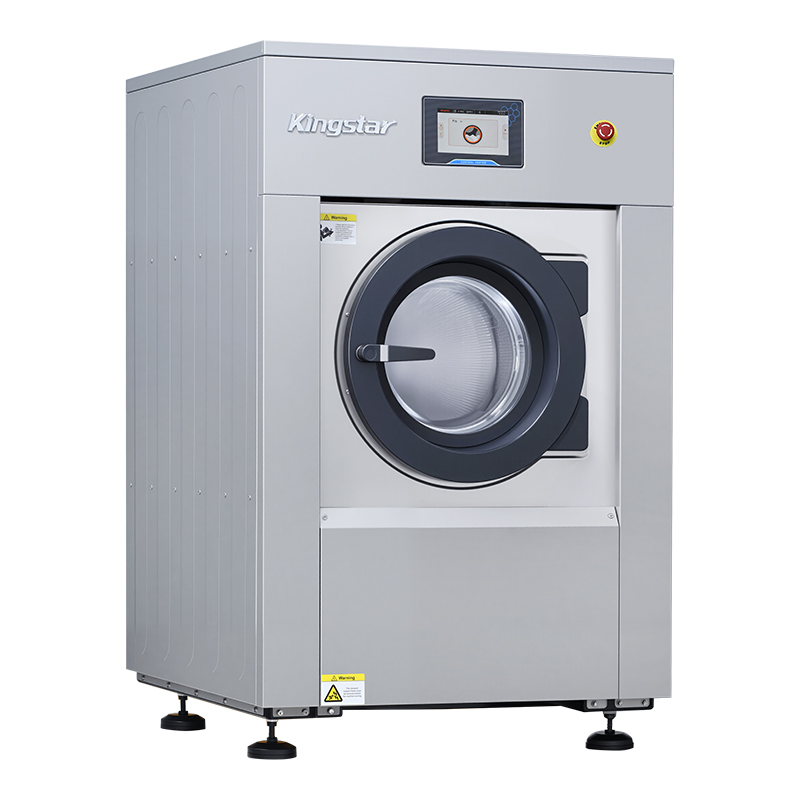
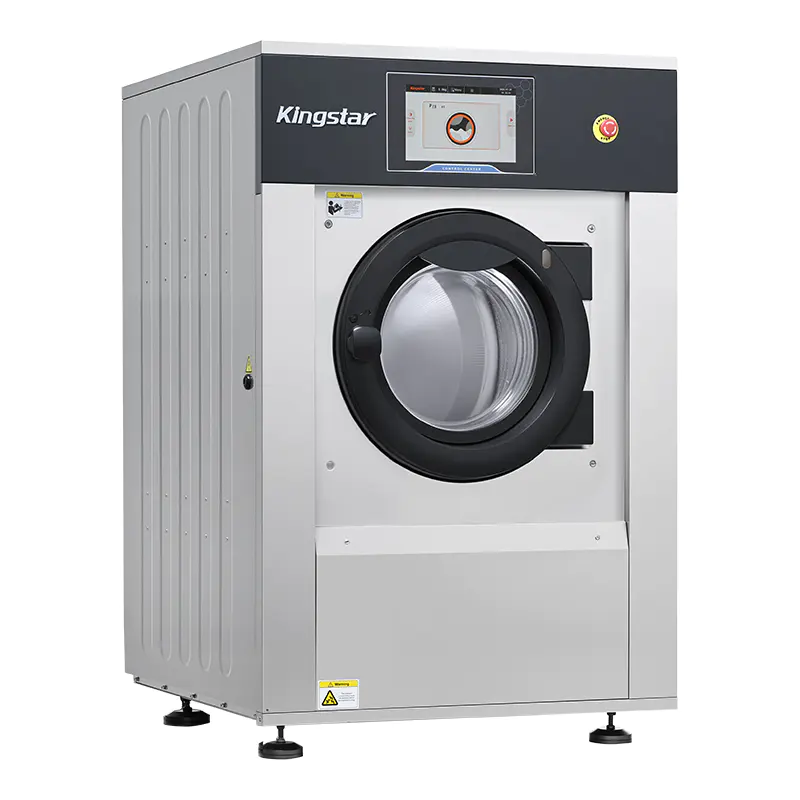
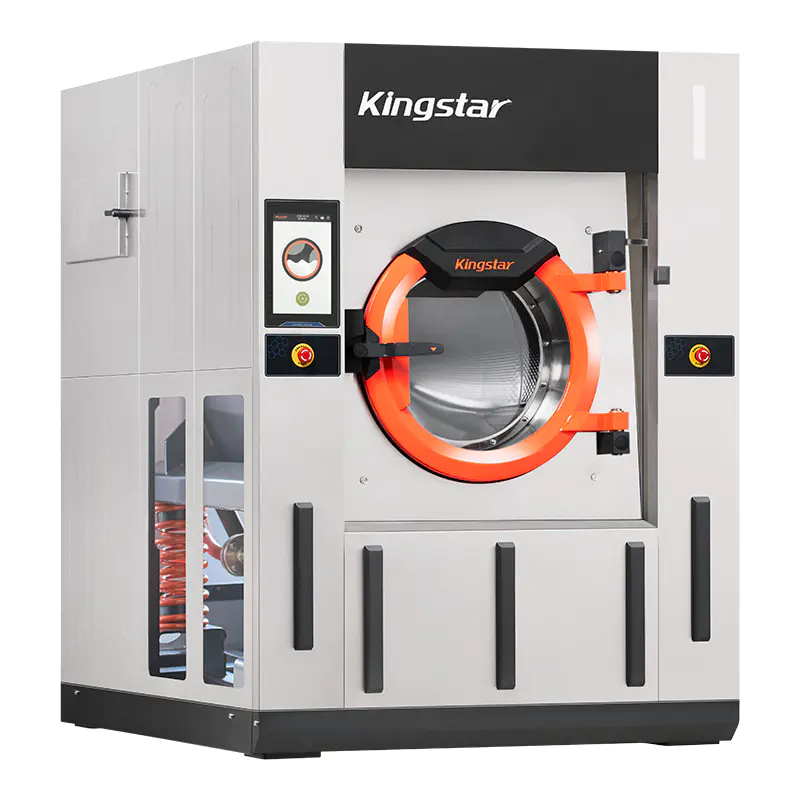
● Kingstar Washing Machine SHS-2025
For garments made from recycled fibers, the Kingstar washing machine SHS-2025 has 79 customizable programs and comes with a built-in washing program specifically for recycled fiber clothes.
| Washing Cycle | Wash | Spin | Rinse 1 | Spin | Rinse 2 | Spin |
| Time (minutes) | 10 | 1 | 3 | / | 3 | / |
| Temperature (°C) | 35 | / | 0 | / | 25 | / |
| Wash Speed (rpm) | 32 | / | 32 | / | 32 | / |
| Spin Speed (rpm) | / | 680 | 680 | / | 680 | |
| Wash Speed Ratio (rpm) | 6/13 | / | 6/13 | / | 6/13 | / |
Conclusion
In the face of constantly changing fabric technology, the professional ability of a laundry is not only reflected in the cleaning effect, but also in whether it can adapt to the characteristics of eco-friendly fabrics with scientific washing and care plans. Kingstar is always committed to providing smarter and more reliable solutions for laundry shops worldwide.
FAQ
Q1: Is polar fleece really made from Coke bottles?
A1: Some is made from recycled polyester from plastic bottles. But most polar fleece on the market is still made from petroleum-based virgin polyester.
Q2: What are the important things when washing polar fleece?
A2: Temperature: People should use water below 40°C and dry on low heat because hot water or drying can make fibers shrink and feel stiff.
Agitation: People should use a gentle wash cycle instead of scrubbing and wringing, and keep the spin speed low for dehydration.
Detergent: Neutral detergents should be used. Strong alkaline detergent or wrong use of softener can damage fibers and make static worse.
Q3: Polar fleece gets static and attracts dust easily. Can it be fixed?
A3: People can add a special antistatic conditioner when washing and rinse polar fleece well.
Air drying is better than high-heat drying. If using a dryer, people should pick a low-temp cycle and take it out before it’s fully dry. Or use a dryer with humidity control.
Post-care: Spray the clothes with antistatic spray after washing.
ADD:No.388 Xinggang Road, Chongchuan District, Nantong City, 226000, Jiangsu Province, China.
-
Phone: +86-13917089379
-
Tel:+86-13917089379
-
Fax:+86-0513-85663366
-
E-mail:louislu@kingstarlaundry.com
products