英语
英语 俄语
俄语 西班牙语
西班牙语 德语
德语
Precautions for Bleaching Cotton Clothes
Bleaching is a common step in laundry care services, but it is also a step that needs caution. A right bleaching method can help remove stains, brighten fabrics, and protect fibers. There are two commonly used bleaching agents. They are chlorine bleach and oxygen bleach. This article will introduce the characteristics and correct application of these two types of bleaches.
Chlorine Bleach
Common sodium hypochlorite solutions (liquid bleach...) are usually a colorless or pale yellow liquid. They have a pungent odor and strong alkalinity.
● Application range
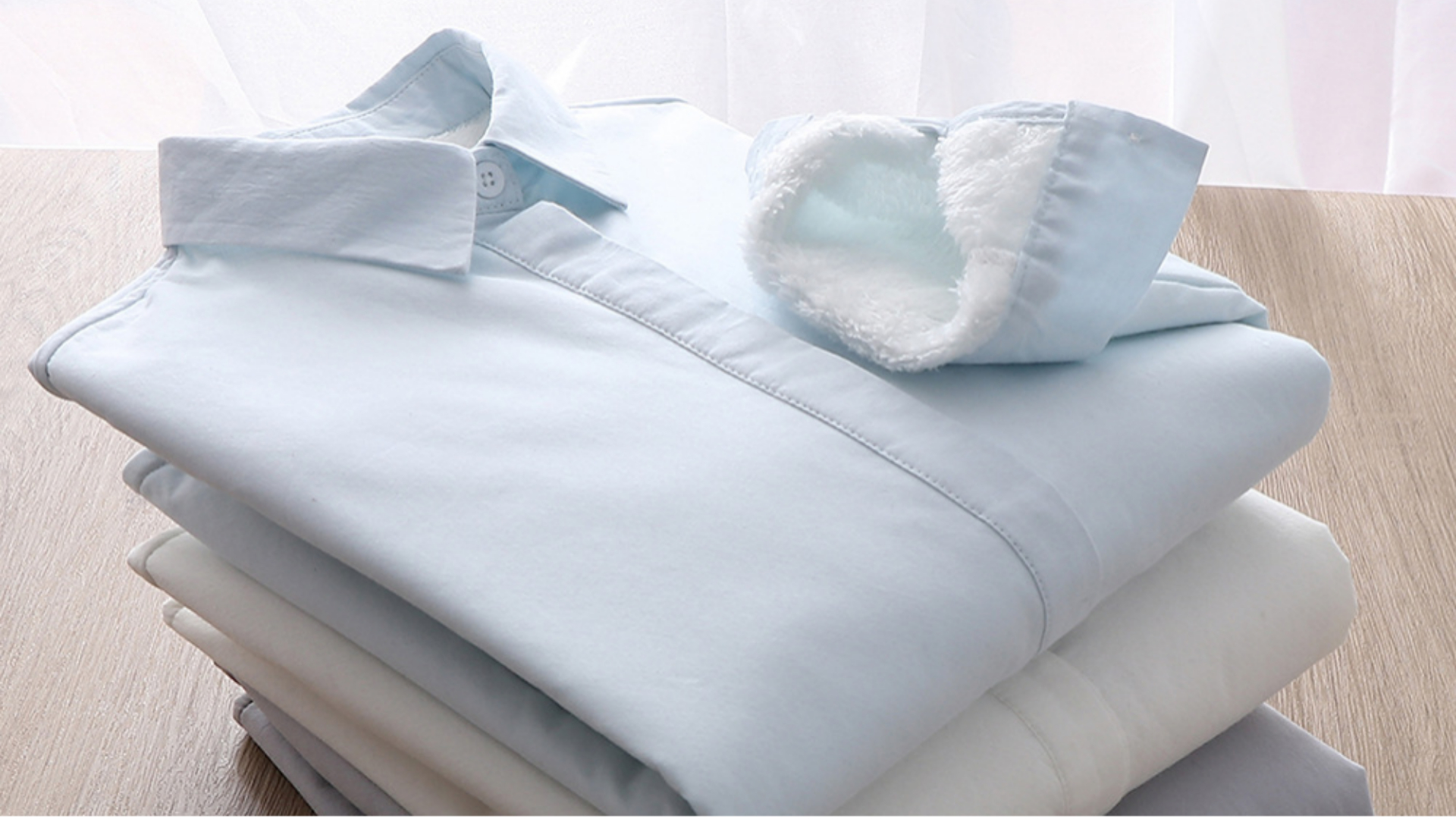
It can be used to bleach white cotton, linen, polyester, acrylic, and other synthetic fabrics, and remove stubborn stains.
- Important warnings
They should not be used on colored clothes because they will cause fading or discoloration.
Even for white clothes treated with optical brighteners, a spot should always be tested on hidden areas (hem, seams) first to prevent localized yellowing caused by damage to the optical brighteners.
● Application methods
- Localized stain removal
Dilute the color-safe bleach with clean water at a ratio of 1:1 → use a cotton swab to apply the solution to the stained area → stay for about 5 minutes → stain fades → rinse the area thoroughly → do an acid neutralization → remove residual chlorine.
People should not rub or scrub the clothes because chlorine bleach temporarily reduces the tensile strength of fibers, and mechanical friction may damage these fibers.
- Full Bleaching
Add 50ml of sodium hypochlorite disinfectant to about 1 liter of warm water (around 30℃) → stir well to dissolve completely → submerge the garments → soak for no more than 30 minutes → stain is removed → rinse → spin-dry the items first → do a dedicated acid neutralization cycle → thorough dechlorination → rinse → spin-dry → air-dry.
Operators at the laundromat should wear rubber gloves during the process to avoid contact with the corrosive liquid.
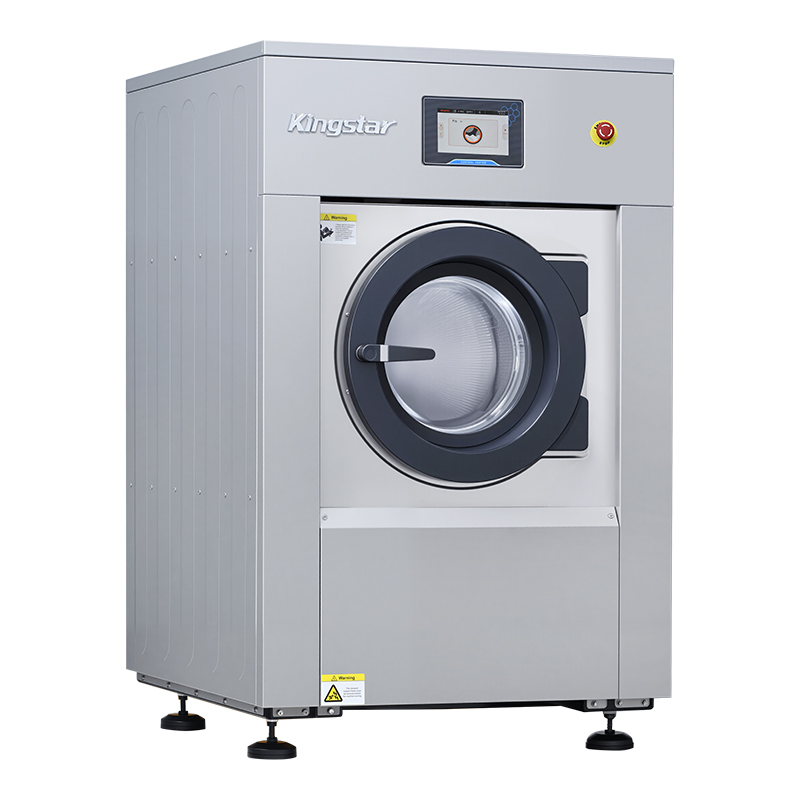
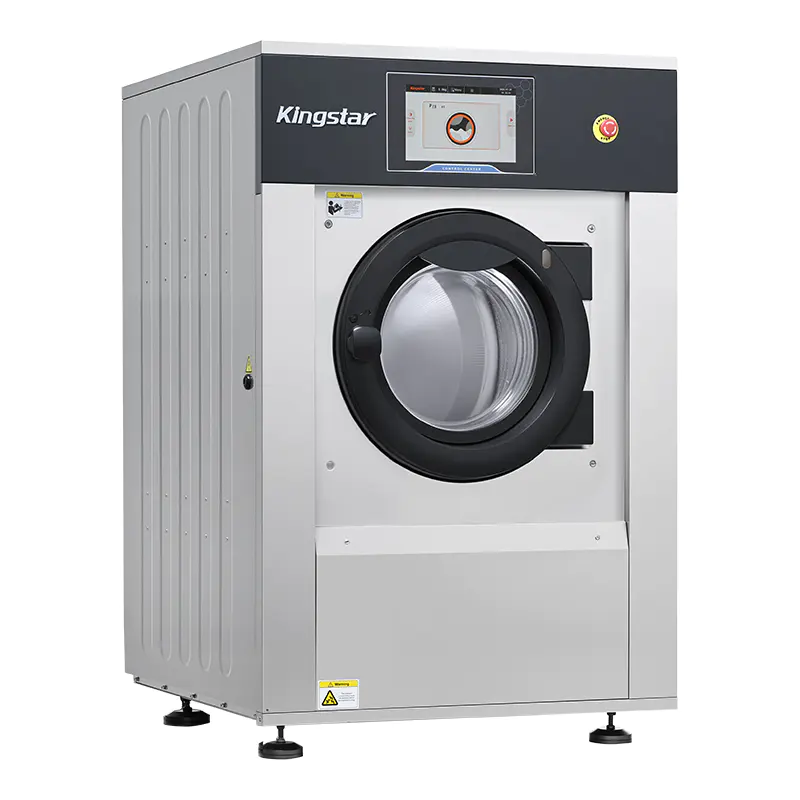
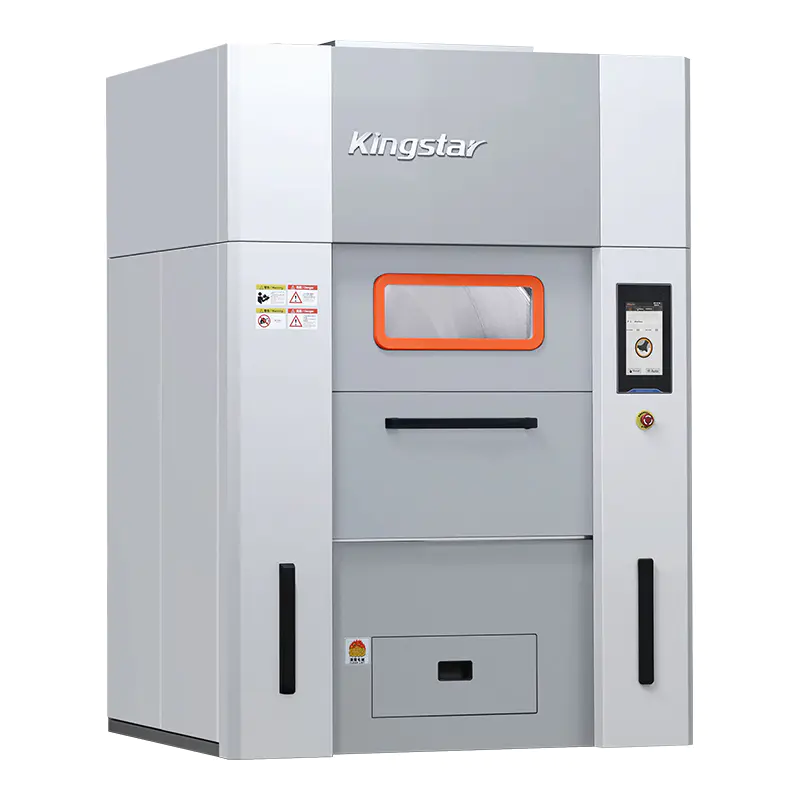
Full bleaching can also be done with the Kingstar wet cleaning machine SHS-2025P’s corresponding bleaching program preset. Thanks to the machine’s precise temperature control, the bleaching results can be better. Once the bleaching is complete, the Kingstar wet cleaning machine automatically does neutralization and rinsing cycles. Also, operators don’t need to touch the bleach solution, so the process is safer. During soaking, people set the water temperature to 30℃, set the drum speed to 15 rpm, and set the rotation-pause ratio to 3s/20s. In addition, the timed tumbling action ensures uniform bleaching coverage.
- Important notes
All metal ornaments or accessories on the clothes should be removed before bleaching. Metal ions can catalyze the decomposition of hypochlorite and speed up fiber damage. Dechlorination is a must after bleaching because residual chlorine is the main cause of garment yellowing and fiber embrittlement over time. Sodium thiosulfate or a dedicated neutralizing acid for dechlorination should be used before a thorough rinsing.
Oxygen Bleach
Oxygen-based bleaches work by releasing active oxygen. They are called color-safe bleaches due to their safety for colorful clothes.
Common active ingredients: hydrogen peroxide, sodium percarbonate, sodium perborate.
Laundry shops should check the clothes and remove any rust stains (some on buttons and accessories) before using oxygen bleach because rust reacts vigorously with active oxygen, and may cause fabric scorching.
Metal accessories should be removed as much as possible. If some metal accessories cannot be removed, staff can apply petroleum jelly to them or cover them with adhesive tape to prevent oxidation and discoloration.
● Common oxygen bleach
- Hydrogen peroxide
It is a strong oxidizing agent. Commercially available types are generally divided into two categories: medical-grade (with a concentration ≤ 3%) and industrial-grade (with a concentration ranging from 35% to 50%). The latter is classified as a high-risk chemical and requires strict management. Hydrogen peroxide is most stable at a pH of 3.5 to 4.5. In an alkaline environment, its bleaching power is greatly improved.
Note:
Long-time soaking may cause embrittlement of protein fibers such as silk and wool. For little smoke stains or yellowish discoloration on cotton clothes, people can try using hydrogen peroxide combined with a small amount of sodium bicarbonate to treat the affected areas.
- Sodium Percarbonate
It is a compound of hydrogen peroxide and sodium carbonate. It is suitable for all common fibers. In hot water (>40℃), it rapidly releases active oxygen so as to bleach clothes, remove stains, and sterilize clothes. Its decomposition product can soften water quality and improve stain removal efficiency. Also, it can well remove tea stains, fruit juice stains, and other pigment-based stains.
- Sodium Perborate
This bleach requires hot water at a temperature of 60℃ or over 60℃. The oxygen-releasing process is mild and easily controllable. It was once widely used for bleaching high-grade cotton fabrics as well as silk and wool fibers. However, due to its borate, it has potential risks to the soil environment. Currently, it has been restricted in regions such as the European Union. In daily household applications, it has been gradually replaced by sodium percarbonate.
● Precautions
All in all, the second one is safer and more eco-friendly. However, there are still some precautions.
- Read the label
Staff should always check the care label before bleaching to confirm whether chlorine bleach or oxygen bleach is permitted.
- Concentration
Staff should dilute the product strictly according to the instructions. Never arbitrarily increase the concentration because this may cause irreversible damage to the clothes.
Conclusion
For laundry shops, correctly distinguishing the characteristics and application scopes of chlorine bleach and oxygen bleach can effectively resolve issues such as yellowing of white clothes and stubborn stains. It also protects fibers and colors as much as possible. Without sufficient practical experience, it is recommended to use oxygen bleach, which is safer. Otherwise, irreversible damage may affect the laundry shop’s reputation.
ADD:No.388 Xinggang Road, Chongchuan District, Nantong City, 226000, Jiangsu Province, China.
-
Phone: +86-13917089379
-
Tel:+86-13917089379
-
Fax:+86-0513-85663366
-
E-mail:louislu@kingstarlaundry.com