英语
 俄语
 西班牙语
 德语

Commercial Laundromat Guide: Equipment, Layout, Uptime and Payback
A 200-square-metre self-service store with 20 washers, 14 dryers and one attendant looks simple on paper: cycles per hour multiplied by price per cycle. In practice, three numbers decide whether a commercial laundromat covers its rent, and they are kilograms processed in the peak hour, cost per kilogram dried, and uptime. Seating, signage and loyalty apps are decoration until those three numbers are healthy.
This guide works backwards from that money: what commercial equipment does differently, how to size the washer and dryer mix, how much floor space each layout really costs, and which installation tolerances produce most first-year callbacks.
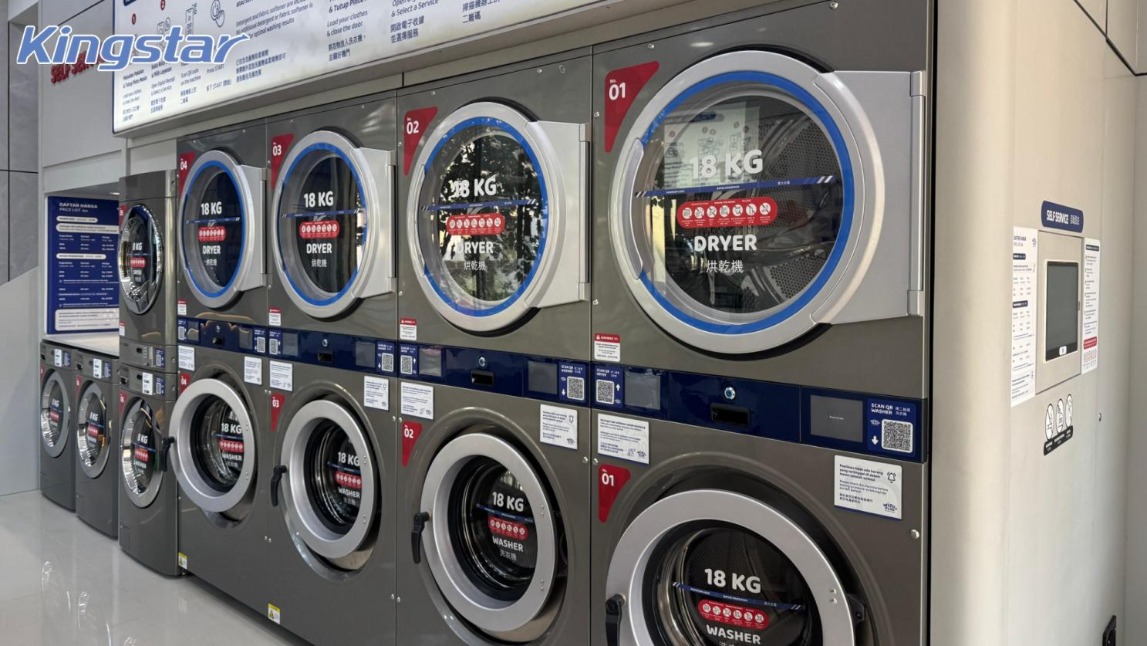
What "Commercial" Changes on a Laundromat Floor
A household washer is built for a few cycles a week. A machine in a busy laundromat can complete 20 to 60 cycles a day, so bearings, door locks, suspension and control boards work in a completely different regime. Comparing quotations on price alone hides that difference.
| Item | Household appliance | Commercial laundromat machine |
|---|---|---|
| Daily cycles per unit | 3 to 8 | 20 to 60 |
| Drum capacity | 7 to 10 kg | 12 to 25 kg, or two stacked pockets |
| Mounting | Floor-standing | Hard-mount on a concrete slab, or soft-mount on spring and damper suspension |
| Extraction | Standard spin | High-speed extraction that shortens drying time |
| Payment | Manual start | Coin, token or card reader, often with remote reporting |
| Service access | Appliance repair network | Front and rear panels, replaceable bearings and seals |
Two rows carry most of the operating cost. Soft-mount suspension absorbs vibration inside the machine, so it does not need a poured concrete plinth, which lowers construction cost and makes the floor easier to rearrange later. Extraction speed moves cost from the dryer, where heat is expensive, back to the washer, where it is cheap.
Sizing the Washer Mix Around Peak-Hour Demand
Peak hours pay the bills, and most self-service stores take 30 to 40 percent of daily turnover in two or three hours. A floor sized for the daily average will queue on Sunday evening.
- Peak-hour customers: 40.
- Average load: 8 kg, roughly one family basket.
- Peak-hour demand: 40 x 8 = 320 kg of linen.
- Machines needed: 320 divided by the hourly capacity of the pocket size you plan to install.
Cycles per hour come from the programme. A 15 kg washer-extractor running a 20-minute wash, a 3-minute drain and a 5-minute distribution and spin completes about three cycles an hour, which is roughly 45 kg of linen. The chart below applies the same arithmetic across the pocket sizes normally used in laundromats.
A workable mix is skewed rather than uniform: about half the pockets at 15 to 20 kg for everyday baskets, a quarter at 25 kg for duvets and family loads, and the rest at 12 kg for single customers who want a fast, inexpensive cycle. A floor of one size either wastes capacity on small loads or forces large loads through two machines.
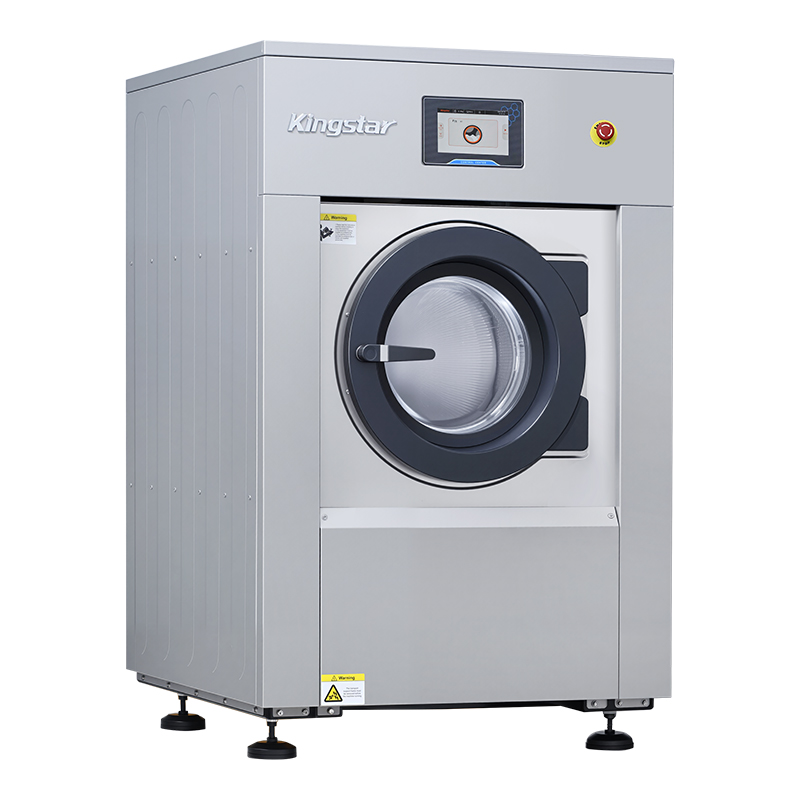
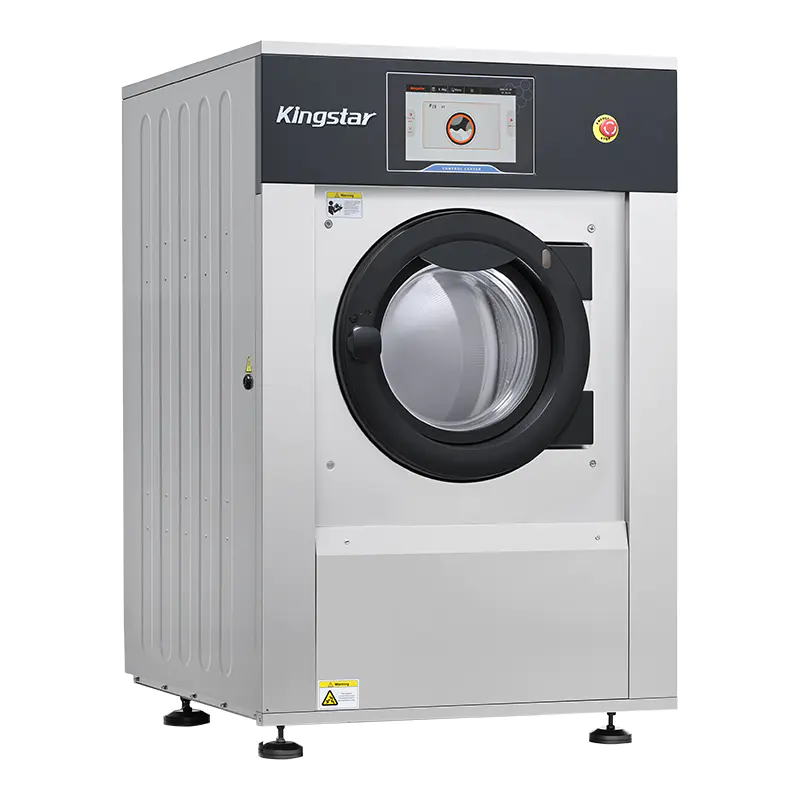
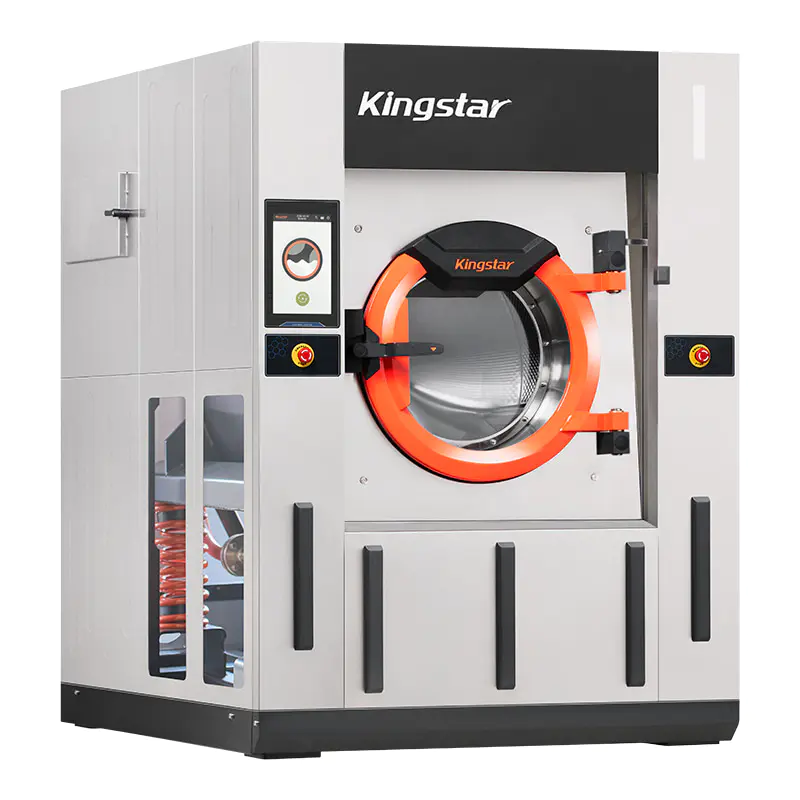
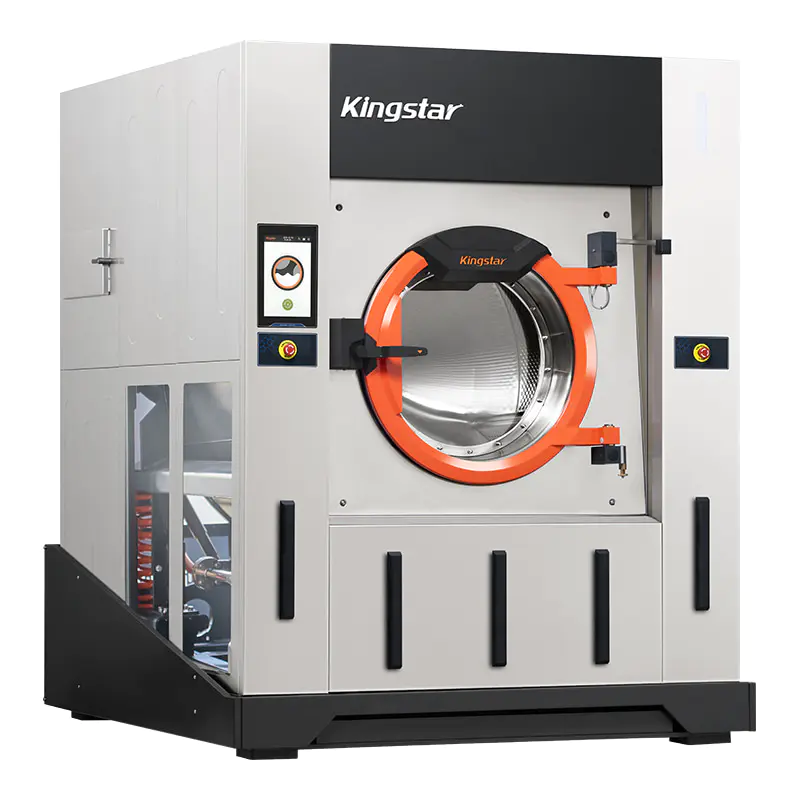
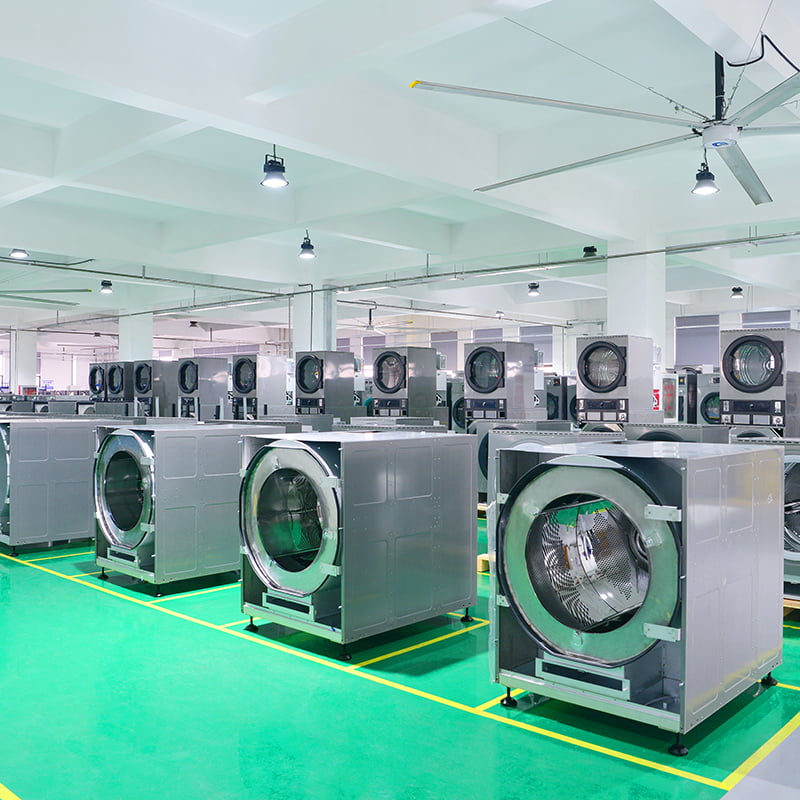 Commercial Coin-Operated Soft-Mount Washers, 12–25 kgCovers the 12–25 kg range with soft-mount suspension for self-service unbalanced loads and electric or steam heating to match building utilities.View Product →
Coin-operated soft-mount washers in the 12 to 25 kg range cover that spread: the suspension handles the unbalanced loads typical of self-service use, and electric or steam heating can be matched to the utility supply already in the building.
Drying Is the Cost Centre That Surprises New Operators
Drying uses more energy per kilogram than washing and frustrates customers when it drags. Drum volume, airflow and heat source decide the outcome.
Drum volume is the quiet specification. Dryers tumble best when drum volume sits at about 20 litres per kilogram of dry linen, a ratio near 1:20. A 25 kg dryer therefore needs roughly 500 litres of drum volume to run a full load without linen balling up at the front. Undersized drums mean longer cycles, higher gas consumption and more wrinkles.
Airflow is the second lever. A dryer that cannot pull enough make-up air runs hot without drying efficiently, and a lint screen cleaned twice a week instead of twice a day quietly adds minutes to every cycle. Plan the exhaust route before signing a lease. On heat source, gas normally gives the lowest cost per kilogram where a mains supply exists, while electric and steam models suit buildings without gas or with spare boiler capacity.
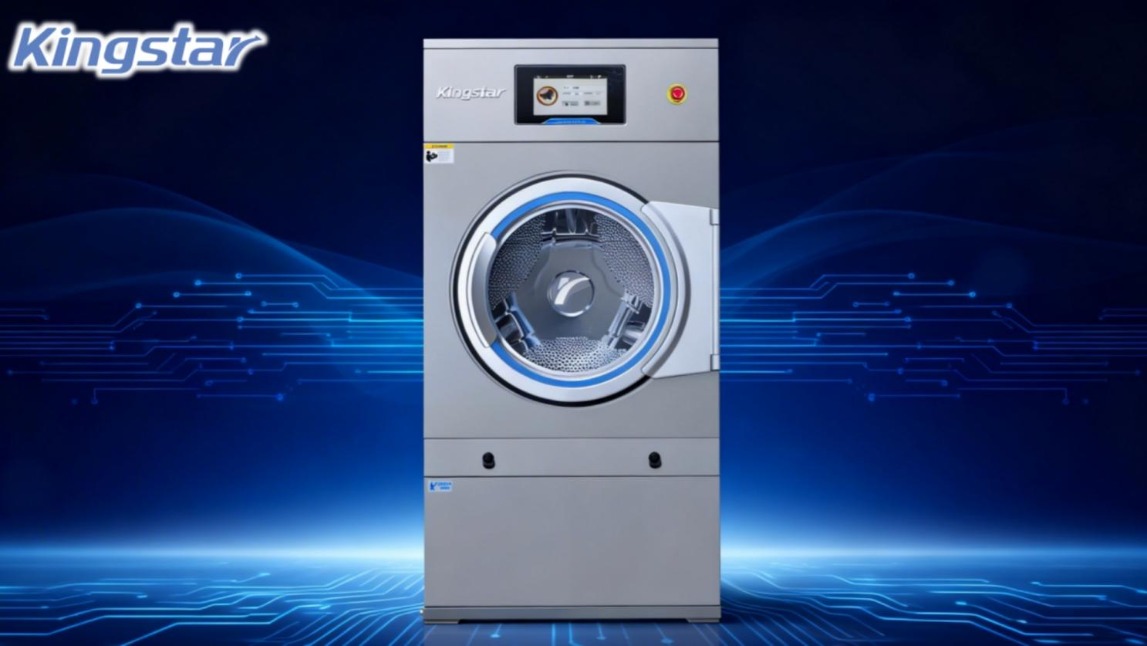
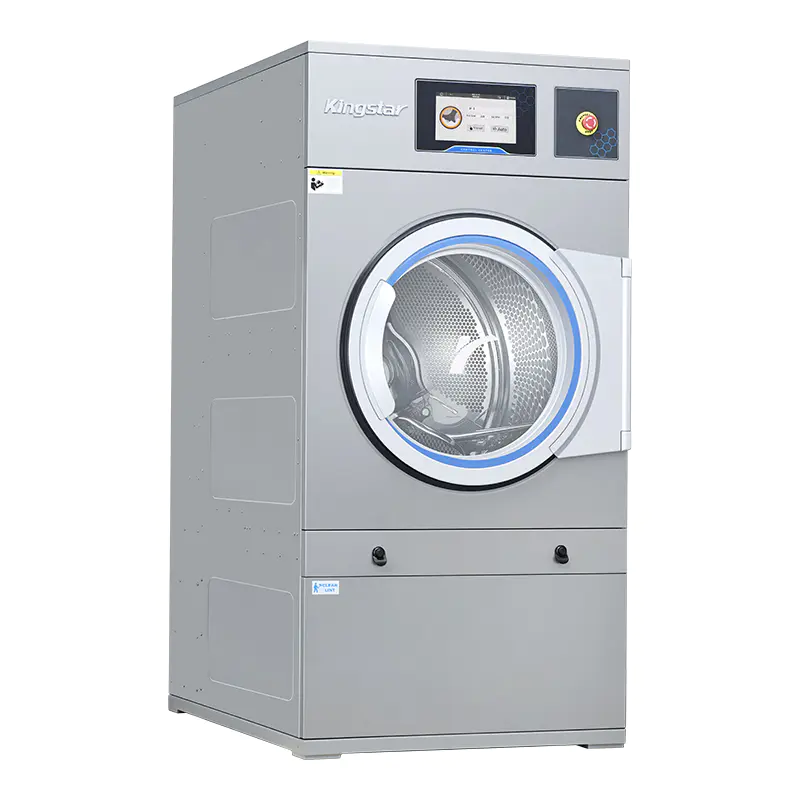
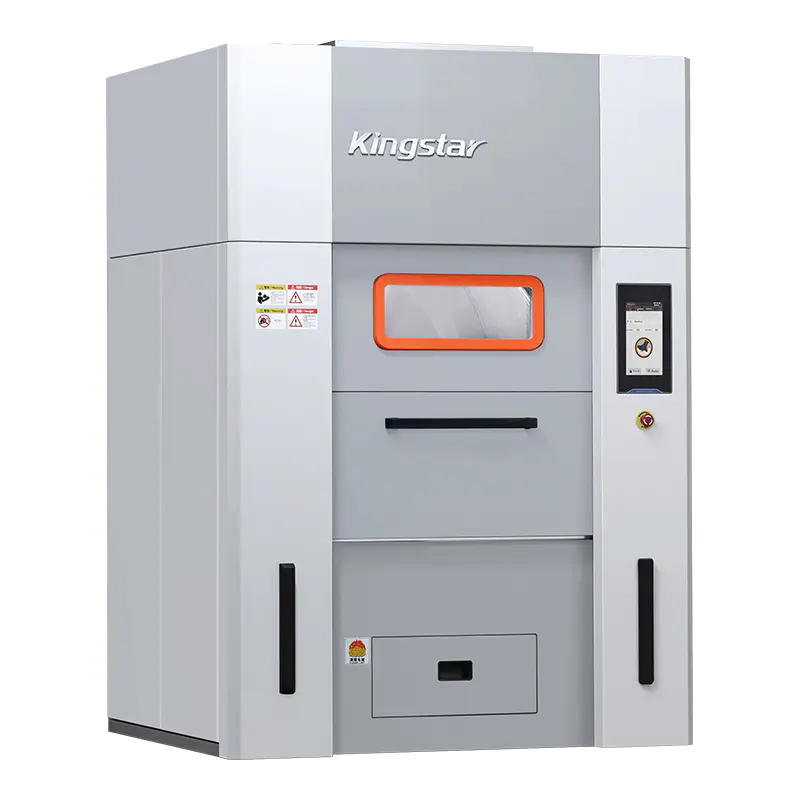
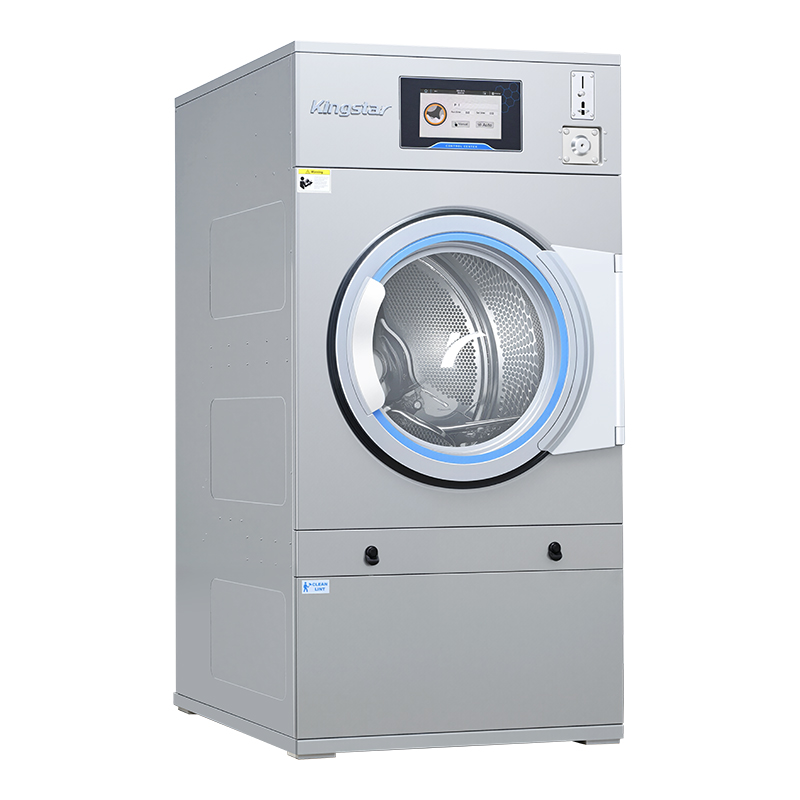 Coin-Operated Single Tumble Dryers, 15–25 kgSuits a weight-based dryer bank with electric or gas heating, coin control, and sizes that can match the washer mix.View Product →
Drying also takes longer than washing, so plan the dryer bank by weight rather than by machine count. Coin-operated single tumble dryers in 12, 15, 20 and 25 kg sizes let you match that bank to the washer mix and keep part of it free for short top-up cycles during the rush.
Layout and the Stacked Decision
Floor space is the second-largest cost after equipment, so measure in square metres per washing position rather than counting machines.
Stacking is not only about area. A stacked pair shares one water connection, one drain and one electrical feed, which trims plumbing and shortens installation. The trade-offs are real: the upper pocket is harder for older customers to load, and the pair cannot be split if one half fails, so keep a few single-pocket machines on the floor as backup capacity.
A Quick Selection Path
- Is the floor suspended or above ground level?
- Yes: choose soft-mount machines, which absorb vibration internally.
- No: hard-mount units on a concrete slab are usually cheaper per kilogram.
- Is space the binding constraint?
- Yes: stacked washer-dryer pairs, one service connection per position.
- No: side-by-side machines for easier loading and simpler service.
- Is the typical load bedding and family baskets?
- Yes: weight the mix towards 20 to 25 kg pockets.
- No: a majority of 12 to 15 kg pockets keeps cycle times and prices attractive.
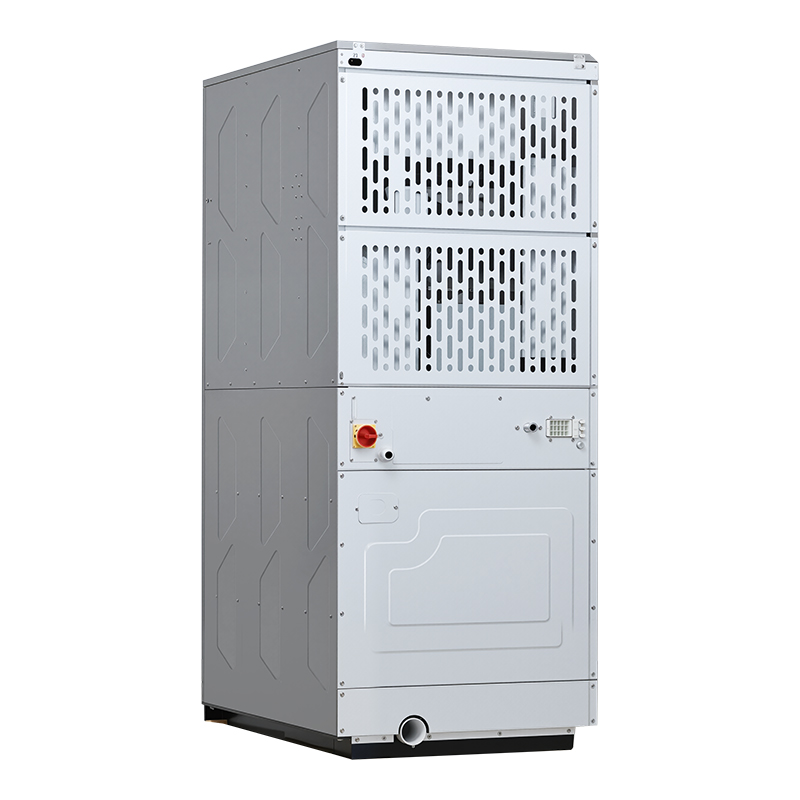 Coin-Operated Stacked Washer-Dryer, Hardmount 15/20 kgCombines washing and drying in one footprint with shared utilities and one payment point, useful where floor space is limited.View Product →
Coin-operated stacked washer-dryers are the usual answer where rent is high: two functions in one footprint, one payment point and one set of utilities.
Installation Tolerances That Cause Callbacks
Most first-year service calls are site conditions rather than failed components.
- Water: confirm pressure and flow at the busiest hour, not on an empty afternoon, and check hardness so softening can be planned.
- Drain: a washer-extractor empties a full drum in seconds, so the drain must handle a sudden high flow rate rather than a steady trickle.
- Level base: soft-mount machines still need a level floor, because a slope of a few millimetres across a bay shows up as walking machines and door alarms.
- Ventilation: dryers need make-up air and a short, smooth exhaust run, since every extra elbow adds running cost.
- Clearances: leave room for the door swing, the unloading arc and future bearing service.
Sourcing quality shows up years later, when a bearing or door seal has to be replaced and the spare must actually fit. Kingstar's manufacturing background covers a 130,000-square-metre plant, 700 employees, exports to 70 countries and ISO 9001-based production with digital order and production tracking, which is the kind of detail that decides how quickly a store gets back to earning.
What Decides Payback
Four levers decide how quickly the investment returns, and they matter roughly in this order:
- Uptime. A machine out of service earns nothing while still consuming rent, so reducing a three-day repair to one day is often worth more than a purchase discount.
- Cost per kilogram dried. Extraction speed, drum-to-load ratio and airflow influence this more than the sticker price does.
- Mix accuracy. Small pockets maximise revenue per cycle hour; large pockets serve bulky items that small machines cannot handle at all.
- Price per cycle. The price must cover energy, water, chemicals, card fees, labour and maintenance before it touches the equipment loan.
A useful test before ordering: take your busiest hour, count the customers queuing, and check how much linen the proposed floor can process in that hour. If capacity sits below demand, the cheapest quotation becomes the most expensive project.
A Short Procurement Checklist
- Ask for extraction performance in numbers rather than adjectives.
- Confirm drum volume per kilogram for every dryer.
- Check spare parts availability and typical lead time in writing.
- Verify that the heating options offered match your utility supply.
- Request installation drawings and utility requirements before delivery.
- Ask for references from stores of a similar size and climate.
For a wider view of how washers, dryers and payment systems are combined for different site types, the laundry equipment solutions overview is a practical starting point.
FAQ: Commercial Laundromat Planning
How many washers does a commercial laundromat need?
Work from peak-hour demand rather than floor area. Divide the kilograms you expect in the busiest hour by the hourly capacity of the pocket size you plan to install, then add 15 to 20 percent spare capacity for breakdowns and seasonal peaks.
Can soft-mount machines be installed on an upper floor?
Yes, in most cases. Soft-mount washer-extractors absorb vibration internally and are commonly installed on suspended floors, provided the base is level and the structure can carry both static and dynamic loads. A structural check is still required; the absence of a concrete plinth does not mean the floor can be ignored.
What is the right washer-to-dryer ratio?
Plan drying capacity by weight and cycle time, not by machine count. Because a drying cycle usually runs longer than a wash cycle, many laundromats install slightly more dryer capacity than washer capacity, and use stacked dryers when floor space is tight.
How long do laundromat machines last?
Service life depends on cycles per day, water quality and preventive maintenance. Machines in a busy store run many times the cycles of household appliances, so bearings, seals and door locks are best treated as serviceable parts with a planned replacement interval rather than as permanent components.
ADD:No.388 Xinggang Road, Chongchuan District, Nantong City, 226000, Jiangsu Province, China.
-
Phone: +86-13917089379
-
Tel:+86-13917089379
-
Fax:+86-0513-85663366
-
E-mail:louislu@kingstarlaundry.com