英语
英语 俄语
俄语 西班牙语
西班牙语 德语
德语
Home / News / Industry News / How to Choose a Laundromat Washing Machine: Capacity, Cost, and Payback

Kingstar is your trusted partner for industrial and commercial laundry equipment. We specialized in the R&D and manufacturing of high-end industrial washers, commercial washers and dryers. Meanwhile, we provide global clients with comprehensive planning, layout workflow design, and software-hardware integration services for smart laundry plants.
Industry News
Sep 24,2026
How to Choose a Laundromat Washing Machine: Capacity, Cost, and Payback
Behind every profitable laundromat is a set of washers that never gives customers a reason to leave. A laundromat washing machine runs a dozen to thirty cycles each day, lifting, spinning and extracting wet clothes inside a predictable window. When a machine breaks down, queued customers do not wait patiently; they walk to the nearest competitor. That is why laundromat operators choose washers with a different logic from household buyers.
This guide treats the laundromat washing machine as a revenue asset. It covers capacity and cycle time, soft-mount versus hard-mount installation, stacked washer-dryers, payment systems, water and energy consumption, and lifetime cost. Each section gives the recommendation first, then the reasoning and the numbers behind it.
Match the Drum Capacity to Your Customer's Loads
Capacity comes first because it sets the revenue ceiling of the room. A 20 kg washer processes roughly twice the dry weight of a 10 kg residential-style machine in a similar footprint, so two machines can handle a morning queue that would otherwise require four.
Self-service laundromats typically use 12 kg, 15 kg, 20 kg and 25 kg drums. A single adult produces about 7-10 kg of laundry per week; a family of four produces 15-20 kg. Stores beside residential communities therefore fill their 20 kg and 25 kg machines first, while stores near student housing find the 12 kg and 15 kg sizes work best. Buy too many small machines and the peak-hour queue grows; buy too many large ones and half-empty cycles waste water, heating and floor space.
| Capacity | Realistic load | Cycle time | Best location |
|---|---|---|---|
| 12 kg | 8-10 kg dry | 28-35 min | Student areas, urban singles |
| 15 kg | 10-13 kg dry | 30-38 min | Mixed residential |
| 20 kg | 15-18 kg dry | 35-42 min | Suburban family areas |
| 25 kg | 20-23 kg dry | 40-48 min | High-density residential cores |
With the right mix, waiting time turns into revenue. A configuration of two 12 kg, four 20 kg and two 25 kg machines processes roughly 20-24 loads per peak hour, enough for a catchment of 300-500 households without chronic queues.
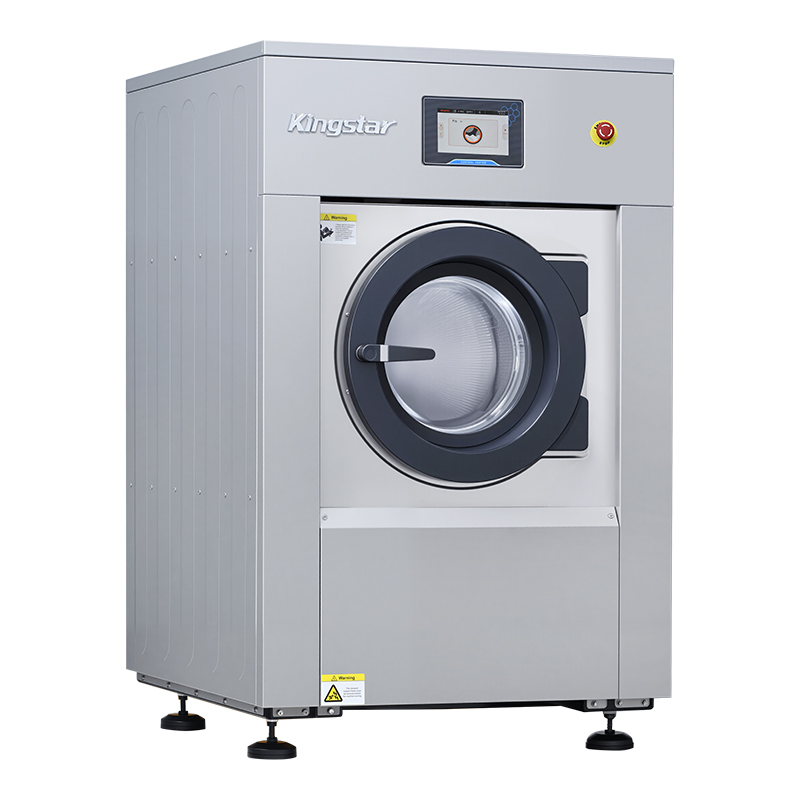
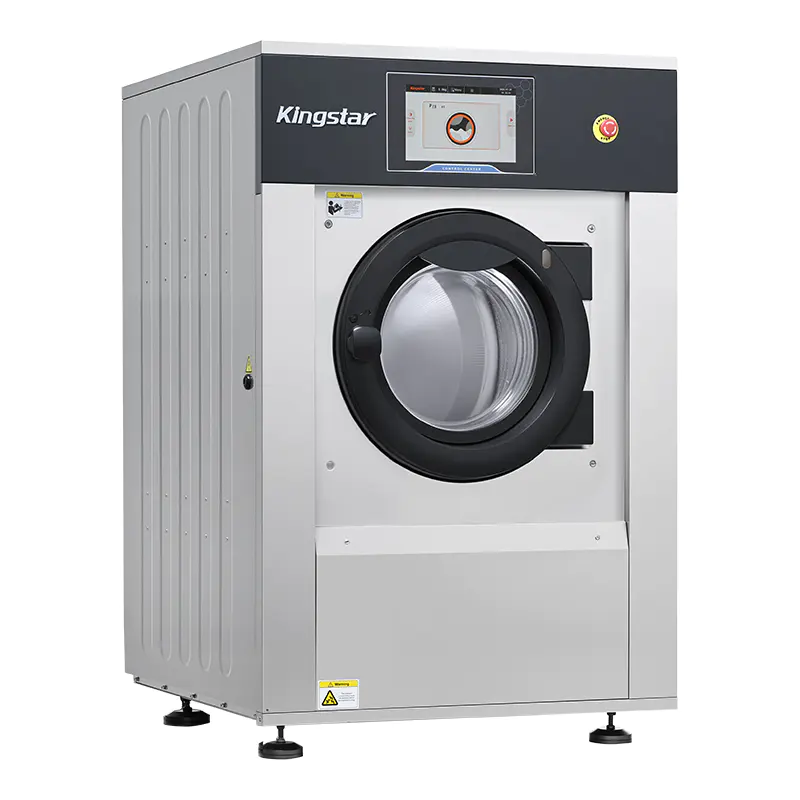
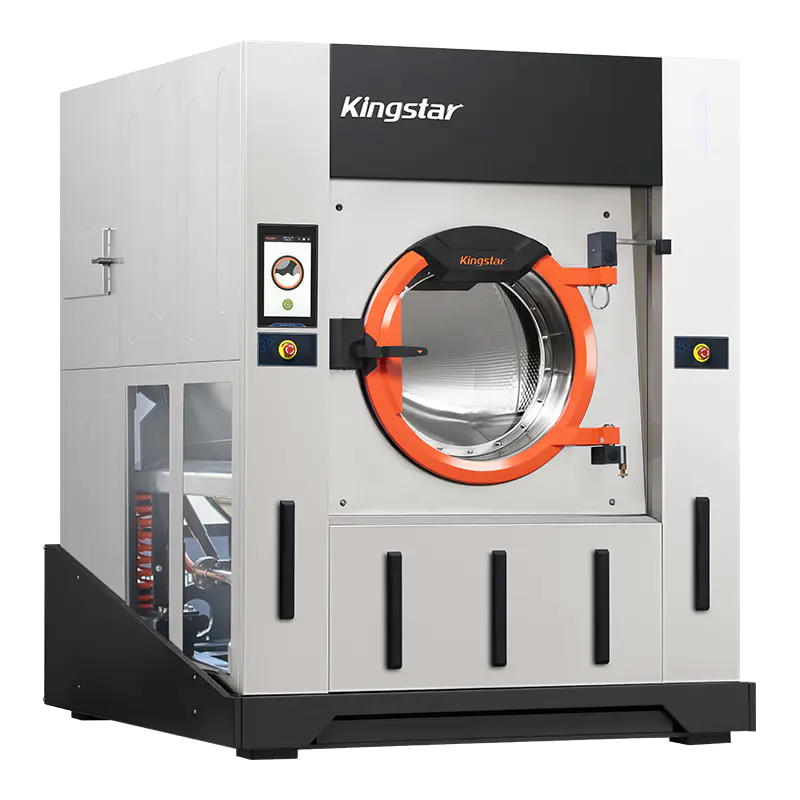
The coin-operated models in this weight range come with soft-mount suspension, front-loading doors and a choice of electric or steam heating, so the same platform can serve a new store, an equipment swap, or an expansion of an existing room.
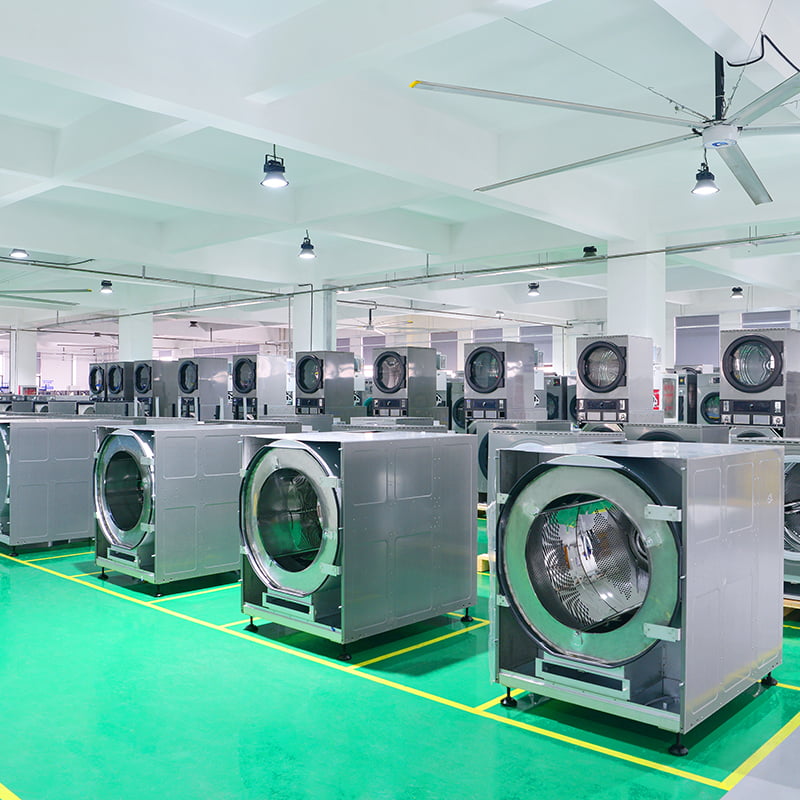 Coin-Operated Softmount Washer for LaundromatsIdeal for upper-floor or mezzanine installations, this soft-mount washer absorbs oscillation during extraction, eliminating the need for a concrete foundation. Choose from 12 to 25 kg capacities in a coin-operated design.View Product →
Soft-Mount Construction Protects the Building and the Cycle
Choose soft-mount for any laundromat on a normal retail floor. The suspension system absorbs the oscillation of the high-speed extraction phase, so the machine does not need a heavy concrete foundation and can be installed on upper floors, mezzanines or timber-frame buildings.
Hard-mount washers are bolted rigidly to the floor and demand a reinforced concrete base; they suit ground-floor plants and on-premise laundry rooms with solid slabs. In a public laundromat next to a café or below apartments, soft-mount machines keep vibration complaints low and installation simple.
Extraction speed is the second part of the story. A commercial laundromat washer typically spins at 800-1,000 rpm in the final cycle, and a higher dehydration factor means the load enters the dryer already drier. That shortens drying time, and drying time is where the electricity bill is made. The upfront price of soft-mount is slightly higher, but the savings on foundation work and vibration isolation usually cover the difference.
Stacked Washer-Dryers Double the Value of Tight Floor Space
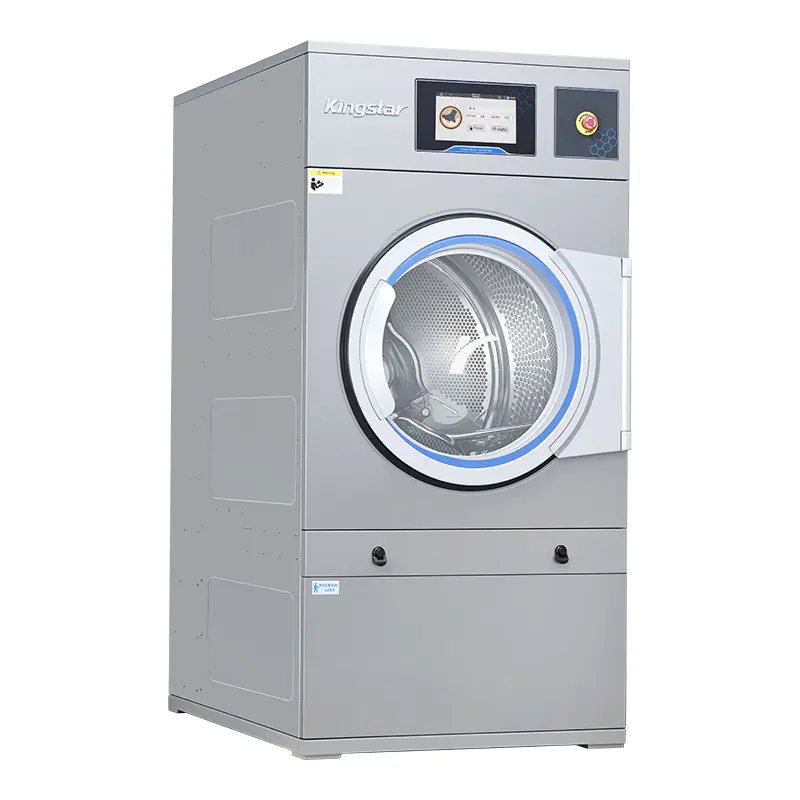
Stacked washer-dryers are the answer to high rent and narrow rooms. A stacked unit places the washer on the bottom and the dryer on top, doubling the function per square metre while keeping the front-loading access that customers already know.
Stacked units suit single users and small loads best. In a common configuration, the lower washer is 12 kg to 20 kg and the upper dryer has a similar drum volume. When the wash cycle finishes, the customer transfers the load directly into the dryer and keeps moving, which shortens the queue. Two stacked units fit into the footprint of one side-by-side pair, and one control system manages both drums, simplifying revenue tracking.
Operators in dense urban markets use this layout heavily because it fits small shopfronts and the washing habits of small households. The 12 kg to 20 kg stacked range also works in mixed stores where single-user machines sit next to large front-loaders.
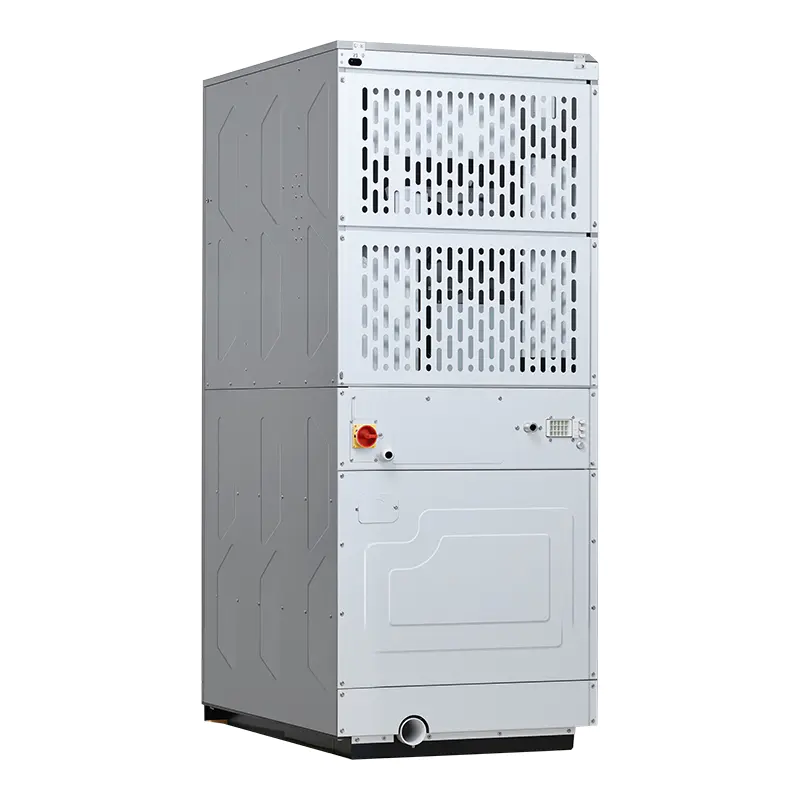 Stacked Coin-Operated Washer Dryer with SoftmountSave up to half your floor space with this compact stacked unit, offering reliable coin or alternative payment options. Its soft-mount suspension works on standard floors, making it a strong choice for urban laundromats.View Product →
Payment Systems Decide Who Can Use the Machine
The payment system is part of the machine's control electronics, not an add-on. Coin operation remains the standard because it needs no infrastructure, but card readers and mobile payment are appearing in locations where customers rarely carry coins. Decide by customer base first: student laundromats still feed on coins; business-district stores need card or app payment.
The control board matters more than the coin slide. A good control board allows flexible pricing, preset wash programs, diagnostic codes and the option to add card payment later, so the store is not locked into coins when the neighbourhood changes.
Hardware also matters in a vending environment: stainless steel fronts resist abrasion from detergent, payment vaults need tamper protection, and door interlocks must survive hundreds of openings per day. A stacked unit with a single control system gives the owner one machine that takes coins now and can be upgraded to card control later without replacing the whole cabinet.
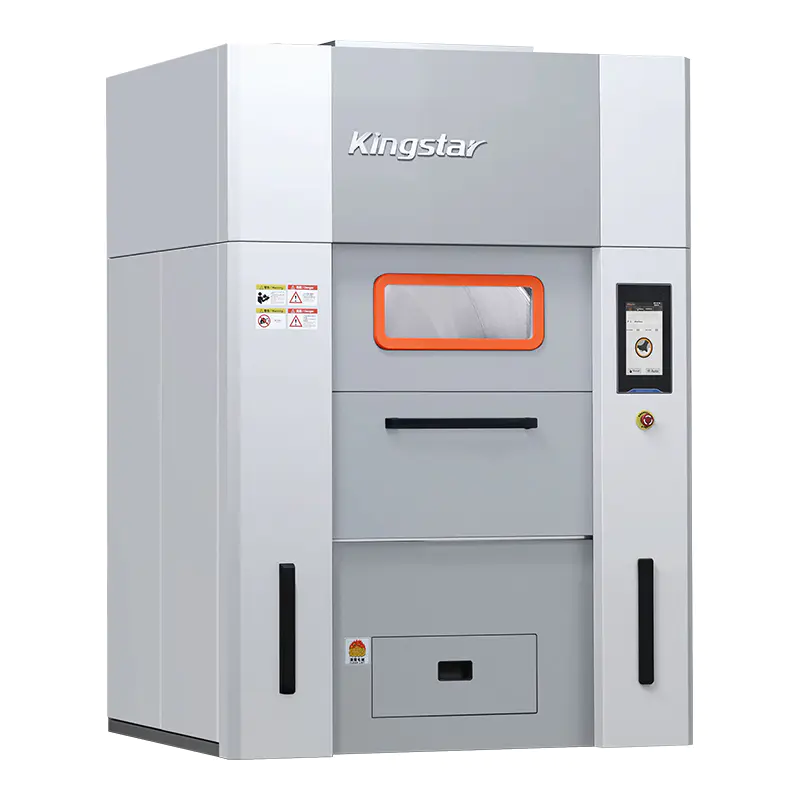
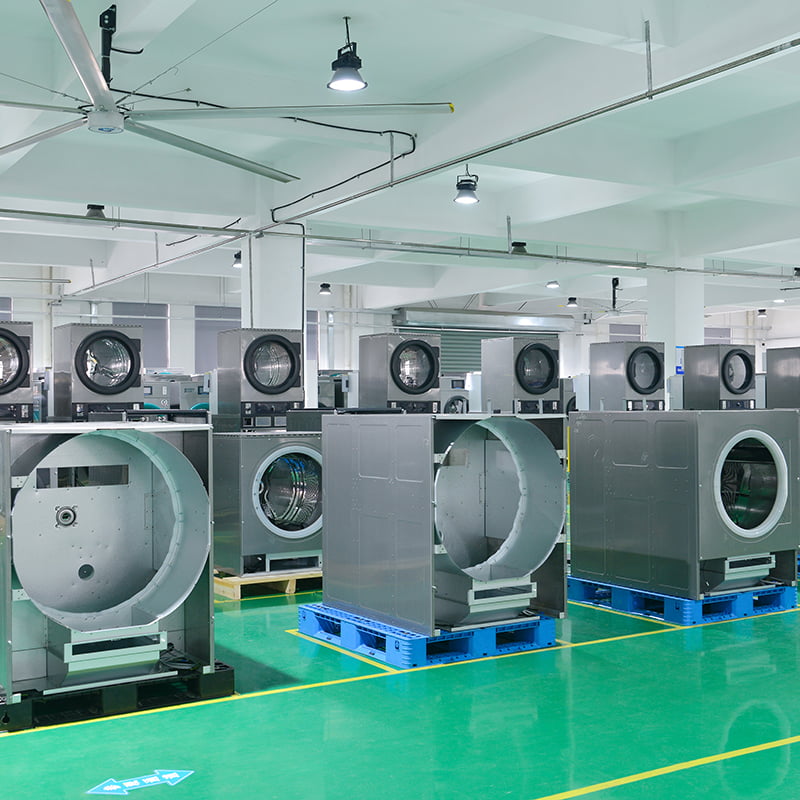 Coin-Operated Stacked Tumble Dryer for Small SpacesThis stacked dryer minimizes floor usage while offering an intelligent touchscreen control and efficient lint filtering. A practical upgrade path for vended laundry settings, letting owners start with coins and adapt later.View Product →
Water, Heating and the Real Cost per Cycle
The two largest variable costs in a laundromat are water and the energy to heat it. Operators compare purchase prices and miss the calculation that decides profitability: the cost per cycle over five years.
A typical laundromat soft-mount washer has a water ratio between 10 and 12 litres per kilogram of rated capacity. A 20 kg machine therefore uses roughly 200-240 litres per cycle. At fifteen cycles a day, that is 3,000-3,600 litres daily, or about 1.1-1.3 million litres per year for a single washer. Where water costs 3-4 USD per thousand litres, the annual water bill reaches 3,000-5,000 USD, and the energy cost for hot water can double that.
Electric and steam heating are the two main options. Steam is generally more efficient when the building already has a boiler, and it shortens heat-up time. Electric heating costs more per useful unit of heat in most markets but removes boiler installation and maintenance. Ask the manufacturer for both the water ratio and the heat-up time before ordering, and calculate the cycle cost from those two figures.
| Heat source | Installation | Running cost profile | Maintenance | Best for |
|---|---|---|---|---|
| Electric | Simple, no boiler | Higher per useful kWh in most regions | Heating elements exposed to scale | Small stores and retrofits |
| Steam | Requires boiler or steam supply | Lower when steam is already available | Boiler inspection, steam traps | Medium and large stores with central plant |
Build Quality, Spare Parts and Service Response
The machine that fails is the machine you remember; the purchase price fades in the first week. Look for evidence of build quality: stainless steel front and drum, solid door hinges and interlocks, and suspension components rated for thousands of high-speed cycles. The manufacturer's track record matters just as much — how long it has built commercial laundry equipment, which quality systems it follows, and whether spare parts are stocked for the model you are ordering.
A manufacturer with its own factory and certified quality systems can replace a motor or a valve without long delays. The company behind the Kingstar brand has produced commercial laundry equipment for over 25 years, employs 700 people and operates a 130,000-square-metre facility, giving its service network a solid base. When comparing quotes, compare the supplier's support structure, not only the price list.
A full equipment-selection framework is covered in the companion guide on choosing laundry equipment for laundromats, but the core rule stays the same: the machine must fit the customer load pattern, the building and the payment method.
A reliable starting configuration for a 60-80 square metre store looks like this: two 12 kg machines, four 20 kg machines, two 25 kg machines, four dryers and at least one stacked washer-dryer for single users. Track usage for the first six months and tune the mix — one extra 20 kg unit in the right location often beats adding a second heat source or a new vestibule.
Buying a laundromat washing machine is a five-year decision: capacity first, soft-mount second, payment method third, operating cost fourth, service support fifth. A machine that looks cheap on the invoice but drinks extra water and keeps a technician busy every month costs more than the premium unit it replaced. Before finalizing the layout, review the manufacturer's solution-based configuration guide that matches machine sizes to room geometry, plumbing and electrical capacity; then buy for the lifetime, not for the first invoice.
ADD:No.388 Xinggang Road, Chongchuan District, Nantong City, 226000, Jiangsu Province, China.
-
Phone: +86-13917089379
-
Tel:+86-13917089379
-
Fax:+86-0513-85663366
-
E-mail:louislu@kingstarlaundry.com
products