英语
英语 俄语
俄语 西班牙语
西班牙语 德语
德语
Home / News / Industry News / Laundry Machinery Buying Guide: Key Types, Specs, and Cost Factors to Consider

Kingstar is your trusted partner for industrial and commercial laundry equipment. We specialized in the R&D and manufacturing of high-end industrial washers, commercial washers and dryers. Meanwhile, we provide global clients with comprehensive planning, layout workflow design, and software-hardware integration services for smart laundry plants.
Industry News
Oct 01,2026
Laundry Machinery Buying Guide: Key Types, Specs, and Cost Factors to Consider
Choose the wrong laundry machinery and the problem shows up within the first month: wash cycles stretch past peak hours, dryer gas consumption climbs, and the maintenance crew starts hoarding spare motors. Choose correctly, and the same machines can run for more than a decade with predictable operating costs. That is why this buying decision comes down to workload math, not brand preference. You match three variables to your operation: machine category, load capacity, and extraction performance.
What Laundry Machinery Actually Covers
Commercial laundry machinery is not a single category. It spans several machine classes, each built for a different stage of the linen cycle. The core pieces are washer-extractors, tumble dryers, and stacked washer-dryers; large plants may also add barrier washers for contamination control and finishing equipment such as ironers and folders.
Washer-Extractors
A washer-extractor washes and mechanically extracts water in one unit. The extraction stage pulls a large share of the moisture out of the load before drying, and this directly controls how much heat the dryer must consume. Machines with a high dehydration factor, typically expressed as G-force in the range of 300 to 600, leave linen at lower residual moisture and shorten drying cycles.
Tumble Dryers
Tumble dryers finish what extraction started. Commercial dryers are rated by drum volume relative to the load, because that ratio determines whether heated air actually moves through the fabric or simply flows around it. A dryer with insufficient drum volume dries unevenly and wastes gas; one that is oversized for the operation raises standby losses.
Stacked Washer-Dryers
Stacked washer-dryers pair a washer with a dryer in one vertical frame, cutting the floor footprint roughly in half. These units fit laundromats, schools, and any location where usable floor area is expensive.
The Specifications That Matter More Than Brand Reputation
Whatever the machine class, a few specifications separate a production tool from a costly asset. Capacity is only the starting point; you should also compare dehydration performance, drum volume, material quality, and control flexibility.
Dehydration performance deserves special attention because it connects machine output directly to energy cost. A washer-extractor with a dehydration factor near 400 leaves a cotton load at about 45 to 50 percent residual moisture. A machine operating closer to 250 G-force leaves the same load at 55 to 60 percent. On a daily throughput of one ton of linen, that gap sends hundreds of kilograms of extra water through the dryers every day.
| Specification | Why it matters | What to look for |
|---|---|---|
| Load capacity | Sets cycles per day | Matches daily demand in 8 to 10 cycles |
| Dehydration factor (G-force) | Controls drying energy | 300+ for commercial; 400+ for hotels |
| Drum volume (dryers) | Affects drying uniformity | Matched to the rated load |
| Construction materials | Resists chemical attack | Stainless steel drum and shell |
| Control flexibility | Avoids energy waste | Store cycles for each fabric type |
Pay special attention to the dehydration factor. The difference between 45 and 55 percent residual moisture looks small on a spec sheet, but it decides whether your dryers run two hours or three hours every day.
Matching Laundry Machinery to the Operation Type
Different operations put different demands on the same equipment. Hotels weigh throughput and fabric care; laundromats weigh space, durability, and unattended operation; schools weigh safety, noise, and simple controls. The correct machine answers the constraints of the building and the workload.
Hotels and Hospitality
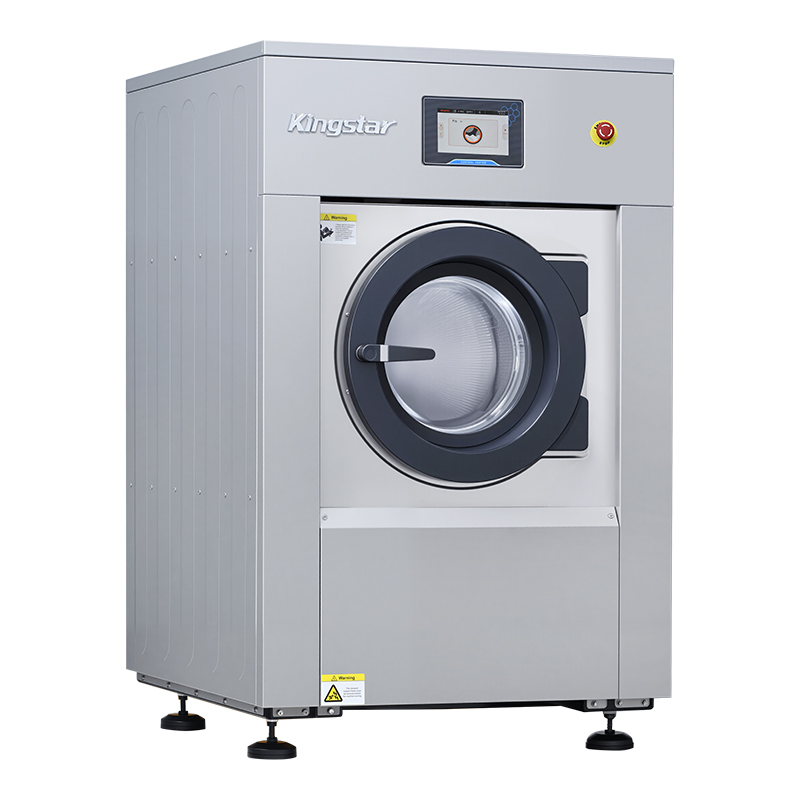
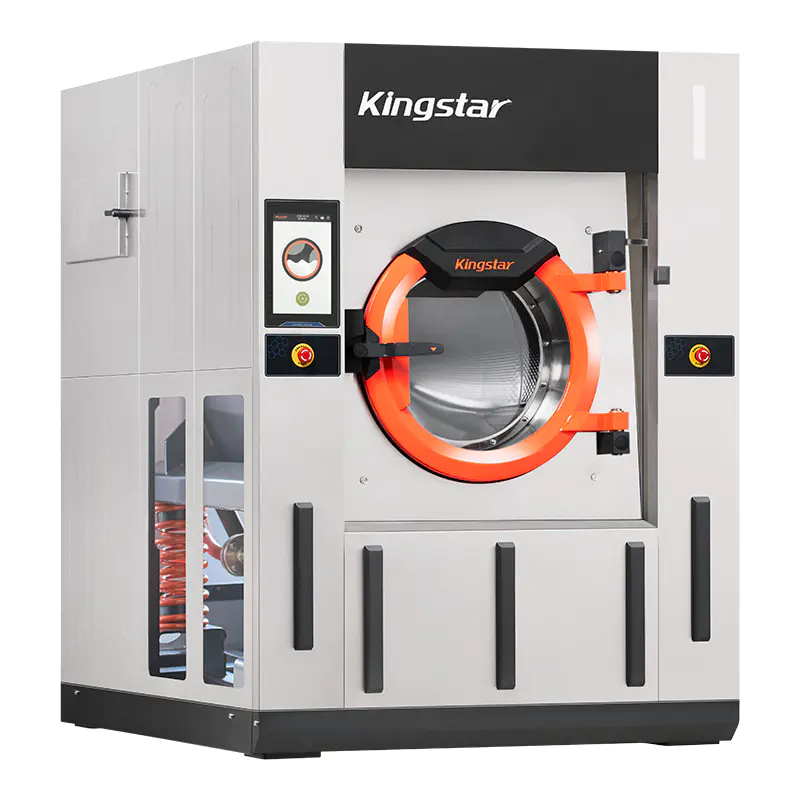
A hotel laundry floor runs on throughput. A 300-room property can easily generate 800 to 1,200 kilograms of linen per day, and that volume must pass through the wash floor between checkout and arrival. Large front-load washer-extractors with a soft-mount design keep vibration away from guest areas, while a high dehydration factor shortens drying time for towels and sheets. Barrier washers, with separate loading and unloading doors, handle strict hygiene protocols where clean and soiled linen must never come into contact.
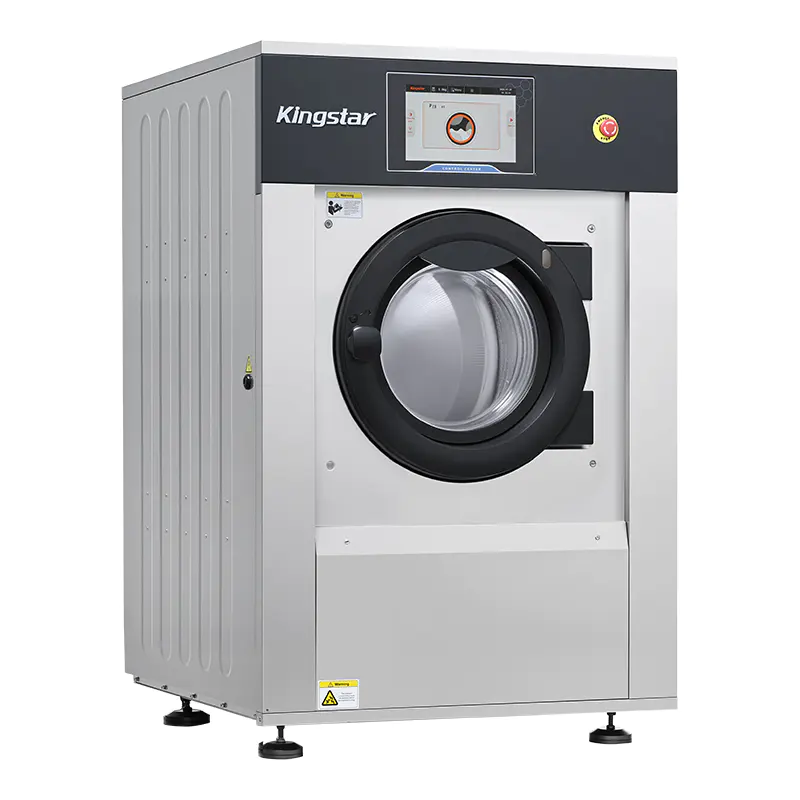
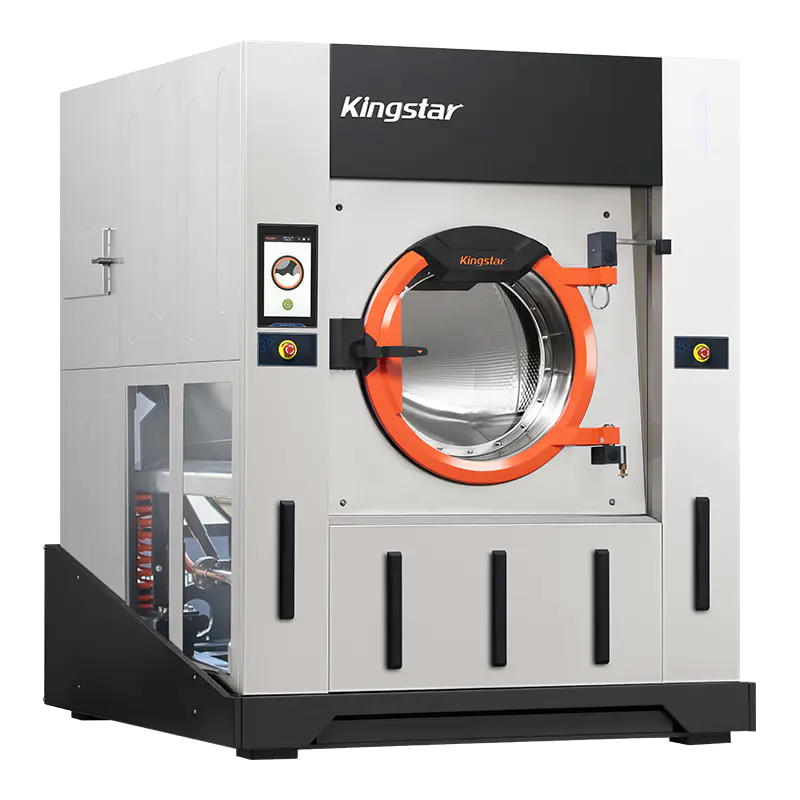
 Smart High-Speed Washer-Extractor with Touchscreen and Vibration ReductionFor high-volume hotel and hospital laundries, this washer-extractor offers large capacities, a 12.1-inch touchscreen, and soft-mount design to keep vibration from guest areas while boosting drying efficiency.View Product →
Laundromats and Self-Service Laundries
Self-service laundries face a different puzzle: many small loads, coin or mobile payment, and minimal staff presence. Coin-operated stacked washer-dryers answer all three constraints. Their compact footprint fits more machines into the same rental area, and each unit runs independently, so one fault does not stop the store.
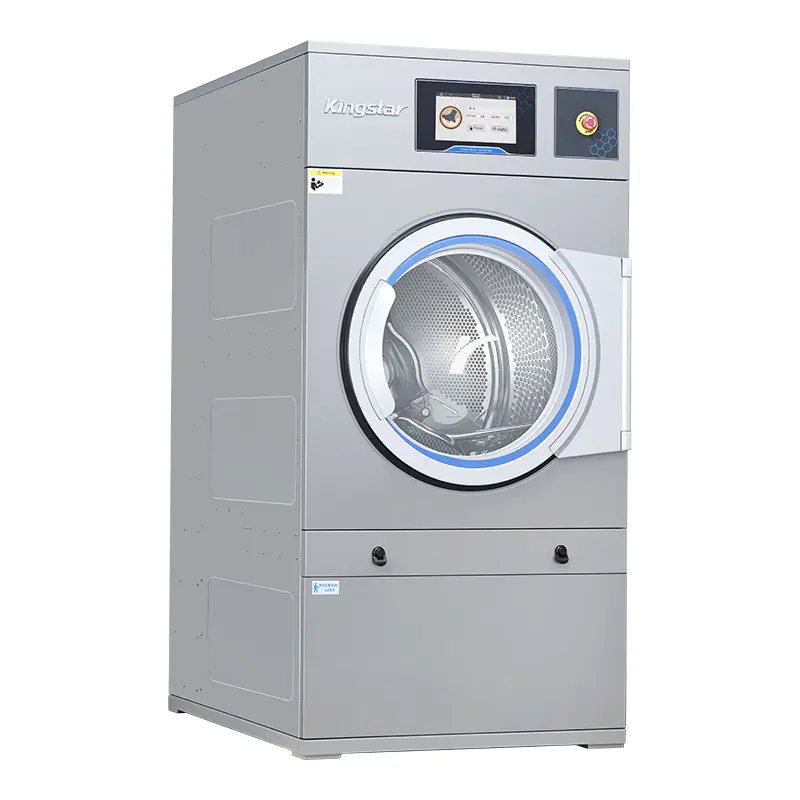
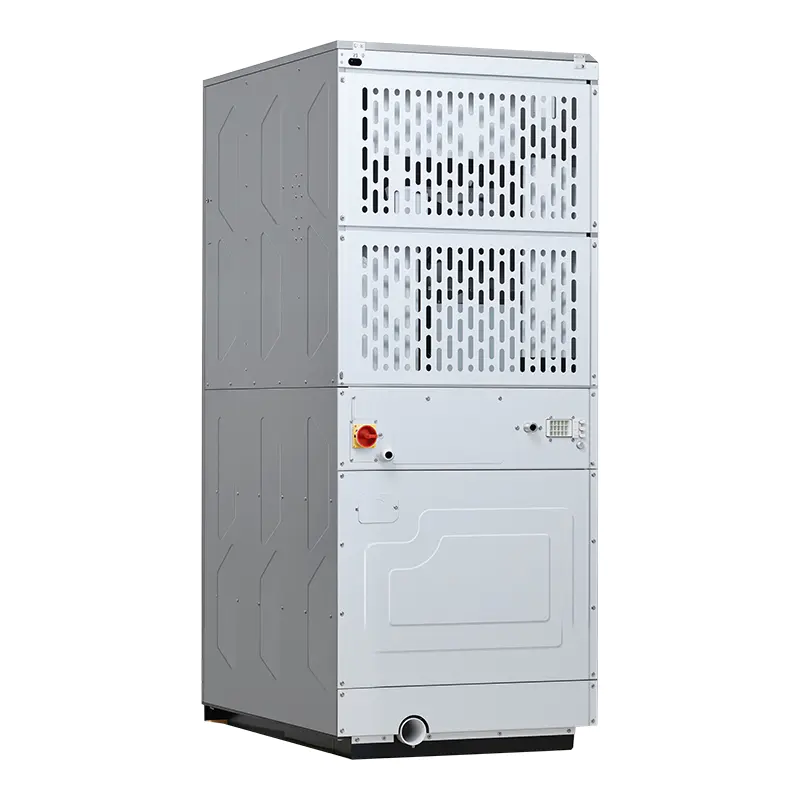 Coin-Operated Stacked Washer-Dryer for Self-Service LaundriesCombining a washer and dryer in one compact unit, this soft-mount machine suits self-service laundries with minimal staff, offering multiple payment options and independent operation to maximize floor space.View Product →
Schools and Campuses
Schools operate on a different rhythm. Demand concentrates in dormitory and sports seasons, and users are students, not trained staff. Soft-mount washers in the 18 to 25 kilogram range keep noise and vibration low enough for buildings that are occupied around the clock, while stacked dryers add capacity without consuming extra floor space. Safety features such as door locks, overload protection, and temperature limits reduce risk with untrained users.
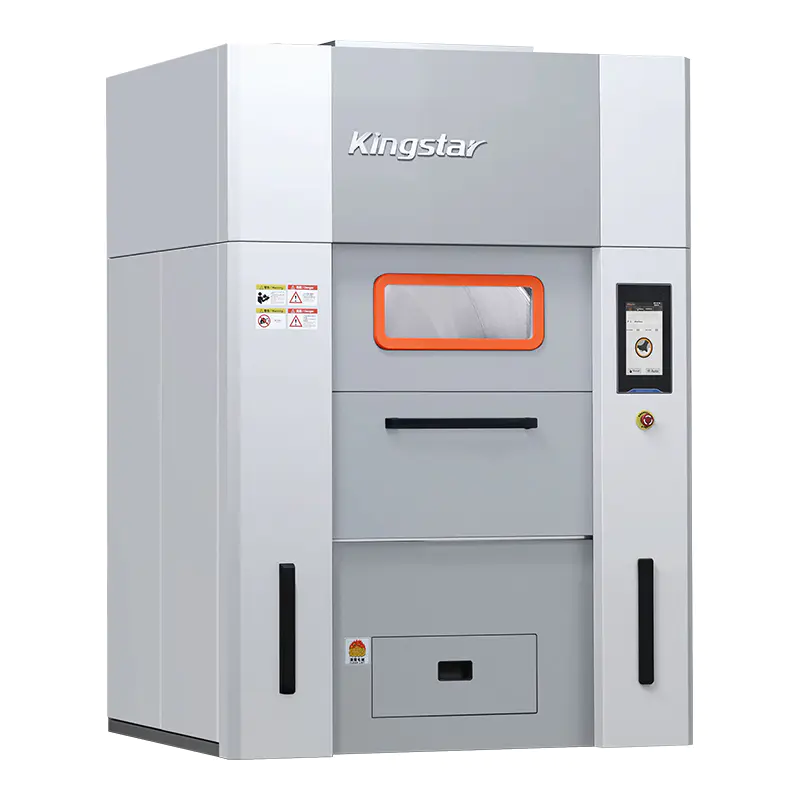
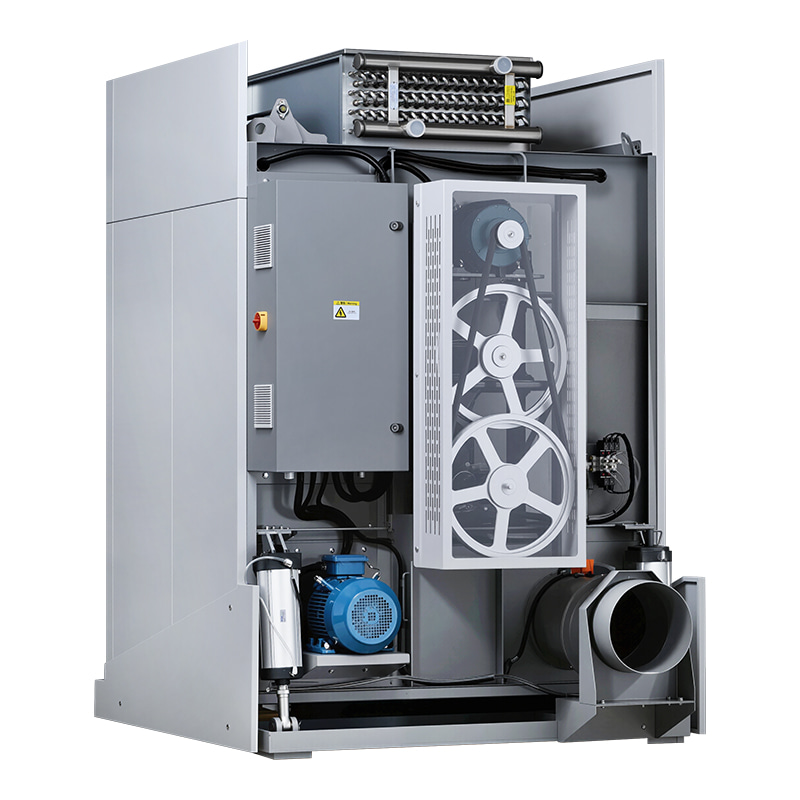 100kg Industrial Forward Tilting Dryer with Touchscreen ControlBuilt for continuous central plant operations, this high-capacity dryer features a 10-inch touchscreen, humidity control, and front tilt discharge to save labor and maintain high daily productivity.View Product →
Commercial Laundry Plants
Central plants process a continuous stream of goods and depend on large-capacity machines built for long operating hours. In this setting, machine availability matters more than any single cycle feature, and the buying decision shifts toward service contracts, spare part lead times, and the manufacturer's production capacity.
The Real Cost of Laundry Machinery Is the Operating Cost
The purchase price of laundry machinery usually accounts for about a third of its five-year cost. Energy, water, labor, and maintenance make up the remainder, so buying on price alone usually ends up being the expensive route. Five factors dominate the cost of ownership:
- Water consumption: metered rinse water reduces usage and the energy needed to heat that water.
- Extraction efficiency: a higher G-force sends less moisture into the dryer, lowering gas or steam consumption with every cycle.
- Drying efficiency: correctly sized drums with good insulation avoid prolonged cycles and wasted heat.
- Maintenance access: standardized components and accessible service points keep machines online longer.
- Installation: soft-mount designs reduce floor reinforcement and simplify placement on existing structures.
A simple calculation shows why the dehydration factor dominates the payback. Say a hotel runs eight cycles of 100 kilograms per day. If the washer-extractor leaves linen at 55 percent residual moisture instead of 65 percent, each cycle sends 10 fewer kilograms of water into the dryer's heating system. Over a year, that is close to 30 tons of water that never needs to be evaporated. The machine that achieves this gap costs nowhere near the energy it saves in twelve months.
How to Evaluate a Laundry Machinery Manufacturer
Machine specifications alone are not enough; the quality of the manufacturer decides what happens three years after installation. Evaluate three things: production standards, traceability, and after-sales support.
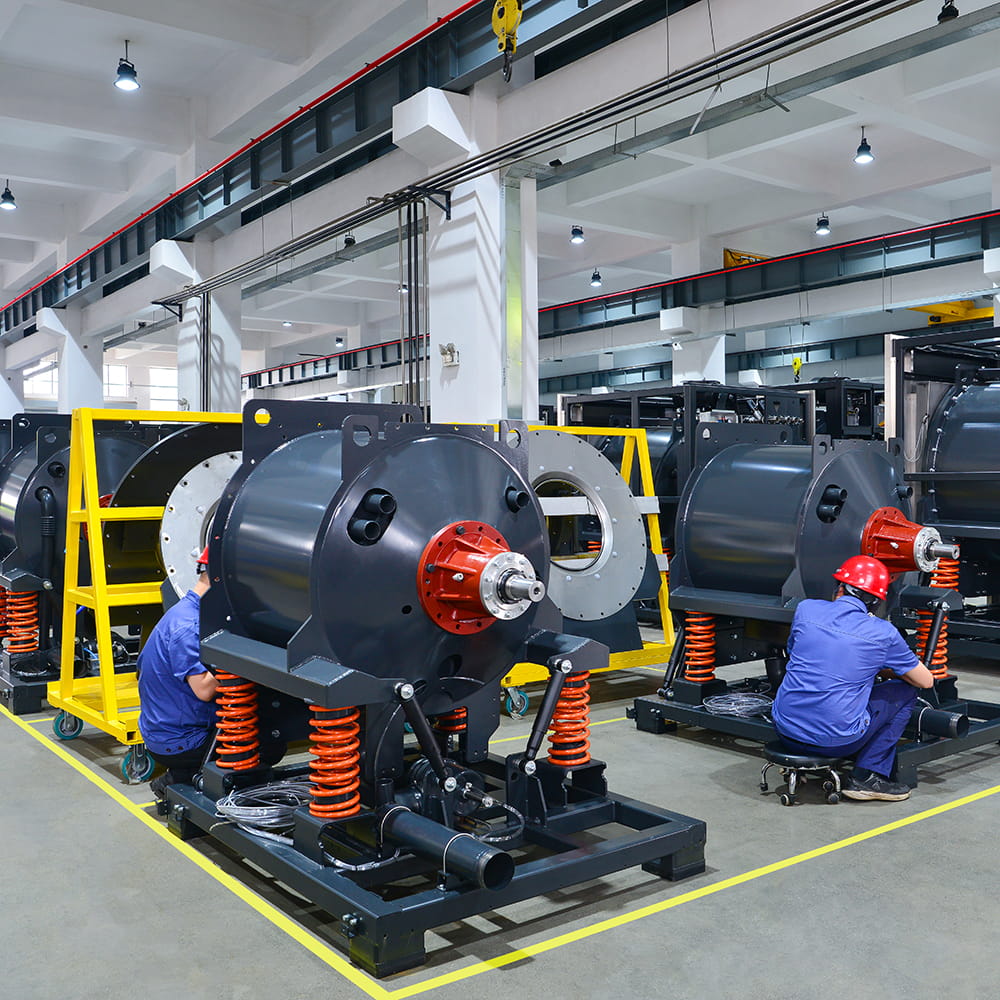
Production standards: ask whether the factory is certified under ISO9001 and whether it performs its own fabrication, machining, and assembly in-house. A manufacturer that controls welding, drum balancing, and final testing under one roof delivers more consistent machines than one that merely assembles imported parts. Concrete signals include 25 years of production history, a large factory floor, and exports to more than 70 countries; serious manufacturers publish these facts on their about page.
Traceability and management systems: manufacturers that run ERP and MES systems can track an order from contract to delivery, manage production schedules, and keep quality records for every batch. This matters when you later need documentation for audits, warranty claims, or spare part orders.
After-sales support: evaluate installation and training support before purchase, not after a breakdown. A manufacturer that publishes documented solutions for layout, water supply, and operation can anticipate problems that a parts-only supplier would only discover on site.
Buying laundry machinery is a sequence: measure the workload, choose the machine class, compare the specifications that affect operating cost, and then check the manufacturer's production and service base. Operators who follow that sequence before ordering avoid the two most common mistakes: oversized machines that idle at low efficiency and undersized machines that push the operation into overtime.
ADD:No.388 Xinggang Road, Chongchuan District, Nantong City, 226000, Jiangsu Province, China.
-
Phone: +86-13917089379
-
Tel:+86-13917089379
-
Fax:+86-0513-85663366
-
E-mail:louislu@kingstarlaundry.com
products