英语
英语 俄语
俄语 西班牙语
西班牙语 德语
德语
Home / Author / Suyin Huo — Regional Sales Executive / Coin-Operated Single Tumble Dryer: A Reliable Commercial Drying Solution for High-Volume Laundry Operations

Kingstar is your trusted partner for industrial and commercial laundry equipment. We specialized in the R&D and manufacturing of high-end industrial washers, commercial washers and dryers. Meanwhile, we provide global clients with comprehensive planning, layout workflow design, and software-hardware integration services for smart laundry plants.
Suyin Huo — Regional Sales Executive
Sep 24,2026
Coin-Operated Single Tumble Dryer: A Reliable Commercial Drying Solution for High-Volume Laundry Operations
Commercial laundry operators require equipment that can combine reliable drying performance, simple customer operation, controlled operating costs, and long service life. The coin-operated single tumble dryer available in 15 kg, 20 kg, and 25 kg capacities is designed to meet these demands in laundromats, apartment laundry rooms, hotels, hospitals, dormitories, resorts, and other professional laundry environments. It provides a practical solution for businesses that need dependable drying equipment capable of operating repeatedly throughout the day.
Developed by Jiangsu Chuandao Intelligent Equipment Co., Ltd. under the Kingstar laundry equipment business, this dryer combines intelligent controls, flexible heating options, robust construction, commercial-grade components, and a payment-control system designed for self-service operation. Its structure is intended to support efficient drying, convenient loading and unloading, and straightforward maintenance.
Unlike many basic domestic dryers adapted for commercial use, this product is engineered around the requirements of professional laundry facilities. Its drum volume, airflow system, heating capacity, motor configuration, control interface, and protective coin box are selected to support frequent cycles and continuous operation. Three capacity options allow operators to select a model according to available space, customer demand, and typical laundry load size.
The SDR-2015C provides a 15 kg capacity, the SDR-2020C provides a 20 kg capacity, and the SDR-2025C provides a 25 kg capacity. All three models use a 7-inch full-color touchscreen and support 99 preset and editable drying programs. Electric or gas heating can be selected according to the installation environment and energy strategy of the laundry business.
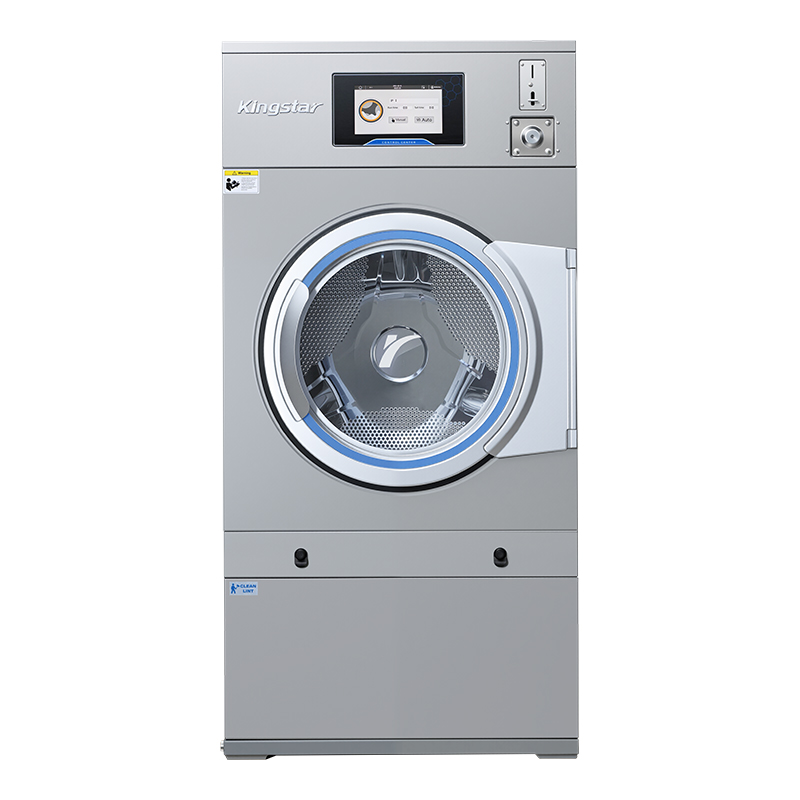
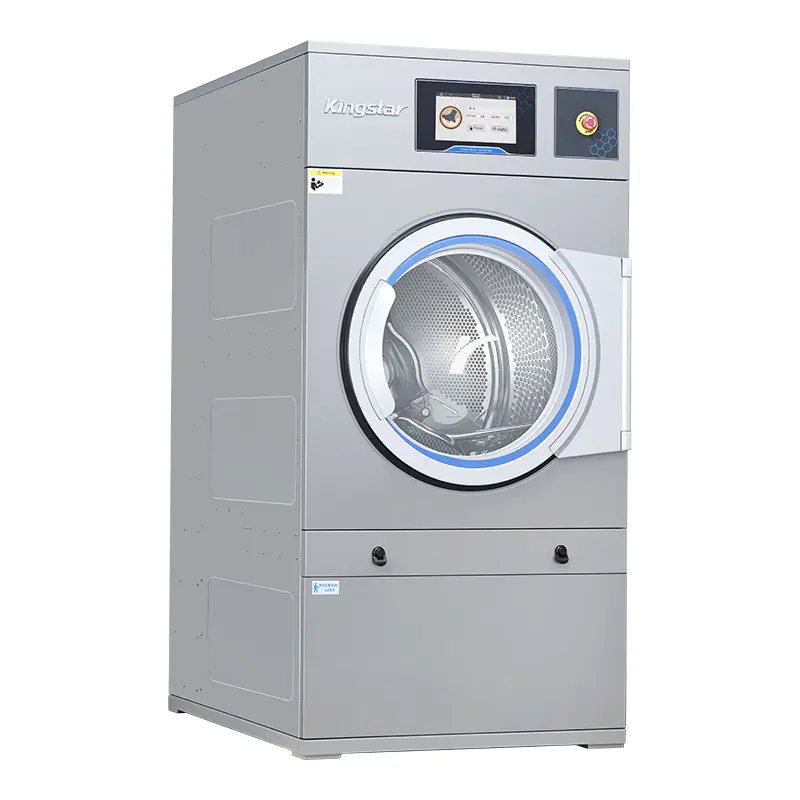
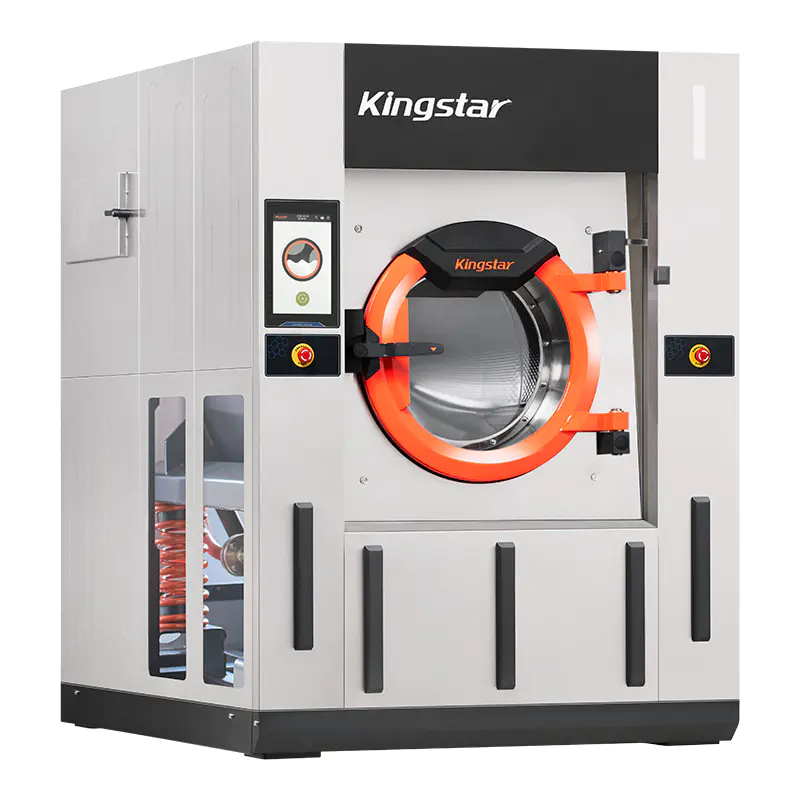
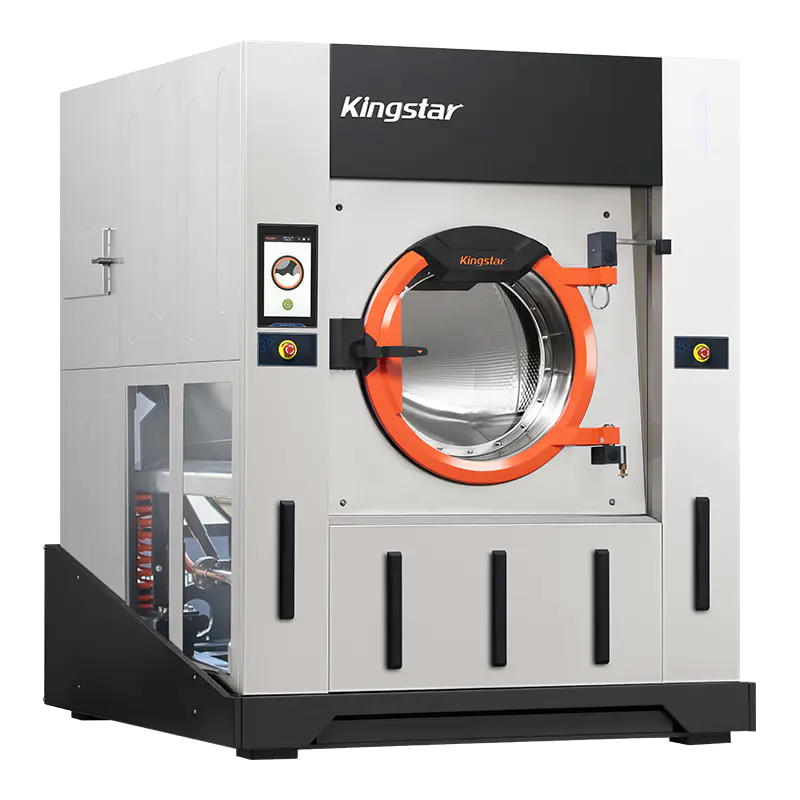
Coin-Operated Single Tumble Dryer(15/20/25kg)
Commercial Drying Requirements in Modern Laundry Facilities
Drying is one of the most important stages in a commercial laundry process. A washer can remove most of the water from textiles, but only a properly designed dryer can complete the process efficiently while protecting fabric quality. In a busy laundry facility, drying equipment must handle repeated loading, frequent door opening, changing fabric types, variable load weights, and long operating hours.
Commercial operators also need predictable cycle performance. Customers using a self-service laundromat expect their clothing to be dry when the paid cycle ends. Hotels and hospitality businesses need reliable turnaround for towels, bedding, uniforms, and other textiles. Apartment laundry rooms must provide easy-to-use equipment that does not require constant supervision. These needs make the design of the dryer especially important.
A commercial dryer must move heated air through the load at a sufficient rate, maintain stable heat, remove moisture through the exhaust system, and rotate the drum smoothly. If airflow is restricted, drying time increases and energy consumption rises. If heating is poorly controlled, textiles may be damaged or the equipment may experience unnecessary thermal stress. If the drum, motor, or bearings are undersized, the machine may suffer premature wear under continuous use.
The coin-operated single tumble dryer addresses these challenges through a combination of high-capacity drum design, dedicated exhaust airflow, selectable heating methods, intelligent controls, and commercial-grade components. Its design is particularly suitable for facilities where users operate the equipment independently and where the owner needs to monitor operating costs and machine availability.
Product Overview and Model Selection
The three models share the same general operating concept but provide different capacities and dimensions. This enables laundry businesses to choose a machine that matches their expected demand. Smaller facilities may select the 15 kg model to save floor space, while high-traffic locations may choose the 20 kg or 25 kg versions to process larger loads and reduce waiting times.
| Specification | SDR-2015C | SDR-2020C | SDR-2025C |
| Rated capacity | 15 kg | 20 kg | 25 kg |
| Drum diameter | 750 mm | 850 mm | 850 mm |
| Drum depth | 680 mm | 640 mm | 800 mm |
| Drum volume | 300 L | 360 L | 460 L |
| Exhaust diameter | 150 mm | 200 mm | 200 mm |
| Main motor power | 0.37 kW | 0.55 kW | 0.75 kW |
| Fan motor power | 0.37 kW | 0.55 kW | 0.55 kW |
| Electric heating power | 13.5 kW | 18 kW | 22.5 kW |
| Exhaust airflow | 21.3 m³/min | 36 m³/min | 36 m³/min |
| Overall width | 800 mm | 900 mm | 890 mm |
| Overall depth | 1200 mm | 1200 mm | 1420 mm |
| Overall height | 1600 mm | 1700 mm | 1805 mm |
| Approximate weight | 275 kg | 420 kg | 468 kg |
The 15 kg model is a practical choice for compact laundromats, apartment buildings, and smaller hospitality facilities. Its 300-liter drum offers useful capacity while keeping the overall footprint relatively compact. The 20 kg model provides a larger drum and higher airflow for operators who need greater throughput. The 25 kg model is intended for higher-volume applications where larger textile loads are processed regularly.
Capacity selection should be based on more than the maximum weight of a load. Operators should consider the type of textiles being dried, the moisture level after washing and extraction, the available electrical or gas supply, exhaust ducting requirements, room ventilation, and the number of machines operating simultaneously. Proper planning helps ensure that the selected dryer performs efficiently without creating bottlenecks in the laundry workflow.
Advanced Intelligent Drying Control
One of the most important features of the dryer is its 7-inch full-color HD touchscreen. The interface is designed to make program selection easier for customers and operators. Instead of relying on a limited set of mechanical controls, users can select appropriate drying parameters through a modern digital panel.
The system includes 99 built-in programs that can be preset or customized. This provides flexibility for different materials and laundry requirements. Clothing, towels, bed linen, uniforms, and other textiles may require different temperatures, drying times, or operating sequences. With editable programs, the operator can establish settings that reflect local customer demand and the fabric types most commonly processed.
A broad program library also helps reduce operator intervention. Once suitable programs have been configured, customers can select a cycle with minimal assistance. This is particularly beneficial in unattended laundromats, residential laundry rooms, student accommodation, and other self-service environments.
Digital control also contributes to consistency. A repeatable program helps ensure that similar loads receive similar treatment from one cycle to the next. Consistency is valuable in commercial environments because it supports customer satisfaction, reduces complaints related to damp laundry, and makes machine performance easier to monitor.
The control system can also support operational standardization across multiple machines. A laundry operator with several dryers can configure comparable programs on each unit. This makes training simpler and allows customers to move between machines without learning an entirely different operating method.
Program Flexibility for Different Textiles
Different fabrics release moisture at different rates and tolerate different heat levels. Lightweight clothing may dry quickly, while dense towels and heavy bedding require greater airflow and longer exposure. Delicate textiles may require lower temperatures, whereas robust cotton materials can generally tolerate more intensive drying conditions.
The 99-program structure gives operators the ability to create practical categories for their facility. Programs may be organized by fabric type, load size, desired dryness level, or customer application. The exact settings should always be established according to the textile manufacturer's care instructions and the operating conditions of the site.
This flexibility is an advantage over simpler commercial dryers that offer only a few fixed time or temperature options. A larger selection of programs allows the machine to serve a wider range of customers without requiring separate equipment for every textile category.
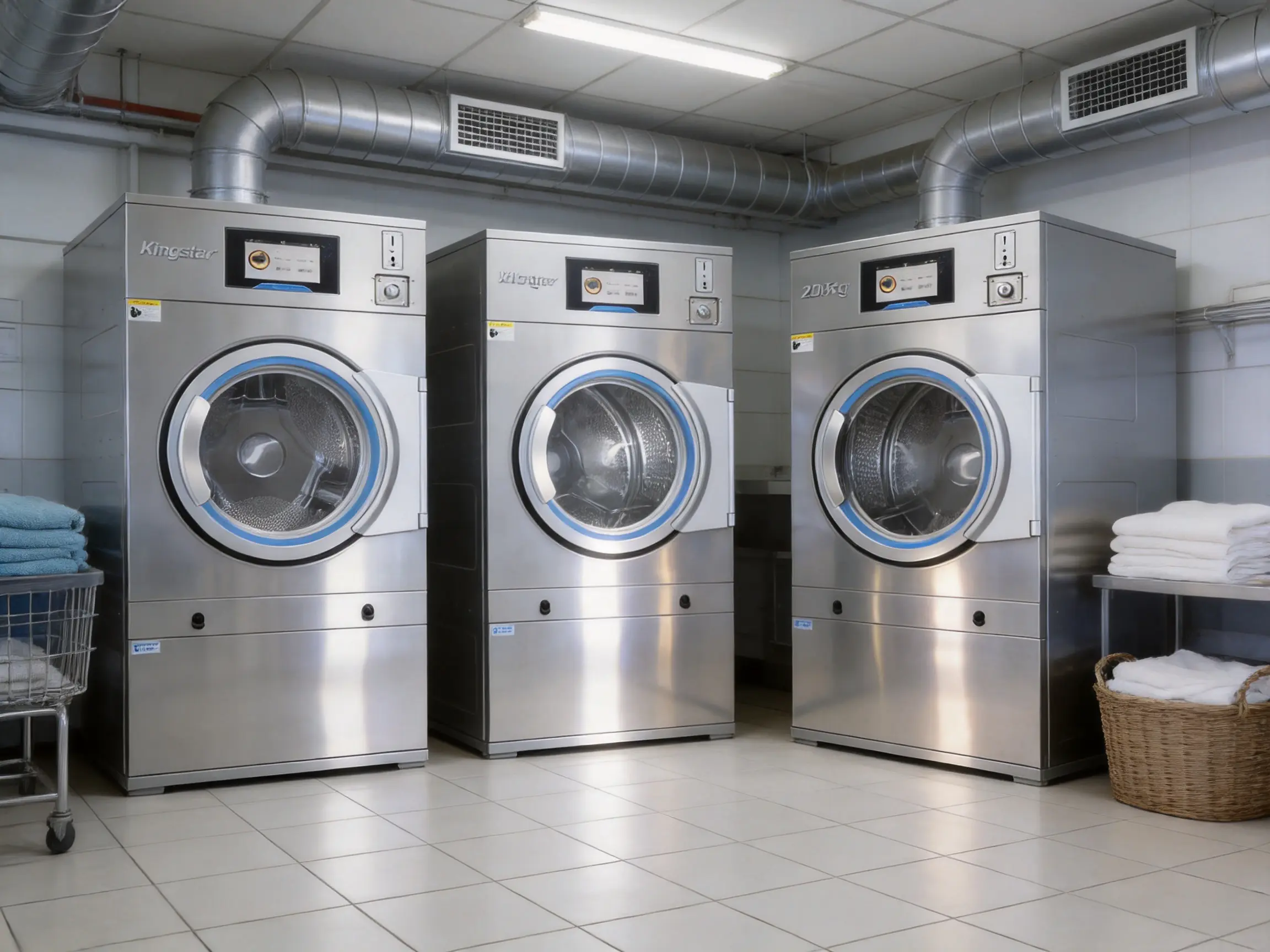
Electric and Gas Heating Options
The dryer supports electric and gas heating. This is a significant advantage because commercial laundry facilities differ in their building services, energy prices, installation conditions, and operating preferences. Some sites have strong electrical capacity and prefer electric heating. Others have access to a suitable gas supply and may select gas heating as part of their operating strategy.
The electric heating power is rated at 13.5 kW for the 15 kg model, 18 kW for the 20 kg model, and 22.5 kW for the 25 kg model. The gas pressure requirement is listed at 2–5 kPa, with gas consumption specified at approximately 2.17 m³/h across the listed models. The gas heating power is listed at 19.1 kW, while the heating capacity is listed at 65,306 BTU per hour.
Heating selection should be made during the planning stage. Site owners should evaluate local regulations, ventilation requirements, utility costs, available supply capacity, installation permissions, and the expected duty cycle. Gas systems may require additional safety controls and professional installation. Electric systems may require suitably rated wiring, circuit protection, and electrical distribution capacity.
The availability of two heating methods gives distributors and commercial customers greater purchasing flexibility. It also allows the same general dryer platform to serve different markets and building types. This is useful for laundry equipment suppliers that need to provide solutions for customers with different infrastructure conditions.
High-Power Heating and Insulation
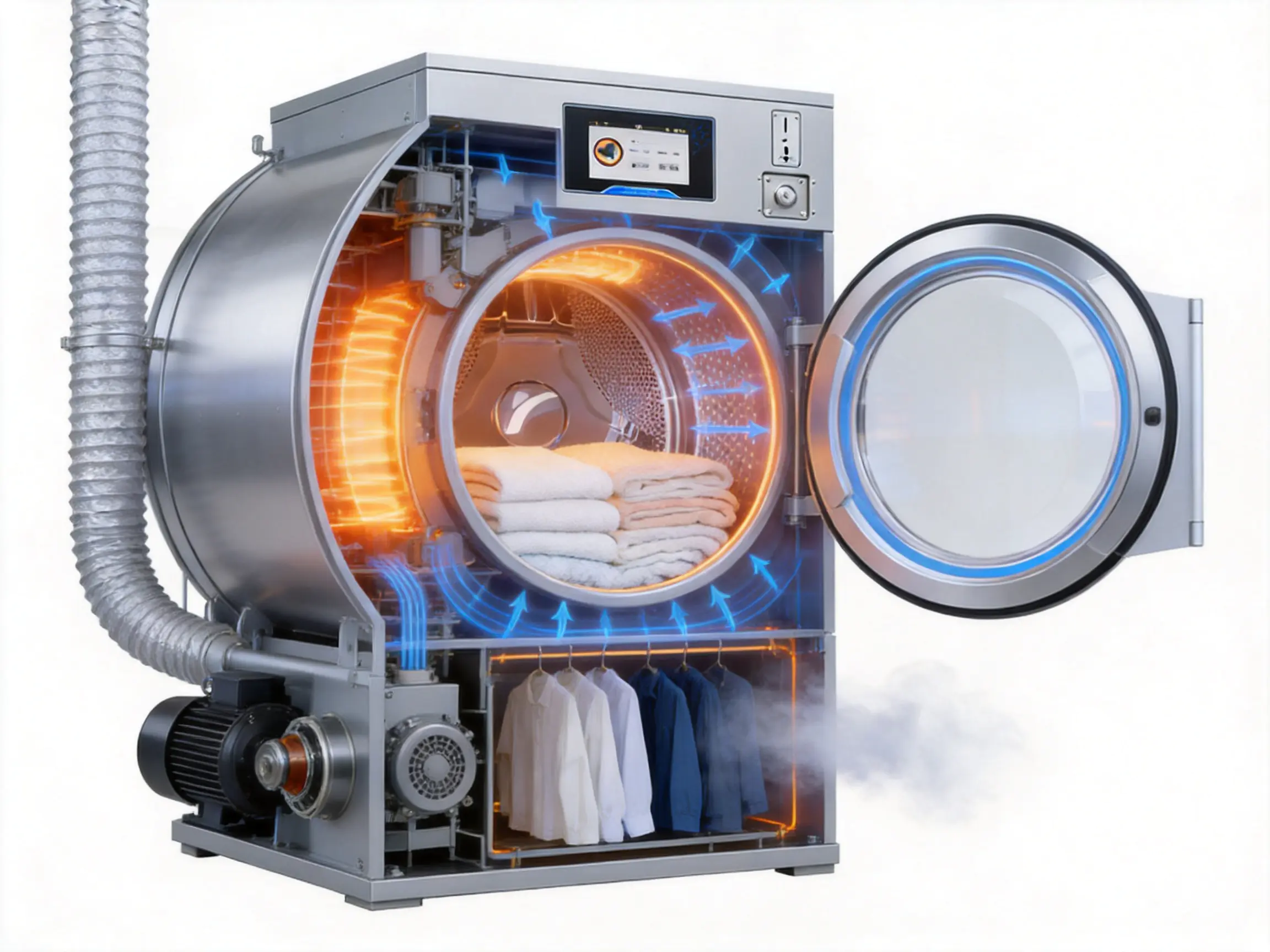
The dryer uses a high-power heating design combined with insulation around the outer cylinder. The purpose of this structure is to help the machine raise temperature efficiently, retain heat, and reduce unnecessary heat loss from the drying chamber.
Efficient heat retention supports faster moisture removal and can improve energy utilization. When the outer cylinder is properly insulated, more of the generated heat is directed toward the textile load instead of escaping into the surrounding room. This can also help improve the working environment by reducing the amount of unwanted heat released into the laundry area.
Drying efficiency depends on the complete system rather than heating power alone. The heating elements, drum movement, fan, exhaust duct, load size, residual moisture, and room conditions all influence performance. The dryer combines these elements to create a balanced commercial drying process rather than depending only on high temperature.
Airflow, Exhaust Performance, and Drying Efficiency
Airflow is essential to commercial tumble drying. Heated air must pass through the textile load, absorb moisture, and then leave the drum through the exhaust system. If moist air remains in the drum, the drying process slows. If the exhaust duct is blocked or poorly designed, the machine may require longer cycles and consume more energy.
The listed exhaust airflow is 21.3 m³/min for the SDR-2015C and 36 m³/min for both the SDR-2020C and SDR-2025C. The exhaust diameter is 150 mm on the 15 kg model and 200 mm on the two larger models. These specifications should be considered when planning ductwork and room ventilation.
Proper installation is essential to achieving the stated airflow. Exhaust ducts should be routed as directly as possible, with minimal unnecessary bends. Ducts should be appropriately sized, securely connected, and regularly inspected for lint accumulation. If several dryers share a ventilation system, the design must be evaluated carefully to prevent back pressure and airflow imbalance.
Good airflow offers several operational benefits. It can shorten drying times, reduce heat buildup, support stable temperature control, and help prevent excessive stress on the fan motor and heating system. It also helps remove lint and humid air from the drying chamber.
Compared with poorly ventilated machines, a dryer with a properly designed airflow path is better suited to high-volume commercial operation. However, no dryer can compensate for an improperly installed exhaust system. Operators should follow professional installation practices and maintain the entire ventilation pathway, not only the lint filter.
Durable Drum and Practical Loading Design
The inner drum is made from 304 stainless steel. This material is widely used in commercial laundry equipment because it offers a useful combination of strength, corrosion resistance, cleanability, and long-term durability. A stainless-steel drum is well suited to repeated contact with damp textiles and the humid conditions found in laundry rooms.
The listed inner cylinder mesh thickness is 1.2 mm for all three models. The inner cylinder opening diameter is listed as 8 mm. These structural details contribute to the drum's ability to handle regular commercial use while supporting airflow through the textile load.
The load-to-capacity ratio is listed as 1:20 for the 15 kg model and 1:18 for the 20 kg and 25 kg models. In practical operation, the best loading level depends on fabric type, residual moisture, and the desired drying result. Operators should avoid overloading the drum because tightly compressed textiles restrict air movement and may remain damp even when the cycle ends.
The large door opening supports faster loading and unloading. This is particularly important in high-traffic facilities, where every minute spent handling a load affects productivity. A wide opening also makes it easier to remove bulky items such as towels, blankets, workwear, and bedding.
Loading convenience is an important point of difference between professional laundry equipment and smaller domestic products. Commercial users need to process larger loads efficiently, and staff should not have to force heavy textiles through a narrow opening. The combination of a large drum and accessible door helps make daily operation more practical.
Balanced Loading for Better Results
Although the dryer is designed for commercial use, correct loading practices remain important. Loads should be distributed as evenly as possible. Mixing extremely heavy items with very light items can produce uneven tumbling and inconsistent drying. Operators should also avoid placing items with excessive residual water into the dryer if the washing and extraction process has not removed enough moisture.
Balanced loading helps reduce vibration and mechanical stress. It also promotes better contact between the heated air and the textiles. Staff training should therefore include capacity limits, textile sorting, removal of foreign objects, and appropriate program selection.
Commercial-Grade Components and Manufacturing Strength
Long-term reliability depends on the quality of the components used throughout the machine. The product information identifies imported electrical components, including Mitsubishi inverters and Schneider contactors. Wires, plugs, and bearings are also selected from quality suppliers. These components are intended to support stable electrical control and dependable operation under repeated commercial workloads.
An inverter can help manage motor operation and may support smoother starting and speed control when correctly configured. A reliable contactor contributes to dependable switching within the electrical system. Quality wiring, plugs, and bearings are important because these parts are exposed to heat, vibration, electrical load, or continuous movement.
The use of recognized component brands can also support serviceability. Technicians may be more familiar with widely used electrical parts, and replacement sourcing can be more straightforward than with unidentified or inconsistent components. For commercial operators, service continuity is important because extended downtime can result in lost revenue and customer dissatisfaction.
Jiangsu Chuandao Intelligent Equipment Co., Ltd. combines manufacturing, research and development, and customer service experience in the commercial laundry equipment sector. Its production approach focuses on matching mechanical design, electrical control, heating configuration, and customer requirements. The company's OEM and ODM capabilities also allow equipment solutions to be adapted for different markets and business models.
Manufacturing Process and Quality Control Priorities
A commercial dryer requires careful control at several stages of production. The frame and outer cylinder must be fabricated with appropriate dimensional accuracy. The drum must be formed and assembled to support smooth rotation. The door, hinges, seals, heating assembly, fan, exhaust connections, and control cabinet must be installed in a coordinated manner.
Welding and structural assembly influence the machine's rigidity and long-term stability. A strong frame helps reduce vibration during operation and provides a stable foundation for the drum and drive system. Surface treatment and finishing are also important because commercial machines are exposed to humidity, cleaning chemicals, textile lint, and frequent operator contact.
Assembly quality is particularly important around rotating parts. Drum alignment, bearing installation, belt tension where applicable, pulley alignment, and motor positioning all influence noise, vibration, and service life. Proper inspection during assembly helps identify mechanical issues before the dryer reaches the customer.
Electrical quality control includes checking wiring, terminal connections, control components, sensors, touchscreen operation, heating controls, and protective devices. Functional testing should confirm that the drum rotates correctly, the fan operates as intended, the heating system responds to commands, and the control programs can be selected and completed properly.
Factory testing is also valuable for identifying abnormal vibration, unusual noise, temperature irregularities, airflow problems, and control-system errors. By combining mechanical inspection with electrical and functional testing, a manufacturer can improve product consistency and reduce the likelihood of installation-related difficulties.
Advantages Over Basic or Light-Duty Competitors
The coin-operated single tumble dryer offers several advantages when compared with basic dryers designed for light commercial or domestic applications.
1. Designed for Frequent Commercial Use
The product is built around the operating conditions of laundromats, hotels, apartment complexes, and other commercial sites. Its capacity range, motor configuration, drum construction, and heating options are intended for repeated cycles rather than occasional household use.
2. Three Practical Capacity Options
The 15 kg, 20 kg, and 25 kg choices allow customers to select a model according to demand and available space. A supplier can also configure a laundry room with a combination of capacities, using smaller machines for ordinary clothing and larger units for bedding or high-volume loads.
3. Intelligent Control With 99 Programs
Many basic dryers provide only a small number of fixed cycles. The 7-inch touchscreen and 99 editable programs offer greater flexibility. Operators can tailor the machine to different fabrics, load sizes, and business requirements, while customers receive a more understandable interface.
4. Electric or Gas Heating
The availability of electric and gas heating helps the product adapt to different installation environments. Buyers are not limited to one energy configuration, which makes the dryer suitable for a wider range of commercial projects.
5. Stainless-Steel Inner Drum
The 304 stainless-steel inner cylinder supports hygiene, durability, corrosion resistance, and routine cleaning. This is especially useful in facilities that process damp textiles continuously.
6. Dedicated Airflow and Exhaust Design
Commercial drying depends on effective moisture removal. The product includes dedicated fan motors, defined exhaust diameters, and specified airflow performance for each capacity. These features support a more complete drying system than a machine relying only on heat.
7. Protective Coin Control Box
The anti-pry coin control box is intended to protect the payment mechanism and reduce unauthorized access. This is particularly important in unattended laundry rooms, where equipment may be used by many members of the public and staff may not be present at all times.
8. Imported Electrical Components
The use of recognized electrical brands and quality bearings, wires, and plugs supports reliability and may simplify service work. Component quality is an important consideration when a machine must operate for long hours and when downtime directly affects revenue.
Self-Service and Coin-Operated Operation
The coin-operated design makes the dryer suitable for revenue-generating self-service laundry applications. Customers can pay for a drying cycle and operate the machine without requiring an employee to control every stage. This helps reduce labor requirements and allows laundry facilities to remain efficient during busy periods.
Coin-operated equipment also gives owners a straightforward way to manage usage. The machine can be installed in laundromats, residential communities, student housing, hotels, military accommodation, worker dormitories, and other properties where users pay individually for laundry services.
The payment control box should be positioned and maintained as part of the overall machine installation. Operators should keep the coin mechanism clean, check for signs of tampering, and ensure that the payment interface remains easy for customers to use. A damaged or unreliable payment system can create customer frustration even when the dryer itself is operating correctly.
For property owners, the value of a coin-operated dryer extends beyond the machine's drying function. It can provide an additional service to tenants or guests, reduce the need for on-site laundry staff, and create a measurable operating model. Clear instructions, visible pricing, and regular maintenance help improve the customer experience.
Applications Across Commercial Markets
Laundromats
Laundromats require machines that can process many different types of personal clothing and household textiles. The programmable control system allows customers to choose cycles according to their loads, while the three capacity options allow owners to serve both individual users and customers with large family loads.
Because laundromats often operate for extended hours, reliability, accessible maintenance, and effective lint management are essential. The dryer can be installed as part of a complete self-service laundry line with commercial washers, washer-extractors, and additional dryers.
Apartment Complexes and Residential Communities
Property managers can install coin-operated dryers in shared laundry rooms for tenants. The 15 kg model may be suitable for a compact building, while larger models may be preferred in a large residential development. The touchscreen interface helps residents operate the equipment without extensive training.
A properly managed shared laundry room should include ventilation, cleaning schedules, operating instructions, and a clear service contact. Routine inspection is especially important because the machines may be used by many people with different loading habits.
Hotels and Hospitality Businesses
Hotels process towels, sheets, uniforms, bathrobes, and other textiles. While some hotel laundries use large industrial systems, smaller hotels and guest facilities may benefit from commercial tumble dryers in the 15–25 kg range. The high-power heating design and programmable operation help support different textile categories.
For guest laundry services, a coin-operated dryer can provide a convenient amenity. For back-of-house operations, the same dryer platform can offer reliable drying capacity for housekeeping textiles, subject to the facility's workflow and volume requirements.
Hospitals and Care Facilities
Healthcare and care facilities require careful textile handling and strong hygiene practices. The stainless-steel drum is easy to clean, while customizable programs can support different categories of linens and uniforms. Facility managers must establish suitable sanitation procedures and ensure that textile care instructions are followed.
Schools, Dormitories, and Worker Housing
Educational institutions and staff accommodation often need shared laundry equipment that is simple to operate and resistant to frequent use. Coin control helps organize usage, while multiple capacity choices allow the installation to match the expected population and available floor area.
Installation Planning and Infrastructure Requirements
Correct installation is essential to safe and efficient operation. Before delivery, the buyer should confirm the available floor area, doorway dimensions, lifting and positioning requirements, electrical supply, gas supply if applicable, exhaust route, room ventilation, drainage or condensate considerations where relevant, and access for future service.
The rated voltage listed for the models is 380/3/50. Local electrical professionals should verify compatibility with the site supply and ensure that suitable protective devices, grounding, wiring, and isolation equipment are provided. Electrical work should comply with local regulations and be completed by qualified personnel.
Gas-heated installations require additional planning. The listed gas pressure range is 2–5 kPa, but the actual installation must follow applicable gas safety codes and the requirements of local authorities. Gas lines, shutoff systems, combustion ventilation, exhaust arrangements, and safety controls must be evaluated professionally.
Exhaust duct design deserves particular attention. Ducts should be as short and direct as practical, with smooth internal surfaces and secure joints. Lint access points should be provided where appropriate. The exhaust outlet should be positioned so that humid air does not return to the building or create a hazard near air intakes.
The machine should be placed on a stable, level foundation. Adequate clearance should be left around service panels, doors, ventilation points, and exhaust connections. Clear access makes routine inspection easier and reduces the time required for maintenance.
Routine Maintenance and Cleaning
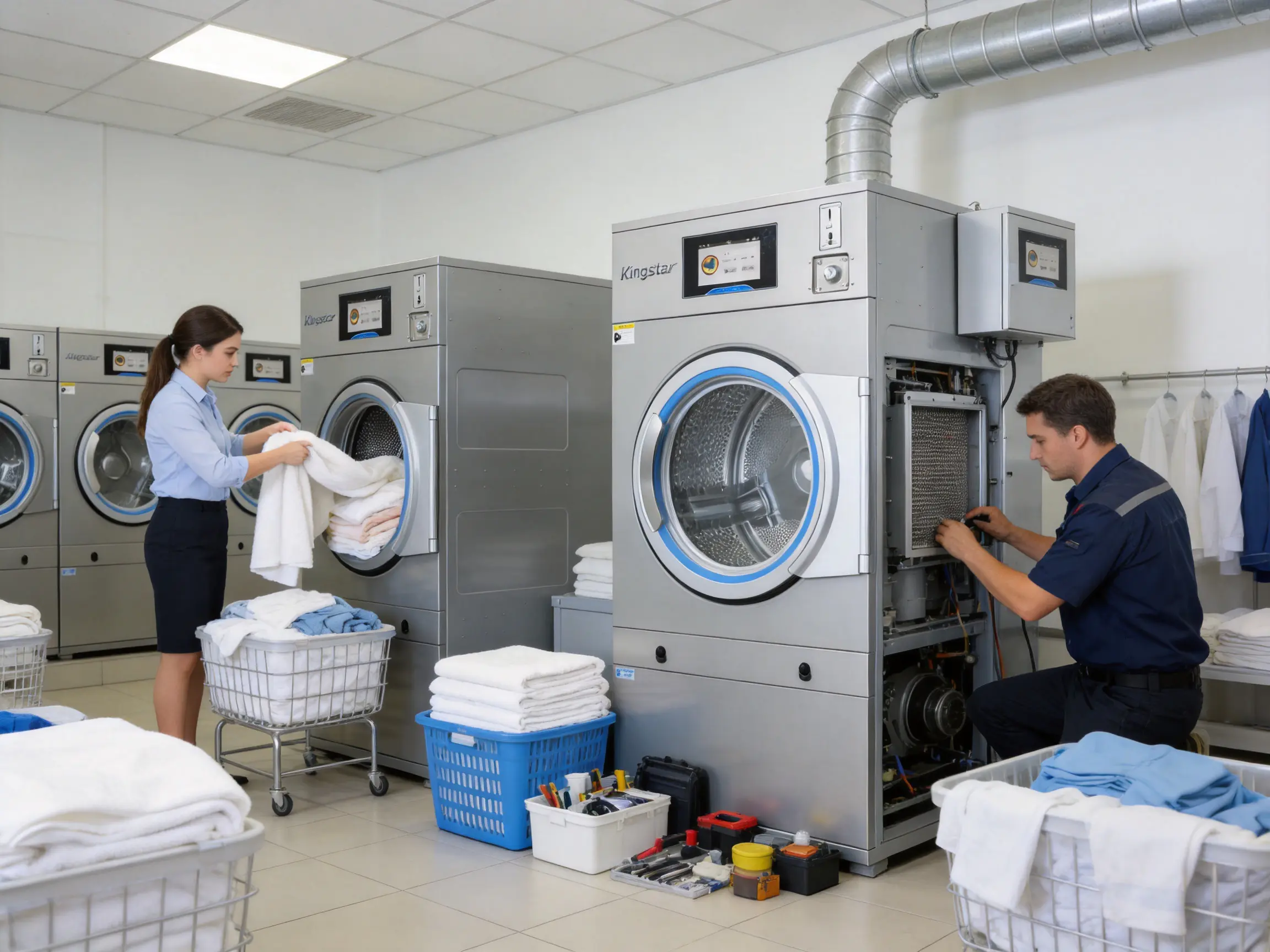
Preventive maintenance is essential for preserving drying efficiency, reducing energy waste, and extending equipment life. The most important daily task is cleaning the lint filter after every cycle. Lint buildup restricts airflow and may increase drying time, motor load, heating stress, and fire risk.
The drum and door area should be inspected regularly. Residues, foreign objects, and accumulated fibers should be removed using suitable cleaning methods. Door seals should be checked for damage or deformation because a poor seal can allow heat and airflow to escape.
Vent ducts should be inspected and cleaned at intervals based on operating intensity. A high-volume laundromat may require more frequent cleaning than a low-use residential facility. Operators should also inspect the external casing and coin mechanism to maintain appearance and reliable payment operation.
| Maintenance task | Recommended frequency | Primary purpose |
| Clean lint filter | After every cycle | Maintain airflow and drying efficiency |
| Inspect drum and door seal | Weekly | Prevent residue buildup and maintain a proper seal |
| Clean exhaust duct | Monthly or as needed | Maintain ventilation and reduce fire risk |
| Inspect bearings and belts | Quarterly | Prevent mechanical failure and abnormal vibration |
| Clean exterior and coin mechanism | Monthly | Preserve appearance and payment reliability |
| Check electrical connections and safety devices | According to the service plan | Support safe and stable operation |
Bearings, motor belts, hinges, shafts, and other moving parts should be inspected for wear, noise, misalignment, or excessive play. Lubrication should be applied only where recommended by the manufacturer and with suitable products. Excessive or incorrect lubrication can attract lint and create additional problems.
Electrical connections should be checked for looseness, heat damage, corrosion, or visible deterioration. The thermostat, sensors, control panel, fan, heating elements, and protective devices should be tested according to the service schedule. Any abnormal smell, noise, vibration, temperature, or drying result should be investigated promptly.
Safety and Operational Best Practices
Operators should train employees or facility managers to identify basic safety conditions before using the dryer. The lint filter must be installed correctly and kept clear. The exhaust path must remain unobstructed. Clothing containing flammable liquids, solvents, oils, or other hazardous substances must not be placed in the dryer unless it has been properly treated according to approved safety procedures.
Customers should be instructed not to overload the drum and not to place sharp objects, heavy metal items, or unsuitable materials inside the machine. Pockets should be checked before garments are loaded. Mixed loads should be sorted when necessary to avoid damage or uneven drying.
The dryer should not be operated if the door, seal, control panel, electrical cable, gas connection, or exhaust system shows visible damage. Repairs should be handled by trained technicians. Operators should not bypass safety sensors or protective devices in an attempt to keep the machine running.
In coin-operated environments, clear user instructions should explain how to select a program, pay for a cycle, load the drum, and respond if the machine stops unexpectedly. A visible service contact number can help staff respond quickly to payment or operating problems.
Energy and Operating Cost Considerations
Drying energy consumption depends on several variables, including load weight, residual moisture, program settings, heating method, exhaust condition, room temperature, and machine utilization. A dryer may be rated for high heating power, but actual consumption varies according to how it is operated.
One of the most effective ways to reduce operating costs is to maintain the airflow system. A blocked lint filter or restricted exhaust duct forces the dryer to operate longer. Regular cleaning can therefore support both performance and energy efficiency.
Proper washer-extractor performance also affects the dryer. If laundry leaves the washer with excessive residual moisture, the dryer must remove more water. A suitable washing and extraction process can reduce drying time and improve total laundry efficiency.
Operators should choose programs appropriate to the textile and load size. Excessively long or high-temperature cycles can waste energy and increase fabric wear. At the same time, insufficient drying can result in customer complaints and repeat cycles. The programmable control system helps operators develop balanced settings for their most common loads.
For larger facilities, managers can record cycle duration, utility usage, maintenance activity, and customer demand. This information can help identify inefficient machines, abnormal drying times, or changes in operating conditions. Preventive maintenance is often less expensive than repeated emergency repairs and lost operating hours.
Why Manufacturer Support Matters
Commercial laundry equipment is a long-term investment. The initial purchase price is only one part of the total cost of ownership. Installation, utilities, maintenance, spare parts, operator training, service response, and machine longevity all influence the final business result.
A manufacturer with experience in research and development, production, and customer service can provide more than a standard machine. It can help customers choose capacities, evaluate heating options, plan a laundry layout, establish maintenance procedures, and adapt controls to specific markets.
Jiangsu Chuandao Intelligent Equipment Co., Ltd. provides OEM and ODM capabilities for commercial laundry equipment. This can be valuable for distributors and project contractors that require customized branding, control configurations, payment arrangements, capacity combinations, or market-specific solutions.
Consistent communication between manufacturer and customer also helps reduce installation problems. Technical information about voltage, gas pressure, exhaust diameter, machine dimensions, airflow, and weight should be reviewed before shipment. This allows the buyer to prepare the site and avoid delays when the equipment arrives.
After installation, service documentation and staff training can help the owner achieve better results. A well-maintained machine is more likely to deliver stable performance than equipment that is operated without cleaning, inspection, or proper loading procedures.
Recommended Selection Guide
When selecting a model, first estimate the average and peak laundry volume. A location with modest daily demand may benefit from the 15 kg model, while a busy laundromat or facility processing bedding may require the 20 kg or 25 kg model. If demand varies significantly, a combination of different capacities may be more practical than installing only one size.
Next, evaluate the installation infrastructure. Confirm whether the location can support 380/3/50 power, the required electrical heating load, or the gas pressure and ventilation requirements. Review the exhaust route carefully, including duct length, bends, outlet position, and shared ventilation conditions.
Available floor space is another important factor. The 15 kg model measures approximately 800 mm wide, 1200 mm deep, and 1600 mm high. The 20 kg model measures approximately 900 mm wide, 1200 mm deep, and 1700 mm high. The 25 kg model measures approximately 890 mm wide, 1420 mm deep, and 1805 mm high. Service access and door clearance must be added to these basic dimensions.
Finally, consider the type of customer and textiles. A self-service laundromat may prioritize simple program selection and secure coin operation. A hotel may prioritize capacity and linen throughput. An apartment complex may prioritize compact installation and easy maintenance. Matching the product configuration to the application helps maximize return on investment.
Q&A
Q: What capacities are available?
A: The coin-operated single tumble dryer is available in 15 kg, 20 kg, and 25 kg capacities. The corresponding models are SDR-2015C, SDR-2020C, and SDR-2025C.
Q: Is the dryer suitable for laundromats?
A: Yes. The dryer is designed for self-service commercial environments and includes a protective anti-pry coin control box. Its touchscreen interface, programmable cycles, and commercial construction make it suitable for laundromats and shared laundry rooms.
Q: Can the machine use electric or gas heating?
A: Yes. The dryer supports electric or gas heating. The appropriate configuration should be selected according to the site's utility supply, local regulations, ventilation conditions, and operating cost strategy.
Q: How many drying programs are available?
A: The control system includes 99 preset and editable programs. Operators can configure cycles for different textile types, load sizes, and desired drying results.
Q: What type of touchscreen does the dryer use?
A: Each listed model is equipped with a 7-inch full-color HD touchscreen for program selection and operation.
Q: What material is used for the inner drum?
A: The inner cylinder is made from 304 stainless steel. This material supports durability, corrosion resistance, hygiene, and routine cleaning.
Q: How important is the exhaust system?
A: The exhaust system is essential. It removes humid air from the drum and supports efficient drying. Blocked or poorly designed ductwork can increase drying time, energy consumption, heat buildup, and mechanical stress.
Q: How often should the lint filter be cleaned?
A: The lint filter should be cleaned after every drying cycle. This helps maintain airflow, drying efficiency, and operational safety.
Q: Can the dryer process towels and bedding?
A: Yes, the larger models are suitable for many commercial textile applications, including towels, bedding, uniforms, and other laundry loads. The selected program and load size should match the textile care requirements.
Q: What electrical supply is listed for the dryer?
A: The listed rated voltage is 380/3/50. Buyers should have qualified electrical professionals confirm compatibility with the local power supply and complete installation according to applicable regulations.
Q: What gas pressure is required?
A: The listed gas pressure range is 2–5 kPa. Gas installation must be completed by qualified professionals and must comply with local safety regulations and building requirements.
Q: How does the dryer help reduce maintenance requirements?
A: The machine uses commercial-grade construction, a stainless-steel drum, quality electrical components, and a structured preventive maintenance approach. Regular lint removal, exhaust cleaning, component inspection, and safety checks are still necessary for reliable operation.
Q: Can the manufacturer provide customized solutions?
A: Jiangsu Chuandao Intelligent Equipment Co., Ltd. provides OEM and ODM capabilities. Customization can be discussed according to market requirements, project conditions, branding needs, control preferences, and installation specifications.
Q: What should be checked before purchasing?
A: Buyers should confirm capacity requirements, floor dimensions, door access, electrical or gas supply, exhaust routing, room ventilation, service access, payment requirements, and local installation regulations.
Conclusion
The coin-operated single tumble dryer provides a flexible and durable solution for commercial laundry operations. Its 15 kg, 20 kg, and 25 kg capacity options allow businesses to select equipment according to demand and space. The 7-inch touchscreen and 99 editable programs support simple operation and textile-specific drying control. Electric and gas heating options provide installation flexibility, while the high-power heating system and insulated outer cylinder support effective heat utilization.
The 304 stainless-steel inner drum, large loading door, dedicated exhaust system, commercial motors, imported electrical components, and anti-pry coin control box address the practical needs of high-use laundry facilities. Compared with basic or light-duty dryers, the product is designed more specifically for continuous commercial operation, self-service use, and long-term maintainability.
Its performance depends on correct installation, suitable loading, unobstructed exhaust ventilation, regular lint removal, and preventive maintenance. When these practices are followed, the dryer can help laundromats, property managers, hotels, institutions, and other commercial operators improve drying consistency, reduce downtime, and provide a dependable laundry service.
Supported by the manufacturing, research and development, customization, and customer service capabilities of Jiangsu Chuandao Intelligent Equipment Co., Ltd., the product is positioned as a practical commercial drying platform for both standard and customized laundry projects.
References
1. Commercial Laundry Equipment Maintenance Principles, internal technical guidance for tumble dryer operation and preventive maintenance.
2. Industrial and Commercial Textile Care Practices, guidance on drying temperatures, load management, and fabric protection.
3. Electrical Safety and Control Component Practices for Commercial Machinery, general principles for wiring inspection, protective devices, and control-panel maintenance.
4. Gas-Fired Commercial Appliance Installation Principles, general requirements for gas supply, ventilation, combustion safety, and professional installation.
5. Preventive Maintenance Procedures for Commercial Drying Equipment, recommended inspection frequencies for lint filters, exhaust ducts, bearings, belts, seals, and safety components.
6. Product specification and operating information supplied for the SDR-2015C, SDR-2020C, and SDR-2025C coin-operated single tumble dryers.
Product: Coin-Operated Single Tumble Dryer(15/20/25kg)

ADD:No.388 Xinggang Road, Chongchuan District, Nantong City, 226000, Jiangsu Province, China.
-
Phone: +86-13917089379
-
Tel:+86-13917089379
-
Fax:+86-0513-85663366
-
E-mail:louislu@kingstarlaundry.com
products