英语
 俄语
 西班牙语
 德语
Home / News / Industry News / Industrial Laundry Guide: Equipment, Capacity, and Operating Costs for Operators

Kingstar is your trusted partner for industrial and commercial laundry equipment. We specialized in the R&D and manufacturing of high-end industrial washers, commercial washers and dryers. Meanwhile, we provide global clients with comprehensive planning, layout workflow design, and software-hardware integration services for smart laundry plants.
Industry News
Nov 12,2026
Industrial Laundry Guide: Equipment, Capacity, and Operating Costs for Operators
A hotel laundry manager processing 2,500 room-nights a week does not need a lecture on fabric care. She needs to know whether a 100 kg washer-extractor can clear the morning linen surge before checkout, and what a missed peak really costs.
Here is the short answer: industrial laundry is not simply a larger version of a home washing machine. It is a production system built around throughput, hygiene, utility cost, and labor. The best equipment choice is the one that matches your daily kilograms and peak-hour demand while keeping water, energy, and rework under control. Get that match wrong, and every kilogram of linen carries hidden cost.
This guide explains what an industrial laundry actually does, how to size the equipment train, and which buying criteria separate a reliable plant from an expensive experiment.
What Counts as an Industrial Laundry?
Industrial laundry refers to laundering at a scale that serves many users, not one household. It can be an on-premise laundry (OPL) inside a hotel, hospital, or school, or an independent commercial plant that collects, washes, finishes, and returns linen and workwear. The common thread is volume, repeatability, and documented hygiene.
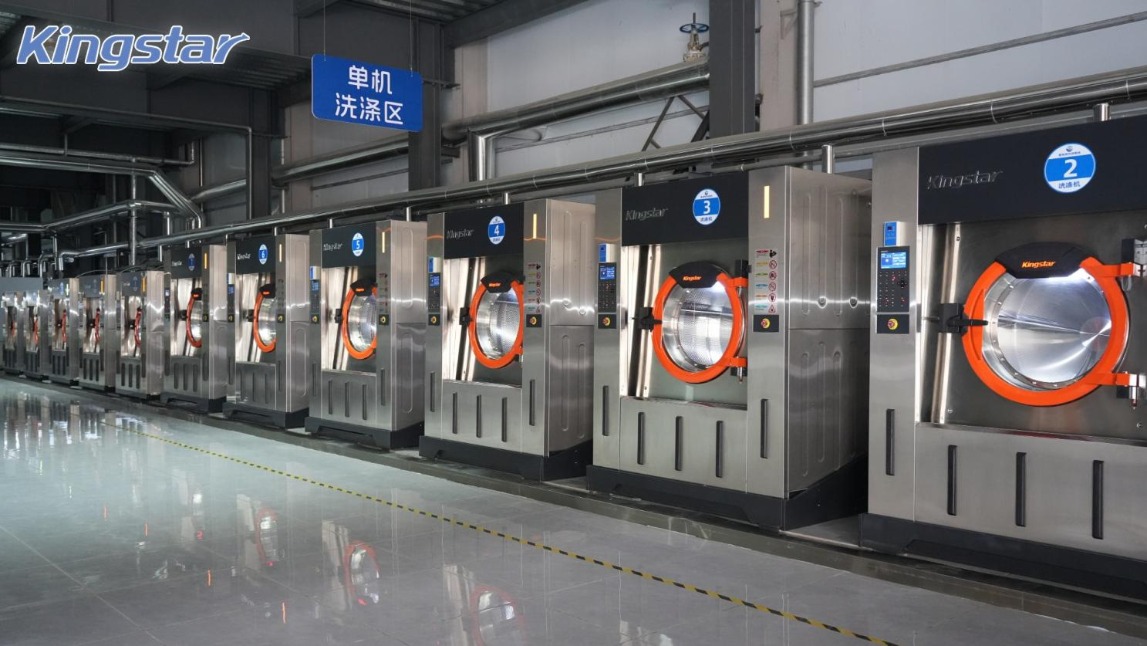
Most operations follow five functions: receiving, sorting, washing, finishing, and delivery. Each function creates a bottleneck if it is under-resourced.
- Receiving and weighing soiled textiles, then recording route or department.
- Sorting by fabric, color, soil level, and infection-control category.
- Washing with the correct chemistry, temperature, and mechanical action.
- Finishing through drying, ironing, folding, and inspection.
- Delivery or internal return to rooms, wards, or production lines.
| Model | Typical customer | Core equipment | Primary metric |
|---|---|---|---|
| On-premise laundry (OPL) | Hotel, hospital, school, factory | Washer-extractor, dryer, ironer | Cost per processed kg and linen availability |
| Independent industrial laundry | Hotels, restaurants, clinics, workwear clients | High-capacity washer-extractors, barrier washers, tunnel washer, finishing line | Throughput per shift and cost per kg |
| Workwear and mat rental | Industrial and food-processing businesses | Heavy-duty washers, dryers, sorting and repair stations | Garment life, hygiene compliance, route density |
Equipment Train and Capacity Sizing
Begin with kilograms per day and peak kilograms per hour, not with machine capacity alone. A 100 kg washer-extractor is not automatically better than three 40 kg units if your peak arrives in a two-hour window and your drying capacity cannot keep up.
- Washing
- Washer-extractor (soft-mount or hard-mount)
- Barrier washer for clean and soiled separation
- Tunnel washer for very high volume
- Drying
- Single tumble dryer
- Stack dryer
- Gas or steam-heated dryer
- Finishing
- Ironer or calender
- Folder and stacker
- Inspection table
- Support
- Water treatment and softener
- Chemical dosing
- Boiler or heat source
Use a simple capacity check: daily kg times peak factor divided by available peak hours equals required kg per hour. Then divide by the realistic cycles per hour for the machine you are considering. A 40 kg washer-extractor might complete four to five cycles per hour in a light-soil hotel program, while a heavy-soil workwear program may run three.
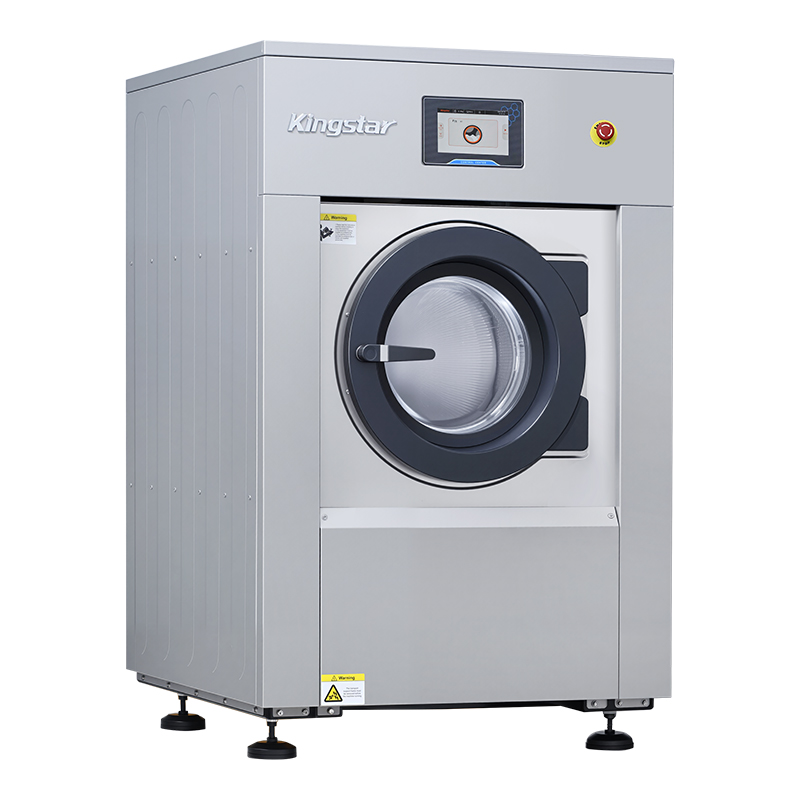
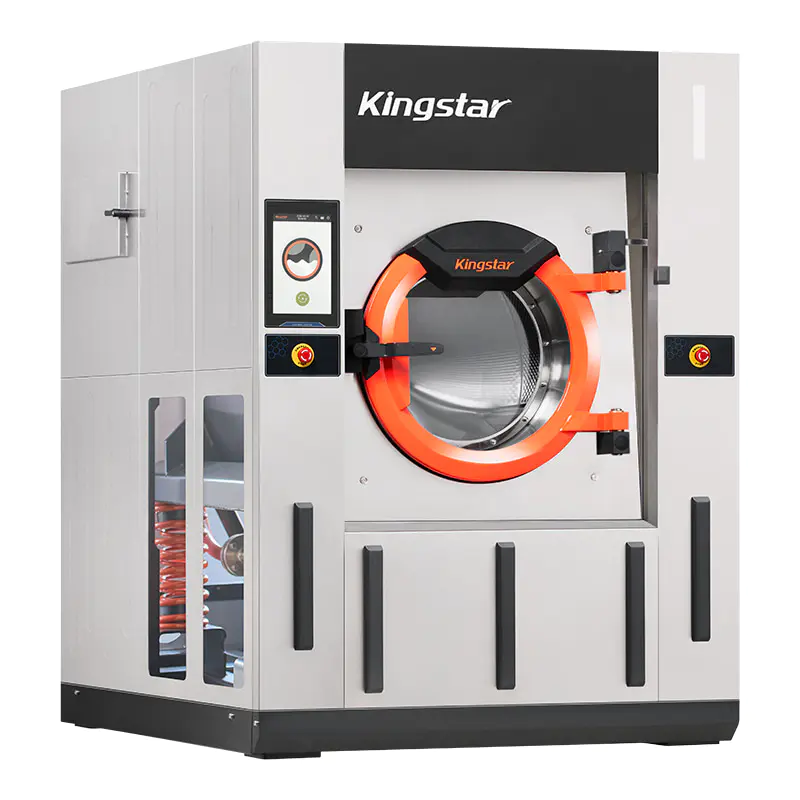
For operations that need hygienic separation, a barrier washer such as the Kingstar 50/70/100 kg model keeps soiled and clean sides physically apart.
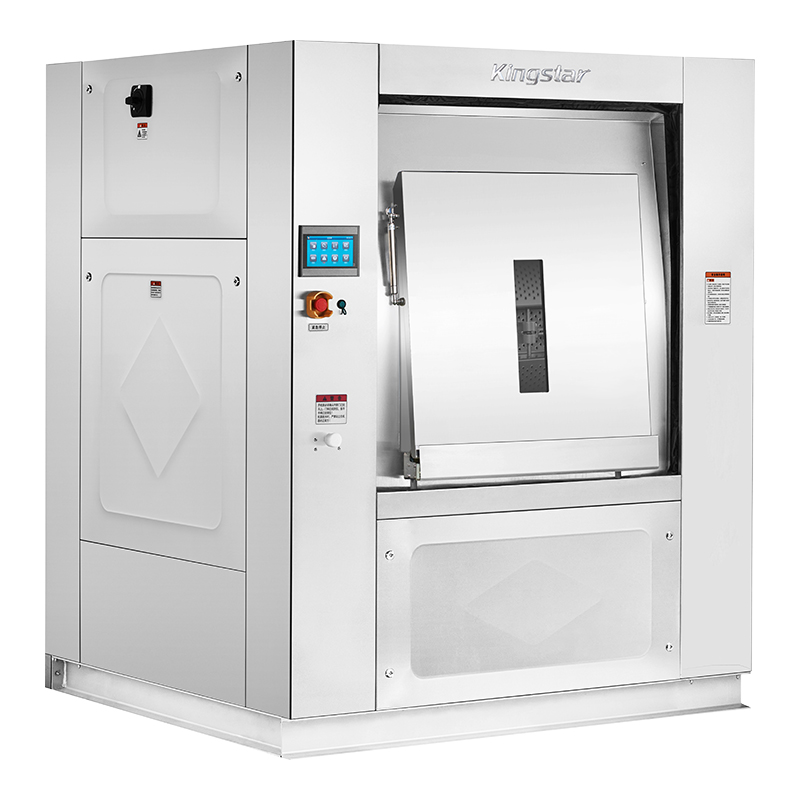 Kingstar Barrier Washer-Extractor for Hygienic Laundry SeparationDual-compartment washer-extractor separates soiled and clean zones through a partition wall, with electric or steam heating for high-contamination laundry.View Product →
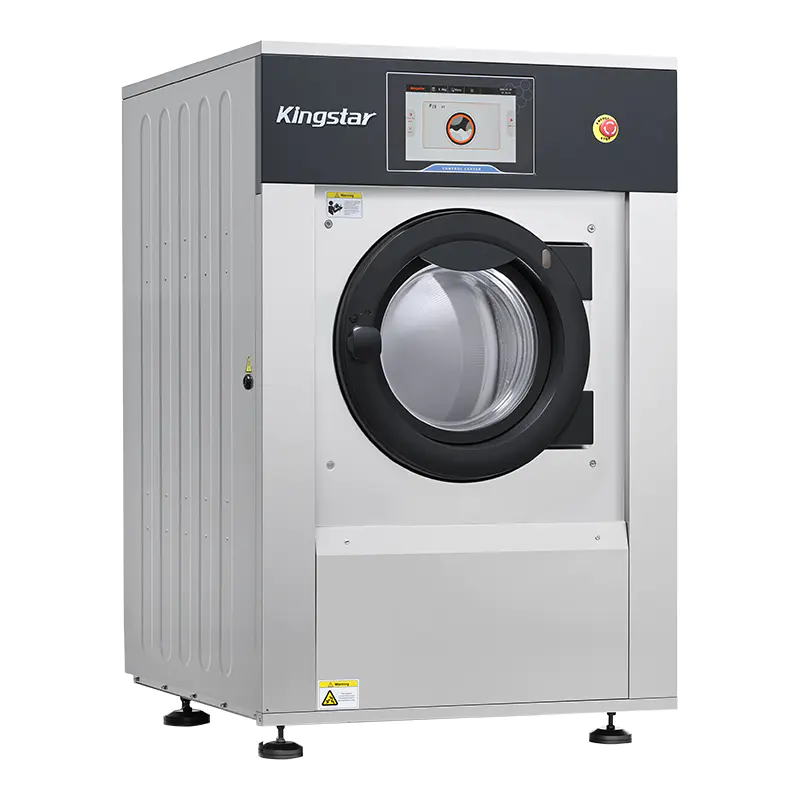
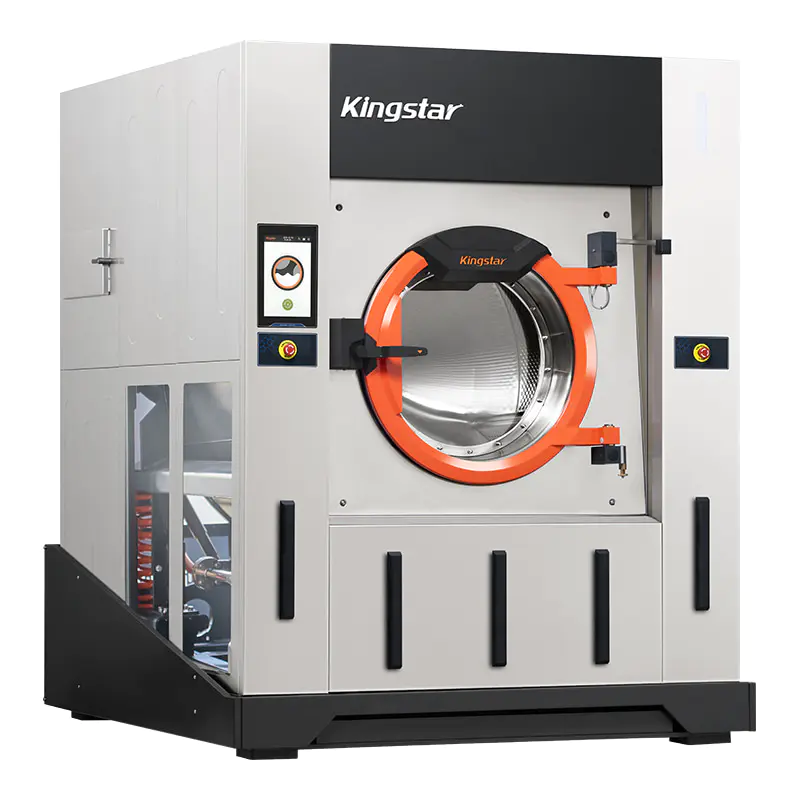
High-volume hotel and OPL plants often pair a 100 kg energy-efficient washer-extractor with matching drying and finishing capacity.
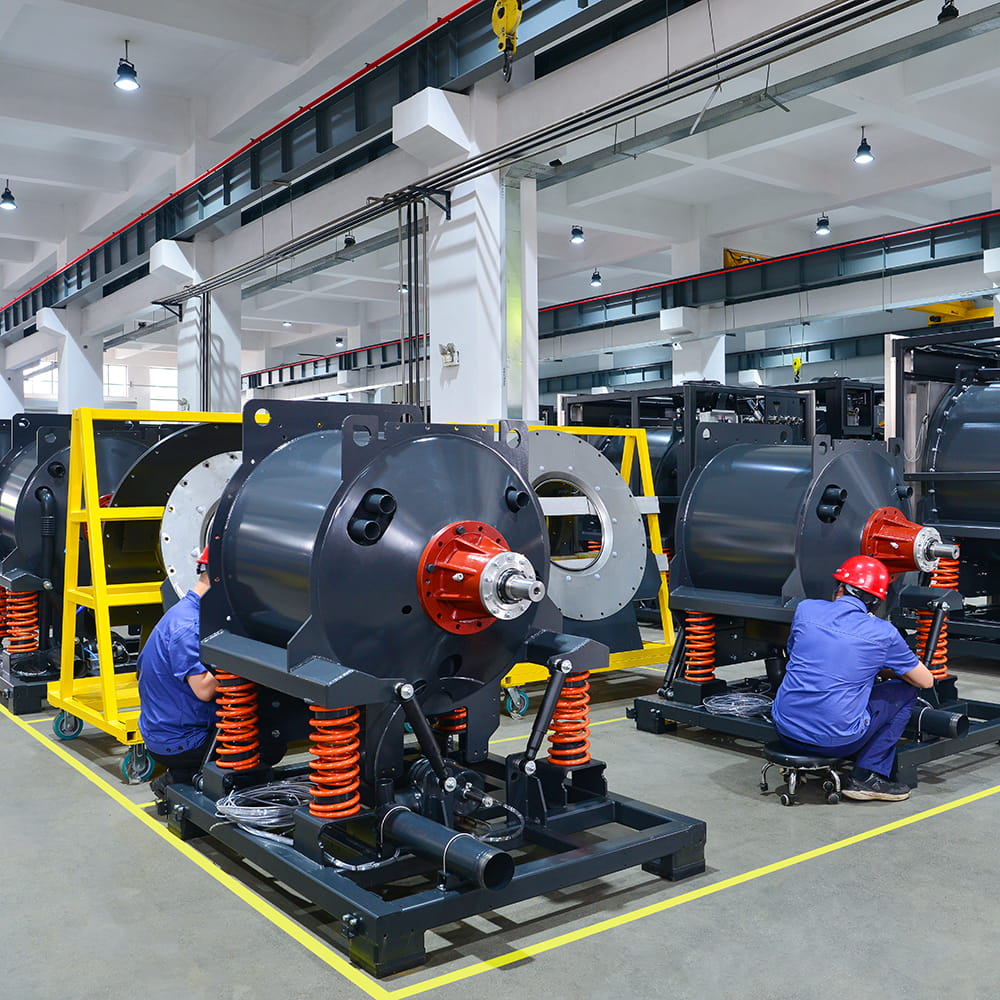 Smart High-Speed Electric Washer-Extractor CustomTouchscreen-controlled washer-extractor with 30–100 kg capacities, intelligent load weighing, and high-speed extraction for hotel, hospital, and commercial laundry streams.View Product →
For smaller industrial or commercial streams, a 40 kg electric washer-extractor can handle a focused production window without tying up a full tunnel line.
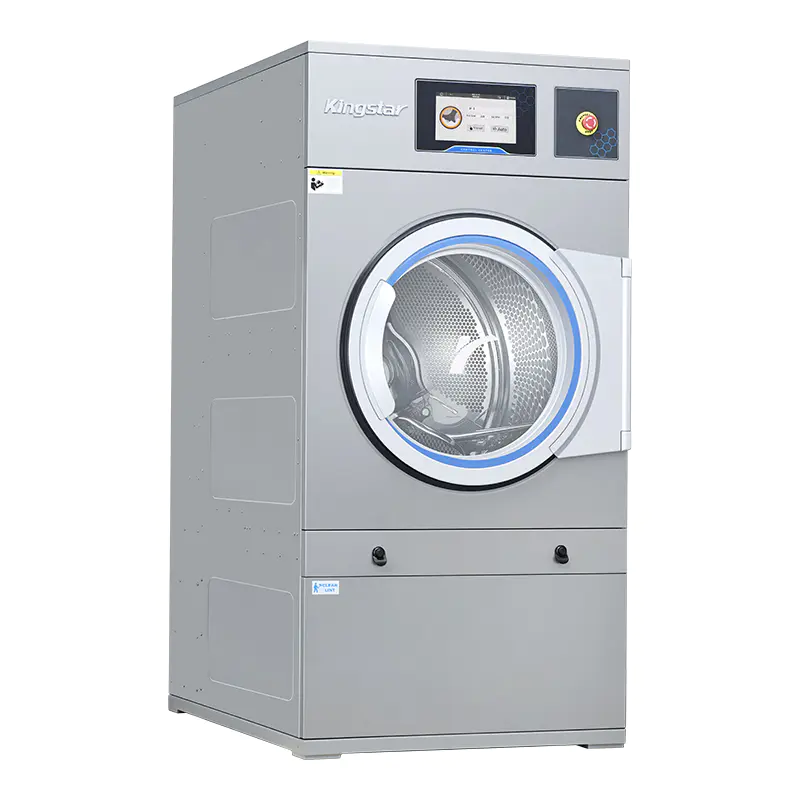
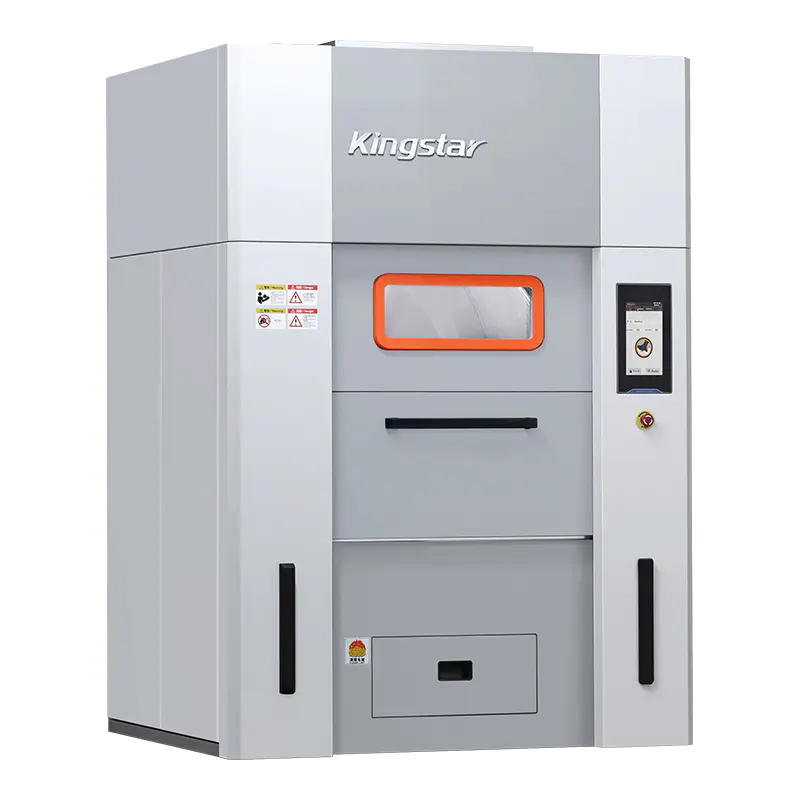
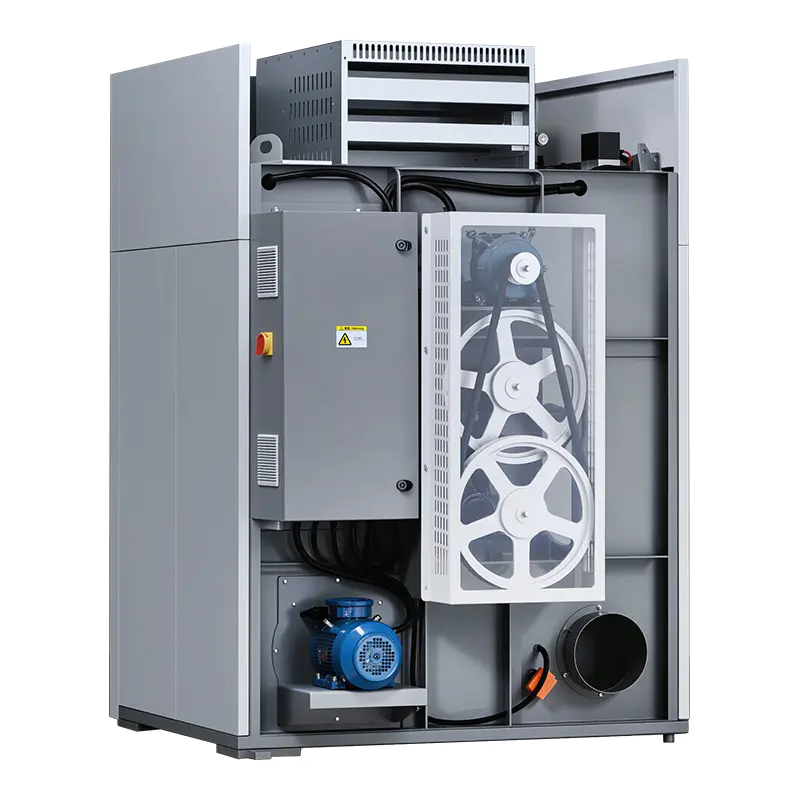 Kingstar Industrial Dryer Custom for Laundry OperationsTouchscreen industrial dryer with 40–100 kg capacities and steam, electric, or gas heating, suited to hotel, hospital, dry-cleaning, and laundromat loads.View Product →
Key Buying Criteria Beyond Drum Size
Drum size is visible; the variables that decide your cost per kg are less obvious. Ask for verifiable data on water consumption per cycle, thermal energy, G-force, cycle time, and service access.
| Criterion | Why it matters | What to verify |
|---|---|---|
| G-force and extraction | Higher extraction removes more water, reducing dryer energy and time. | Published G-force and residual moisture after extraction |
| Water and chemical use | Water, heating, and detergent are recurring costs. | Liters per kg, bath ratio, dosing accuracy |
| Barrier or isolation design | Prevents cross-contamination in healthcare, food, and hospitality linen. | Separate loading and unloading doors, airflow control |
| Construction and service | Industrial laundries run long shifts; downtime is expensive. | Bearing access, panel diagnostics, local service response |
| Supplier process control | Consistent manufacturing affects spare-part fit and machine life. | ISO9001, ERP and MES traceability, documented testing |
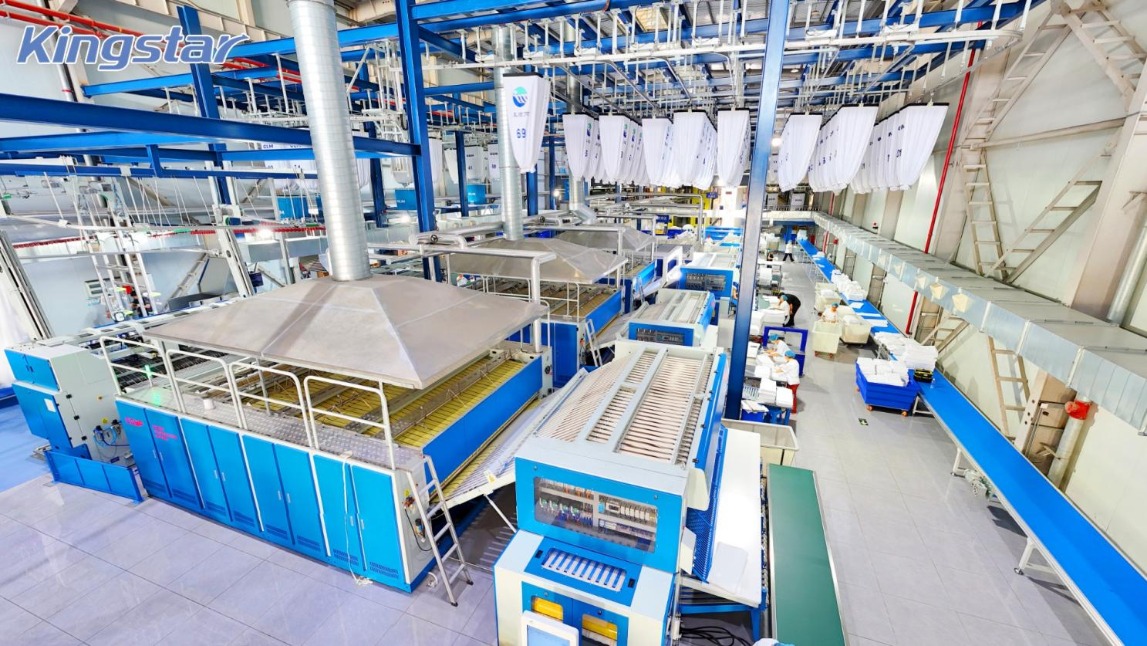
Kingstar, the premium brand from Jiangsu Chuandao Intelligent Equipment Co., Ltd., brings more than 25 years of laundry equipment manufacturing and ISO9001-based quality management to these decisions. That experience matters most when a plant needs a complete equipment train rather than a single machine.
Operating Costs and Common Mistakes
In a typical industrial laundry, labor and utilities usually dominate the cost per kilogram; equipment depreciation is only one line. A machine that saves 10 percent on water but adds 30 minutes of daily cleaning may not be the cheaper choice.
Common mistakes include buying the largest machine the budget allows, ignoring boiler and water-softener capacity, and underestimating sorting labor. Another frequent error is treating peak demand as an average. If all linen returns between 8 a.m. and 10 a.m., your plant needs peak capacity, buffer storage, or staggered collection.
- Size the dryer to the washer, not the other way around.
- Measure water hardness before choosing chemical dosing.
- Plan a soiled linen hold area that matches daily intake.
- Track rework and rejected linen as a quality cost.
- Schedule preventive maintenance by running hours, not by breakdowns.
For plants that need a layout, utility plan, and equipment mix rather than a catalog list, a laundry solution review can prevent expensive mismatches between washing, drying, and finishing.
Frequently Asked Questions
What is the difference between a commercial laundry and an industrial laundry?
A commercial laundry usually serves a business or small customer base, while an industrial laundry processes higher volumes, often with heavier textiles or workwear, and runs on production targets, hygiene protocols, and documented cost per kilogram.
How do I calculate the right washer capacity?
Start with daily kilograms and peak-hour demand. Multiply daily kilograms by a peak factor, divide by available peak hours, then divide by the realistic cycles per hour of the chosen machine. Add at least 10 to 15 percent buffer for growth and rework.
Why do industrial laundries use barrier washers?
Barrier washers separate soiled loading from clean unloading, reducing cross-contamination. They are common in healthcare, food processing, and any operation where hygiene compliance is audited.
What causes high cost per kilogram in an industrial laundry?
Labor, energy, water, and chemicals typically dominate. Over-drying, rewashing, poor sorting, and oversized equipment running partial loads are frequent causes of avoidable cost.
How often should industrial laundry equipment be serviced?
Follow the manufacturer schedule based on running hours and load severity. High-use plants should inspect bearings, door seals, belts, and safety interlocks monthly and keep a log for traceability.
ADD:No.388 Xinggang Road, Chongchuan District, Nantong City, 226000, Jiangsu Province, China.
-
Phone: +86-13917089379
-
Tel:+86-13917089379
-
Fax:+86-0513-85663366
-
E-mail:louislu@kingstarlaundry.com
products